

Blog
Domestic Helper Childproofing Checklist: Making Singapore Homes Safer for Young Children

Executive Summary
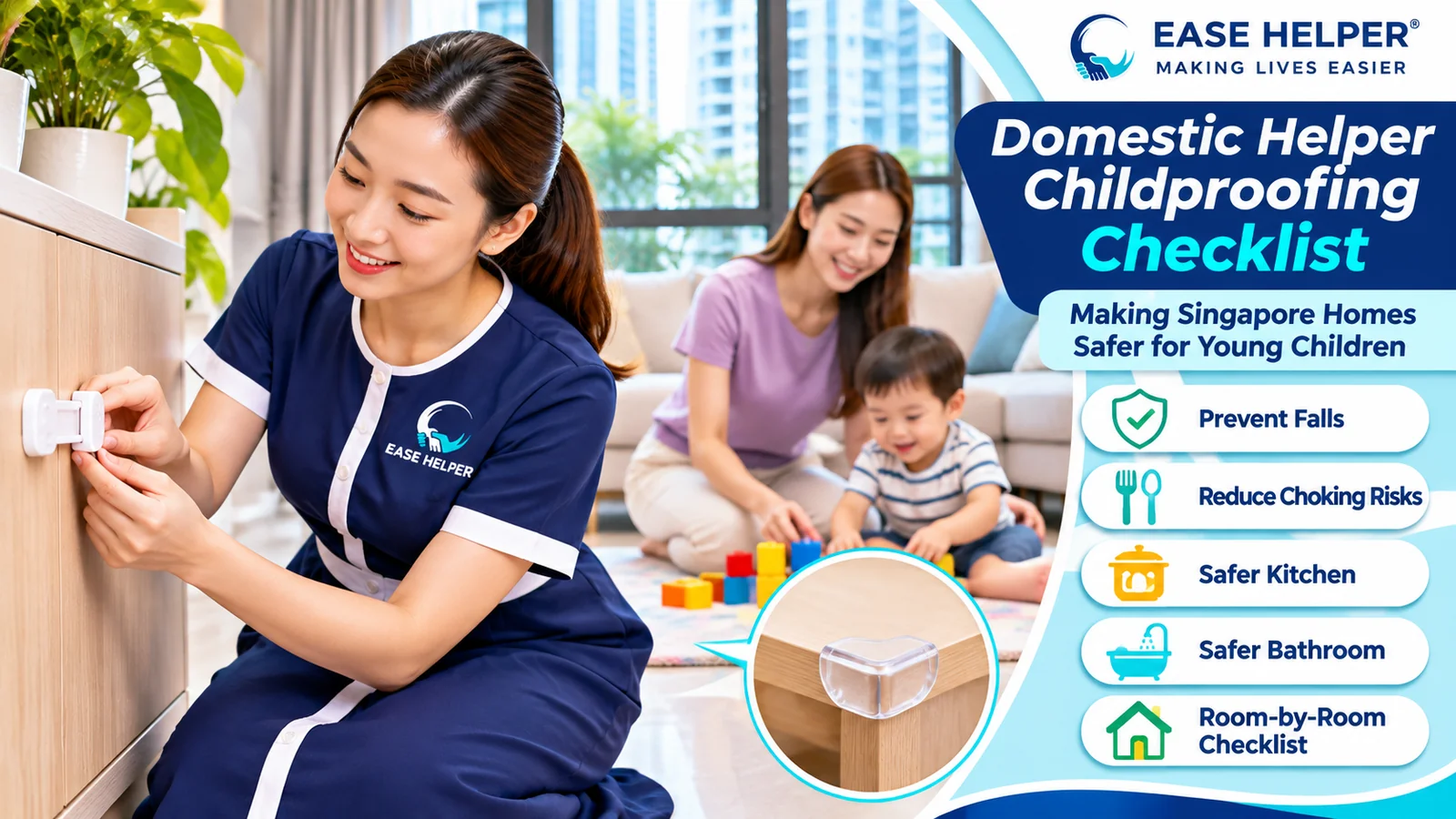
A domestic helper childproofing checklist helps Singapore families identify household hazards and establish safer routines for babies, toddlers and young children. Important precautions include securing furniture, restricting access to windows and balconies, storing chemicals safely, preventing choking and maintaining close supervision. This guide provides a practical room-by-room checklist, age-appropriate safety tips and training recommendations for employers and domestic helpers.
Why a Domestic Helper Childproofing Checklist Matters
Young children explore their surroundings by touching, climbing and putting objects into their mouths. As a result, ordinary household items can become unexpected hazards. A domestic helper childproofing checklist helps caregivers identify these risks before accidents happen.
Singapore homes, including HDB flats and condominiums, may contain elevated windows, balconies, compact kitchens and bathrooms with wet floors. Families should assess these features carefully, especially when caring for crawling babies or active toddlers.
However, childproofing products cannot replace attentive supervision. Employers and helpers should combine physical safety measures with clear household rules and regular communication.
1. Start With a Room-by-Room Home Safety Inspection
Before assigning childcare responsibilities, walk through the home with your domestic helper. Examine each room from a child’s perspective. For example, crouch down to identify accessible sockets, loose cables and small objects.
Areas to Inspect
- Living room and dining area.
- Bedrooms and children’s play areas.
- Kitchen and household storage spaces.
- Bathrooms and toilets.
- Windows, balconies and service yards.
- Entrances, corridors and staircases, where applicable.
During the inspection, explain which areas children may enter independently and which require adult supervision. Then document any hazards that need attention.
2. Prevent Falls From Windows, Balconies and Furniture
Falls can cause serious injuries, particularly in high-rise homes. Therefore, window and balcony safety should be a priority in every domestic helper childproofing checklist.
Window and Balcony Precautions
- Keep windows secured using suitable child-safety measures.
- Do not place chairs, tables or climbable furniture near windows.
- Keep balcony doors secured when young children are nearby.
- Never leave a child unattended on a balcony.
- Check that safety devices remain properly installed and functional.
Furniture and Climbing Hazards
- Anchor televisions, bookshelves and unstable furniture appropriately.
- Keep heavy objects away from furniture edges.
- Use suitable safety gates for staircases where needed.
- Discourage climbing on drawers, cabinets and tables.
3. Keep Small Objects Away to Reduce Choking Risks
Babies and toddlers frequently explore objects with their mouths. Small household items may therefore create choking hazards.
Items to Keep Out of Reach
- Coins, beads and small toy components.
- Button batteries and loose batteries.
- Magnets, especially small high-powered magnets.
- Buttons, jewellery and hair accessories.
- Plastic bags, balloons and packaging materials.
- Small detachable parts from household products.
Check the floor, sofa gaps and play areas regularly. In addition, select age-appropriate toys and inspect them for loose or broken parts.
Food also requires attention. Prepare meals according to the child’s developmental stage, ensure the child sits while eating and supervise mealtimes closely.
4. Make the Kitchen Safer for Young Children
The kitchen contains hot surfaces, sharp utensils, electrical appliances and cleaning products. Consequently, employers should establish strict rules for children entering this area.
Kitchen Childproofing Checklist
- Keep knives, scissors and sharp tools securely stored.
- Turn pot handles inward and use rear burners when practical.
- Keep hot drinks and cooking liquids away from counter edges.
- Secure access to cleaning chemicals and detergents.
- Keep electrical cords away from children.
- Do not leave young children unattended near active cooking equipment.
- Use suitable barriers or restricted-access rules when necessary.
Employers should also explain how to manage childcare during meal preparation. If a helper cannot safely supervise a child while cooking, the household should arrange an alternative supervision plan.
5. Prevent Bathroom Slips, Burns and Water Accidents
Bathrooms can become slippery, especially after bathing or cleaning. Water-filled containers and bathtubs also present serious dangers to young children.
Bathroom Safety Rules
- Never leave a baby or young child alone in a bathtub or near water.
- Empty buckets, basins and other water containers promptly after use.
- Keep bathroom floors dry whenever possible.
- Use suitable non-slip surfaces and mats.
- Check bathwater temperature before bathing a child.
- Keep medicines, razors and cleaning products secured.
- Supervise children near toilets and other water sources.
Importantly, a child can get into difficulty in a small amount of water. Continuous, close adult supervision is essential during bathing.
6. Secure Medicines, Chemicals and Household Products
Many common household products can harm children if swallowed or handled incorrectly. These include medicines, detergents, disinfectants and certain personal care products.
Safe Storage Practices
- Store medicines and chemicals in locked or otherwise child-inaccessible locations.
- Keep products in their original labelled containers.
- Never store cleaning chemicals in beverage bottles.
- Put products away immediately after use.
- Keep laundry capsules and concentrated detergents securely stored.
- Report damaged packaging or spills promptly.
Teach your domestic helper to respond quickly if a child may have swallowed a harmful substance. Do not induce vomiting unless a medical professional specifically instructs you to do so.
7. Check Electrical Safety and Loose Cords
Electrical equipment and loose cables require attention in households with young children.
- Use suitable child-safety measures for accessible electrical outlets.
- Replace damaged plugs, cords and electrical accessories.
- Keep appliance cables away from children.
- Secure dangling blind and curtain cords.
- Keep charging devices and power strips out of reach.
- Do not overload electrical sockets.
When equipment appears damaged, stop using it and inform the employer. Electrical repairs should be handled by a qualified person.
8. Follow Age-Appropriate Childproofing Practices
Children’s abilities change quickly. Therefore, families should review household precautions as children grow.
| Developmental Stage | Common Risks | Recommended Focus |
|---|---|---|
| Babies | Unsafe sleep environments, small objects and falls. | Safe sleep arrangements, supervised floor play and clear surfaces. |
| Crawling infants | Accessible cables, low cupboards and choking hazards. | Secure low-level hazards and inspect floors regularly. |
| Toddlers | Climbing, opening doors and accessing kitchens. | Window precautions, furniture anchoring and restricted areas. |
| Preschool children | Exploration, household tools and unfamiliar activities. | Safety education, clear boundaries and continued supervision. |
These stages are general guides. Employers should assess each child’s actual abilities and behaviour rather than relying on age alone.
9. Domestic Helper Childproofing Checklist by Room
Use the following table during the initial household orientation and regular safety reviews.
| Location | Safety Check | Suggested Frequency |
|---|---|---|
| Living room | Remove small objects, secure unstable furniture and check loose cables. | Daily visual check. |
| Children’s bedroom | Check sleep space, toys, furniture and accessible hazards. | Daily. |
| Kitchen | Secure sharp tools, hot items, appliances and chemicals. | Before and after cooking. |
| Bathroom | Check wet floors, water containers, medicines and cleaning products. | Before and after use. |
| Windows and balcony | Confirm access restrictions and safety devices remain secure. | Daily and whenever conditions change. |
| Storage areas | Check chemicals, tools and heavy objects are inaccessible. | Weekly and after restocking. |
| Play area | Remove damaged toys and choking hazards. | Before playtime. |
Employers can adapt this checklist to suit the household’s layout, the children’s ages and any additional care needs.
10. Train Your Domestic Helper to Recognise Safety Hazards
Effective domestic helper childproofing training should include demonstrations, supervised practice and clear reporting procedures.
Suggested Training Process
- Walk through the home and identify high-risk areas.
- Demonstrate how safety gates, locks and other approved devices work.
- Explain the child’s routines and developmental abilities.
- Practise identifying small objects and other hazards.
- Clarify supervision expectations during cooking, bathing and playtime.
- Explain whom to contact if an accident occurs.
- Review the checklist regularly and update it when the child develops new abilities.
Use simple language and visual demonstrations when needed. Encourage your helper to ask questions whenever an instruction is unclear.
11. Establish Clear Supervision and Communication Rules
Childproofing reduces hazards, but it does not eliminate the need for supervision. Employers should specify which tasks take priority when a helper is caring for a young child.
- Never leave young children unattended in hazardous areas.
- Do not leave a child alone during bathing.
- Maintain active supervision during meals and play.
- Explain when household chores should be paused to prioritise childcare.
- Inform parents immediately about accidents or newly discovered hazards.
- Agree on rules for visitors, outings and child handovers.
Clear responsibilities help prevent situations where a caregiver is expected to complete multiple tasks that cannot be performed safely at the same time.
12. Prepare for Child-Related Emergencies
Even careful households may experience unexpected incidents. A written emergency plan helps domestic helpers respond more confidently.
Emergency Preparation Checklist
- Keep parents’ contact numbers readily available.
- Display the home address for emergency communication.
- Know when to call Singapore emergency ambulance services at 995.
- Identify the nearest appropriate medical facility.
- Keep a properly stocked first-aid kit.
- Consider recognised infant and child first-aid or CPR training.
- Report every significant accident promptly, even if the child initially appears well.
For suspected choking, serious injuries, breathing difficulties or loss of consciousness, seek emergency assistance immediately. Follow appropriate first-aid guidance based on the child’s age and the caregiver’s training.
13. Review Childproofing Measures as Children Grow
A childproofing checklist should not remain unchanged for years. Crawling, standing, climbing and increased curiosity introduce new risks.
Review the home whenever a child reaches a new developmental stage, the household purchases furniture or appliances, or the family changes its daily routines.
Employers should also invite domestic helpers to report hazards they notice during everyday household activities. Their observations can help families identify risks that might otherwise go unnoticed.
Frequently Asked Questions
1. What should a domestic helper check before supervising a toddler?
Check for accessible small objects, unstable furniture, open windows, hot items, cleaning chemicals and unsafe play equipment. Confirm that the child can be supervised appropriately throughout the activity.
2. Are safety gates and cabinet locks enough to childproof a home?
No. Safety products may reduce particular risks, but children still require age-appropriate supervision. Families should inspect safety devices regularly and address hazards throughout the home.
3. How often should employers review their childproofing checklist?
Daily visual checks are useful for frequently used areas. Employers should also conduct broader reviews regularly and whenever a child develops new abilities or the home environment changes.
4. What should a helper do if a child has an accident?
Assess immediate danger, seek emergency help for serious symptoms and provide only appropriate first aid within their training. Inform the parents promptly and follow the household’s emergency plan.
5. How can employers train a new domestic helper in child safety?
Start with a room-by-room orientation, demonstrate safety devices, explain supervision priorities and practise emergency communication. Use a written checklist and provide regular feedback.
Conclusion
A domestic helper childproofing checklist helps Singapore households create safer environments for young children. By addressing window hazards, choking risks, kitchen dangers, bathroom safety and chemical storage, families can reduce common household risks.
Most importantly, employers should combine practical safety measures with active supervision, clear communication and regular training. Childproofing is an ongoing responsibility shared by everyone involved in caring for a child.
Looking for a Domestic Helper in Singapore?
EaseHelper helps Singapore families explore domestic helper options suited to their household needs, including families seeking support with childcare and everyday household responsibilities.
Explore EaseHelperDisclaimer: This article provides general household child-safety information and does not replace professional medical advice, recognised first-aid training or product-specific installation instructions. Families should assess their individual circumstances and seek qualified assistance where appropriate.