
Blog
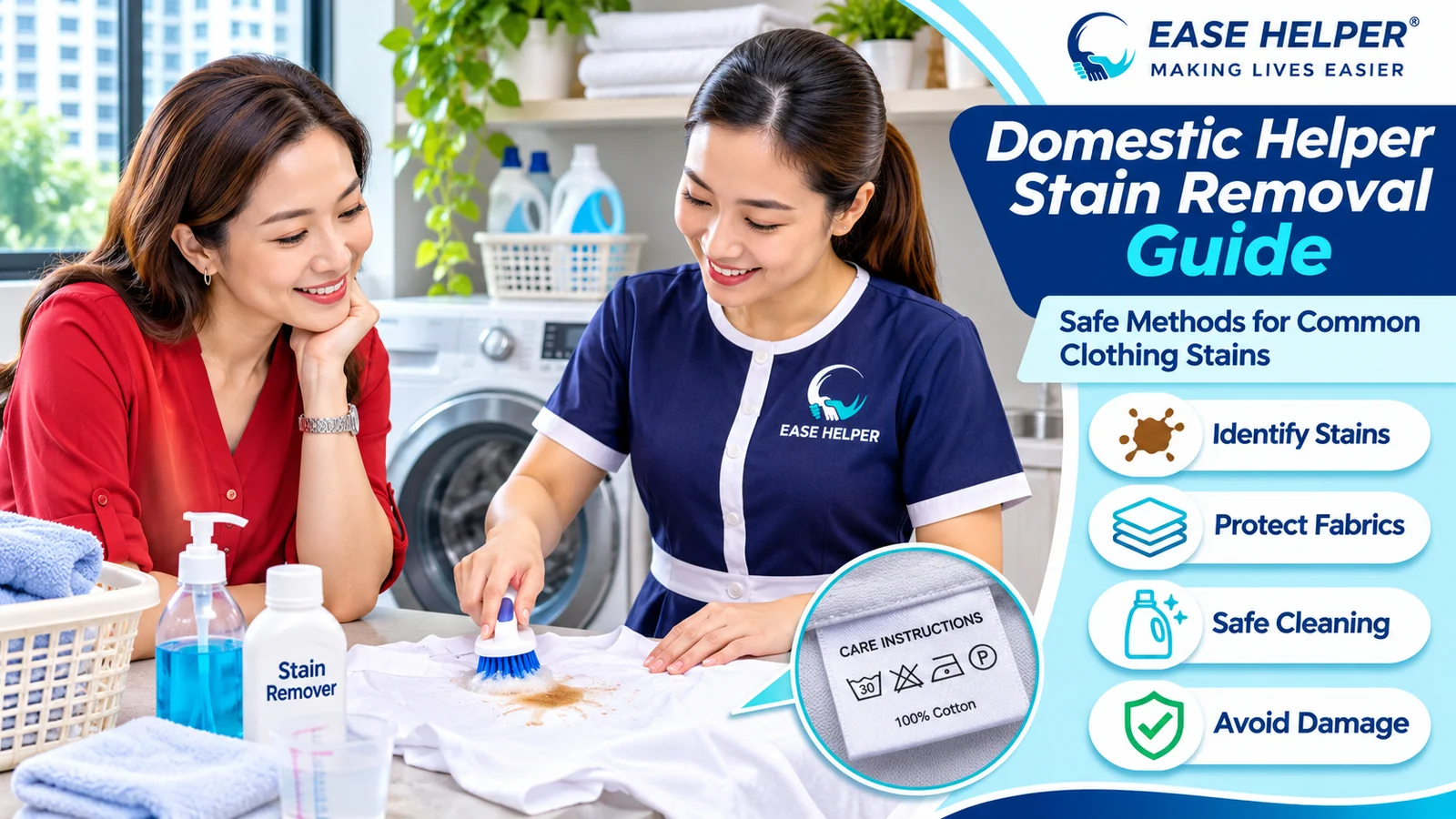
Domestic Helper Laundry Stain Removal Guide: Safe Methods for Common Clothing Stains

Executive Summary
Domestic helper stain removal training helps Singapore households protect clothing, prevent fabric damage and manage everyday laundry more effectively. Successful stain removal starts with identifying the stain, checking the garment’s care label and choosing a suitable cleaning method. This guide explains safe techniques for common stains, fabric-specific precautions, a practical laundry checklist and ways employers can train their domestic helpers to handle stained clothing confidently.
Why Domestic Helper Stain Removal Training Matters
Domestic helper stain removal training helps employers maintain clothing properly while reducing avoidable laundry mistakes. Everyday stains from food, drinks, cosmetics and household activities can become difficult to remove when treated incorrectly.
For example, hot water can make some protein-based stains harder to remove. Meanwhile, aggressive scrubbing may damage delicate fibres or spread a stain across the fabric.
Therefore, employers should explain which garments require special care, demonstrate approved cleaning products and establish a simple process for handling stains before washing.
1. Identify the Stain Before Starting Treatment
First, identify what caused the stain. Different substances respond to different cleaning methods. A technique suitable for coffee may not work well on oil or blood.
Common Household Stain Categories
- Food and drinks: Coffee, tea, sauces, fruit juice and chocolate.
- Oil and grease: Cooking oil, butter and oily food.
- Protein-based stains: Blood, milk and some food residues.
- Cosmetics: Foundation, lipstick and makeup.
- Outdoor stains: Mud, grass and dirt.
- Ink: Pen marks and certain stationery stains.
Ask your helper to report unfamiliar stains instead of experimenting with strong chemicals or repeatedly washing the garment.
2. Check Clothing Care Labels Before Removing Stains
Before applying any product, read the garment’s care label. This step helps prevent shrinking, colour loss, fabric distortion and other avoidable damage.
What to Check
- Whether the garment can be washed at home.
- The recommended washing temperature.
- Whether bleaching is permitted.
- Whether tumble drying is suitable.
- Whether the garment requires professional dry cleaning.
Also check the product label for fabric compatibility. When appropriate, test the stain remover on a hidden area and follow its instructions.
3. Follow a Safe Domestic Helper Stain Removal Routine
A consistent process makes stain removal easier to teach and reduces the risk of mistakes.
- Act promptly: Treat fresh stains when practical, following the garment’s care instructions.
- Remove excess material: Gently lift solids with a suitable tool without spreading the stain.
- Blot instead of rubbing: Use a clean cloth to absorb excess liquid.
- Check the fabric: Confirm the care label and identify any special restrictions.
- Apply a suitable treatment: Follow the product instructions and recommended contact time.
- Wash appropriately: Use the correct cycle, temperature and detergent.
- Inspect before drying: Check whether the stain remains before applying heat.
If the stain remains, reassess the treatment rather than repeatedly applying strong chemicals. For valuable garments, ask the employer whether professional cleaning is preferred.
4. Domestic Helper Laundry Stain Removal Guide by Stain Type
The following table provides general approaches for common washable fabrics. Always follow the garment and product care instructions first.
| Stain Type | Suggested First Step | Important Precaution |
|---|---|---|
| Coffee or tea | Blot the spill and rinse with cool water when the fabric permits. | Avoid rubbing the stain deeper into the fibres. |
| Cooking oil | Blot excess oil and pretreat with a fabric-safe laundry detergent. | Do not use excessive detergent or assume hot water is safe. |
| Blood | Rinse promptly with cold water when permitted. | Avoid hot water, which may set protein stains. |
| Chocolate | Remove excess material and treat with a suitable detergent. | Check for remaining residue before drying. |
| Makeup | Gently blot and use a fabric-compatible pretreatment. | Avoid harsh rubbing on delicate garments. |
| Mud | Allow thick mud to dry when appropriate, then gently brush away loose dirt. | Do not grind wet mud into the fabric. |
| Ink | Blot carefully and check whether a specialist product is suitable. | Some inks and fabrics require professional cleaning. |
| Fruit juice | Blot promptly and rinse according to the care label. | Check colourfastness before pretreatment. |
5. Handle White and Coloured Clothing Separately
White clothing and coloured garments may require different stain removal products and washing procedures.
White Clothing
- Check whether the care label permits bleach.
- Use only products suitable for the fabric.
- Follow the recommended dilution and application instructions.
- Avoid unnecessary chemical treatments on delicate fibres.
Coloured Clothing
- Choose a colour-safe product where appropriate.
- Test for colourfastness when recommended.
- Separate new or colour-bleeding garments.
- Avoid products that may fade or discolour the fabric.
Importantly, never mix bleach with ammonia, acids or other cleaning products. Keep chemicals in their original labelled containers.
6. Protect Delicate and Expensive Garments
Not every garment should undergo routine stain removal at home. Formalwear, silk blouses, wool garments and clothing with decorative finishes may require special attention.
Employers should identify these items during laundry training and explain which garments the helper may wash independently.
Special-Care Clothing Rules
- Follow dry-clean-only instructions.
- Do not apply stain remover without checking compatibility.
- Avoid vigorous scrubbing or wringing.
- Do not use high heat unless permitted.
- Ask the employer before treating unfamiliar expensive garments.
7. Use Laundry Chemicals Safely
Domestic helper stain removal training should include safe chemical handling. Some laundry products contain substances that can irritate the skin, eyes or respiratory system.
- Read the manufacturer’s instructions before use.
- Wear suitable protective gloves when directed.
- Use products in a well-ventilated area.
- Never mix different cleaning chemicals unless the manufacturer specifically instructs it.
- Store products securely away from children and pets.
- Never transfer chemicals into unlabelled food or drink containers.
If a chemical causes irritation or accidental exposure, stop using it and follow the product’s first-aid instructions. Seek medical assistance when necessary.
8. Avoid Common Laundry Stain Removal Mistakes
Many laundry problems arise from rushing or applying the same method to every garment.
| Common Mistake | Possible Consequence | Better Practice |
|---|---|---|
| Using hot water on every stain | Some stains may become harder to remove. | Check stain type and care label first. |
| Scrubbing aggressively | Fabric damage or spreading of stains. | Blot gently and use suitable pretreatment. |
| Mixing cleaning chemicals | Dangerous reactions or harmful fumes. | Use products separately as instructed. |
| Drying before checking | Heat may set remaining stains. | Inspect the garment after washing. |
| Using bleach on unsuitable fabrics | Discolouration or fibre damage. | Check garment and product labels. |
| Ignoring delicate clothing instructions | Shrinking or permanent damage. | Set aside special-care garments. |
9. Create a Household Laundry Stain Removal Checklist
A simple checklist helps domestic helpers follow the same procedure each time.
| Task | Checklist |
|---|---|
| Identify stain | Determine the likely source and whether the stain is fresh or dried. |
| Check garment | Read care instructions and check fabric type. |
| Choose product | Select a suitable stain remover and check its instructions. |
| Test if needed | Check colourfastness on a hidden area where appropriate. |
| Pretreat safely | Blot or apply treatment without excessive rubbing. |
| Wash | Use the recommended wash cycle and temperature. |
| Inspect | Check for remaining stains before drying. |
| Report problems | Inform the employer if the stain remains or fabric damage is suspected. |
10. How Employers Can Train Their Domestic Helper
Effective training involves demonstration, supervised practice and constructive feedback. Employers should avoid assuming that every helper has experience with the same washing machine, detergent or fabric types.
Practical Training Steps
- Show where laundry products and protective equipment are stored.
- Explain which garments require special care.
- Demonstrate how to read garment and cleaning product labels.
- Practise treating a simple stain on an ordinary washable garment.
- Explain when to ask for permission before using a product.
- Review the completed laundry and provide clear feedback.
Where language barriers exist, use pictures, short written instructions and practical demonstrations. Encourage questions and allow enough time for the helper to become familiar with household preferences.
11. Establish a Simple Laundry Routine
A reliable routine reduces last-minute washing and makes it easier to identify stains before they become more difficult to treat.
- Separate laundry according to colour, fabric and care requirements.
- Check pockets and inspect garments before washing.
- Identify stained clothing that requires pretreatment.
- Set aside delicate items for employer approval.
- Keep stain-removal products organised and labelled.
- Review garments after washing and before drying or ironing.
Employers can also provide a designated basket for stained clothing and another for special-care garments.
12. When Should a Helper Ask the Employer for Guidance?
Domestic helpers should not feel pressured to experiment when a stain is unfamiliar or the garment is valuable.
Ask the employer before treating expensive clothing, delicate fabrics, unidentified stains, garments with unclear care labels or items that have already been damaged.
Clear communication helps protect household belongings and prevents avoidable misunderstandings.
Frequently Asked Questions
1. What is the safest first step when removing a clothing stain?
Identify the stain, check the garment’s care label and gently remove excess material. Avoid aggressive rubbing or applying strong chemicals before confirming fabric compatibility.
2. Can domestic helpers use bleach to remove stains?
Only when the garment and product instructions permit it. Bleach is unsuitable for many fabrics and colours. Never mix bleach with other cleaning chemicals.
3. Should hot water be used for all clothing stains?
No. Hot water may make some stains, particularly protein-based stains, more difficult to remove. Always consider the stain type and the garment’s washing instructions.
4. What should a helper do if a stain remains after washing?
Inspect the garment before drying, review the care instructions and inform the employer when necessary. Avoid repeated harsh treatment, especially on delicate or valuable clothing.
5. How can employers teach stain removal effectively?
Demonstrate a simple routine, provide suitable products, identify special-care garments and use a written checklist. Supervised practice and clear feedback help build confidence and consistency.
Conclusion
Domestic helper stain removal training is an important part of maintaining household clothing safely. By identifying stains, checking care labels, using appropriate products and following a consistent laundry routine, domestic helpers can reduce avoidable fabric damage and manage everyday laundry more confidently.
Employers should provide clear instructions, demonstrate safe techniques and encourage helpers to ask questions when they encounter unfamiliar garments or difficult stains.
Looking for a Domestic Helper in Singapore?
EaseHelper helps Singapore families explore domestic helper options and find suitable support for their household needs. Browse available helper profiles and learn more about our placement services.
Explore EaseHelperDisclaimer: This article provides general household laundry guidance. Always follow garment care labels, cleaning product instructions and relevant safety precautions. Results vary by stain, fabric and product. Seek professional cleaning advice for valuable or delicate garments when appropriate.