

Blog
Domestic Helper Medication Safety in Singapore: Safe Storage, Reminders and Household Responsibilities

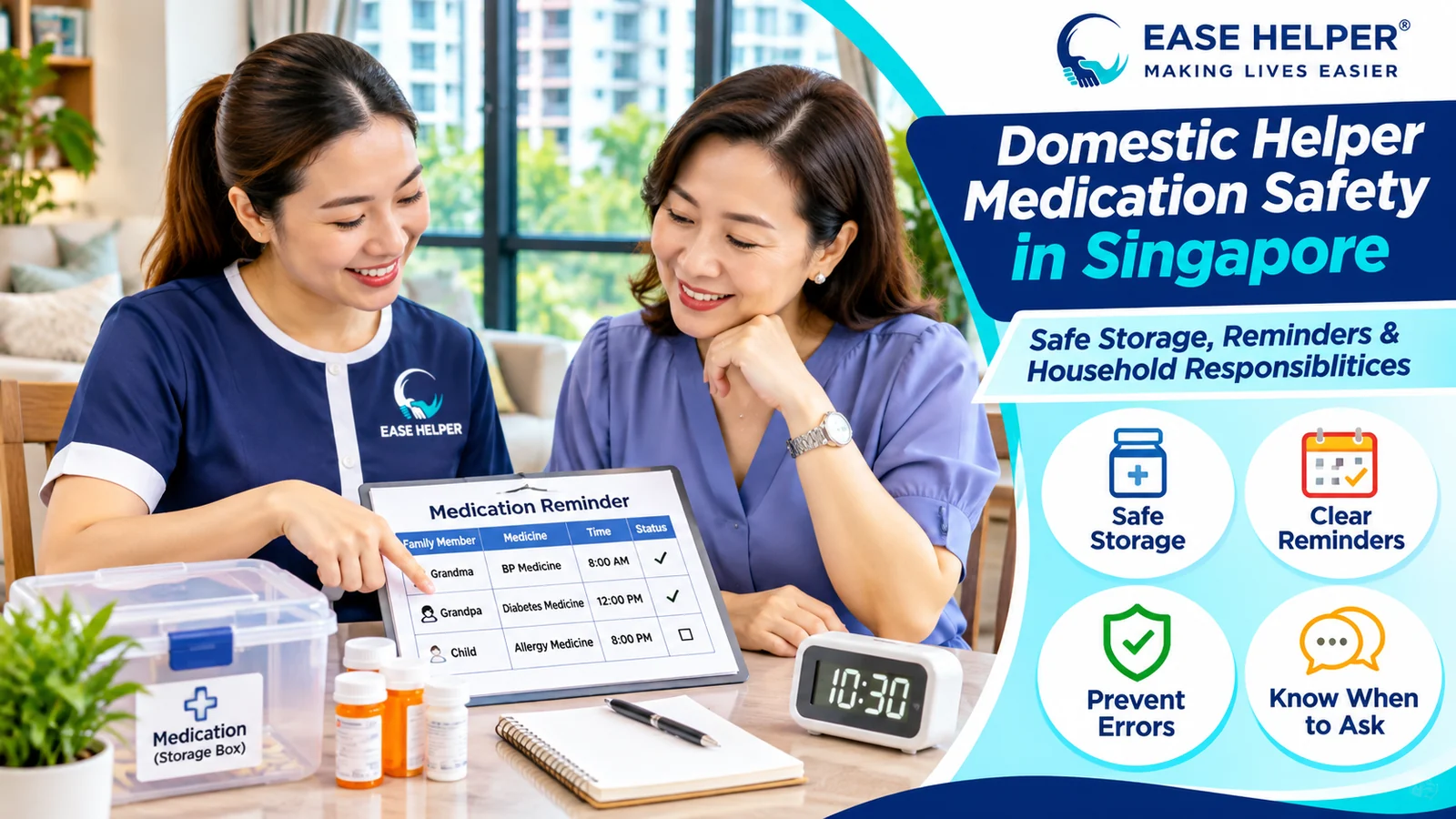
Domestic helper medication safety is an important consideration for Singapore families, especially when a household includes young children, elderly parents or family members with ongoing medical needs. Domestic helpers may assist with daily routines, but medication mistakes can have serious consequences.
Employers should therefore establish clear responsibilities, keep medicines properly organised and explain when a helper must contact a parent, caregiver or healthcare professional. A domestic helper should never be expected to diagnose a condition, select a medicine or independently change a prescribed dose.
This practical guide explains how Singapore employers can introduce safer household medication routines while respecting the limits of a domestic helper’s role.
Executive Summary
Domestic helper medication safety begins with clear instructions, safe storage and appropriate supervision. Employers should keep medicines in their original labelled packaging, maintain an accurate medication list and explain who is responsible for each task.
Helpers may assist with reminders and other agreed non-clinical tasks. Any assistance involving actual medication administration should follow clear instructions from the responsible caregiver and relevant healthcare professional, with suitable training and supervision.
If a dose is uncertain, missed or possibly given twice, the helper should stop and contact the responsible person or healthcare professional rather than guessing.
1. Why Domestic Helper Medication Safety Matters
Many Singapore households manage medicines for more than one family member. These may include prescribed tablets, inhalers, creams, eye drops and other treatments.
Problems can arise when several medicines look similar, instructions change or family members assume someone else has completed a task.
Common Household Medication Risks
- Confusing medicines belonging to different people.
- Using an outdated medication schedule.
- Giving a dose twice because nobody recorded the first dose.
- Using the wrong measuring device for a liquid medicine.
- Storing medicines where children can reach them.
- Using expired or improperly stored products.
- Failing to communicate a missed dose or possible side effect.
Employers can reduce these risks through simple, written procedures and clear communication.
2. Define the Domestic Helper’s Medication Responsibilities
Before assigning any medication-related task, employers should distinguish routine household assistance from clinical decision-making.
Tasks a Helper May Assist With
- Reminding an adult that it is time to take a prescribed medicine.
- Informing the employer when medication supplies appear low.
- Keeping an approved reminder schedule visible to authorised caregivers.
- Reporting that a family member has refused or missed a medicine.
- Helping maintain a clean and organised storage area.
- Accompanying a family member to a medical appointment when arranged by the employer.
Tasks Requiring Special Caution
Preparing doses, administering medicines, using medical devices or assisting a person who cannot manage their own medication may require individual assessment, healthcare guidance and practical training.
A helper should not independently:
- Choose which medicine a family member should take.
- Increase, reduce or stop a prescribed dose.
- Substitute one medicine for another.
- Crush tablets or open capsules without professional confirmation.
- Give another person’s prescription medicine.
- Decide how to compensate for a missed dose.
- Administer injections or perform other clinical procedures without appropriate professional arrangements.
Employer reminder: Household instructions do not replace medical advice. Ask the prescribing clinician or pharmacist which tasks are appropriate for the family member’s condition and the helper’s training.
3. Store Medicines Safely at Home
Safe storage is one of the most effective ways to prevent accidental medication errors.
Practical Storage Rules
- Keep medicines in their original packaging with readable labels.
- Follow the temperature and storage instructions for each product.
- Keep medicines away from children and unauthorised access.
- Separate medicines belonging to different household members.
- Protect medicines from excessive heat, moisture and direct sunlight when required.
- Check expiry dates regularly.
- Store refrigerated medicines according to the pharmacist’s instructions.
Do not assume that every medicine belongs in the refrigerator. Some products require room-temperature storage, while others have specific refrigeration requirements.
4. Create a Clear Household Medication Information Sheet
A written information sheet can help prevent confusion between caregivers. However, the employer should prepare and verify it using current prescription labels and professional instructions.
Information to Record
- Name of the family member.
- Medicine name as shown on the label.
- Prescribed instructions and timing.
- Relevant storage requirements.
- Responsible caregiver or authorised person.
- Important instructions from the healthcare professional.
- Contact details for questions or urgent concerns.
- Date when the information was last reviewed.
Keep medical information private and accessible only to people who genuinely need it for caregiving.
5. Use Medication Reminders Without Guessing
Some adults manage their own medicines but appreciate reminders. A domestic helper may support this routine when the arrangement is clear and appropriate.
Good Reminder Practices
- Use the latest approved schedule.
- Give reminders at the agreed times.
- Confirm whether the responsible person has taken the medicine when appropriate.
- Report refusal or uncertainty promptly.
- Never assume that an unrecorded dose was missed.
- Ask the employer or healthcare professional what to do if the schedule changes.
Reminder alarms can help, but they do not replace communication between caregivers.
6. Prevent Double Dosing and Missed Medication
When multiple people assist with caregiving, communication becomes especially important.
For example, a parent may administer a medicine before leaving for work, while the helper believes the dose remains outstanding.
Preventing Communication Errors
- Identify who is responsible for each medication task.
- Use one agreed recording method.
- Record completed tasks promptly and accurately.
- Communicate any changes before the next scheduled dose.
- Never administer a dose based only on an assumption.
If nobody can confirm whether a dose was taken, contact the responsible caregiver or pharmacist for advice. Do not automatically give another dose.
7. Medication Safety When Caring for Children
Children may be particularly vulnerable to medication errors because appropriate treatment and dosing depend on factors such as age, weight, medical condition and the specific product.
Employers should retain clear responsibility for decisions about children’s medicines.
Important Childcare Precautions
- Keep all medicines out of children’s reach.
- Do not give adult medicines to children unless specifically prescribed.
- Never estimate a child’s medicine dose.
- Use only the measuring device specified for the medicine.
- Do not give leftover prescriptions from an earlier illness without professional advice.
- Report symptoms, refusals and possible adverse reactions promptly.
A helper should never be expected to decide which fever, cough or allergy medicine a child needs.
8. Medication Safety When Supporting Elderly Family Members
Some elderly people take several medicines or have difficulty remembering instructions. Others may have swallowing problems, impaired vision or cognitive difficulties.
These situations call for individual assessment rather than a standard household routine.
Helpful Employer Preparations
- Confirm the current medication list with the healthcare team.
- Clarify which tasks the elderly person can perform independently.
- Provide clear instructions for reminders and reporting.
- Explain what to do if a person refuses medication.
- Arrange professional guidance for swallowing or administration difficulties.
- Keep emergency contacts accessible.
Do not crush tablets to make swallowing easier unless a pharmacist or prescriber confirms that doing so is safe for the specific medicine.
9. Understand Medication Labels and Instructions
Medication labels may include instructions about timing, food, storage and precautions. A helper who does not understand the label should ask for clarification.
What Employers Should Explain
- Which family member the medicine belongs to.
- Who is responsible for giving or taking it.
- What the prescribed label says.
- Which instructions require special attention.
- Who to contact if the label is unclear.
Employers can use translated explanations or demonstrations when language barriers exist. However, they should not simplify medical instructions in a way that changes their meaning.
10. Keep Medicines Separate From Household Cleaning Products
Medicines should not be stored alongside detergents, disinfectants or other potentially hazardous household products.
Similarly, never transfer medication into unlabelled food containers or bottles.
Safe Organisation Tips
- Use a dedicated, secure medicine storage area.
- Keep original labels attached.
- Separate personal medication from cleaning supplies.
- Avoid leaving tablets on kitchen counters.
- Check storage areas during regular household organisation.
These steps reduce the risk of accidental ingestion and confusion.
11. What to Do When a Medication Error Is Suspected
Medication mistakes should be addressed promptly. The appropriate response depends on the medicine, amount, person affected and symptoms.
Immediate Steps
- Stop further medication-related action until the situation is clarified.
- Inform the employer or responsible caregiver immediately.
- Keep the medicine packaging and relevant records available.
- Contact a healthcare professional or appropriate urgent medical service for advice.
- Follow professional instructions rather than attempting a home remedy.
- Record what happened accurately after immediate safety needs are addressed.
For severe symptoms, collapse, breathing difficulty or another medical emergency in Singapore, call 995 for an ambulance.
Important: Do not induce vomiting or attempt to reverse a suspected overdose without professional instructions. A person may need urgent assessment even if symptoms have not appeared.
12. Domestic Helper Medication Safety Checklist
| Safety Area | Employer’s Responsibility | Helper’s Role |
|---|---|---|
| Medication list | Maintain accurate, current information. | Refer to approved information when relevant. |
| Storage | Provide secure, appropriate storage. | Keep the area organised as instructed. |
| Reminders | Set the agreed schedule and responsibilities. | Give agreed reminders and report concerns. |
| Dose decisions | Follow the healthcare professional’s instructions. | Never guess or change a dose. |
| Missed doses | Obtain professional advice when necessary. | Report the issue without improvising. |
| Children’s medicines | Determine appropriate care with a clinician. | Follow only authorised, suitable tasks. |
| Adverse reactions | Arrange appropriate medical assessment. | Report symptoms immediately. |
| Emergency response | Provide emergency instructions and contacts. | Seek help promptly and follow the plan. |
13. Train Your Domestic Helper Through Practical Demonstrations
Training should focus on preventing mistakes, recognising uncertainty and communicating clearly.
A Simple Training Approach
- Explain: Describe the helper’s permitted responsibilities.
- Show: Identify the correct storage area and approved information sheet.
- Demonstrate: Practise using a reminder or reporting system.
- Confirm: Ask the helper to explain what to do when instructions are unclear.
- Review: Update the routine when prescriptions or household needs change.
If actual medication administration is contemplated, arrange appropriate professional guidance and ensure the task is suitable for the helper’s competence and the patient’s needs.
14. Establish a Medication Communication Routine
Regular communication helps prevent misunderstandings, especially when different family members share caregiving responsibilities.
Useful Communication Practices
- Identify one primary person for medication questions.
- Communicate prescription changes promptly.
- Review written schedules after medical appointments.
- Encourage immediate reporting of uncertainty.
- Keep emergency contact information current.
- Never criticise a helper for seeking clarification before acting.
Employers should also ensure that instructions remain manageable and do not exceed the helper’s training or responsibilities.
15. Common Medication Safety Mistakes to Avoid
| Common Mistake | Safer Alternative |
|---|---|
| Leaving medicines in unlabelled containers | Retain original packaging and labels. |
| Guessing a missed dose | Ask the responsible caregiver or pharmacist. |
| Using an old prescription schedule | Maintain a current, verified medication list. |
| Storing medicines within children’s reach | Use secure storage. |
| Crushing tablets without checking | Seek professional confirmation first. |
| Assuming another caregiver gave a dose | Use an agreed recording system. |
| Ignoring possible adverse reactions | Seek timely medical advice. |
| Asking a helper to make medical decisions | Keep clinical decisions with qualified professionals. |
16. Respect Privacy and Professional Boundaries
Medical information is personal. Employers should share only the information necessary for the helper’s agreed responsibilities.
A helper should not be asked to photograph medical records, share health information publicly or discuss a family member’s condition with unrelated people.
At the same time, the helper needs enough accurate information to carry out authorised tasks safely and recognise when assistance is required.
17. Review the Medication Routine After Healthcare Appointments
Prescriptions can change following medical reviews, hospital discharge or adjustments to treatment.
Whenever this happens, the employer should confirm the new instructions and replace outdated schedules.
Post-Appointment Review
- Check whether any medicine has been started or stopped.
- Confirm changes to timing or storage.
- Update the medication information sheet.
- Remove outdated instructions from the household routine.
- Clarify responsibilities with everyone involved in caregiving.
Do not assume that a medicine should continue simply because it remains in the home.
18. Build a Safer Household Medication Routine
Domestic helper medication safety depends on clear boundaries, appropriate training and reliable communication. The objective is not to turn a domestic helper into a healthcare professional.
Instead, employers should create a system in which medicines are stored safely, reminders are accurate, instructions are understood and potential errors are reported without delay.
With these safeguards, domestic helpers can provide appropriate household support while employers and healthcare professionals retain responsibility for medical decisions.
Frequently Asked Questions
1. Can a domestic helper give medicine to a child in Singapore?
Employers should not assume that medication administration is a routine childcare task. The arrangement depends on the child’s needs, the medicine, clear caregiver authorisation and appropriate healthcare guidance and training. The helper must not independently choose or adjust treatment.
2. Can a domestic helper remind an elderly person to take medicine?
Yes, an agreed reminder may be a suitable non-clinical support task when the elderly person manages their own medication. More complex assistance requires individual assessment and appropriate guidance.
3. What should a helper do if a family member misses a medication dose?
Inform the responsible caregiver and obtain advice from the pharmacist or prescribing clinician when needed. Do not automatically double the next dose or change the schedule.
4. How should medicines be stored in a Singapore household?
Follow each product’s labelled storage instructions, retain original packaging and keep medicines securely away from children. Some medicines require refrigeration, while others do not.
5. What should a domestic helper do if a medication mistake happens?
Report it immediately, preserve the relevant medicine information and seek appropriate medical advice. Call 995 for a medical emergency in Singapore. Do not guess how to correct the mistake.
Looking for a Domestic Helper in Singapore?
EaseHelper helps Singapore families explore domestic helper placement options based on their household needs. Clear expectations, practical training and appropriate professional support are especially important when a household includes children or elderly family members.
Explore EaseHelper ServicesDisclaimer: This article provides general household safety information and is not medical advice or a substitute for professional training. Medication decisions, administration methods and responses to errors should follow instructions from qualified healthcare professionals. Individual care needs vary. Seek urgent medical assistance when necessary.