

Monthly Archives: September 2026

Domestic Helper and Pet Care in Singapore: What Employers Should Know

Domestic helper pet care in Singapore requires clear instructions, suitable training and safe routines. This guide explains how employers can introduce dog walking, cat care, feeding, hygiene and emergency procedures while considering the helper's experience, comfort and other household responsibilities.

Domestic Helper Grocery Shopping in Singapore: Budgeting, Planning and Practical Tips
Domestic helper grocery shopping in Singapore is easier with clear lists, realistic budgets and proper training. This guide helps employers explain supermarket shopping, price comparisons, payment methods, receipt handling, food safety and storage. Discover practical ways to reduce shopping mistakes and improve everyday household routines.
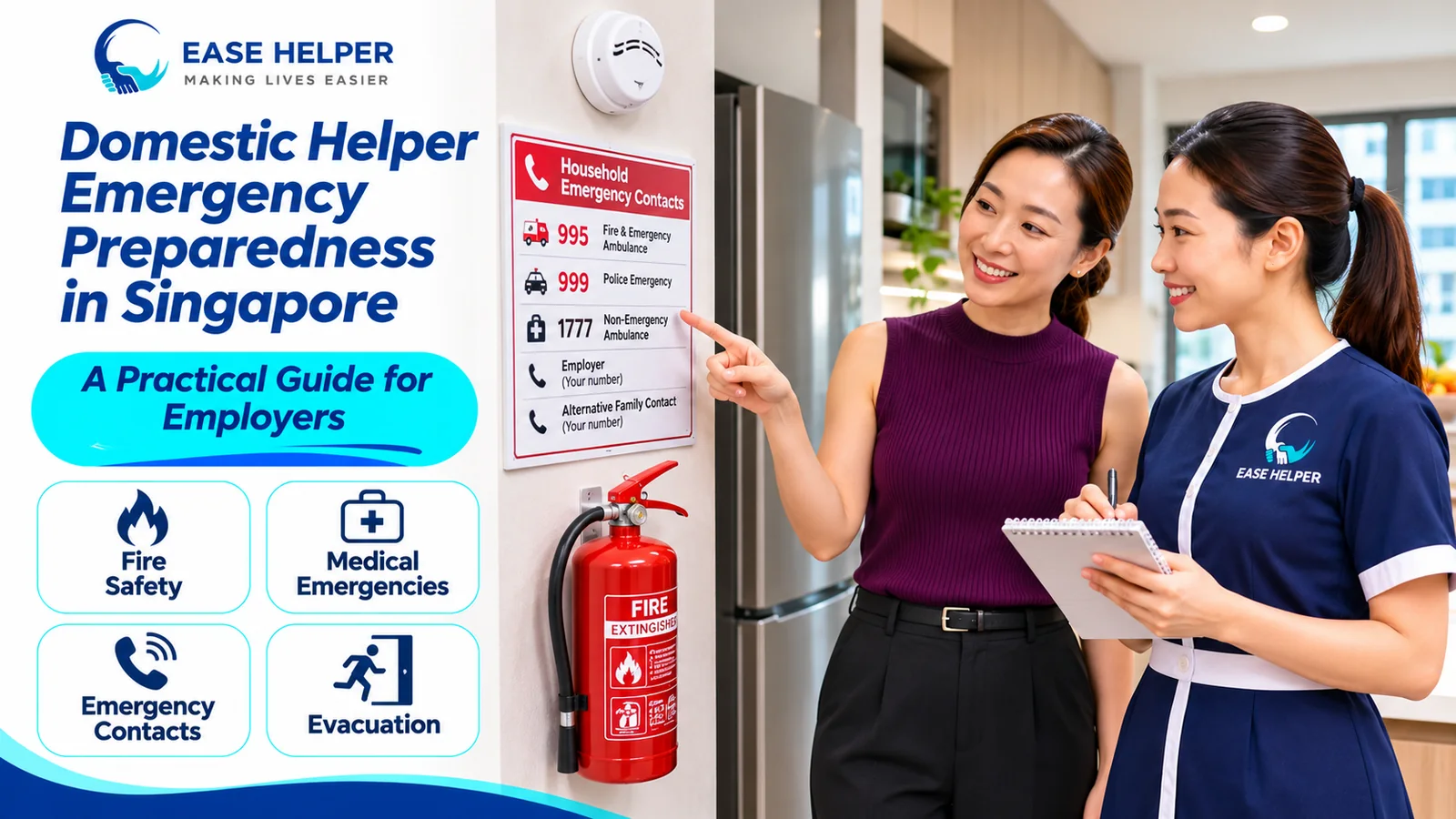
Domestic Helper Emergency Preparedness in Singapore: A Practical Guide for Employers
Domestic helper emergency preparedness in Singapore helps households respond safely to unexpected situations. This practical guide covers fire safety, medical emergencies, emergency contact numbers, gas leaks, evacuation planning and childcare or elderly care incidents. Learn how to train your domestic helper and prepare a clear household emergency plan.

Domestic Helper and Family Travel: What Singapore Employers Should Prepare
Planning overseas travel with your domestic helper? Singapore employers should review visa requirements, work authorisation, passport validity, insurance, accommodation and rest arrangements before departure. This guide explains practical steps for travelling with a domestic helper, including childcare, elderly care, emergency planning and Singapore re-entry considerations.

Household Inventory Management for Domestic Helpers in Singapore: A Practical Guide
Household inventory management helps Singapore families organise groceries, cleaning products and everyday essentials. This practical guide explains how employers can train domestic helpers to track supplies, check expiry dates, manage shopping lists and reduce unnecessary spending. Discover a simple checklist and useful storage tips.
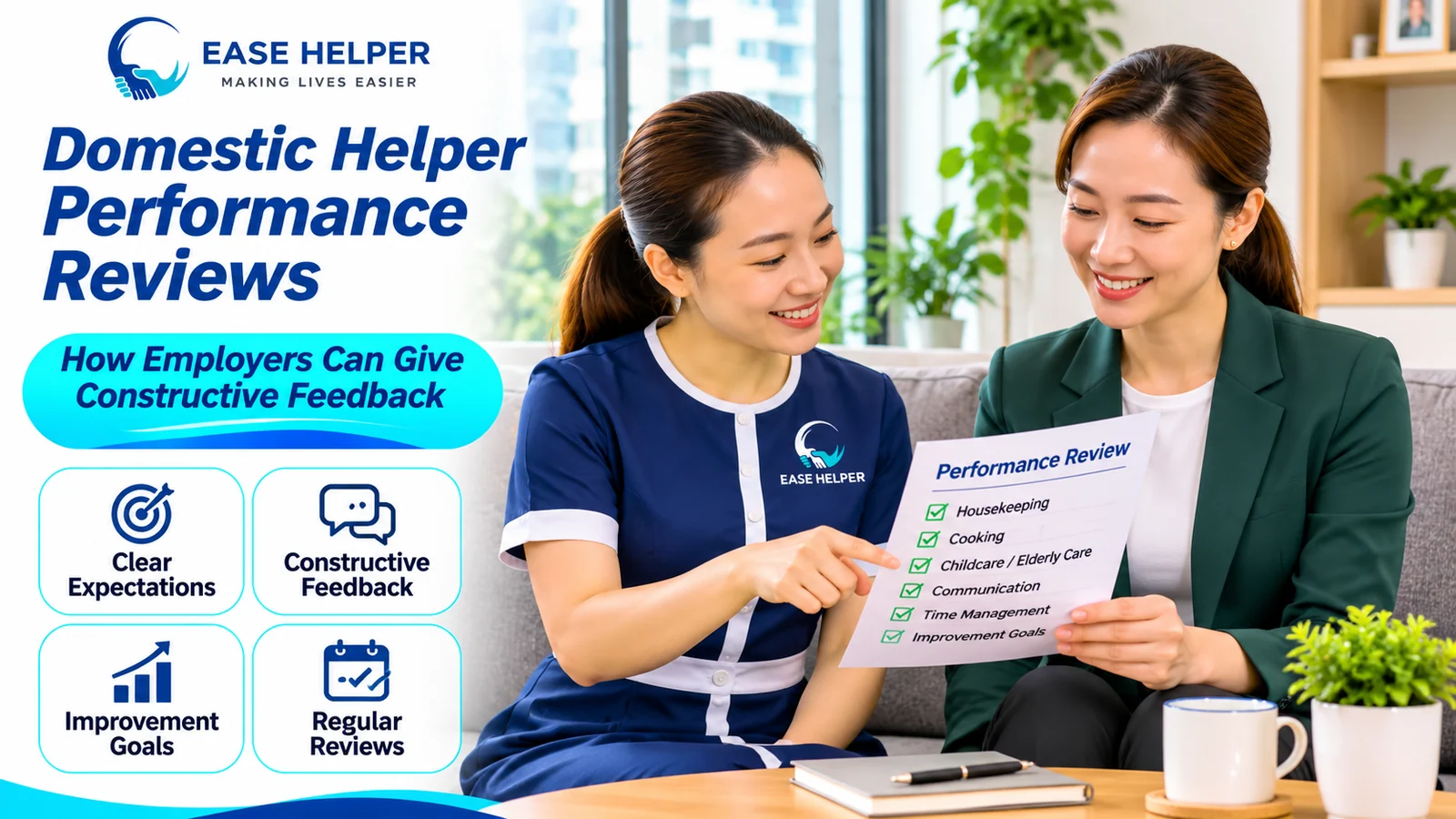
Domestic Helper Performance Reviews in Singapore: A Practical Guide for Employers
Domestic helper performance reviews can help Singapore employers communicate expectations, recognise good work and address recurring problems constructively. This guide explains how to conduct fair reviews, use a simple evaluation checklist, set realistic improvement goals and maintain a respectful working relationship.
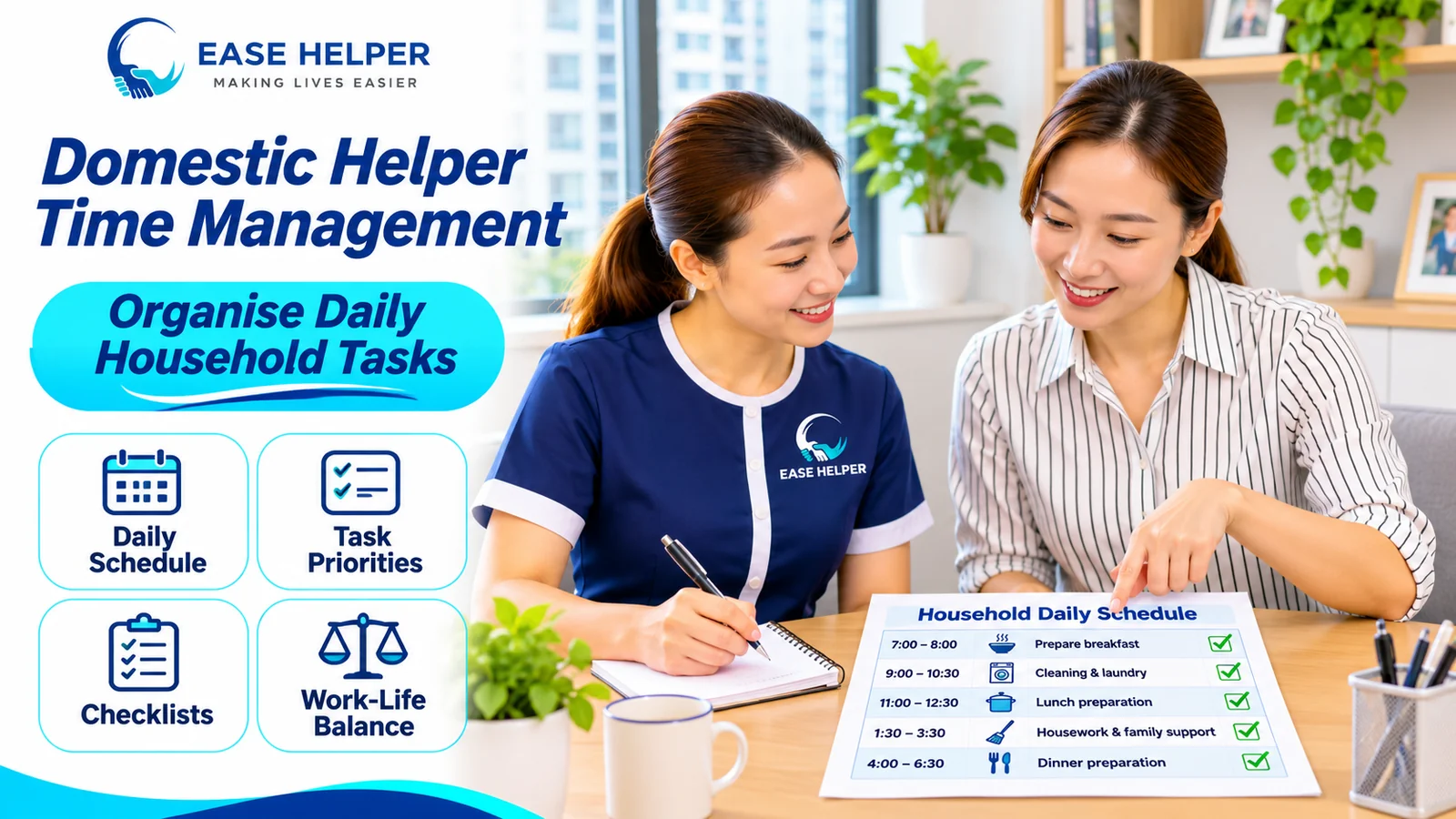
Domestic Helper Time Management in Singapore: How to Organise Daily Household Tasks
Effective domestic helper time management helps Singapore families organise daily household responsibilities while maintaining realistic workloads. Discover practical daily schedules, cleaning and cooking priorities, childcare and elderly care considerations, task checklists, and communication tips that support a balanced, productive household routine.

Domestic Helper Communication Barriers in Singapore: How Employers Can Improve Understanding
Communication barriers between employers and domestic helpers can lead to unnecessary misunderstandings. This practical Singapore guide explains how to give clearer instructions, overcome language differences, use visual aids and translation tools, provide constructive feedback and build better two-way communication for safer, smoother household routines.
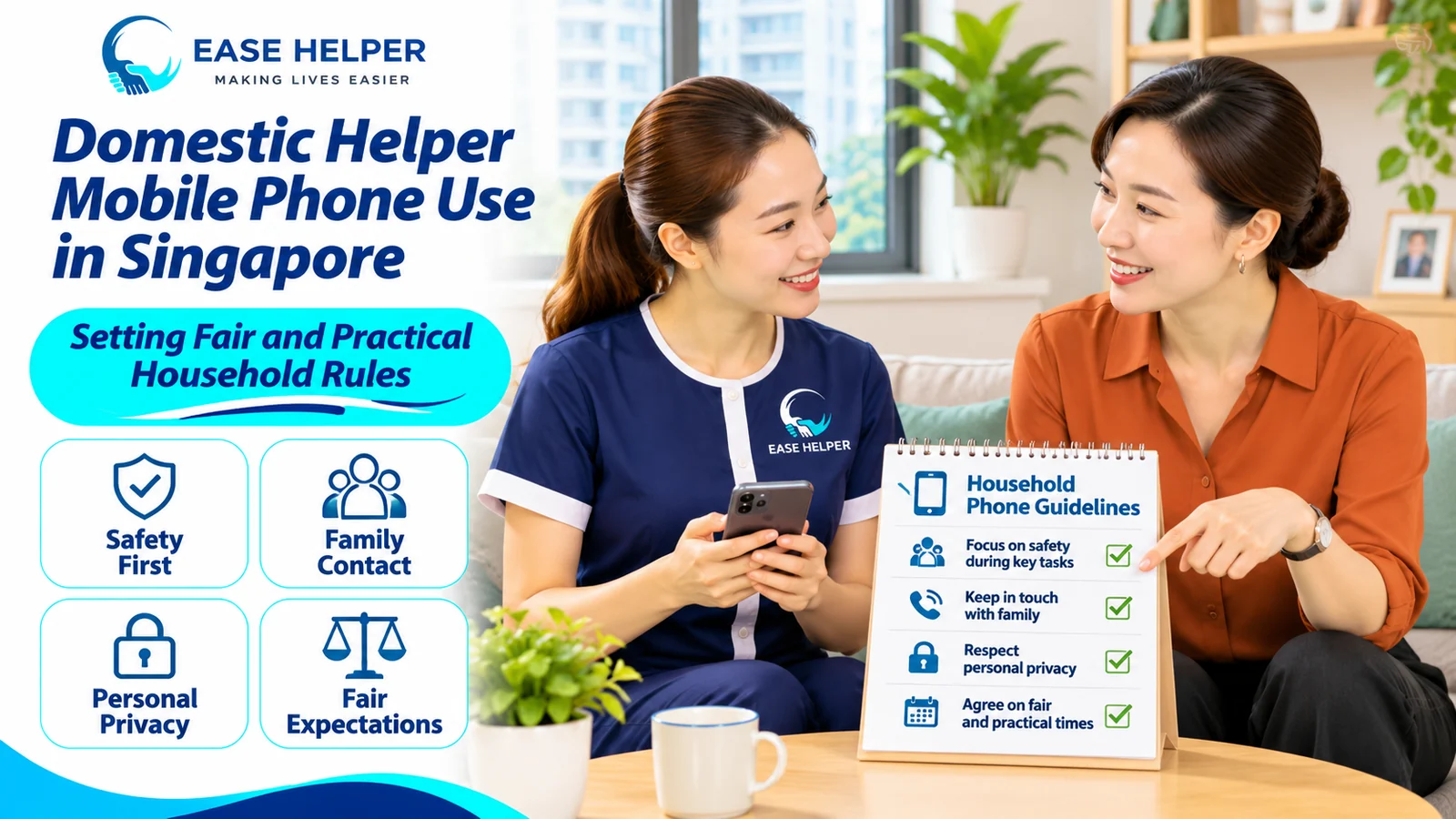
Domestic Helper Mobile Phone Use in Singapore: Setting Fair and Practical Household Rules
Setting clear mobile phone expectations can help Singapore employers and domestic helpers avoid unnecessary disagreements. This guide explains how to balance household safety, work responsibilities, family communication, personal privacy and rest time while creating practical rules that both parties understand.
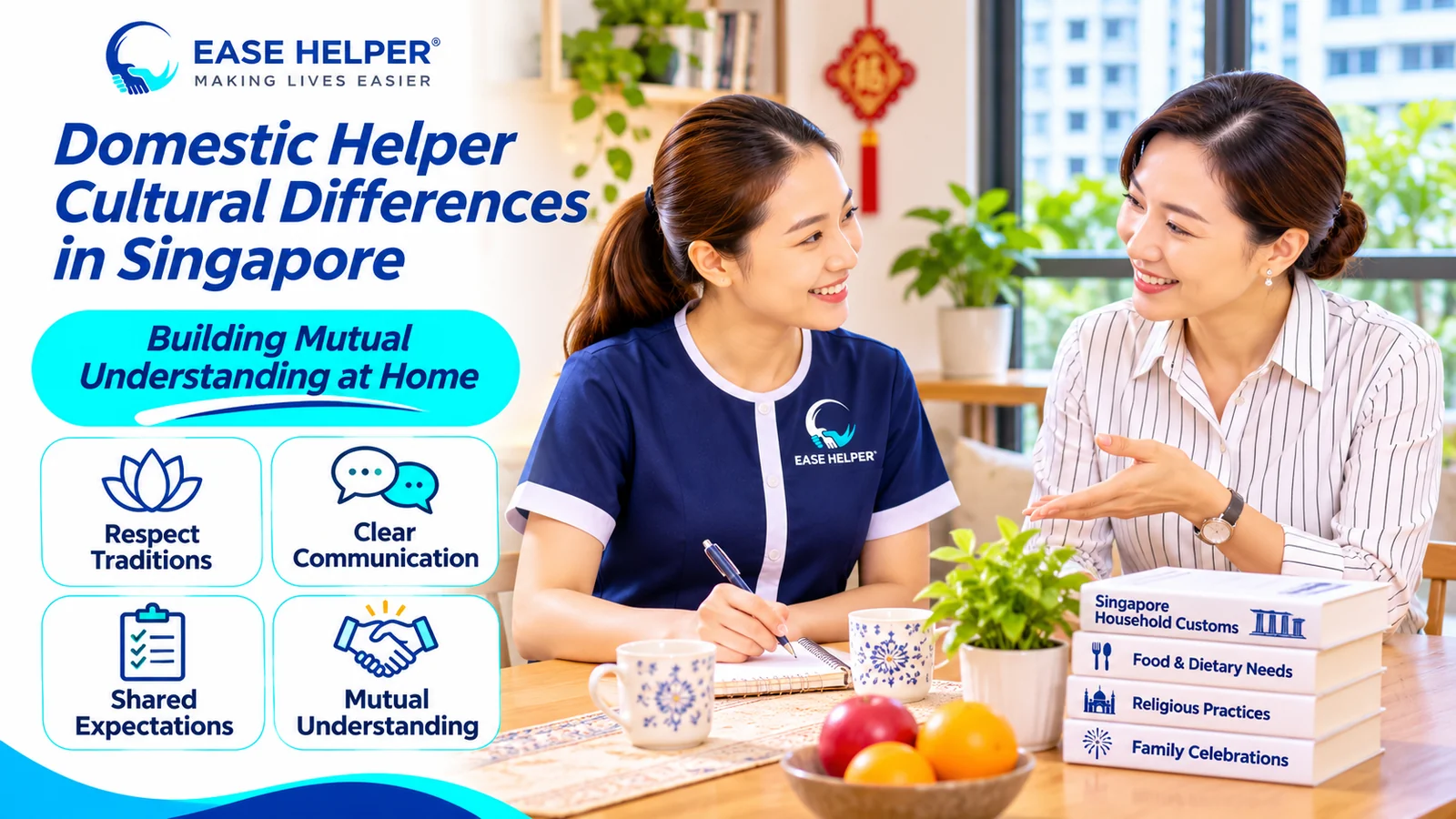
Domestic Helper Cultural Differences in Singapore: Building Mutual Understanding at Home
Cultural differences between Singapore employers and domestic helpers can affect communication, food preferences, religious practices and household routines. This practical guide explains how both parties can respect individual differences, clarify expectations and resolve misunderstandings to build a positive and professional working relationship.