
Blog
Domestic Helper Emergency Preparedness in Singapore: A Practical Guide for Employers

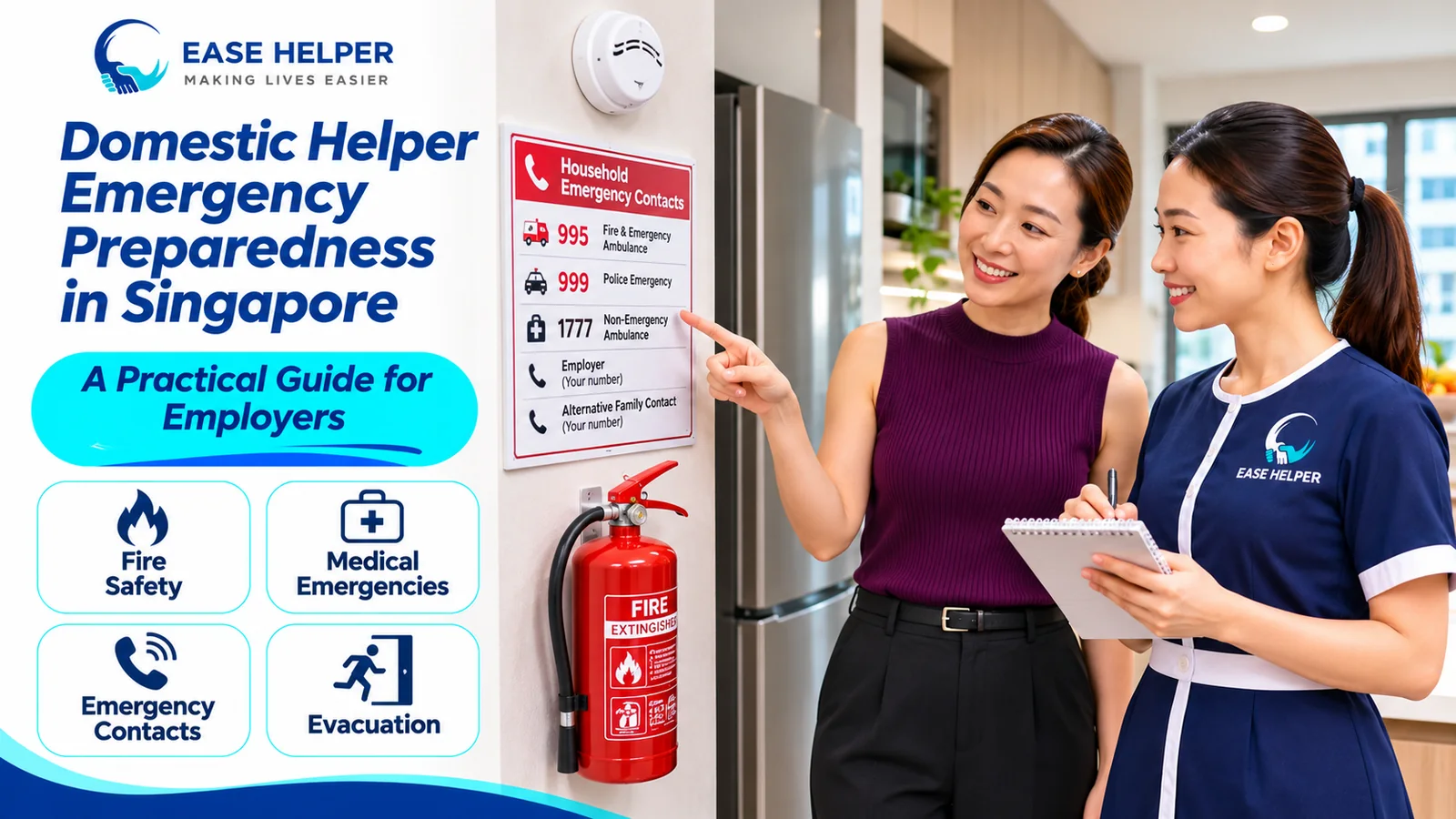
Domestic helper emergency preparedness in Singapore is essential for households that rely on domestic helpers for childcare, elderly care, cooking and everyday responsibilities. Emergencies can happen unexpectedly, particularly when employers are away from home.
Therefore, employers should explain how to recognise danger, contact emergency services and respond safely. A clear household emergency plan helps domestic helpers act promptly without taking unnecessary risks.
This guide explains practical emergency procedures, important Singapore contact numbers and training steps that employers can introduce during the first week of employment.
Executive Summary
Domestic helper emergency preparedness in Singapore starts with clear emergency contacts, evacuation routes and basic safety training. Employers should explain what to do during fires, medical emergencies, gas leaks, household accidents and other urgent situations.
In Singapore, call 995 for fire or emergency ambulance services and 999 for urgent police assistance. Employers should also explain when to contact family members, where to evacuate and how to protect children or elderly residents without placing anyone in additional danger.
1. Why Emergency Preparedness Matters for Domestic Helpers
Domestic helpers may be alone with children, elderly parents or other household members during an emergency. Consequently, they need clear instructions before a dangerous situation occurs.
For example, a helper should know how to respond if an elderly person collapses, a cooking fire starts or a child becomes seriously unwell.
However, employers should not expect a helper to perform medical or rescue procedures without appropriate training.
Key Emergency Preparedness Goals
- Recognise situations requiring urgent assistance.
- Know the correct Singapore emergency numbers.
- Understand the household evacuation route.
- Locate emergency supplies and important contacts.
- Communicate essential information clearly.
- Protect personal safety while assisting household members.
Above all, safety should take priority over protecting belongings or completing household duties.
2. Important Emergency Numbers in Singapore
Employers should display essential contact numbers in an accessible location. Additionally, they should save the numbers on the helper’s phone where practical.
| Emergency or Service | Contact | When to Use It |
|---|---|---|
| Fire and emergency ambulance | 995 | Fires, life-threatening medical emergencies and urgent rescue situations. |
| Police emergency | 999 | Immediate police assistance for serious threats or crimes in progress. |
| Non-emergency ambulance | 1777 | Non-emergency ambulance arrangements; service charges may apply. |
| Employer | Household-specific number | Urgent household updates and instructions. |
| Alternative family contact | Household-specific number | When the employer cannot be reached. |
| Building security | Where applicable | Condominium or building-related assistance. |
Important: During a life-threatening emergency, contact the appropriate emergency service immediately. Do not delay the call while waiting for the employer to answer.
For current emergency guidance, visit the Singapore Civil Defence Force and the Singapore Police Force.
3. Create a Household Emergency Contact Sheet
A written contact sheet helps domestic helpers find essential information quickly. Therefore, employers should keep it in a practical location, such as a kitchen noticeboard.
Information to Include
- Full residential address, including unit number and postal code.
- Employer’s telephone number.
- Alternative family contact.
- Emergency numbers 995 and 999.
- Relevant medical information for household members.
- Building security contact, if applicable.
- Evacuation meeting point.
- Location of the first-aid kit.
Furthermore, employers should practise explaining the address aloud. Emergency operators may need the exact location before dispatching assistance.
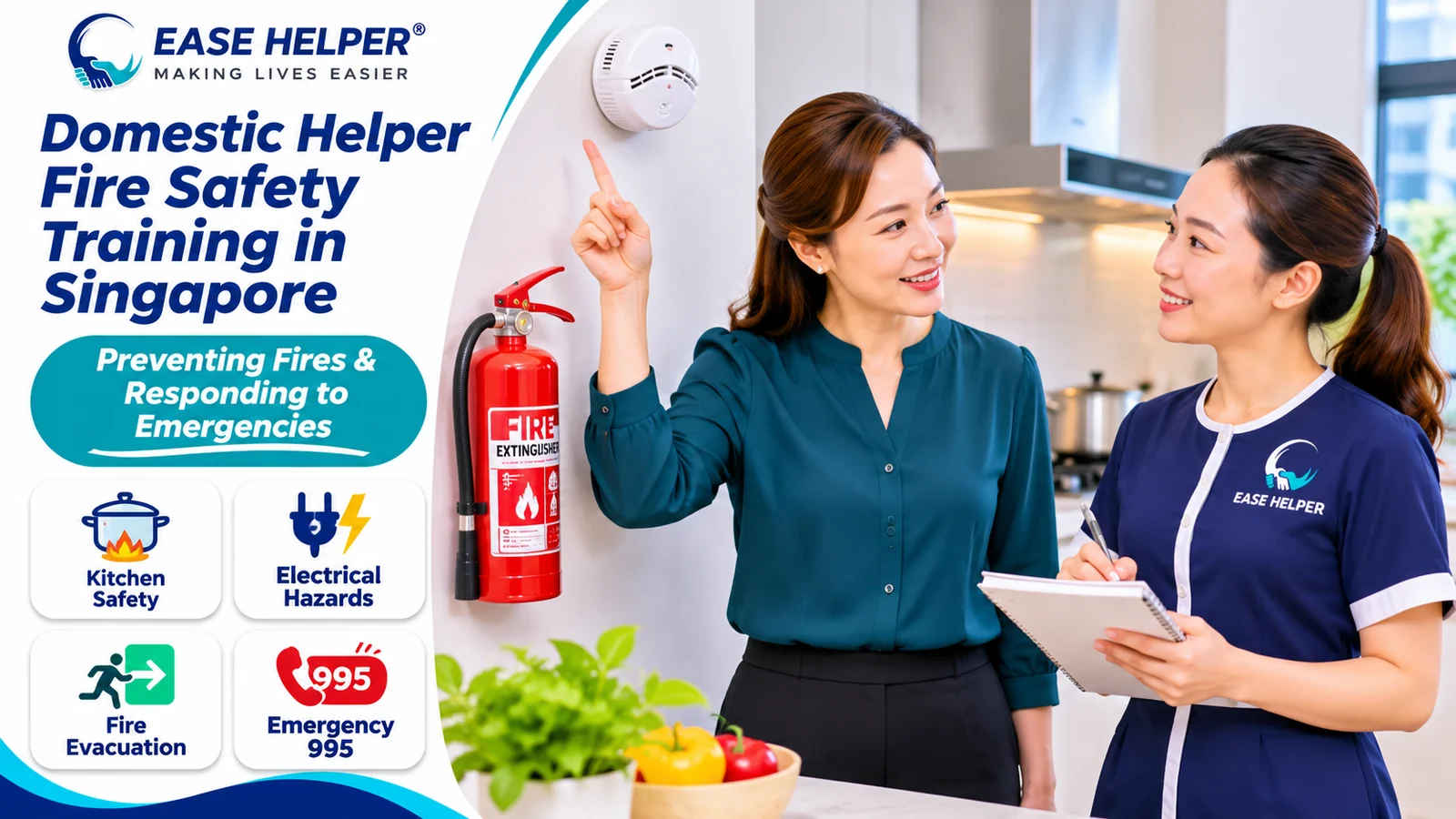
4. Fire Safety Training for Domestic Helpers
Cooking, electrical appliances and household equipment can create fire risks. Consequently, domestic helpers should understand basic fire prevention and evacuation procedures.
Fire Prevention Practices
- Never leave active cooking unattended.
- Keep combustible items away from heat sources.
- Avoid overloading electrical sockets.
- Switch off appliances when appropriate.
- Report damaged electrical cords or unusual burning smells.
- Keep escape routes clear.
What to Do During a Fire
- Alert people nearby immediately.
- Leave the dangerous area using a safe escape route.
- Call 995 when safe to do so.
- Use stairs rather than lifts during a fire evacuation.
- Do not re-enter a burning or smoke-filled building.
- Follow SCDF instructions and building emergency procedures.
Although suitable fire extinguishers may be available, employers should not expect an untrained helper to fight a fire. Evacuation and personal safety come first.
5. What to Do if There Is a Gas Leak
A suspected gas leak requires immediate caution. For example, a strong gas smell or unusual hissing sound may indicate a problem.
Therefore, domestic helpers should know how to leave the area safely and obtain assistance.
Basic Gas Leak Precautions
- Do not ignite flames or smoke.
- Avoid operating electrical switches or appliances in the affected area.
- Do not use equipment that may create sparks.
- Leave the affected area promptly.
- Warn other household members.
- Contact emergency services from a safe location when necessary.
- Do not return until the area has been declared safe.
Additionally, employers should explain any appliance-specific safety instructions. However, helpers should not attempt repairs or take unnecessary risks.
6. Medical Emergencies: Recognising Warning Signs
Domestic helpers may assist children, elderly residents or family members with medical conditions. Therefore, employers should explain which symptoms require urgent help.
Examples of Serious Warning Signs
- Difficulty breathing.
- Unconsciousness or unresponsiveness.
- Severe chest pain.
- Sudden weakness or signs of stroke.
- Severe uncontrolled bleeding.
- Serious injury after a fall.
- Seizures or other severe medical symptoms.
When a life-threatening emergency is suspected, call 995 promptly. Follow the emergency operator’s instructions.
Furthermore, employers should provide relevant information about known medical conditions, allergies and emergency care plans where necessary for caregiving.
7. First Aid: Know the Limits of Training
Basic first-aid knowledge can be useful. However, incorrect treatment may worsen an injury.
Consequently, employers should consider appropriate first-aid training rather than relying on informal instructions alone.
Practical First-Aid Preparation
- Identify the location of the household first-aid kit.
- Explain how to report injuries.
- Keep emergency contact details accessible.
- Follow instructions from emergency professionals.
- Learn CPR and AED skills through recognised training where appropriate.
- Do not administer unfamiliar medication without appropriate instructions or authorisation.
Importantly, an untrained helper should not attempt complex medical procedures.
8. Emergency Procedures for Childcare
Families with babies or young children should provide specific emergency instructions. For instance, a helper should know when to contact parents and when immediate medical assistance is necessary.
Childcare Emergency Checklist
- Know the child’s name, age and relevant medical conditions.
- Keep parental contact numbers accessible.
- Understand emergency evacuation arrangements.
- Know how to respond to serious choking or breathing difficulties through appropriate training.
- Keep hazardous items away from children.
- Report accidents and unusual symptoms promptly.
Moreover, employers should explain that the helper must not delay emergency assistance while trying to obtain parental permission during a life-threatening situation.
9. Emergency Preparedness for Elderly Care
Elderly residents may face mobility difficulties, falls or sudden medical problems. As a result, households should prepare a suitable emergency plan.
Important Elderly Care Arrangements
- Explain relevant medical conditions and warning signs.
- Keep emergency contact information available.
- Identify mobility aids and safe assistance methods.
- Explain what to do after a serious fall.
- Prepare an evacuation plan for residents with limited mobility.
- Ensure the helper understands when professional assistance is needed.
For example, if an elderly person falls and may have a serious injury, the helper should avoid unnecessary movement and seek urgent medical guidance.
10. Power Failures, Water Leaks and Household Problems
Not every household emergency requires an ambulance or police response. Nevertheless, domestic helpers should know how to handle urgent maintenance problems safely.
| Situation | Suggested Response |
|---|---|
| Power failure | Use a safe light source, avoid exposed wiring and contact the employer. |
| Water leak | Keep away from electrical hazards and report the problem promptly. |
| Broken glass | Keep children away and clean safely using suitable protective equipment. |
| Locked-out situation | Contact the employer or authorised building management. |
| Suspicious visitor | Keep the door secured and seek appropriate assistance. |
| Severe weather | Follow official safety advice and avoid exposed or hazardous areas. |
In addition, employers should explain which household problems require immediate reporting and which can wait until they return home.
11. Prepare an Emergency Evacuation Plan
A household evacuation plan should identify safe exits, an outdoor meeting point and procedures for assisting vulnerable residents.
Therefore, employers should walk through the plan with their helper rather than providing written instructions alone.
Evacuation Planning Checklist
- Identify the main exit and an alternative safe route where available.
- Explain the location of staircases.
- Choose a safe meeting point.
- Discuss how children and elderly residents may need assistance.
- Keep exits and corridors clear.
- Follow building-specific fire and evacuation instructions.
However, a helper should never be expected to enter a dangerous area or attempt an unsafe rescue.
12. How to Communicate During an Emergency
Clear communication helps emergency responders understand what has happened. Consequently, domestic helpers should practise describing the situation using simple language.
Five Essential Details
- Location: Give the full address and unit number.
- Incident: Explain what happened.
- People affected: State how many people need help.
- Immediate danger: Describe fire, smoke, injuries or other hazards.
- Contact: Provide a reachable telephone number.
For example, the helper might say: “I am at Block 123, Example Street, unit 04-05. An elderly person has collapsed and is not responding. Please send an ambulance.”
This address is fictional and used only to demonstrate clear emergency communication.
13. First-Week Emergency Training Checklist
Employers should introduce emergency procedures during the first week and review them periodically.
| Training Topic | What to Practise |
|---|---|
| Emergency numbers | Recognising when to call 995 or 999. |
| Home address | Explaining the full address clearly. |
| Fire evacuation | Identifying exits, stairs and meeting points. |
| Medical emergencies | Recognising urgent warning signs. |
| Childcare safety | Following the household emergency plan. |
| Elderly care | Knowing when professional medical assistance is needed. |
| Household hazards | Responding safely to gas smells, leaks and electrical concerns. |
| Communication | Contacting emergency services and family members. |
Additionally, employers should check understanding through simple questions and supervised practice. Repetition can improve confidence without creating unnecessary anxiety.
14. Frequently Asked Questions
1. What emergency number should a domestic helper call in Singapore?
Call 995 for fire or emergency ambulance services. Call 999 when urgent police assistance is required. The helper should also know the household’s full address.
2. Should domestic helpers receive first-aid training?
Appropriate first-aid training can be valuable, especially in households with children or elderly residents. However, helpers should understand the limits of their training and seek professional help when necessary.
3. What should a helper do if a fire starts while the employer is away?
Alert others, evacuate safely and call 995. Do not use lifts during a fire evacuation or re-enter a dangerous building. Follow SCDF instructions.
4. What if an elderly family member suddenly collapses?
If the person is unresponsive or a life-threatening emergency is suspected, call 995 immediately. Follow the emergency operator’s instructions and avoid unnecessary movement when serious injury is possible.
5. How often should employers review emergency procedures?
Review the plan during initial orientation and whenever household circumstances change. Periodic practice also helps domestic helpers remember emergency contacts, evacuation routes and safety responsibilities.
How EaseHelper Supports Singapore Employers
Domestic helper emergency preparedness in Singapore is easier to manage when employers provide clear training, practical instructions and suitable household routines.
EaseHelper supports Singapore households with domestic helper recruitment and matching. Families can discuss childcare, elderly care and other household requirements during the selection process.
Looking for a Domestic Helper in Singapore?
Explore domestic helper options with EaseHelper and find a suitable match for your family’s household and caregiving needs.
Explore EaseHelper ServicesDisclaimer: This article provides general household emergency preparedness information and does not replace professional emergency, medical or fire-safety training. In urgent situations, contact the appropriate emergency services. Employers should consult current guidance from the Singapore Civil Defence Force, Singapore Police Force and Ministry of Manpower.