
Blog
Domestic Helper and Pet Care in Singapore: What Employers Should Know

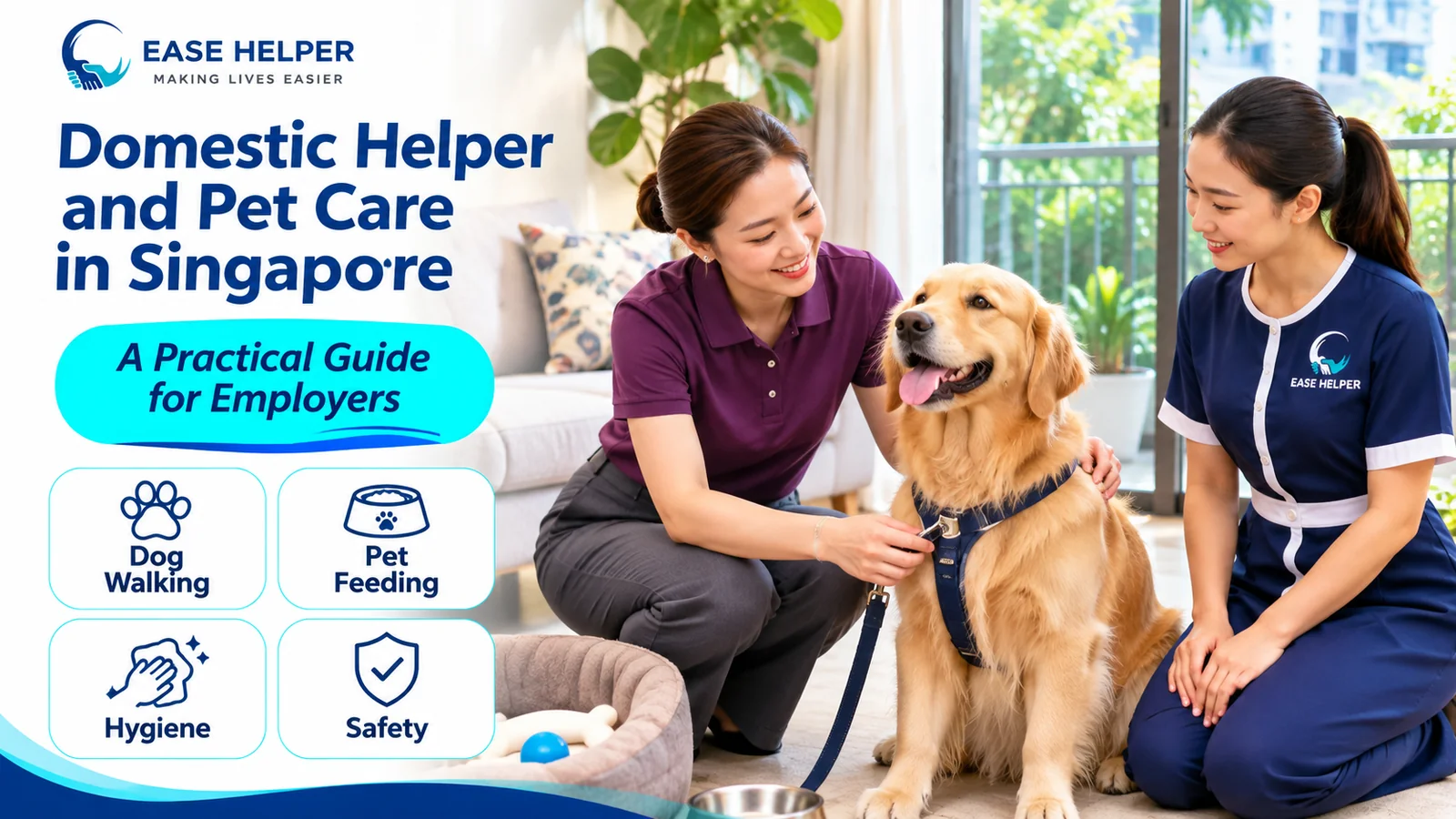
Domestic helper pet care in Singapore requires clear expectations, practical training and careful attention to safety. Many Singapore households have dogs, cats or other pets, and some employers may ask their domestic helpers to assist with feeding, cleaning or daily routines.
However, caring for animals involves responsibilities that differ from ordinary housework. Therefore, employers should discuss pet-care duties before hiring, consider the helper’s experience and comfort level, and provide appropriate supervision.
Executive Summary
Domestic helper pet care in Singapore can include feeding pets, cleaning pet areas, monitoring basic behaviour and assisting with walks when appropriate. Employers should explain these duties clearly, provide training and ensure the tasks are safe and manageable.
In addition, employers remain responsible for their pets’ welfare. Domestic helpers should not be expected to manage aggressive animals, perform veterinary procedures or handle unsafe situations without appropriate professional support.
1. Can a Domestic Helper Take Care of Pets in Singapore?
Domestic helpers may assist with reasonable pet-care duties within their employer’s household. For example, a helper might prepare pet food, refill drinking water, clean a litter tray or accompany a family dog on a walk.
Nevertheless, employers should explain these responsibilities during recruitment. A candidate who has never handled dogs may not feel comfortable walking a large or energetic animal.
Furthermore, a helper may have allergies, fears or limited experience with certain pets. As a result, employers should consider suitability rather than assume that every domestic helper can manage all animals.
2. Discuss Pet-Care Responsibilities Before Hiring
Employers should describe the household’s pets and expected duties before selecting a domestic helper. This allows both parties to discuss the responsibilities openly.
Questions Employers Can Ask
- Have you cared for dogs, cats or other pets before?
- Are you comfortable living in a household with animals?
- Have you previously fed or cleaned up after pets?
- Are you comfortable walking a dog?
- Do you have allergies or concerns about animals?
- Would you be willing to learn basic pet-care routines?
Importantly, employers should not treat a lack of pet-care experience as dishonesty or unwillingness. Instead, they should assess whether suitable training can bridge the gap.
3. Common Domestic Helper Pet-Care Duties
The exact responsibilities depend on the animal’s needs, the helper’s experience and the household’s daily schedule.
| Pet-Care Task | Practical Expectations | Important Precaution |
|---|---|---|
| Feeding | Follow the employer’s feeding instructions. | Avoid unapproved food or treats. |
| Fresh water | Refill and clean drinking bowls. | Use clean containers and suitable water. |
| Pet-area cleaning | Clean designated bedding or feeding areas. | Use pet-safe cleaning products. |
| Dog walking | Follow an agreed walking route and schedule. | Use appropriate restraint and avoid unsafe conditions. |
| Litter-tray cleaning | Clean according to the household routine. | Practise hand hygiene and follow health precautions. |
| Observing pets | Inform the employer about unusual behaviour. | Do not attempt veterinary treatment independently. |
Additionally, employers should prioritise essential household duties and allow enough time to complete pet-care tasks safely.
4. How to Train a Domestic Helper to Care for a Dog
Dogs differ considerably in size, strength, temperament and training. Consequently, employers should introduce dog-care duties gradually.
Step 1: Introduce the Dog Safely
Allow the dog and helper to become familiar with each other while the employer supervises. Avoid forcing close contact if either appears uncomfortable.
Step 2: Explain Feeding Instructions
Show the correct food, portion size and feeding schedule. In addition, identify any foods or treats the dog must avoid.
Step 3: Demonstrate Leash Handling
Before asking the helper to walk the dog independently, demonstrate how to attach the leash, manage doors and respond to pulling.
Step 4: Practise Short Walks Together
Start with supervised walks in a familiar environment. Then, consider independent walking only if the helper can manage the dog confidently and safely.
Step 5: Explain Emergency Procedures
Provide the employer’s contact details and the veterinary clinic’s information. Explain what to do if the dog becomes unwell, escapes or behaves aggressively.
Safety reminder: A helper should not be required to walk a dog that she cannot safely control. Employers should arrange alternative care or professional training when necessary.
5. Caring for Cats: Feeding, Litter and Safety
Cats may require less outdoor activity than dogs. However, they still need consistent feeding, clean facilities and a safe living environment.
Common Cat-Care Tasks
- Follow the agreed feeding schedule.
- Provide fresh drinking water.
- Clean litter trays safely.
- Keep food and litter areas separate.
- Check that windows and doors remain secure.
- Inform the employer about changes in appetite or behaviour.
In Singapore, cat owners must also consider applicable cat-keeping and licensing requirements. Therefore, employers should consult the Animal & Veterinary Service (AVS) for current guidance.
6. Pet Hygiene and Household Cleanliness
Pet-care routines should support hygiene without creating unnecessary risks for the helper or family members.
For example, employers can designate separate equipment for cleaning litter trays, pet bowls and household food-preparation surfaces.
Recommended Hygiene Practices
- Wash hands after handling pet waste.
- Use appropriate equipment for cleaning pet areas.
- Keep pet food away from human food-preparation surfaces.
- Store pet-cleaning products safely.
- Clean feeding bowls regularly.
- Follow veterinary advice for pets with infectious conditions.
Furthermore, employers should provide suitable cleaning supplies and explain how to use them. Avoid mixing cleaning chemicals or applying household products directly to animals unless a veterinarian confirms they are suitable.
7. Dog Walking in Singapore: Important Safety Considerations
Walking a dog may appear straightforward. Nevertheless, Singapore’s roads, shared pathways, weather and other animals can create unexpected challenges.
Therefore, employers should demonstrate safe routes and discuss the dog’s behaviour before assigning independent walks.
Dog-Walking Checklist
- Use a suitable leash and properly fitted collar or harness.
- Follow applicable leash and public-space rules.
- Avoid unsafe interactions with unfamiliar dogs.
- Carry suitable supplies to clean up after the dog.
- Consider heat, rain and the dog’s physical condition.
- Keep the employer informed about incidents.
For applicable dog-control and licensing requirements, refer to the Animal & Veterinary Service.
8. What if the Helper Is Afraid of Dogs or Cats?
Some domestic helpers have little experience with animals. Others may feel uncomfortable around particular breeds or larger pets.
Employers should take these concerns seriously. First, discuss the reason for the discomfort. Next, consider gradual introductions and supervised training where appropriate.
However, do not force the helper into situations that could cause injury. If she cannot safely handle the animal, the employer should make alternative arrangements.
Ultimately, successful pet care depends on a suitable match between the household’s needs and the helper’s abilities.
9. What Should a Domestic Helper Do if a Pet Becomes Unwell?
Domestic helpers can help by observing changes and informing the employer promptly. However, they should not independently diagnose illnesses or administer unapproved treatments.
Warning Signs to Report
- Repeated vomiting or diarrhoea.
- Difficulty breathing.
- Sudden weakness or collapse.
- Unusual aggression or severe distress.
- Refusal to eat or drink when concerning for the animal.
- Suspected poisoning or injury.
If an animal appears seriously ill or injured, contact the employer and seek veterinary assistance promptly. In addition, avoid handling an aggressive or distressed animal in a way that could cause injury.
10. Balance Pet Care With Other Household Duties
Domestic helpers may already have responsibilities involving cooking, cleaning, laundry, childcare or elderly care. Consequently, employers should consider whether additional pet-care tasks are realistic.
| Situation | Practical Employer Approach |
|---|---|
| Dog needs several walks daily | Plan the schedule and assess whether the helper can manage it safely. |
| Newborn and pets in the same household | Prioritise infant safety and avoid conflicting supervision duties. |
| Large or reactive dog | Consider professional dog walking or training. |
| Multiple pets | Explain each animal’s needs and allow sufficient time. |
| Pet requires medical treatment | Follow veterinary instructions and arrange professional care where necessary. |
Moreover, employers should ensure that the helper receives the rest and well-being protections required under Singapore’s applicable domestic helper employment rules.
11. Create a Simple Pet-Care Instruction Sheet
A written checklist helps reduce misunderstandings, especially when several family members share responsibility for the animals.
Suggested Information to Include
- Pet’s name, species and basic temperament.
- Feeding times and approved food.
- Water and cleaning routines.
- Walking instructions, where applicable.
- Areas the pet may or may not enter.
- Warning signs that require contacting the employer.
- Veterinary clinic and emergency contact details.
Additionally, employers should review the instructions whenever the pet’s needs change. This ensures the helper follows the latest routine.
12. Frequently Asked Questions
1. Can a domestic helper walk a dog in Singapore?
A domestic helper may assist with dog walking as part of suitable household duties. However, the employer should provide training, follow applicable public-space rules and ensure the helper can safely control the dog.
2. Should employers ask about pet-care experience during interviews?
Yes. Employers should explain the number and type of pets, expected duties and any special care needs. This helps assess the candidate’s experience, comfort and suitability.
3. What if a domestic helper is afraid of dogs?
Discuss the concern respectfully and consider supervised introductions. However, do not require the helper to handle an animal that presents an unsafe situation. Alternative arrangements may be necessary.
4. Can a domestic helper give medication to a pet?
Employers should seek veterinary guidance before assigning medication-related tasks. The helper should not diagnose conditions, change doses or administer unapproved treatments independently.
5. How can employers balance pet care with childcare and housework?
Create a realistic daily schedule, prioritise safety and avoid conflicting supervision duties. Where necessary, arrange additional support for demanding pet-care needs.
How EaseHelper Can Assist Pet-Owning Households
Finding a suitable domestic helper for a household with pets requires more than general housework experience. Employers should consider the candidate’s comfort around animals, willingness to learn and ability to manage the household’s overall responsibilities.
EaseHelper supports Singapore families with domestic helper recruitment and matching. During the selection process, employers can explain their household’s pet-care needs and discuss suitable candidate requirements.
Looking for a Domestic Helper for Your Family?
Explore domestic helper options with EaseHelper and discuss your household’s needs, including suitable pet-care responsibilities.
Explore EaseHelper ServicesDisclaimer: This article provides general information about domestic helper pet care in Singapore. It does not constitute legal or veterinary advice. Employers remain responsible for complying with applicable employment, animal-welfare, licensing and public-space requirements. Consult the Ministry of Manpower, Animal & Veterinary Service and qualified veterinary professionals for current requirements and individual circumstances.