Blog
Domestic Helper Accommodation in Singapore: Sleeping Arrangements, Privacy and Employer Responsibilities

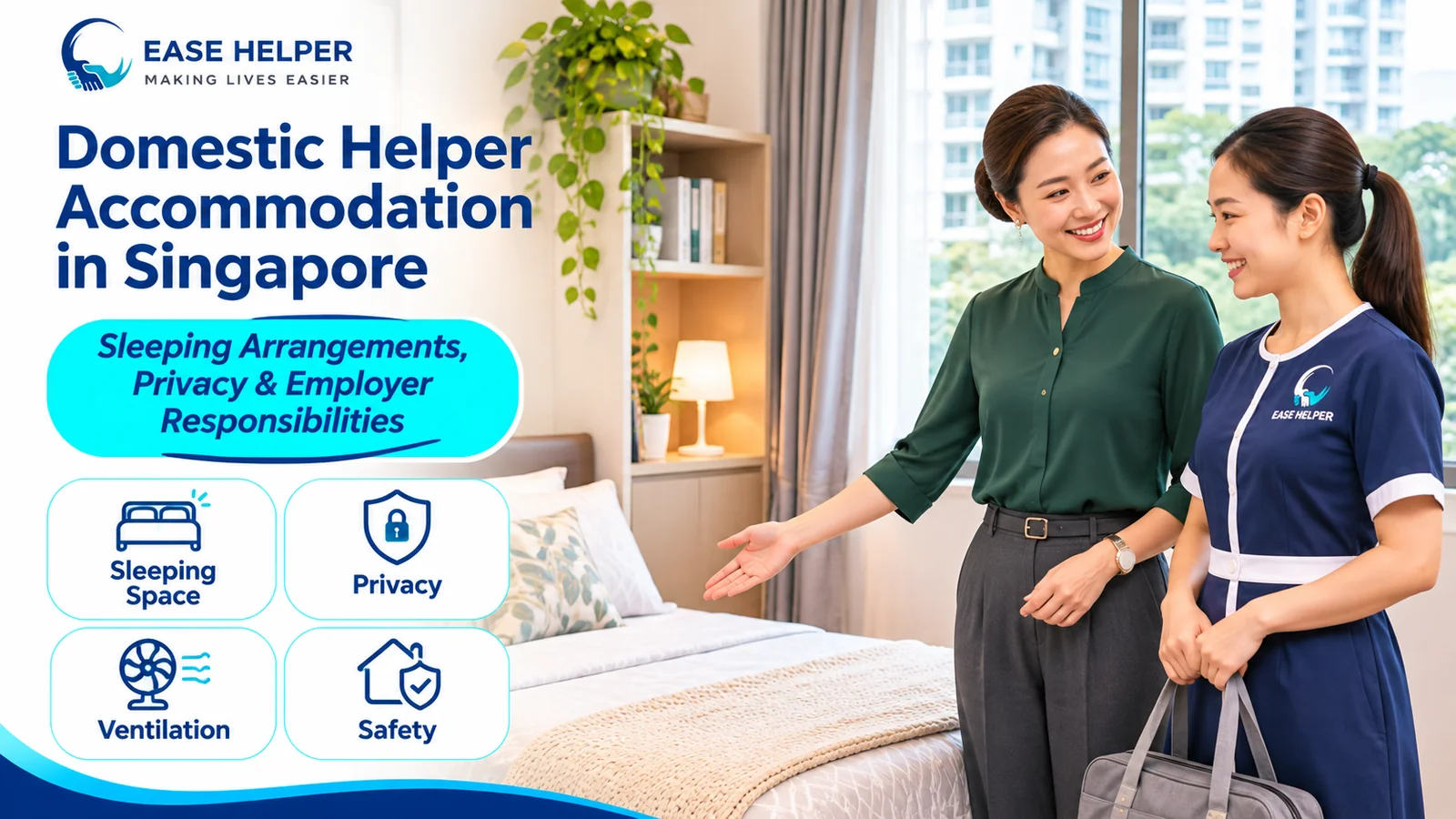
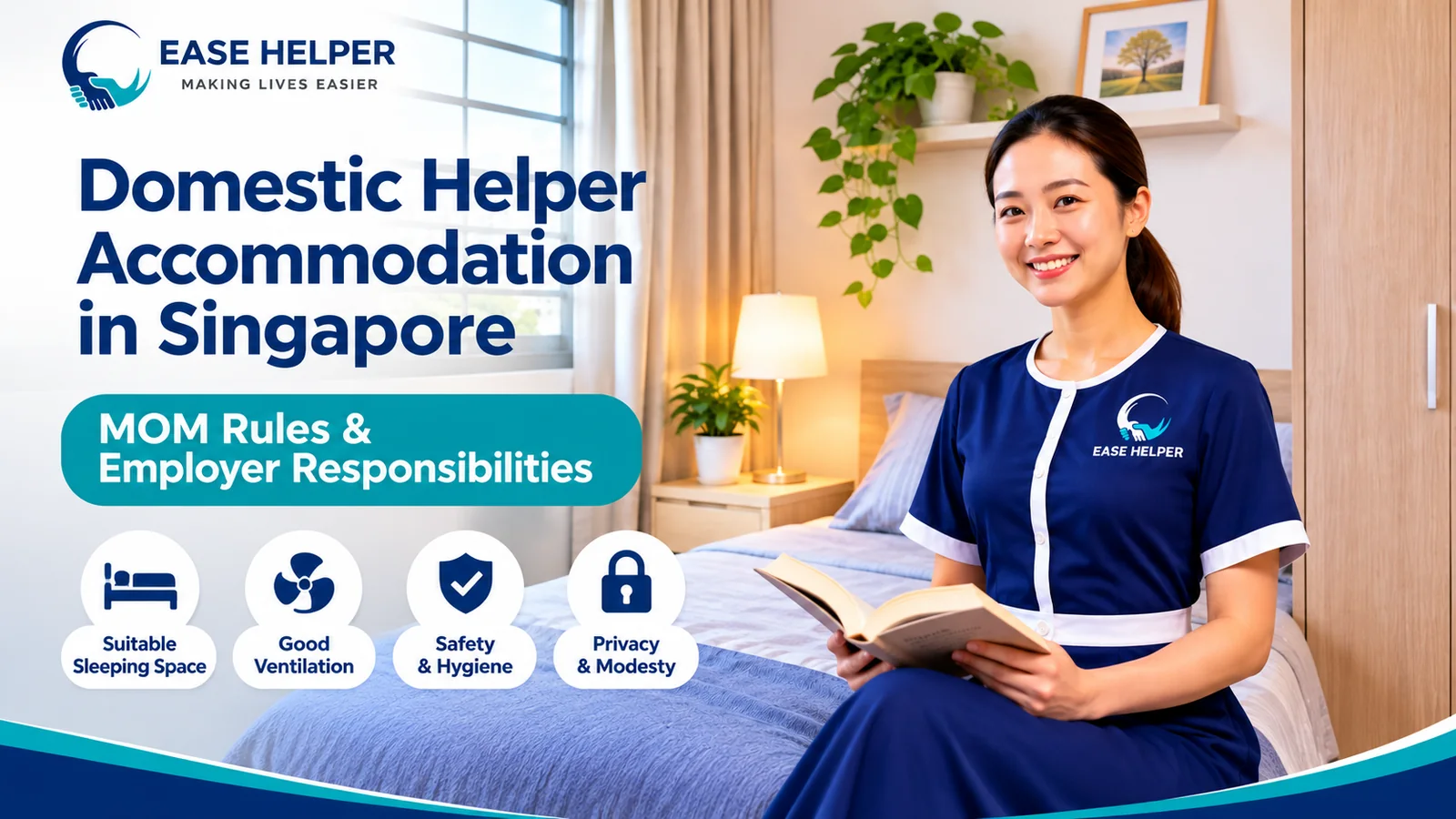
Domestic helper accommodation in Singapore must provide adequate shelter, safety, ventilation, sleeping space and privacy. Before hiring a domestic helper, employers should check whether their home can offer suitable living arrangements. Although a separate bedroom is preferred, the Ministry of Manpower (MOM) recognises that some households have limited space.
Therefore, employers should understand the accommodation requirements before deciding where their helper will sleep. This guide explains the main MOM rules, practical options for HDB flats and condominiums, and common mistakes to avoid.
Executive Summary
Employers in Singapore must provide their domestic helpers with acceptable accommodation. MOM recommends a separate room where possible. Otherwise, the sleeping arrangement must provide adequate space and privacy.
- Provide a mattress, pillow, blanket, bathroom amenities and toiletries.
- Ensure sufficient ventilation, shelter and safety.
- Do not require a helper to share a bedroom with a male adult or teenager.
- Do not install cameras in sleeping, changing or bathroom areas.
- Discuss the sleeping arrangement before employment begins.
These requirements apply whether the employer lives in an HDB flat, condominium or landed property.
1. Domestic Helper Accommodation Requirements in Singapore
MOM requires employers to provide acceptable accommodation as part of their responsibility for a domestic helper’s well-being. Consequently, the employer must consider more than simply finding space for a mattress.
| Requirement | What Employers Should Provide |
|---|---|
| Adequate shelter | Protection from rain, direct sun, strong winds and other environmental hazards. |
| Sleeping amenities | A mattress, pillow and blanket, together with bathroom amenities and toiletries. |
| Ventilation | Sufficient airflow, with an electric fan if natural ventilation is inadequate. |
| Safety | A sleeping space away from dangerous equipment, structures and unsafe conditions. |
| Privacy | A separate room where possible, or another arrangement with adequate personal space and privacy. |
| Modesty | No bedroom sharing with a male adult or teenager and no cameras in private areas. |
For the official requirements, refer to MOM’s guide to rest days, health and well-being.
2. Does a Domestic Helper Need a Separate Bedroom?
A separate bedroom is the preferred arrangement. However, MOM does not require every employer to provide a dedicated bedroom in all circumstances.
If a separate room is unavailable, employers must still provide adequate space and privacy. For example, they should consider whether the helper can sleep comfortably, change clothes privately and rest without unnecessary disturbances.
When a Separate Room Is Available
Prepare the room before your helper arrives. Provide clean bedding, suitable ventilation and a practical place for personal belongings. In addition, make sure she can access bathroom facilities safely.
When a Separate Room Is Not Available
Discuss the proposed sleeping arrangement with your helper before confirming employment. Explain who uses the space, whether other family members enter it and how privacy will be maintained.
For example, a suitable partition may improve privacy in a shared area. Nevertheless, a partition alone does not make an unsafe or poorly ventilated space acceptable.
3. Domestic Helper Sleeping Arrangements in HDB Flats
Many Singapore households live in HDB flats with limited bedrooms. As a result, employers may need to plan sleeping arrangements carefully.
Four-Room and Five-Room HDB Flats
Where possible, allocate a separate bedroom. If family members occupy every bedroom, consider whether another safe and private arrangement can meet MOM’s requirements.
Additionally, avoid placing a sleeping mattress in a passageway that blocks movement or an emergency exit.
Three-Room HDB Flats
Space may be more limited in smaller flats. Therefore, employers should evaluate ventilation, privacy and the household’s sleeping arrangements before hiring.
A shared room must still protect the helper’s modesty. In particular, she must not sleep in the same room as a male adult or teenager.
Two-Room HDB Flats
MOM considers the eligibility and need of families living in two-room HDB flats because these homes may have only one bedroom. Employers should not assume approval is automatic.
For further details, see MOM’s guidance on employing a domestic helper in a two-room HDB flat.
4. Accommodation in Condominiums and Landed Houses
Condominiums and landed properties may offer more sleeping options. However, the same MOM requirements apply regardless of property type.
Some homes have utility rooms, service areas or small rooms near the kitchen. Before assigning one as sleeping accommodation, employers should check the actual ventilation, safety and privacy.
For instance, a small enclosed room without sufficient airflow may be unsuitable even if it has a door. Similarly, a room beside hazardous equipment may create avoidable safety risks.
5. Can a Domestic Helper Sleep in the Living Room?
A living-room arrangement should not be treated as automatically acceptable. Employers must assess whether it provides sufficient space, privacy, ventilation and safety.
Consider the following questions:
- Can the helper rest without frequent interruptions?
- Can she change clothes in a private area?
- Does the sleeping arrangement leave emergency exits unobstructed?
- Is the area sufficiently ventilated?
- Will household members regularly walk through the space at night?
If the proposed arrangement cannot meet MOM’s requirements, employers should find a better solution before hiring.
6. Privacy and CCTV Rules for Domestic Helpers
Privacy is an essential part of acceptable domestic helper accommodation in Singapore. Employers may use security cameras in appropriate household areas, but they must inform their helper about the devices and their locations.
Moreover, employers must not install cameras in places that compromise the helper’s privacy or modesty, including sleeping areas, changing areas and bathrooms.
Employers should also respect reasonable personal boundaries. For example, knock before entering a private room and discuss arrangements for storing personal belongings.
MOM reaffirmed the importance of adequate space and privacy in its May 2026 parliamentary response on domestic helper privacy.
7. Ventilation, Hygiene and Sleeping Safety
Comfortable accommodation supports a helper’s health and ability to rest. Therefore, employers should regularly check the sleeping area for practical problems.
Ventilation
Ensure sufficient airflow. If natural ventilation is inadequate, provide mechanical ventilation such as an electric fan.
Cleanliness
Keep the area clean and dry. Also, address pests, water leaks and other hygiene problems promptly.
Fire and Electrical Safety
Avoid placing bedding near dangerous equipment, exposed wiring or other hazards. Furthermore, keep escape routes clear.
Bathroom Access
Provide reasonable access to bathroom facilities and basic toiletries. The helper must also have privacy when bathing and changing clothes.
8. Domestic Helper Accommodation Checklist for Employers
| Checklist Item | Employer Action |
|---|---|
| Sleeping location | Confirm a suitable sleeping area before employment. |
| Mattress and bedding | Prepare clean and usable sleeping amenities. |
| Ventilation | Check airflow and provide a fan if necessary. |
| Privacy | Ensure the helper has adequate personal space. |
| Safety | Remove hazards and keep escape routes clear. |
| Bathroom amenities | Provide toiletries and suitable bathroom access. |
| Communication | Explain the sleeping arrangement before employment begins. |
| Ongoing review | Ask whether any accommodation problems need attention. |
9. Common Accommodation Mistakes to Avoid
Employers can prevent many problems through early planning. In particular, avoid these common mistakes:
- Using an unsuitable utility space: A small room is not necessarily safe or adequately ventilated.
- Ignoring privacy: A helper needs appropriate personal space even when sharing an area.
- Placing cameras in private areas: Sleeping, changing and bathroom areas must remain private.
- Providing inadequate bedding: Employers must supply the basic sleeping amenities required by MOM.
- Failing to discuss arrangements: Explain the accommodation clearly before the helper starts work.
Above all, employers should treat accommodation as an ongoing responsibility rather than a one-time preparation task.
10. Frequently Asked Questions
Is a separate bedroom compulsory for a domestic helper in Singapore?
MOM recommends a separate room where possible. If one is unavailable, employers must provide adequate space and privacy through another suitable arrangement.
Can a domestic helper share a bedroom with a family member?
A shared arrangement must meet MOM’s privacy and modesty requirements. A domestic helper must not sleep in the same room as a male adult or teenager.
Can employers install CCTV in a helper’s bedroom?
No. Employers must not install cameras in areas that compromise a helper’s privacy or modesty, including where she sleeps or changes clothes.
Does MOM allow domestic helpers to sleep in utility rooms?
The room’s name does not determine whether it is acceptable. Employers must assess ventilation, safety, shelter, space and privacy. An unsuitable utility room should not be used as sleeping accommodation.
Can a family in a two-room HDB flat hire a domestic helper?
MOM considers the family’s eligibility and need because a two-room flat may have limited sleeping space. Employers should consult MOM’s guidance before making arrangements.
Need Help Hiring a Domestic Helper in Singapore?
EaseHelper helps Singapore families understand the practical responsibilities involved in hiring a domestic helper, including household suitability, accommodation planning and employment arrangements.
Explore your options and find a domestic helper who suits your family’s needs.
Explore EaseHelper ServicesDisclaimer: This article provides general information for Singapore employers and does not constitute legal advice. MOM requirements and administrative practices may change. Always consult the latest official MOM guidance and seek clarification from MOM when a proposed accommodation arrangement is uncertain.