Blog
Domestic Helper Food and Dietary Needs in Singapore: A Practical Guide for Employers

Executive Summary
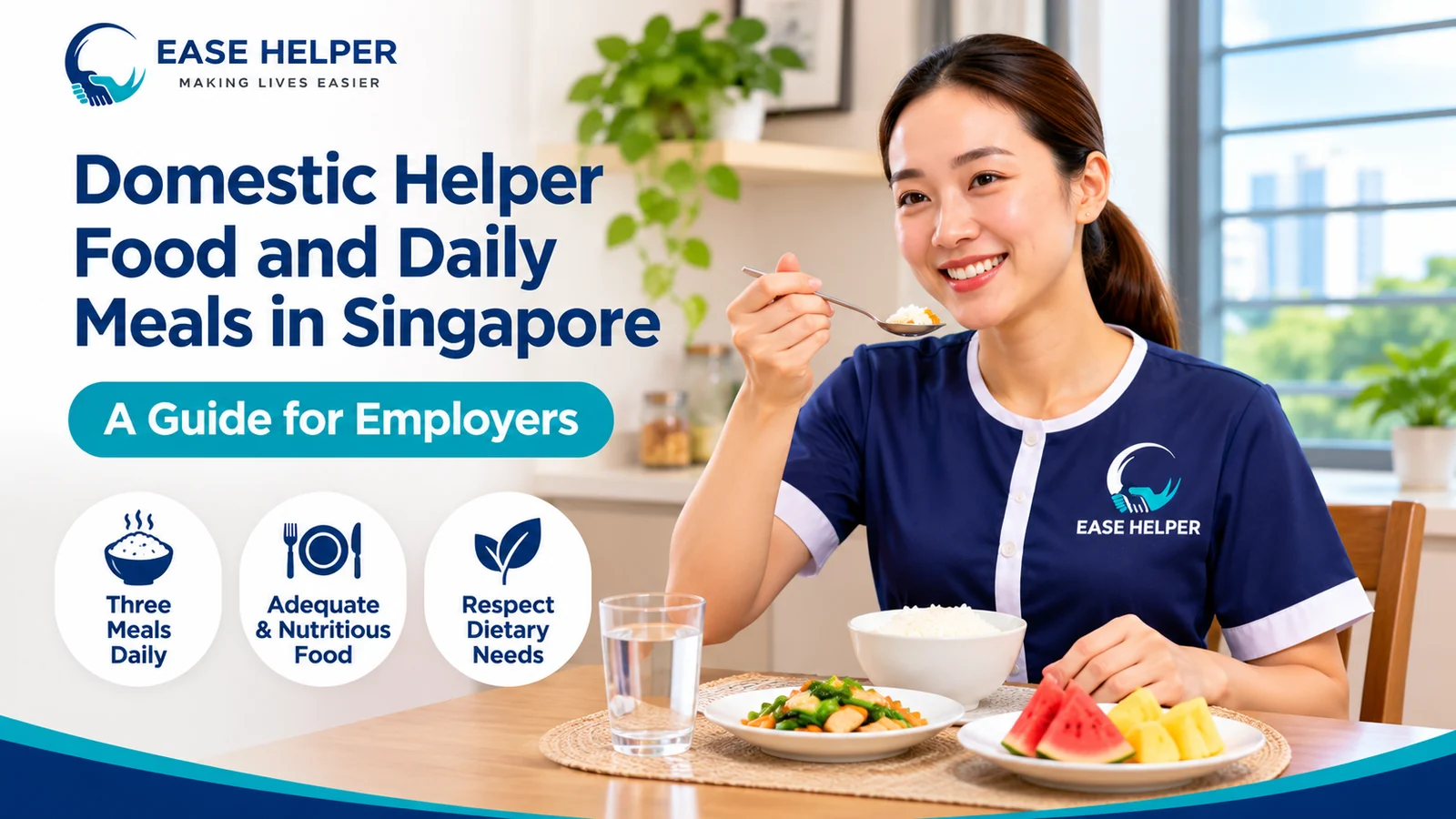
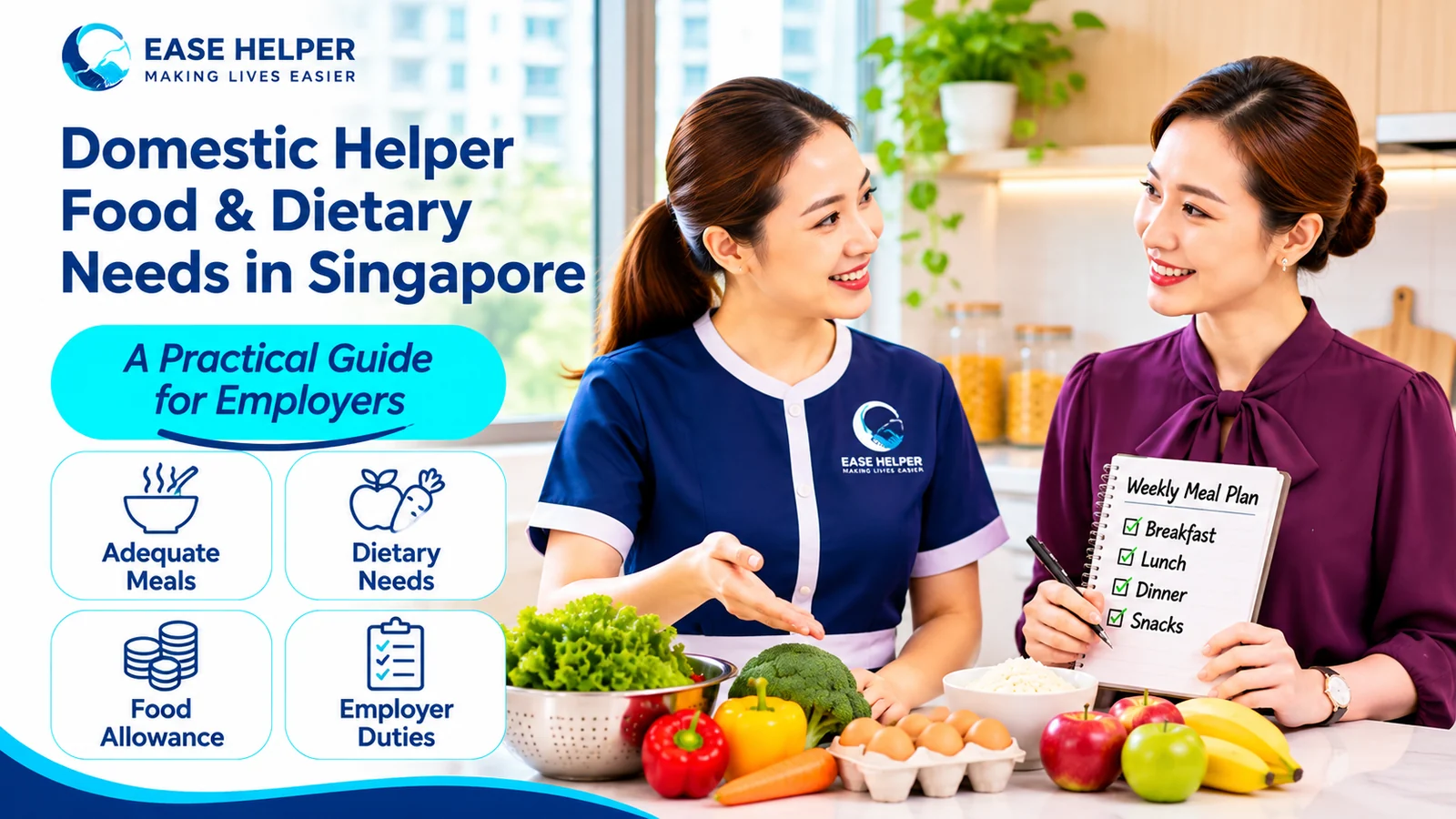
Domestic helper food and dietary needs in Singapore are an important part of responsible household employment. Employers must provide adequate food and should consider each helper’s dietary preferences, health needs and cultural practices. Clear meal arrangements can prevent misunderstandings and support a comfortable working environment. This guide explains employer responsibilities, practical meal planning, food allowances, dietary restrictions and common questions about providing food to domestic helpers.
Understanding Domestic Helper Food and Dietary Needs in Singapore
Domestic helper food and dietary needs in Singapore deserve attention from the beginning of employment. Because domestic helpers live and work in their employers’ homes, everyday meal arrangements directly affect their comfort and wellbeing.
Under Singapore’s Ministry of Manpower (MOM) requirements, employers must provide adequate food for their migrant domestic workers. Therefore, employers should not treat meals as an optional benefit.
However, adequate food involves more than simply making leftovers available. Employers should provide sufficient meals, consider reasonable dietary needs and ensure access to safe drinking water.
In addition, food preferences vary from person to person. Consequently, employers should discuss individual needs rather than make assumptions based on nationality.
1. What Are Employers Required to Provide?
Singapore employers are responsible for providing adequate food to their domestic helpers. MOM also provides guidance on suitable meals and employer responsibilities.
As a practical starting point, employers should ensure that their helpers have access to regular, sufficient meals and drinking water.
Basic Food Arrangements
- Provide adequate food throughout the employment period.
- Ensure meals are sufficient for the helper’s needs.
- Provide access to safe drinking water.
- Make reasonable arrangements for different dietary requirements.
- Discuss meal preparation and eating schedules clearly.
- Do not deduct the cost of required food from the helper’s salary.
Furthermore, employers should review meal arrangements if the helper regularly feels hungry or cannot eat the food provided.
Employer reminder: Providing adequate food is an employer responsibility. Always check current MOM requirements at mom.gov.sg.
2. How Much Food Should a Domestic Helper Receive?
Domestic helpers have different nutritional needs. For example, age, activity level, health conditions and individual appetite can influence how much food someone needs.
Therefore, employers should avoid using one fixed portion size for everyone.
Practical Meal Planning Considerations
- Provide regular meals during the day.
- Include a reasonable variety of food groups.
- Offer sufficient portions for the helper’s appetite and workload.
- Ensure drinking water is readily available.
- Consider suitable snacks when needed.
- Discuss concerns if the helper reports insufficient food.
For general nutrition information, employers can consult HealthHub Singapore.
Importantly, a helper should not have to rely on buying additional food with her salary because the household provides insufficient meals.
3. Should Domestic Helpers Eat the Same Food as the Employer’s Family?
Domestic helpers do not necessarily need to eat identical meals to their employers. However, the food provided must still be adequate.
For example, a helper may prefer rice-based meals while the family regularly eats bread, pasta or other dishes.
In this situation, employers can discuss practical alternatives that suit both the helper’s needs and the household’s arrangements.
Possible Household Meal Arrangements
| Arrangement | Practical Consideration |
|---|---|
| Shared family meals | Check whether the food meets the helper’s dietary needs and preferences. |
| Separate meal preparation | Provide suitable ingredients and reasonable preparation time. |
| Pre-planned weekly meals | Discuss portions, variety and preferred dishes. |
| Food allowance arrangement | Ensure the arrangement provides adequate food and meets applicable MOM requirements. |
Whichever arrangement the household chooses, employers should communicate expectations clearly and avoid unnecessary restrictions.
4. Respect Cultural and Religious Dietary Practices
Some domestic helpers follow dietary practices connected to religion, culture or personal beliefs.
For example, an individual may avoid pork, beef or certain ingredients. Others may prefer vegetarian meals or particular cooking methods.
Nevertheless, employers should not assume that all helpers from the same country share identical dietary practices.
Questions Employers Can Ask
- Are there any foods you do not eat?
- Do you have religious or personal dietary restrictions?
- Are there ingredients you prefer to avoid?
- Would you like to prepare some of your own meals?
- Are there familiar foods that would help you settle in?
These questions encourage practical communication without requiring unnecessary personal disclosures.
5. Consider Food Allergies and Medical Dietary Needs
Food allergies can create serious health risks. Therefore, employers should take any reported allergy seriously.
For example, a helper may need to avoid peanuts, shellfish or other specific ingredients. In such cases, employers should discuss safe meal arrangements and avoid exposing her to known allergens.
Practical Safety Measures
- Ask whether the helper has any known food allergies.
- Check ingredient labels when necessary.
- Explain possible cross-contact risks in shared kitchens.
- Keep suitable alternative ingredients available.
- Encourage medical advice for suspected allergies or dietary conditions.
- Know how to obtain emergency medical assistance.
Additionally, employers should avoid diagnosing allergies themselves or recommending restrictive diets without appropriate medical guidance.
6. Should Employers Give a Food Allowance?
Some households consider a food allowance when a helper prefers to purchase or prepare separate meals.
However, employers must still fulfil their obligation to provide adequate food. A cash arrangement should not become a way to transfer an employer’s basic responsibility to the helper.
Before adopting a food allowance arrangement, employers should check MOM’s current guidance and discuss whether the proposed arrangement genuinely meets the helper’s needs.
Points to Discuss
- Whether the helper prefers separate meal arrangements.
- Whether sufficient food can be obtained under the arrangement.
- How groceries and shared kitchen facilities will be managed.
- Whether the arrangement needs adjustment over time.
- How the employer will continue meeting MOM requirements.
Importantly, food costs should not be treated as a salary deduction for an employer’s required obligations.
7. Help Newly Arrived Domestic Helpers Adjust to Singapore Food
A newly arrived helper may be unfamiliar with local dishes, ingredients or household eating schedules.
As a result, she may need time to discover suitable foods and adjust to different flavours.
Helpful First-Month Actions
- Ask about familiar foods and dietary preferences.
- Show the helper where groceries are stored.
- Explain which ingredients she may use for her meals.
- Introduce local foods gradually rather than insisting on immediate changes.
- Discuss suitable meal times and preparation arrangements.
- Review whether the meals provided are sufficient.
Moreover, allowing reasonable flexibility can make the transition easier without disrupting the household’s daily routine.
8. Create a Practical Weekly Meal Arrangement
A simple meal plan can reduce confusion and ensure the helper has adequate food throughout the week.
For example, employers can discuss broad meal options instead of requiring the helper to eat exactly the same dishes every day.
| Meal | Illustrative Options | Employer Consideration |
|---|---|---|
| Breakfast | Bread, eggs, oats, fruit or rice-based dishes | Provide a suitable and sufficient morning meal. |
| Lunch | Rice or noodles with vegetables and protein | Consider dietary restrictions and portion needs. |
| Dinner | A balanced cooked meal with suitable ingredients | Ensure adequate food is available after daily duties. |
| Additional food | Fruit, yoghurt or other suitable snacks | Discuss individual appetite and nutritional needs. |
| Drinking water | Safe drinking water throughout the day | Ensure convenient access. |
This table is illustrative, not a prescribed diet. Actual meals should reflect the helper’s needs, preferences and any relevant medical advice.
9. Avoid Common Mistakes With Domestic Helper Food Arrangements
Clear arrangements can prevent unnecessary conflict. Nevertheless, employers sometimes overlook food-related concerns because they assume their household practices suit everyone.
| Common Mistake | Why It Causes Problems | Better Approach |
|---|---|---|
| Providing only unwanted leftovers | Food may be insufficient or unsuitable. | Plan adequate, appropriate meals. |
| Assuming nationality determines diet | Individual preferences vary. | Ask about personal dietary needs. |
| Ignoring reported allergies | Exposure may cause serious harm. | Follow appropriate food-safety precautions. |
| Restricting access to drinking water | May affect hydration and wellbeing. | Provide convenient access to safe water. |
| Expecting the helper to buy basic meals | May shift employer responsibilities to the worker. | Provide adequate food without improper salary deductions. |
| Never reviewing meal arrangements | Needs may change over time. | Check periodically whether food remains sufficient. |
10. Support Food Safety and Hygiene
Safe food storage and preparation protect everyone in the household, including the domestic helper.
Therefore, employers should explain basic kitchen hygiene and ensure the helper can store her own food appropriately.
Useful Household Practices
- Store perishable food at suitable temperatures.
- Separate raw ingredients from ready-to-eat food.
- Use clean utensils and preparation surfaces.
- Check food expiry and storage instructions.
- Provide suitable space for the helper’s food.
- Discuss shared refrigerator and pantry arrangements.
For additional food-safety information, visit the Singapore Food Agency.
11. Discuss Food Concerns Respectfully
Domestic helpers may hesitate to say that they dislike certain foods or do not receive enough to eat.
Consequently, employers should encourage respectful two-way communication.
For example, an employer might ask, “Are the meals suitable for you? Is there anything we should adjust?”
Then, listen carefully and discuss practical solutions.
Questions for a Periodic Check-In
- Are you getting enough food each day?
- Are there foods you cannot eat?
- Do the meal times work for you?
- Do you have suitable ingredients for your meals?
- Are there any food arrangements you would like to discuss?
Ultimately, the goal is to provide adequate food while maintaining clear and respectful household arrangements.
12. Employer Checklist for Domestic Helper Food and Dietary Needs
| Area | Employer Checklist |
|---|---|
| Adequate food | Provide sufficient meals throughout employment. |
| Drinking water | Ensure convenient access to safe drinking water. |
| Dietary preferences | Discuss individual cultural and personal preferences. |
| Food allergies | Take reported allergies seriously and seek medical advice when needed. |
| Meal preparation | Clarify ingredients, facilities and reasonable preparation time. |
| Food costs | Meet employer responsibilities without improper salary deductions. |
| Ongoing communication | Review meal arrangements when circumstances change. |
Frequently Asked Questions About Domestic Helper Food in Singapore
1. Must employers provide food for domestic helpers in Singapore?
Yes. Employers must provide adequate food for their migrant domestic workers. They should also check current MOM guidance on suitable food arrangements.
2. Can a domestic helper prepare separate meals?
Yes, households may agree on suitable separate meal arrangements. However, employers must continue providing adequate food and should ensure the helper has appropriate ingredients and reasonable access to preparation facilities.
3. Can employers deduct food costs from a domestic helper’s salary?
Employers should not deduct the cost of meeting their required food obligations from the helper’s salary. For specific salary or deduction questions, consult current MOM rules.
4. What if a domestic helper has religious dietary restrictions?
Employers should discuss the helper’s individual needs and make reasonable arrangements for suitable food. They should avoid assuming that everyone from a particular nationality follows the same diet.
5. Is a food allowance enough to meet employer responsibilities?
A food allowance should not automatically be treated as a substitute for providing adequate food. Employers should check MOM guidance and ensure any arrangement genuinely meets their responsibilities and the helper’s needs.
How EaseHelper Supports Singapore Employers
Understanding domestic helper food and dietary needs in Singapore helps employers establish clear expectations and support a respectful household environment.
At EaseHelper, we assist Singapore families with domestic helper recruitment and matching. During the selection process, employers can discuss relevant household arrangements, dietary considerations and other practical expectations.
Looking for a Domestic Helper in Singapore?
EaseHelper helps Singapore families explore suitable domestic helper options based on their household needs and preferences.
Explore EaseHelper ServicesDisclaimer: This article provides general information about domestic helper food and dietary arrangements in Singapore. It is not legal, medical or nutritional advice. Employers should check current requirements with the Ministry of Manpower and seek qualified medical advice for allergies or special dietary conditions. Individual circumstances and applicable rules may vary.