
Blog
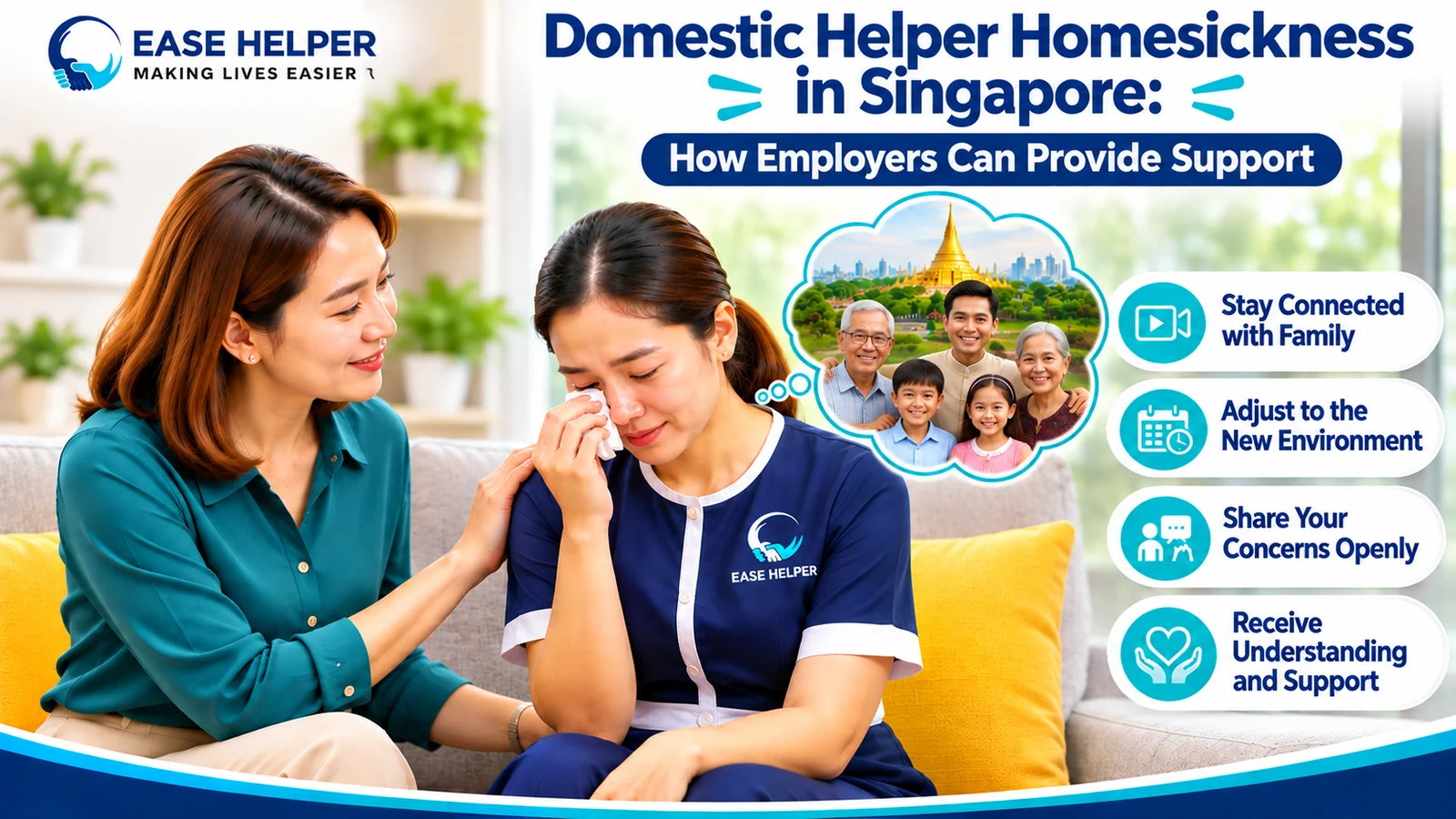
Domestic Helper Homesickness in Singapore: How Employers Can Provide Support

Executive Summary
Domestic helper homesickness in Singapore can affect helpers who live and work far from their families. Adjusting to a new household, language and daily routine may take time, especially during the first few months.
Employers can provide practical support through respectful communication, adequate rest, reasonable expectations and opportunities for private contact with family members.
This guide explains how to recognise possible signs of homesickness, support a helper’s adjustment and respond appropriately when additional help may be needed.
1. Why Do Domestic Helpers Experience Homesickness?
Many domestic helpers leave their home countries to work in Singapore and support their families financially. However, living away from familiar people and surroundings can be challenging.
For example, a helper from Myanmar or Indonesia may miss her children, parents, spouse or friends. At the same time, she must learn new household routines and adapt to her employer’s expectations.
Consequently, she may experience sadness, loneliness or uncertainty while settling into her new environment.
Homesickness is a common response to separation and change. Nevertheless, its intensity and duration vary from person to person.
Common Reasons for Homesickness
- Missing children, parents or other family members.
- Adjusting to unfamiliar food and household routines.
- Communicating in a different language.
- Living in a new country for the first time.
- Having limited opportunities for familiar social activities.
- Worrying about family responsibilities back home.
- Feeling uncertain about new work expectations.
Therefore, employers should allow reasonable time for adjustment rather than expecting immediate familiarity with every aspect of Singapore life.
2. When Is Homesickness Most Common?
Homesickness may arise at different stages of employment. However, some situations can make it more noticeable.
During the First Few Weeks
A newly arrived helper must adapt to a different home, routine and environment. As a result, she may feel overwhelmed even when her employer provides clear instructions.
During Important Family Occasions
Birthdays, religious celebrations, family gatherings and holidays may remind helpers of relatives they cannot see in person.
When Family Problems Occur
News about a sick parent, financial difficulties or problems involving children can create additional worry.
After a Change in Household Routine
Changes in workload, sleeping arrangements or household members may also affect a helper’s sense of stability.
Importantly, employers should not assume that homesickness only occurs during the first month. It may appear later as personal circumstances change.
3. Possible Signs of Homesickness
Homesickness affects people differently. Some helpers may openly discuss missing their families, while others prefer to keep their feelings private.
Employers may notice changes in behaviour, but these signs do not necessarily indicate homesickness.
| Possible Sign | What an Employer Can Do |
|---|---|
| Appearing quieter than usual. | Ask privately whether she is settling in comfortably. |
| Talking frequently about family. | Listen respectfully and allow reasonable family contact. |
| Having difficulty concentrating. | Review workload, instructions and possible concerns. |
| Showing changes in appetite or sleep. | Check whether her living conditions and rest arrangements are suitable. |
| Becoming unusually withdrawn. | Offer a supportive conversation without pressuring her to share personal details. |
| Expressing a wish to return home. | Discuss her concerns seriously and explore appropriate options. |
However, these changes may also relate to illness, fatigue, stress or other difficulties. Therefore, avoid making assumptions or attempting to diagnose the cause.
4. Start With a Respectful Conversation
One of the most useful ways to support a homesick domestic helper is to create opportunities for open communication.
For example, employers can ask how she is adjusting to the household and whether anything is making her uncomfortable.
Keep the conversation private and calm. Moreover, avoid asking questions that feel intrusive.
Helpful Questions Employers Can Ask
- “How are you settling into our home?”
- “Is there anything you are finding difficult?”
- “Are the household instructions clear?”
- “Do you have enough time to rest?”
- “Would you like help understanding something in Singapore?”
- “Is there any practical support you need?”
Afterwards, listen without immediately judging or dismissing her concerns.
Most importantly, respect her decision if she does not wish to discuss private family matters.
5. Support Regular Communication With Family
Contact with loved ones can help domestic helpers maintain important family relationships while living overseas.
For example, phone calls and video conversations may provide reassurance and reduce feelings of isolation.
Employers should discuss practical arrangements for personal communication while respecting privacy, rest and reasonable household needs.
Practical Ways to Support Family Contact
- Allow reasonable opportunities for private calls.
- Respect personal conversations and messages.
- Discuss convenient times for longer video calls.
- Ensure that emergency family contact is possible.
- Avoid unnecessary restrictions on personal communication.
Furthermore, employers should recognise that family contact is especially important when a helper receives worrying news from home.
Employer reminder: A domestic helper’s personal conversations are private. Employers should not demand access to messages, passwords or family communications.
6. Provide Adequate Rest and Personal Time
Rest plays an important role in a helper’s physical and emotional well-being.
Without sufficient rest, everyday challenges may become harder to manage. Therefore, employers should organise household duties realistically.
In Singapore, employers must follow MOM’s requirements concerning domestic helper rest days and well-being.
Under MOM’s rest-day framework, migrant domestic workers must receive at least one rest day each month that cannot be compensated away. Other rest-day arrangements must also follow applicable MOM rules and agreements.
For current requirements, refer to the MOM guidance on rest days and well-being.
Supporting Healthy Rest
- Provide suitable sleeping arrangements.
- Allow sufficient daily rest and sleep.
- Plan duties around agreed rest-day arrangements.
- Avoid unnecessary interruptions during personal time.
- Review workloads when household demands change.
In addition, allow reasonable time for meals and personal hygiene.
7. Help Your Domestic Helper Adjust to Singapore
A new country can feel unfamiliar even when a helper has previous domestic work experience.
For example, she may need guidance on public transport, local shops, household appliances or communicating in English.
Therefore, employers can make the adjustment easier through simple orientation and practical demonstrations.
Useful Orientation Topics
- How to use Singapore’s MRT and public buses.
- Where to buy everyday personal items.
- How to contact the employer in an emergency.
- Basic household safety procedures.
- How to follow the family’s daily routine.
- Where to find official help when needed.
However, avoid overwhelming a newly arrived helper with too much information at once. Instead, introduce unfamiliar activities gradually.
8. Respect Cultural and Personal Differences
Domestic helpers come from different cultural, linguistic and personal backgrounds.
Consequently, their food preferences, daily habits and communication styles may differ from those of their employers.
Employers can support adjustment by discussing reasonable preferences respectfully.
For example, ask whether your helper has particular dietary needs and explain the household’s meal arrangements.
Similarly, allow reasonable personal space and avoid unnecessary criticism of harmless cultural differences.
Practical Examples
- Explain unfamiliar foods without pressuring the helper to like them.
- Respect personal beliefs and reasonable individual practices.
- Use clear language rather than unfamiliar slang.
- Discuss household expectations without making assumptions about nationality.
- Allow personal belongings and private time to be treated respectfully.
Above all, a helper should feel that she can ask questions without embarrassment.
9. Set Clear and Realistic Work Expectations
Unclear instructions may increase stress during the adjustment period.
For instance, a helper may worry about making mistakes if she does not understand how her employer wants a task completed.
Therefore, provide clear instructions and demonstrate unfamiliar household procedures.
A Practical Approach
- Explain the task in simple language.
- Demonstrate the preferred method.
- Allow supervised practice where appropriate.
- Provide constructive feedback.
- Review progress without unnecessary pressure.
Additionally, distinguish essential duties from tasks that can wait.
A realistic routine helps both the employer and the helper understand daily priorities.
10. Encourage Healthy Social Connections
Social connections can help domestic helpers feel less isolated while living overseas.
For example, a helper may value opportunities to meet friends or participate in suitable community activities during her personal time.
Employers should respect lawful, reasonable personal activities while discussing any necessary practical arrangements.
However, employers should not attempt to control a helper’s friendships or isolate her from others.
Ways to Support Social Well-Being
- Respect agreed rest-day arrangements.
- Allow appropriate personal communication.
- Encourage awareness of safe public transport practices.
- Share reliable information about community resources when requested.
- Maintain respectful boundaries around personal relationships.
Ultimately, personal independence and respectful household communication can coexist.
11. What If Your Helper Misses Her Children?
Some domestic helpers are parents who work overseas to support their children.
Consequently, separation may feel particularly difficult during school events, birthdays or family emergencies.
Employers can respond with understanding while respecting the helper’s personal circumstances.
For example, reasonable opportunities for family video calls may help her remain connected.
Likewise, employers can discuss appropriate arrangements if an urgent family matter arises.
Nevertheless, avoid making promises about leave or travel that cannot be fulfilled. Any arrangement should reflect the employment agreement and applicable requirements.
12. Avoid Common Mistakes When Supporting a Homesick Helper
| Approach to Avoid | More Supportive Alternative |
|---|---|
| Ignoring signs of difficulty. | Offer a private conversation and listen respectfully. |
| Criticising the helper for missing family. | Recognise that separation can be difficult. |
| Restricting family communication unnecessarily. | Discuss reasonable arrangements for private contact. |
| Increasing duties to keep the helper busy. | Maintain a realistic workload and adequate rest. |
| Demanding personal family information. | Respect privacy and allow voluntary disclosure. |
| Assuming every problem is homesickness. | Consider workload, health, communication and other factors. |
| Dismissing requests for additional support. | Explore suitable professional or official assistance. |
13. When Should Employers Seek Additional Support?
Homesickness often becomes easier to manage as someone adjusts to a new environment. However, some situations require additional attention.
For example, if your helper experiences persistent distress, significant sleep problems or difficulty managing everyday activities, encourage appropriate professional support.
Similarly, take statements about feeling unsafe or wanting to harm herself seriously.
Appropriate Next Steps
- Listen calmly and ask what immediate support is needed.
- Check for urgent safety or medical concerns.
- Arrange medical assessment when appropriate.
- Contact suitable support services or MOM for employment-related concerns.
- Respect the helper’s privacy and involve her in decisions wherever possible.
If there is an immediate threat to life or safety, call the relevant Singapore emergency service. For a medical emergency, call 995.
Employers can also consult the Ministry of Manpower for official guidance on domestic helper employment responsibilities.
Important: Employers should not diagnose mental health conditions. Persistent or serious distress deserves appropriate professional assessment and support.
14. What If Your Domestic Helper Wants to Return Home?
A helper may occasionally express a wish to return home because she misses her family or faces personal difficulties.
Employers should discuss the reasons respectfully and avoid pressuring her to remain against her wishes.
First, ask whether there is a practical concern that can be addressed, such as unclear instructions, inadequate rest or a family emergency.
Next, discuss the available options and any relevant contractual arrangements.
If employment may end, employers should follow the applicable MOM requirements concerning Work Permit cancellation, outstanding salary and repatriation responsibilities.
Where appropriate, an employment agency can help explain administrative procedures and possible next steps.
15. A Simple Adjustment Support Plan for Employers
Employers can use a structured but flexible approach during a helper’s initial adjustment period.
| Period | Employer Focus | Practical Action |
|---|---|---|
| First few days | Orientation and reassurance. | Explain household routines, safety and communication arrangements. |
| First two weeks | Learning and adjustment. | Demonstrate unfamiliar tasks and provide constructive feedback. |
| First month | Confidence and routine. | Review workload, rest arrangements and any concerns. |
| Following months | Ongoing communication. | Continue regular check-ins and address changing needs. |
These periods are only practical examples, not fixed deadlines. Every helper adjusts at her own pace.
16. Domestic Helper Well-Being Checklist
Employers can use this checklist to review whether their household supports a respectful adjustment process.
- ☐ Explain household expectations clearly.
- ☐ Provide suitable accommodation and rest.
- ☐ Follow MOM rest-day requirements.
- ☐ Allow reasonable private family communication.
- ☐ Respect personal belongings and privacy.
- ☐ Demonstrate unfamiliar household tasks.
- ☐ Give constructive feedback without humiliation.
- ☐ Encourage questions and clarification.
- ☐ Discuss reasonable personal and cultural preferences.
- ☐ Take health concerns seriously.
- ☐ Avoid unnecessary restrictions on social connections.
- ☐ Review workload and daily routines when needed.
- ☐ Seek appropriate support if distress persists.
17. Frequently Asked Questions
Is homesickness common among domestic helpers in Singapore?
Homesickness can occur when domestic helpers live away from their families and familiar surroundings. However, the experience varies between individuals.
How can employers help a homesick domestic helper?
Employers can listen respectfully, support reasonable family communication, provide adequate rest and explain household expectations clearly.
Should employers allow domestic helpers to call their families?
Reasonable opportunities for private family communication can support well-being. Employers should discuss practical arrangements while respecting privacy and applicable requirements.
How long does homesickness usually last?
There is no fixed timeline. Some helpers adjust relatively quickly, while others need more time or additional support.
Can homesickness affect household work?
Emotional distress may affect concentration or daily routines. However, employers should avoid assuming that every work difficulty results from homesickness.
What if a helper becomes withdrawn or frequently upset?
Offer a private conversation and check whether she needs practical, medical or other professional support. Take persistent or serious distress seriously.
Should employers restrict social activities to prevent homesickness?
No. Unnecessary isolation may make adjustment more difficult. Respect lawful personal activities and applicable rest-day arrangements.
What if a domestic helper wants to return to her home country?
Discuss her concerns respectfully and consider the appropriate employment arrangements. If employment ends, follow current MOM rules and contractual obligations.
18. How EaseHelper Supports Better Household Adjustment
At EaseHelper, we understand that a successful domestic helper placement involves more than completing recruitment procedures.
Clear communication, practical preparation and realistic household expectations also play important roles.
Our team helps employers explore suitable domestic helper options and understand common adjustment challenges.
Nevertheless, every helper has individual needs. Employers should maintain respectful communication and provide suitable support throughout employment.
Looking for a Domestic Helper in Singapore?
EaseHelper can help you explore domestic helper options and discuss household expectations, training and adjustment needs.
Support a smoother start through clear communication, practical preparation and mutual respect.
Explore EaseHelper ServicesDisclaimer
This article provides general information about domestic helper adjustment and well-being. It does not replace medical, psychological or legal advice. Employers must comply with applicable Singapore employment requirements and should consult qualified professionals when necessary. For current rules and official guidance, visit the Ministry of Manpower.