Blog
Domestic Helper Insurance in Singapore: What Employers Need to Know

Executive Summary
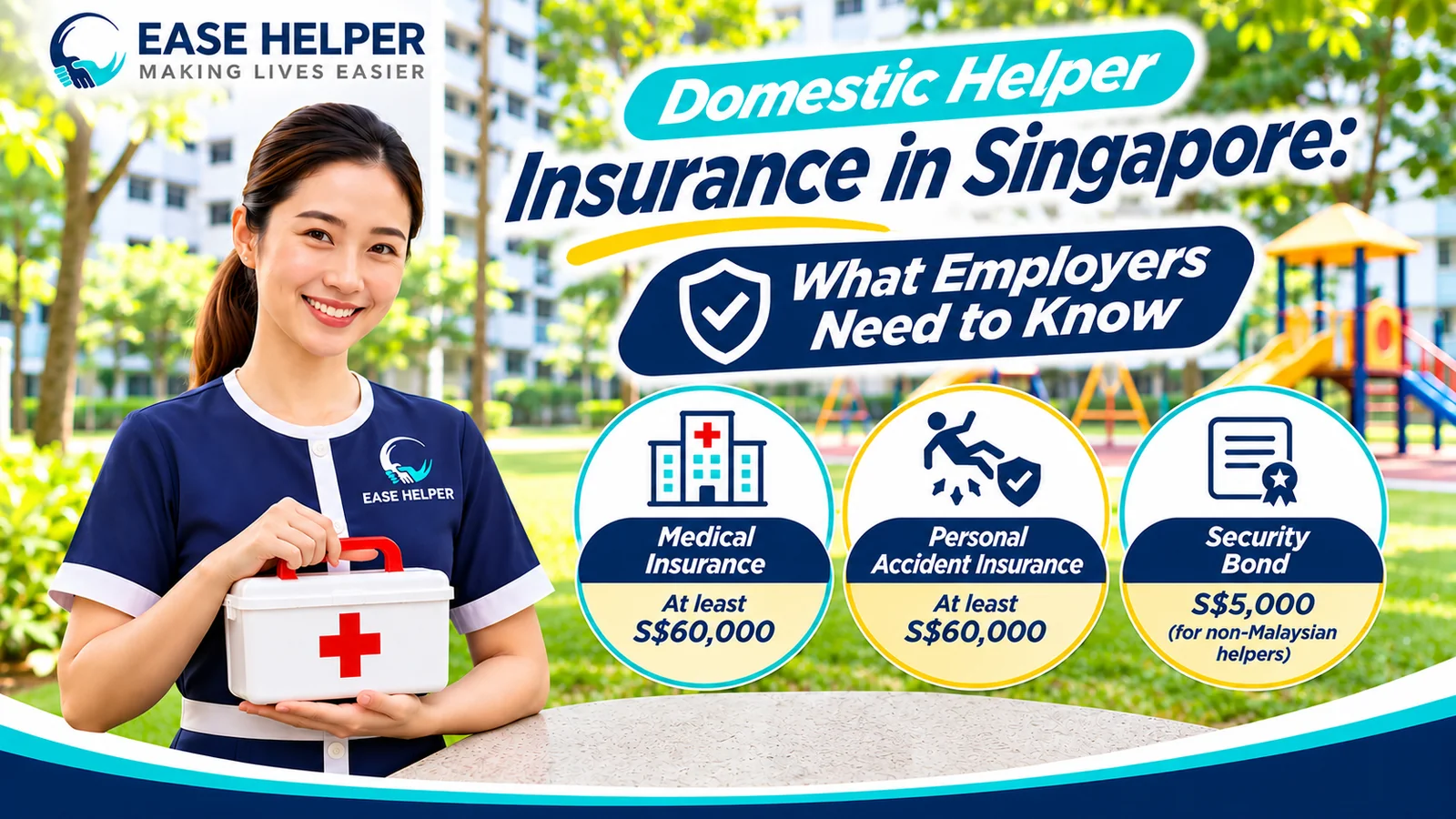
Employers hiring a domestic helper in Singapore must arrange mandatory medical insurance and personal accident insurance. Medical insurance must provide an annual claim limit of at least S$60,000 for inpatient care and day surgery, while personal accident insurance must have a sum assured of at least S$60,000. Employers of non-Malaysian domestic helpers must also arrange a S$5,000 security bond. Understanding the coverage, exclusions and renewal dates helps employers fulfil their responsibilities and manage unexpected expenses.
1. Why Domestic Helper Insurance Matters in Singapore
Hiring a domestic helper brings important responsibilities, including providing appropriate medical care and maintaining the insurance required by Singapore’s Ministry of Manpower (MOM).
Insurance helps manage the financial impact of hospitalisation, day surgery and serious accidents. However, insurance does not eliminate every possible expense. Employers should understand the difference between mandatory coverage and additional benefits offered by insurers.
If you are hiring for the first time, read our complete guide to hiring a domestic helper in Singapore for an overview of the employment process.
2. What Insurance Must Employers Purchase?
According to MOM’s domestic helper insurance requirements, employers must purchase medical insurance and personal accident insurance for their domestic helpers.
| Requirement | Minimum Requirement | Purpose |
|---|---|---|
| Medical insurance | S$60,000 annual claim limit | Inpatient care and day surgery |
| Personal accident insurance | S$60,000 sum assured | Compensation for accidental death or permanent disability |
| Security bond | S$5,000 for non-Malaysian helpers | Guarantee relating to Work Permit conditions |
These are different requirements. A security bond is not a substitute for medical or personal accident insurance. Employers must bear the cost of the mandatory insurance and cannot transfer it to their helper.
3. Medical Insurance for Domestic Helpers
What Does Mandatory Medical Insurance Cover?
Medical insurance must cover inpatient care and day surgery during the helper’s employment in Singapore, with an annual claim limit of at least S$60,000. Any applicable sub-limits must also satisfy MOM’s minimum requirements.
Coverage for outpatient consultations, specialist treatment, dental care and other services depends on the policy. Employers should not assume that every medical expense is insured.
Understanding the Co-Payment Requirement
Under MOM’s enhanced medical insurance framework, insurers cover 75% and employers cover 25% of admissible claim amounts above the first S$15,000, within the applicable insurance limit. Employers should review the actual policy wording to understand deductibles, co-payments and other expenses.
Enhanced Insurance Rules Introduced in 2025
For policies starting on or after 1 July 2025, additional requirements include standardised allowable exclusions, age-differentiated premium bands and direct payment by insurers to hospitals when claims are admissible.
Employers can consult MOM’s explanation of enhanced medical insurance for details.
4. Personal Accident Insurance: What Employers Should Know
Personal accident insurance serves a different purpose from medical insurance. It provides compensation if a domestic helper suffers permanent disability or death resulting from an accident.
MOM requires a minimum sum assured of S$60,000. The compensation must be payable to the helper or her beneficiaries.
Employers should check the policy’s definitions, claims procedures and applicable conditions rather than assuming personal accident insurance will pay all medical bills.
5. Is a Security Bond the Same as Insurance?
No. For most non-Malaysian domestic helpers, employers must arrange a S$5,000 security bond. The bond is a guarantee relating to compliance with Work Permit and security bond conditions, rather than a medical insurance benefit.
The bond must be effective when the helper arrives in Singapore. Employers should arrange it early enough for the bank or insurer to submit the required information.
Read MOM’s security bond requirements for the applicable conditions and exceptions.
6. Should Employers Buy More Than the Minimum Insurance?
MOM’s minimum coverage provides an important baseline, but employers may wish to consider more comprehensive protection, particularly where unexpected hospital bills could create financial pressure.
Compare More Than the Premium
- Annual medical coverage limit and applicable sub-limits
- Hospital ward class and eligible medical providers
- Co-payment, deductible and reimbursement arrangements
- Exclusions, including treatment not covered by the policy
- Optional outpatient and other additional benefits
- Claims support and required documentation
Important: A lower premium does not necessarily mean better value. Compare the actual benefits and potential out-of-pocket costs before selecting a plan.
7. Who Pays When Insurance Does Not Cover a Medical Bill?
Employers remain responsible for necessary medical treatment costs incurred by their domestic helpers in Singapore, including costs not covered by insurance. They cannot require the helper to pay the uninsured portion of her medical bills.
For clarification, refer to MOM’s guidance on medical expenses exceeding insurance benefits.
This is one reason to consider the overall protection offered by a policy rather than focusing solely on the minimum legal requirement.
8. When Should Domestic Helper Insurance Be Purchased or Renewed?
For a new helper arriving from overseas, employers must arrange the required insurance before arrival. Where a security bond is required, it must also take effect on arrival.
For existing helpers, employers should monitor policy expiry dates and ensure that coverage remains valid throughout the relevant employment period.
If your helper’s Work Permit is approaching expiry, see our guide to domestic helper Work Permit renewal in Singapore.
9. Common Domestic Helper Insurance Mistakes
- Buying only the minimum without checking exclusions: Some treatments or expenses may not be covered.
- Confusing medical insurance with personal accident insurance: The two policies serve different purposes.
- Assuming the security bond pays hospital bills: A bond is a separate compliance guarantee.
- Missing renewal dates: Insurance should remain valid when required.
- Not understanding claims procedures: Employers should know whom to contact during an emergency.
- Assuming the helper must pay uninsured costs: Employers retain their medical obligations under MOM rules.
10. A Practical Insurance Checklist for Employers
- Confirm the mandatory medical insurance limit and personal accident insurance sum assured.
- Check whether a security bond is required.
- Compare policy exclusions, ward class and optional benefits.
- Review deductibles and co-payment arrangements.
- Verify the policy commencement and expiry dates.
- Save the insurer’s emergency contact and claims instructions.
- Keep copies of insurance documents and review them before Work Permit renewal.
11. How EaseHelper Can Support Employers
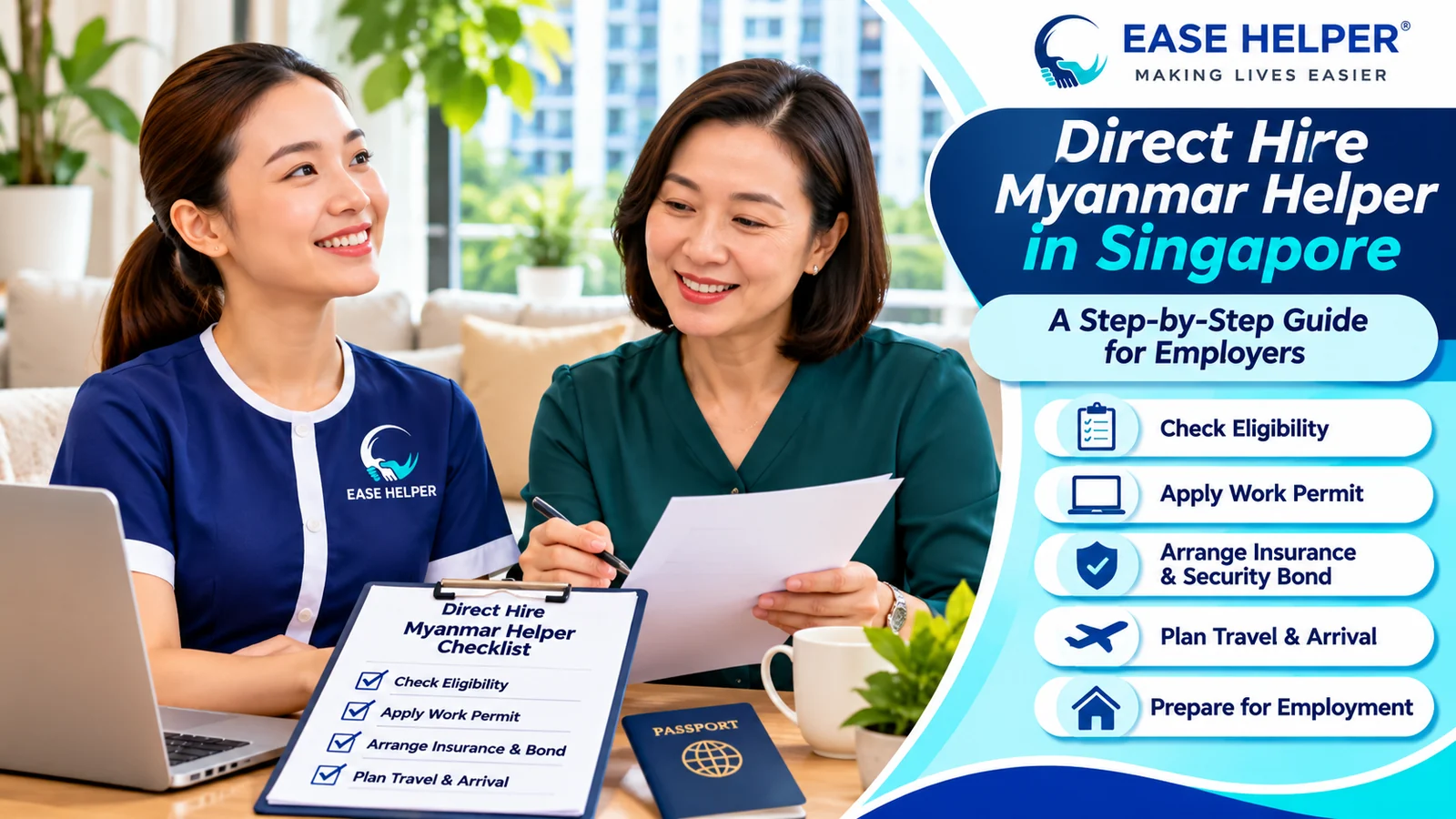
Choosing a domestic helper involves several related decisions, including suitability, training, interviews, employment arrangements and compliance requirements.
EaseHelper helps Singapore families understand the hiring process and the practical steps involved in preparing for a domestic helper’s employment. We can also guide employers on the insurance and documentation requirements they should clarify with the relevant provider.
For broader guidance on selecting an agency, read our domestic helper hiring guide.
Frequently Asked Questions
Is domestic helper insurance compulsory in Singapore?
Yes. Employers must purchase medical insurance and personal accident insurance that meet MOM’s requirements.
What is the minimum medical insurance coverage?
The minimum annual claim limit is S$60,000 for inpatient care and day surgery.
Is personal accident insurance the same as medical insurance?
No. Personal accident insurance provides compensation for accidental death or permanent disability, while medical insurance addresses eligible medical treatment expenses.
Can employers ask their helper to pay for insurance?
No. Employers cannot pass the cost of mandatory insurance to their domestic helper.
Is the S$5,000 security bond an insurance payout?
No. It is a guarantee relating to Work Permit conditions and applies to non-Malaysian domestic helpers.
Should employers purchase additional medical coverage?
Additional coverage is optional, but it may reduce financial exposure to large medical bills. Employers should compare policy benefits and exclusions carefully.
Conclusion
Understanding domestic helper insurance in Singapore is an important part of responsible employment. Medical insurance, personal accident insurance and security bonds each serve a different purpose. By checking MOM requirements, reviewing policy details and monitoring renewal dates, employers can make more informed decisions and prepare for unexpected situations.
Looking for a Domestic Helper in Singapore?
EaseHelper supports families with domestic helper selection, interviews and practical hiring guidance.
Explore your options and find suitable household support with EaseHelper.
Visit EaseHelperDisclaimer: This article provides general information and is not legal, insurance or financial advice. MOM requirements and insurance policy terms may change. Employers should verify current obligations with the Ministry of Manpower and confirm coverage, exclusions and claims procedures directly with their insurer before making decisions.