Blog
Domestic Helper Accommodation in Singapore: MOM Rules and Employer Responsibilities

Executive Summary
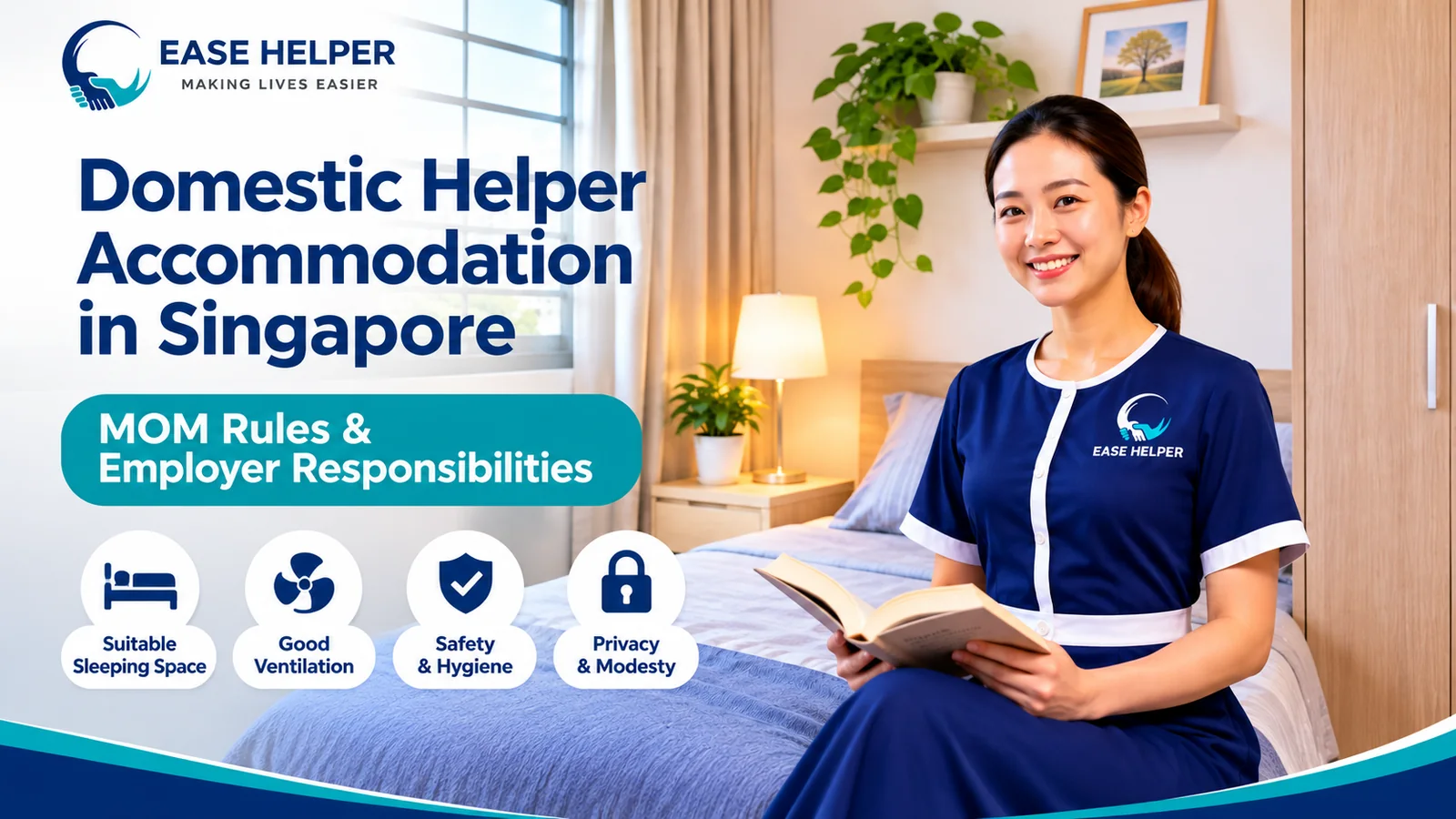
Employers must provide suitable domestic helper accommodation in Singapore. The Ministry of Manpower (MOM) requires adequate shelter, basic amenities, ventilation, safety, space and privacy.
Ideally, your domestic helper should have a separate bedroom. However, if your home does not have a spare room, you must still arrange a suitable sleeping space that protects her privacy and modesty. This guide explains the main requirements, common mistakes and practical ways to prepare your home.
1. Why Domestic Helper Accommodation Matters
Hiring a domestic helper involves more than arranging her Work Permit and salary. As an employer, you must also provide a safe and suitable place for her to live.
Good accommodation supports proper rest, personal privacy and daily well-being. Moreover, a comfortable living arrangement can help your domestic helper settle into your household.
Before hiring, assess your home’s available space and discuss the sleeping arrangements with your family. You can also review our complete guide to hiring a domestic helper in Singapore to understand other important employer responsibilities.
2. MOM Requirements for Domestic Helper Accommodation
MOM sets accommodation standards that employers must follow. Although every household has a different layout, the basic requirements remain the same.
| Requirement | What Employers Should Provide |
|---|---|
| Adequate shelter | A sleeping area protected from sun, rain and strong winds. |
| Basic amenities | A mattress, pillow, blanket, bathroom amenities and toiletries. |
| Ventilation | Sufficient airflow, with a fan if natural ventilation is inadequate. |
| Safety | A sleeping space away from dangerous equipment and unsafe structures. |
| Privacy | Enough personal space for sleeping, changing clothes and daily activities. |
| Modesty | No shared sleeping room with a male adult or teenager. |
For the official requirements, see MOM’s guidance on rest days, health and well-being.
3. Does Your Domestic Helper Need a Separate Bedroom?
MOM advises employers to provide a separate room for their domestic helper whenever possible. However, a separate bedroom is not an absolute requirement for every household.
If you cannot provide one, you must ensure that the alternative arrangement offers adequate space and privacy.
Option A: A Separate Bedroom
A separate bedroom generally provides the clearest arrangement for personal privacy and rest. Where possible, include a suitable bed or mattress, ventilation, lighting and storage for personal belongings.
Additionally, allow your domestic helper to use the room privately when changing clothes or resting.
Option B: A Shared Sleeping Area
Some households have limited space. In these cases, consider whether a shared room can provide adequate privacy and a safe sleeping environment.
For example, an arrangement involving a female family member may be possible if the space remains suitable. However, assess the person’s age, the room’s size, nighttime interruptions and your helper’s privacy needs.
Important: A domestic helper must not sleep in the same room as a male adult or teenager.
Option C: A Partitioned Sleeping Space
Where a separate bedroom is unavailable, a properly arranged partitioned space may offer greater privacy. However, the partition itself does not automatically make the accommodation acceptable.
Ensure that the space has sufficient ventilation, protects modesty and does not obstruct escape routes. Also, avoid placing the sleeping area beside dangerous household equipment.
Practical tip: If you are unsure whether your proposed sleeping arrangement meets MOM requirements, seek clarification before your domestic helper arrives.
4. Can a Domestic Helper Sleep in the Living Room?
A living room is not automatically suitable simply because it has enough floor space for a mattress.
Instead, employers must consider the full sleeping environment. Ask whether the area offers sufficient privacy, protection from disturbances, adequate ventilation and safe access to bathroom facilities.
For instance, a busy living room where family members regularly watch television late at night may interfere with proper rest. Similarly, an open space without privacy for changing clothes may be inappropriate.
Therefore, evaluate the actual conditions rather than relying only on the room’s name or size.
5. Ventilation, Lighting and Temperature
Singapore’s warm and humid climate makes ventilation especially important.
MOM requires sufficient ventilation. If natural airflow is inadequate, employers must provide mechanical ventilation, such as an electric fan.
To improve the sleeping environment:
- Ensure fresh air can circulate safely.
- Provide a working fan where needed.
- Keep the sleeping area free from excessive heat.
- Provide suitable lighting for everyday activities.
- Keep windows and ventilation openings unobstructed where practical.
Air-conditioning is not listed as a universal MOM requirement. Nevertheless, employers should make reasonable arrangements to maintain a comfortable sleeping environment.
6. Privacy and CCTV Rules
Privacy is an essential part of domestic helper accommodation in Singapore.
Employers may use security cameras at home, but they must inform their domestic helper about the devices and their locations.
Furthermore, cameras must not be installed in places that compromise her privacy or modesty. These include sleeping areas, bathrooms and places where she changes clothes.
Respecting Personal Space
Good household practices include knocking before entering a private sleeping area, allowing space for personal belongings and avoiding unnecessary interruptions during rest.
Similarly, discuss reasonable household expectations early rather than introducing unexpected restrictions later.
MOM has also clarified that domestic helpers do not have to reveal their locations during their rest days. For further information, see MOM’s parliamentary answer on domestic helper privacy.
7. Safety and Hygiene in the Sleeping Area
Employers should inspect the sleeping area before their domestic helper moves in. Then, check it regularly as household needs change.
Safety Checklist
- Keep sleeping spaces away from dangerous equipment.
- Do not block doors or emergency escape routes.
- Avoid unstable furniture and unsafe electrical arrangements.
- Keep the floor clear of unnecessary clutter.
- Ensure the domestic helper can leave the home safely during an emergency.
Hygiene Checklist
- Provide clean bedding and suitable toiletries.
- Keep the sleeping area dry and reasonably clean.
- Prevent pest infestations and stagnant water.
- Provide access to clean bathroom facilities.
- Allow suitable storage for clothes and personal items.
These arrangements help protect both your domestic helper and other household members.
8. What About Small HDB Flats?
Living in a smaller HDB flat does not automatically mean that a household cannot hire a domestic helper. However, space limitations may affect whether the accommodation is suitable.
For example, MOM states that households living in a two-room HDB flat may face constraints because they typically have only one bedroom. MOM will consider the household’s eligibility and need to employ a domestic helper.
Consequently, employers should not assume that every proposed sleeping arrangement will be accepted.
Read MOM’s FAQ about employing a domestic helper in a two-room HDB flat for more information.
9. Common Accommodation Mistakes Employers Should Avoid
Even well-intentioned employers can overlook important details. Therefore, review these common mistakes before finalising your arrangements.
| Common Mistake | Better Approach |
|---|---|
| Providing a mattress in a busy communal area without privacy. | Assess whether the area provides adequate personal space and uninterrupted rest. |
| Using a poorly ventilated storage space. | Choose a safer, properly ventilated sleeping area. |
| Installing CCTV in a sleeping or changing area. | Keep cameras out of private areas and inform your helper of other camera locations. |
| Expecting the helper to share a bedroom with a male adult or teenager. | Make a different sleeping arrangement that meets MOM’s modesty requirements. |
| Providing bedding but overlooking toiletries. | Supply the required basic amenities and maintain them. |
| Blocking access to exits with furniture. | Keep escape routes clear and explain emergency procedures. |
10. Discuss Accommodation Before Your Helper Arrives
Clear communication can prevent misunderstandings. Therefore, explain the sleeping arrangements during the hiring process whenever possible.
Discuss where your domestic helper will sleep, where she can store personal belongings and which bathroom she will use. Also, explain the household’s daily routine and privacy arrangements.
For additional guidance on choosing a suitable candidate, read our Myanmar vs Indonesian domestic helper comparison.
Once your helper arrives, show her the sleeping area and explain the facilities available. Encourage her to raise concerns if anything is uncomfortable or unsafe.
11. Domestic Helper Accommodation Checklist for Employers
Use this checklist before your domestic helper starts work:
- ☐ The sleeping area provides adequate shelter.
- ☐ A mattress, pillow and blanket are available.
- ☐ Bathroom amenities and toiletries are provided.
- ☐ Ventilation is sufficient, with a fan where needed.
- ☐ The sleeping area is free from dangerous equipment.
- ☐ Emergency exits remain unobstructed.
- ☐ The arrangement provides adequate space and privacy.
- ☐ The helper will not share a room with a male adult or teenager.
- ☐ No cameras are installed in sleeping, changing or bathroom areas.
- ☐ The helper understands the household’s arrangements.
After completing the checklist, review the accommodation periodically. For example, changes to family sleeping arrangements may affect the space available to your domestic helper.
12. Frequently Asked Questions
Is a separate bedroom compulsory for a domestic helper in Singapore?
No. MOM advises employers to provide a separate room where possible. If that is not possible, employers must still ensure adequate space and privacy.
Can a domestic helper share a bedroom with a child?
The arrangement depends on the circumstances. However, she must not share a sleeping room with a male adult or teenager. Any other shared arrangement must still provide adequate privacy, space and rest.
Must employers provide air-conditioning?
MOM does not list air-conditioning as a universal requirement. However, employers must provide sufficient ventilation, including a fan if natural ventilation is inadequate.
Can employers install CCTV in a helper’s bedroom?
No. Employers must not place cameras in areas that compromise their domestic helper’s privacy or modesty, including where she sleeps or changes clothes.
Can a family in a two-room HDB flat hire a domestic helper?
MOM will consider the household’s eligibility and caregiving needs. However, the employer must still provide suitable accommodation with adequate sleeping space and privacy.
Who is responsible for providing accommodation?
The employer is responsible for ensuring that the domestic helper has acceptable accommodation throughout her employment.
13. How EaseHelper Can Assist Employers
At EaseHelper, we encourage employers to prepare suitable living arrangements before welcoming a domestic helper into their home.
Our team can discuss practical household considerations during the hiring process, including daily responsibilities, communication and settling-in expectations.
However, employers remain responsible for meeting MOM’s accommodation requirements. Where an arrangement is uncertain, employers should obtain clarification from MOM.
Planning to Hire a Domestic Helper in Singapore?
EaseHelper can guide you through the hiring process and help you prepare for your domestic helper’s arrival.
Start with a clear understanding of your household’s needs and responsibilities.
Explore EaseHelper ServicesDisclaimer
This article provides general information about domestic helper accommodation in Singapore and is not legal advice. MOM regulations and guidance may change. Employers should refer to the latest official requirements on MOM’s website or contact MOM for clarification about specific arrangements.