
Blog
Domestic Helper Safety at Home in Singapore: Essential Rules for Employers

Executive Summary
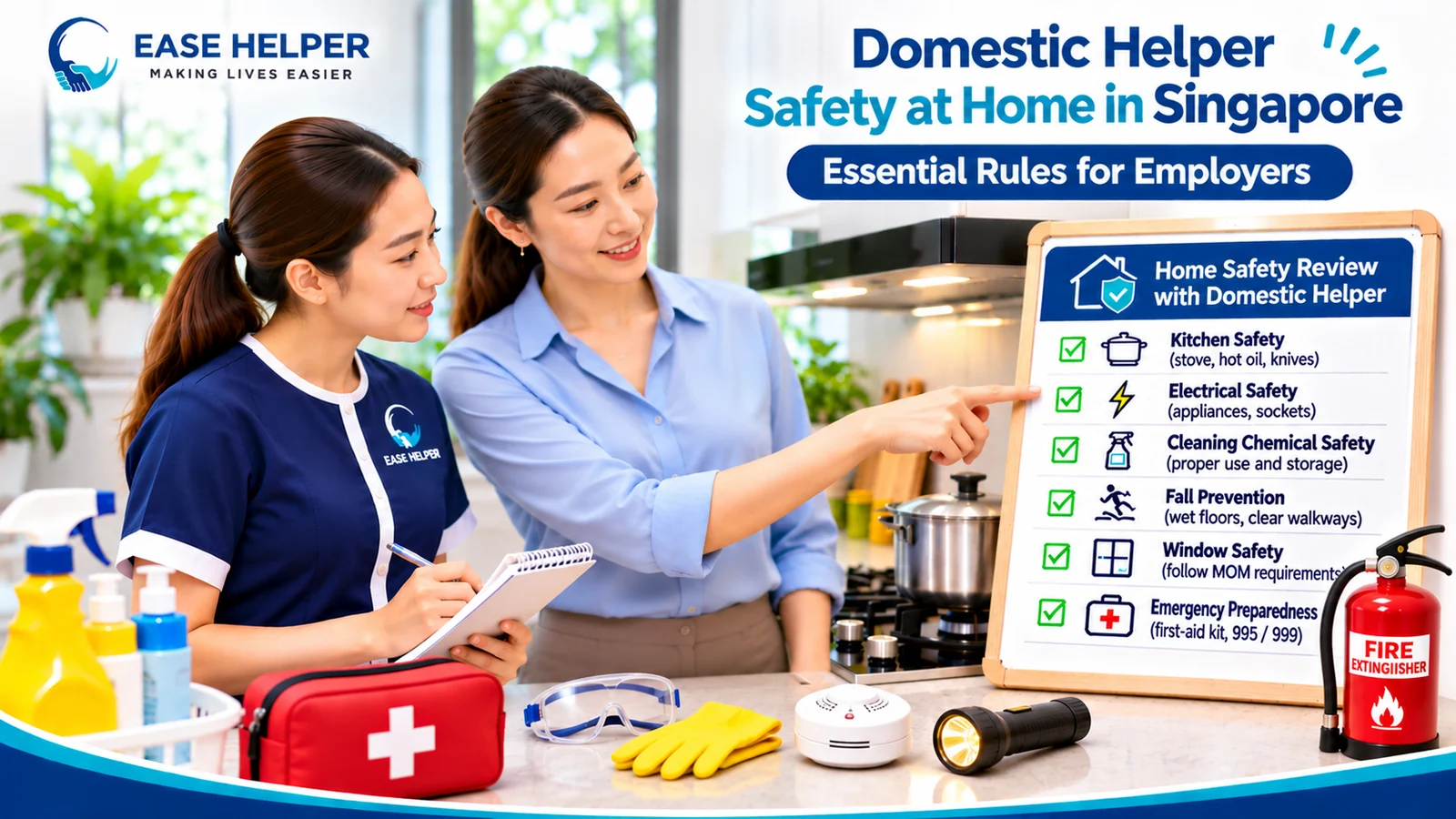
Domestic helper home safety in Singapore begins with proper training, clear instructions and a household environment that reduces avoidable risks.
Employers should explain how to use kitchen appliances, handle cleaning chemicals, prevent falls and respond to emergencies. They should also identify tasks that require special precautions or professional assistance.
This guide covers common household hazards, practical safety rules, emergency preparation and a checklist that employers can use when introducing a domestic helper to their home.
1. Why Is Home Safety Important for Domestic Helpers?
Domestic helpers carry out many everyday household tasks. These may include cooking, cleaning, laundry, childcare and assisting elderly family members.
Although these activities appear routine, they can involve hot surfaces, sharp objects, slippery floors, electricity and cleaning chemicals.
Furthermore, a helper who has recently arrived in Singapore may not be familiar with the household’s appliances or safety procedures.
Therefore, employers should explain potential hazards before assigning unfamiliar tasks.
Benefits of Practical Safety Training
- Reduces the likelihood of preventable accidents.
- Helps helpers recognise dangerous situations.
- Improves confidence when using household appliances.
- Protects children and elderly family members.
- Encourages helpers to report hazards promptly.
- Creates clearer household safety expectations.
Most importantly, safety training should be ongoing rather than limited to the helper’s first day.
2. Start With a Household Safety Orientation
Before asking your helper to work independently, show her the important safety features of your home.
For example, demonstrate how to switch off the cooking gas, locate the electrical distribution board and use the main water shut-off valve where accessible.
Next, explain how to contact family members and emergency services.
Essential Orientation Checklist
- Show the location of the first-aid kit.
- Explain how to switch off kitchen appliances.
- Identify emergency exits and safe evacuation routes.
- Point out slippery surfaces and uneven flooring.
- Explain where cleaning chemicals are stored.
- Demonstrate the correct use of unfamiliar appliances.
- Provide emergency contact numbers.
- Explain which tasks must never be attempted alone.
Afterwards, ask your helper to demonstrate the important steps. This helps confirm that she understands the instructions.
3. Kitchen Safety: Preventing Burns, Cuts and Fires
The kitchen is one of the busiest areas of a Singapore household. However, it also contains several common hazards.
For example, boiling water, hot oil, sharp knives and electrical appliances can cause injuries when used incorrectly.
Safe Cooking Practices
- Keep pot handles turned inward and away from walkways.
- Use suitable oven gloves when handling hot cookware.
- Keep combustible materials away from open flames.
- Never leave active cooking unattended.
- Keep knives sharp, clean and stored safely.
- Use separate utensils where appropriate to prevent food contamination.
- Clean spills promptly when safe to do so.
- Switch off cooking equipment after use.
Additionally, employers should explain how their specific stove, oven, microwave and rice cooker operate.
What If Cooking Oil Catches Fire?
Never pour water onto a cooking oil fire.
If it is safe, switch off the heat and cover a small pan fire with a suitable metal lid or fire blanket. Do not move the burning pan.
However, if the fire spreads or cannot be controlled safely, leave the area, alert others and call 995.
For more fire prevention advice, consult the Singapore Civil Defence Force (SCDF).
4. Electrical Safety in Singapore Homes
Domestic helpers frequently use electrical equipment such as vacuum cleaners, washing machines, irons and kitchen appliances.
Therefore, employers should demonstrate safe operation and explain when an appliance must not be used.
Important Electrical Safety Rules
- Never touch electrical plugs or switches with wet hands.
- Keep electrical appliances away from water.
- Avoid overloading power sockets and extension cords.
- Do not use appliances with damaged cables or exposed wiring.
- Switch off and unplug equipment before cleaning it, where appropriate.
- Never attempt electrical repairs without proper qualifications.
- Report unusual sparks, burning smells or repeated circuit trips.
For instance, if a vacuum cleaner has a damaged cable, stop using it and inform the employer.
Likewise, an iron should never be left unattended while switched on.
Safety reminder: Domestic helpers should not attempt electrical repairs. Employers should arrange a qualified professional when electrical equipment or wiring needs attention.
5. Cleaning Chemical Safety
Household cleaning products can cause skin irritation, breathing difficulties or serious injury if used incorrectly.
Therefore, employers should explain the purpose of each product and demonstrate its safe use.
Essential Chemical Safety Rules
- Read and follow product labels.
- Use the recommended amount and dilution.
- Wear suitable gloves when necessary.
- Ensure adequate ventilation.
- Keep products in their original labelled containers.
- Store chemicals away from food and children.
- Never mix cleaning products unless the manufacturer specifically permits it.
- Wash hands after handling chemicals.
In particular, never mix bleach with ammonia, acidic toilet cleaners or other incompatible products. Dangerous gases may form.
Moreover, do not transfer cleaning chemicals into unlabelled drink bottles. Someone could mistake the contents for a beverage.
What If a Helper Accidentally Mixes Chemicals?
First, leave the affected area immediately if fumes develop. Keep others away and avoid breathing the vapour.
Next, seek medical assistance if anyone experiences coughing, breathing difficulty, eye irritation or other symptoms.
Call 995 for a serious medical emergency. Do not re-enter an area with dangerous fumes to attempt clean-up.
6. Preventing Slips, Trips and Falls
Wet floors, loose cables and cluttered walkways can cause falls.
These hazards are particularly important in bathrooms, kitchens and homes with elderly family members.
Fall Prevention Measures
- Dry wet floors promptly.
- Use appropriate non-slip mats.
- Keep walkways free from loose objects.
- Ensure sufficient lighting.
- Store frequently used items within safe reach.
- Avoid carrying heavy loads that block visibility.
- Wear suitable non-slip footwear.
Additionally, employers should provide stable equipment for tasks that require reaching higher areas.
However, avoid assigning unsafe work at height. Cleaning exterior windows or elevated areas may involve serious risks.
7. Window Cleaning and Working at Height
Window cleaning deserves special attention because falls from height can cause severe injury or death.
In Singapore, MOM imposes specific requirements for domestic helpers cleaning the exterior of windows.
Employers should not allow exterior window cleaning unless the required safety conditions are met. These include secured window grilles and supervision by the employer or an adult representative, as applicable under MOM’s rules.
For example, a helper should never climb onto a window ledge or lean dangerously outside to reach an exterior surface.
Instead, use safer cleaning methods or engage an appropriate professional service when necessary.
Check the current requirements on the MOM website before assigning exterior window-cleaning tasks.
Important: Do not treat exterior window cleaning as an ordinary household chore. Follow MOM’s specific safety requirements and never compromise on fall prevention.
8. Laundry and Ironing Safety
Laundry and ironing are common household duties. Nevertheless, they involve electrical equipment, hot surfaces and cleaning products.
Safe Laundry Practices
- Follow the washing machine manufacturer’s instructions.
- Avoid overloading the machine.
- Keep detergent away from children.
- Use appropriate amounts of cleaning products.
- Report unusual noises, leaks or electrical problems.
Safe Ironing Practices
- Use a stable ironing board.
- Keep the hot iron away from children.
- Do not leave the iron unattended.
- Allow the iron to cool before storing it.
- Keep the power cable away from hot surfaces.
Furthermore, employers should show their helper the correct temperature settings for different fabrics.
9. Child Safety During Household Work
Families with young children should consider how household tasks affect supervision.
For example, a helper should not leave a young child unattended near a stove, bathtub, open window or balcony.
Similarly, cleaning chemicals and sharp objects must remain out of children’s reach.
Child Safety Priorities
- Never leave babies unattended on elevated surfaces.
- Keep small choking hazards away from young children.
- Secure access to dangerous household areas.
- Keep hot drinks and cooking equipment out of reach.
- Follow the family’s safe sleep instructions for infants.
- Prioritise child supervision over non-urgent chores.
Additionally, employers should explain emergency procedures for choking, falls and other injuries.
However, a domestic helper should not be expected to perform unfamiliar medical procedures without suitable training.
10. Safety When Assisting Elderly Family Members
Some domestic helpers support elderly people who have difficulty walking, bathing or moving between furniture.
However, unsafe lifting or transfer techniques can injure both the helper and the elderly person.
Therefore, employers should arrange appropriate training and equipment where needed.
Important Elderly Care Precautions
- Keep walking areas clear.
- Use prescribed mobility aids correctly.
- Provide suitable bathroom safety equipment.
- Avoid lifting a person alone when it is unsafe.
- Follow healthcare professionals’ mobility instructions.
- Report changes in the elderly person’s condition promptly.
Furthermore, families should consider professional caregiving support when care needs exceed the helper’s training or physical capabilities.
11. Fire Safety and Emergency Preparedness
Every household should have a clear emergency plan.
For example, your helper should know how to leave the home safely, whom to contact and where the family should gather during an evacuation.
Emergency Numbers in Singapore
| Emergency | Number | When to Use It |
|---|---|---|
| Fire or emergency ambulance | 995 | Fire, serious injury or life-threatening medical emergencies. |
| Police emergency | 999 | Immediate police assistance for an emergency. |
| Police emergency SMS | 70999 | When it is unsafe or not possible to speak during a police emergency. |
In addition, provide your helper with the employer’s telephone number, an alternative family contact and the home’s full address.
Practice how to communicate the address clearly during an emergency.
12. What Should a Helper Do After an Accident?
Accidents can happen even when households take reasonable precautions.
Therefore, employers should explain how to respond rather than expecting helpers to handle every situation independently.
Basic Accident Response
- Stop the activity and move away from immediate danger if safe.
- Check whether anyone needs urgent medical assistance.
- Call 995 for a life-threatening emergency.
- Inform the employer as soon as reasonably possible.
- Follow appropriate first-aid instructions within the helper’s training.
- Seek medical attention when necessary.
- Record the incident and review how to prevent recurrence.
For example, a serious burn or electric shock may require urgent professional medical attention.
Most importantly, do not delay emergency care because of concerns about blame or household inconvenience.
13. Employers Must Provide a Safe Working Environment
Home safety is not solely the helper’s responsibility.
Employers should supply suitable equipment, explain safe methods and avoid assigning dangerous tasks.
In addition, they should arrange necessary medical care if their helper becomes injured or ill.
Where appropriate, employers should also review the domestic helper’s insurance coverage and relevant MOM obligations.
Employer Responsibilities in Practice
- Provide safe and properly maintained equipment.
- Explain hazards before assigning unfamiliar duties.
- Allow enough time to complete work safely.
- Provide appropriate protective equipment when necessary.
- Take reported hazards seriously.
- Arrange medical attention when required.
- Review safety procedures after an incident.
Consequently, a household safety programme should involve both the employer and the helper.
14. How to Train a New Domestic Helper on Home Safety
Training is most effective when employers demonstrate tasks and allow supervised practice.
For example, showing someone how to operate a gas stove is often more useful than providing verbal instructions alone.
A Simple Four-Step Training Method
- Explain: Describe the task and identify its main hazards.
- Demonstrate: Show the correct and safe procedure.
- Practise: Let the helper try the task with suitable supervision.
- Review: Confirm understanding and correct mistakes constructively.
Additionally, consider using photographs or translated instructions if language differences make communication difficult.
Review safety knowledge periodically, especially when introducing new appliances or cleaning products.
15. Common Household Safety Mistakes
| Common Mistake | Safer Approach |
|---|---|
| Using an unfamiliar appliance without instructions. | Provide a demonstration and supervised practice. |
| Mixing different cleaning chemicals. | Follow product labels and never mix incompatible cleaners. |
| Cleaning exterior windows without required safeguards. | Follow MOM’s window-cleaning safety requirements. |
| Using damaged electrical equipment. | Stop using it and arrange proper inspection or repair. |
| Leaving wet floors unattended. | Remove the hazard promptly and warn others. |
| Carrying out heavy lifting without assistance. | Use appropriate equipment or additional help. |
| Leaving young children unsupervised during cleaning. | Prioritise childcare and postpone non-urgent tasks. |
| Not knowing emergency contact numbers. | Keep a clear emergency contact list. |
16. Domestic Helper Home Safety Checklist
Employers can use the following checklist during a new helper’s orientation and regular safety reviews.
- ☐ Explain how to use kitchen appliances safely.
- ☐ Demonstrate safe handling of knives and hot cookware.
- ☐ Explain what to do if cooking oil catches fire.
- ☐ Check that electrical appliances are in good condition.
- ☐ Identify the location of the first-aid kit.
- ☐ Explain safe storage and use of cleaning chemicals.
- ☐ Warn against mixing incompatible cleaning products.
- ☐ Explain how to prevent slips and falls.
- ☐ Review MOM’s exterior window-cleaning rules.
- ☐ Explain safe ironing and laundry procedures.
- ☐ Identify childcare and elderly care hazards.
- ☐ Provide emergency telephone numbers.
- ☐ Show the household’s evacuation route.
- ☐ Explain how to report accidents and unsafe conditions.
- ☐ Review safety instructions when household routines change.
17. Frequently Asked Questions
What are the most common household safety risks for domestic helpers?
Common risks include burns, cuts, slips, falls, electrical hazards, chemical exposure and injuries from unsafe lifting or working at height.
Should employers train domestic helpers before assigning household tasks?
Yes. Employers should demonstrate unfamiliar equipment and explain the relevant safety precautions before asking helpers to work independently.
Can a domestic helper clean exterior windows in Singapore?
Only when the applicable MOM safety requirements are met. Employers should review the current rules on secured window grilles, supervision and safe cleaning arrangements.
Can domestic helpers mix bleach with other cleaning products?
No. Bleach can react dangerously with certain chemicals, including ammonia and acidic cleaners. Follow product labels and avoid mixing cleaning products.
What should a domestic helper do if a fire starts?
Prioritise personal safety, alert others and leave the area if the fire cannot be controlled safely. Call 995 for emergency assistance.
Should a domestic helper perform electrical repairs?
No. Electrical repairs should be handled by appropriately qualified professionals.
What if a helper is injured while working?
Arrange suitable medical attention promptly. For serious or life-threatening injuries, call 995. Employers should also meet their applicable medical care and insurance obligations.
How often should employers review household safety procedures?
Review them during initial orientation, when introducing unfamiliar tasks or equipment, and after incidents or significant changes to the household environment.
18. How EaseHelper Supports Safer Household Routines
At EaseHelper, we recognise that practical preparation and clear expectations help domestic helpers adapt to Singapore households.
Our domestic helper recruitment and training approach focuses on helping employers understand candidate suitability and everyday household responsibilities.
However, every household has different appliances, layouts and caregiving requirements. Employers should therefore provide home-specific safety orientation and ongoing supervision where appropriate.
Looking for a Domestic Helper in Singapore?
EaseHelper can help you explore suitable domestic helper options and discuss practical household training needs.
Start with clearer expectations, safer routines and better communication.
Explore EaseHelper ServicesDisclaimer
This article provides general household safety information and does not replace professional safety training, medical advice or legal guidance. Employers must follow applicable Singapore regulations and current MOM requirements. For official information, consult the Ministry of Manpower, the Singapore Civil Defence Force and other relevant authorities.