
Blog
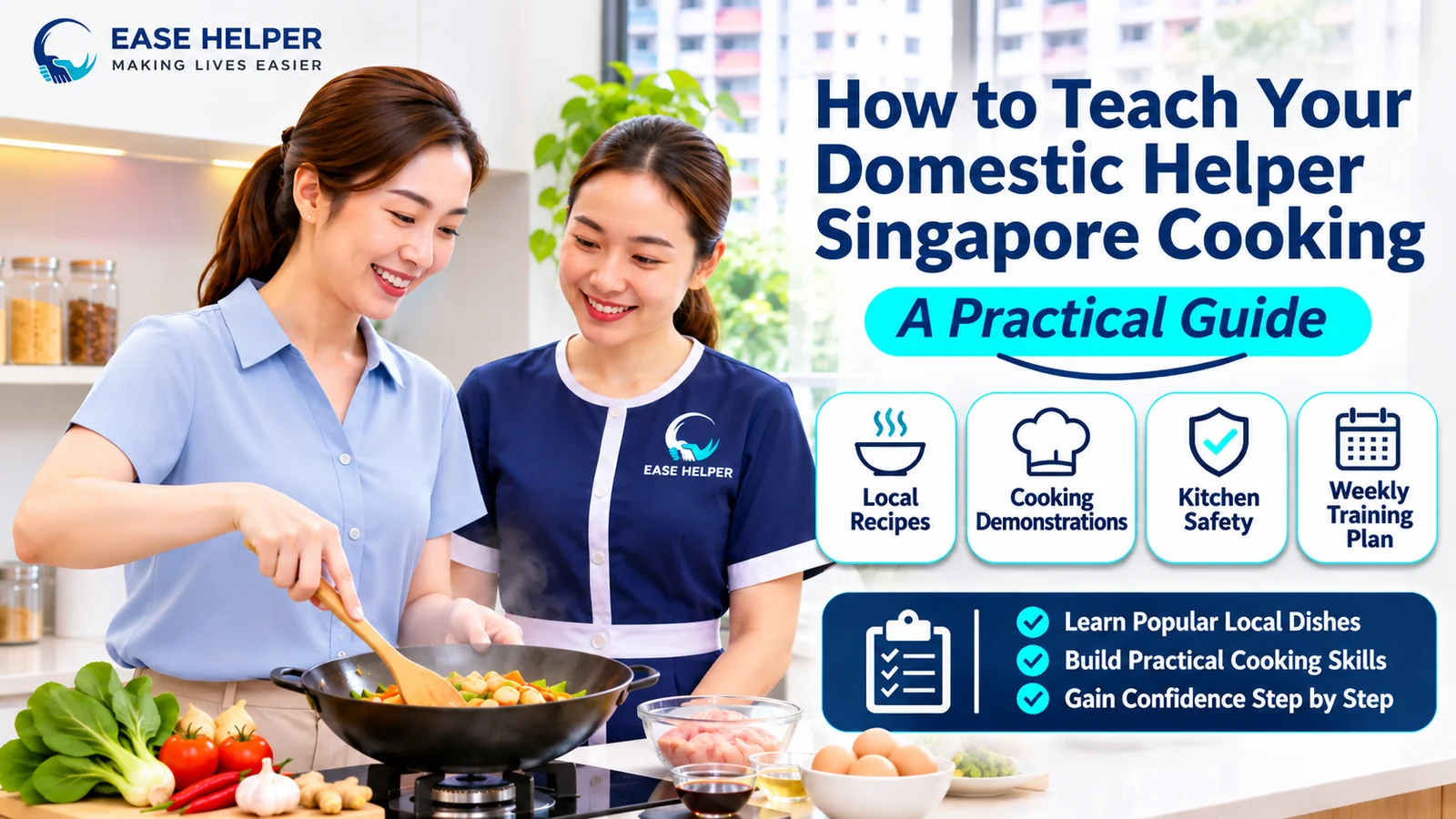
How to Teach Your Domestic Helper Singapore Cooking: A Practical Guide

Executive Summary
Learning how to teach your domestic helper Singapore cooking can make everyday meals easier for the whole household. Start with familiar dishes, demonstrate each step and use simple recipes with pictures. Next, practise essential skills such as preparing ingredients, controlling heat and adjusting seasoning. A realistic weekly training plan helps your helper gain confidence without feeling overwhelmed. Above all, provide patient feedback, maintain kitchen safety and respect different food preferences.
How to Teach Your Domestic Helper Singapore Cooking Step by Step
Many Singapore families enjoy a mixture of Chinese, Malay, Indian and other cuisines. However, a newly hired domestic helper may not know how to prepare the dishes your household prefers.
For example, she may have experience cooking rice, vegetables and soups but not know your family’s preferred version of chicken rice or fish soup.
Fortunately, you can teach your domestic helper Singapore cooking through practical demonstrations, clear recipes and regular practice.
Rather than expecting perfect results immediately, begin with simple dishes. Then, gradually introduce more ingredients, cooking methods and meal-planning responsibilities.
1. Understand Your Domestic Helper’s Cooking Experience
Before starting lessons, ask your helper what she already knows how to cook. This conversation helps you build on her existing abilities.
For instance, she may know how to stir-fry vegetables but have limited experience using an induction hob or electric rice cooker.
Additionally, ask which dishes she feels comfortable preparing independently.
Questions to Ask Before Training
- Which dishes have you cooked before?
- Have you used a gas stove or induction hob?
- Can you follow a written recipe?
- Which kitchen appliances have you used?
- Are there ingredients or cooking methods you want to learn?
- Do you prefer instructions in English, pictures or demonstrations?
Afterwards, choose two or three easy dishes for the first week. This approach creates achievable goals and reduces confusion.
2. Introduce Common Ingredients Used in Singapore Cooking
Singapore cooking often involves ingredients that may be unfamiliar to a helper from another country.
Therefore, start by showing the ingredients your family uses regularly. Explain their names, flavours, storage locations and typical uses.
| Ingredient | Common Uses | Training Tip |
|---|---|---|
| Garlic and ginger | Stir-fries, soups and marinades | Demonstrate peeling, chopping and frying |
| Light soy sauce | Seasoning vegetables, meat and noodles | Show the preferred amount |
| Dark soy sauce | Colour and flavour in selected dishes | Explain how it differs from light soy sauce |
| Sesame oil | Finishing dishes and marinades | Use small measured amounts |
| Oyster sauce | Vegetables and stir-fried dishes | Check dietary restrictions and allergies |
| Pandan leaves | Rice and desserts | Demonstrate cleaning and preparation |
| Chilli and sambal | Spicy dishes and condiments | Explain the family’s spice tolerance |
| Coconut milk | Curries, nasi lemak and desserts | Explain storage and cooking requirements |
Furthermore, label frequently used ingredients when necessary. Clear labels can prevent confusion between similar-looking sauces and seasonings.
3. Start With Five Easy Singapore Home-Cooked Dishes
When teaching your domestic helper Singapore cooking, begin with dishes that use straightforward techniques and familiar equipment.
These five dishes provide a useful starting point. However, adjust the selection to match your family’s dietary needs and preferences.
Dish 1: Garlic Stir-Fried Vegetables
Start with chye sim, spinach or another vegetable your household enjoys. Demonstrate washing, draining, chopping and stir-frying.
Next, show your helper how to control the heat and avoid overcooking the vegetables. Finally, explain your family’s preferred seasoning.
Dish 2: Steamed Egg
Steamed egg helps beginners practise measuring ingredients, mixing and controlling cooking time.
First, demonstrate the egg-to-water ratio in your family recipe. Then, explain how to achieve the preferred texture.
Dish 3: Chicken and Vegetable Soup
Simple chicken soup introduces ingredient preparation, simmering and seasoning.
Additionally, it teaches your helper to follow a sequence rather than adding every ingredient at once. Always cook poultry thoroughly.
Dish 4: Home-Style Fried Rice
Fried rice introduces ingredient preparation, heat control and timing.
Use properly refrigerated cooked rice, prepare all ingredients before heating the wok and cook the dish thoroughly. Avoid leaving cooked rice at room temperature for extended periods.
Dish 5: Simple Fish Soup
Fish soup introduces delicate ingredients and gentle cooking methods.
Show your helper how to prepare the vegetables, manage the broth and cook fish thoroughly. Then, explain your family’s preferred flavour and serving style.
Training tip: Teach one dish at a time. Once your helper can prepare it consistently, introduce another recipe. Repetition often works better than teaching several complicated dishes in one session.
4. Use the Demonstrate, Practise and Review Method
A simple teaching method makes cooking lessons easier to understand.
Step 1: Demonstrate the Recipe
Prepare the dish while your helper watches. Explain each important action using short, clear instructions.
For example, say, “Add one teaspoon of oil” instead of “Add a little oil” when teaching a new recipe.
Step 2: Let Your Helper Practise
Next, ask your helper to repeat the recipe while you supervise. Allow her to perform the steps herself whenever it is safe.
Meanwhile, answer questions and clarify instructions without interrupting every movement.
Step 3: Review the Finished Dish
After cooking, discuss the result together. Identify what worked well before suggesting improvements.
For example, explain that the vegetables need slightly less cooking time or that the soup requires a different amount of seasoning.
Step 4: Repeat With Less Supervision
Once your helper understands the process, let her prepare the dish again with less assistance.
As a result, she can gradually develop confidence and independence.
5. Create a Simple Singapore Cooking Recipe Book
A household recipe book helps your helper remember instructions between lessons.
Furthermore, it reduces the need to explain the same details repeatedly.
Include These Details for Every Recipe
- Dish name and a photograph of the finished meal.
- Ingredients with exact quantities.
- Preparation steps in the correct order.
- Cooking time and temperature where relevant.
- Preferred seasoning and spice level.
- Serving size for your household.
- Allergy or dietary warnings.
- Special family preferences.
For example, a recipe might state, “Use two cloves of garlic and one tablespoon of light soy sauce.” This instruction is clearer than asking your helper to estimate unfamiliar quantities.
Additionally, photographs can help when your helper is still learning English.
6. Teach Kitchen Equipment and Cooking Safety
Cooking training should include safe equipment use from the beginning.
First, demonstrate the stove, oven, rice cooker, microwave and other appliances your household uses.
Next, explain which equipment becomes hot and how to switch it off safely.
Essential Kitchen Safety Rules
- Keep pot handles away from the edge of the stove.
- Use dry oven mitts or suitable heat protection.
- Keep electrical appliances away from water.
- Never leave cooking unattended when supervision is necessary.
- Use stable chopping boards and safe knife techniques.
- Keep raw meat separate from cooked or ready-to-eat food.
- Wash hands and equipment after handling raw ingredients.
- Check that meat, poultry and seafood are thoroughly cooked.
- Switch off appliances after use.
- Report damaged equipment immediately.
The Singapore Food Agency’s food safety guidance provides useful advice on preventing cross-contamination, cooking thoroughly and storing food safely.
For example, SFA advises keeping raw food separate from ready-to-eat food and cooking food thoroughly. Therefore, incorporate these habits into every cooking lesson.
7. Explain Your Family’s Food Preferences
Every Singapore household has different tastes. Consequently, a recipe that works for one family may not suit another.
Before assigning meal preparation, explain your household’s preferences clearly.
Discuss These Food Preferences
- Preferred level of salt and oil.
- Spicy or non-spicy meals.
- Vegetarian or other dietary requirements.
- Food allergies and ingredients to avoid.
- Children’s preferred meals.
- Soft-textured meals for elderly family members when appropriate.
- Portion sizes and meal times.
For example, one family may prefer mild chicken soup, while another enjoys strongly seasoned dishes.
Instead of assuming your helper understands these preferences, demonstrate the desired result.
Moreover, respect your helper’s own dietary needs. MOM advises employers to provide adequate food and remain sensitive to a helper’s religious and dietary restrictions.
Read MOM’s guidance on domestic helper well-being and adequate food.
8. Use a Four-Week Cooking Training Plan
A structured schedule helps employers teach cooking skills without overwhelming a newly hired helper.
However, adapt the pace to her experience and the household’s needs.
| Week | Training Focus | Suggested Practice | Expected Progress |
|---|---|---|---|
| Week 1 | Kitchen orientation and basic ingredients | Rice, steamed egg and simple vegetables | Understands equipment and basic preparation |
| Week 2 | Simple Singapore home-cooked meals | Chicken soup, fish soup and stir-fries | Follows recipes with supervision |
| Week 3 | Timing and preparing several dishes | One main dish, vegetables and soup | Coordinates a basic family meal |
| Week 4 | Meal planning and greater independence | Prepare selected familiar meals | Cooks routine dishes with less assistance |
At the end of each week, review the dishes your helper can prepare confidently. Then, adjust the next week’s lessons accordingly.
Remember that the schedule is an example, not a mandatory training standard. Some helpers will progress faster, while others may need additional practice.
9. Teach Grocery Planning and Ingredient Preparation
Cooking becomes easier when ingredients are available and organised.
Therefore, involve your helper in planning meals and preparing grocery lists.
First, show her how to check the refrigerator and pantry. Next, explain how to identify missing ingredients.
Then, create a simple shopping list based on the week’s meals.
Example Grocery Planning Checklist
- Check available vegetables, meat and fish.
- Review the household’s meal schedule.
- List missing ingredients and quantities.
- Check expiry dates and food condition.
- Plan suitable storage after shopping.
- Prepare ingredients close to cooking time.
- Avoid unnecessary food waste.
Additionally, teach your helper how to recognise the ingredients your family regularly buys from supermarkets or wet markets.
10. Communicate Clearly When Teaching Cooking
Language differences can make cooking instructions difficult to follow. However, simple communication techniques can reduce misunderstandings.
For example, show your helper a photograph instead of relying only on a verbal description.
Similarly, demonstrate the quantity of an ingredient rather than using vague instructions.
Useful Communication Techniques
- Give one instruction at a time.
- Use short and familiar words.
- Demonstrate unfamiliar cooking techniques.
- Use pictures, labels and short recipe videos.
- Ask your helper to explain the next step in her own words.
- Encourage questions without embarrassment.
- Provide feedback privately and respectfully.
As a result, your helper can learn more confidently while avoiding repeated mistakes.
11. Avoid Common Cooking Training Mistakes
Employers sometimes expect their helpers to reproduce complicated meals after only one demonstration.
However, learning a new cuisine takes time and practice.
| Common Mistake | Better Approach |
|---|---|
| Teaching too many dishes at once | Introduce one or two recipes before expanding the menu |
| Using vague measurements | Provide exact quantities and clear examples |
| Giving instructions while rushing | Choose a suitable time for demonstrations |
| Expecting identical results immediately | Allow repeated practice and gradual improvement |
| Correcting every small mistake harshly | Give specific, constructive feedback |
| Ignoring kitchen safety | Teach safe equipment use before independent cooking |
| Assigning cooking without enough time | Plan a reasonable workload and meal schedule |
Furthermore, avoid making cooking lessons unnecessarily stressful. Patient teaching usually creates a more positive learning environment.
12. Build Confidence Through Regular Feedback
Positive feedback helps your helper understand what she is doing well.
For example, you might say, “The vegetables are cooked well. Next time, please use slightly less soy sauce.”
This approach recognises progress while providing a clear improvement target.
Additionally, encourage your helper to record recipes she has mastered. Over time, she can build a useful collection of household favourites.
However, keep training expectations reasonable. MOM reminds employers to manage domestic helpers’ workloads fairly and provide adequate daily rest.
Refer to MOM’s domestic helper rest and well-being guidance.
Frequently Asked Questions About Teaching Domestic Helpers Singapore Cooking
1. How can I teach my domestic helper Singapore cooking if she is a beginner?
Start with simple dishes such as stir-fried vegetables, steamed egg and soup. Demonstrate each step, provide exact measurements and let her practise under supervision. Gradually introduce more complicated recipes.
2. Which Singapore dishes should a domestic helper learn first?
Good starting dishes include garlic vegetables, steamed egg, chicken soup, home-style fried rice and fish soup. Choose dishes your household eats regularly and adjust them to your family’s dietary needs.
3. How long does it take to train a domestic helper to cook?
The timeline depends on her previous cooking experience, language skills and the complexity of your family’s meals. A four-week introductory plan can help organise lessons, but some helpers need more time and practice.
4. What if my domestic helper cannot understand English cooking instructions?
Use photographs, ingredient labels, demonstrations and short recipe videos. Give one instruction at a time and ask her to demonstrate what she understands. Additionally, consider translated instructions when useful.
5. Should I expect my domestic helper to cook independently from the first week?
Not necessarily. First, assess her experience and teach essential kitchen safety. Then, supervise unfamiliar recipes until she can prepare them confidently. Increase independence gradually while keeping the workload reasonable.
How EaseHelper Supports Domestic Helper Cooking Training
Learning how to teach your domestic helper Singapore cooking is easier when employers provide clear instructions and realistic expectations.
At EaseHelper, we recognise the importance of practical household skills, communication and ongoing training. Our recruitment and in-house training approach helps employers identify suitable domestic helpers and establish clear household expectations.
Nevertheless, every family has its own recipes and preferences. Therefore, employers should continue providing guidance after their helper joins the household.
With patience, demonstrations and constructive feedback, families can build a more organised cooking routine.
Looking for a Domestic Helper in Singapore?
EaseHelper helps Singapore families explore domestic helper recruitment options and prepare for a smoother household transition.
Explore EaseHelper ServicesDisclaimer: This article provides general household training guidance and does not constitute professional culinary, medical or legal advice. Follow current Singapore Food Agency recommendations for safe food preparation and storage. Employers must also comply with MOM’s employment conditions, rest-day requirements and domestic helper well-being obligations.