
Blog
Household Inventory Management for Domestic Helpers in Singapore: A Practical Guide


Household inventory management for domestic helpers in Singapore helps families keep essential supplies organised, reduce unnecessary purchases and avoid running out of everyday items. With a simple system, employers can teach their domestic helpers to monitor groceries, cleaning products and household necessities without creating unnecessary paperwork.
Moreover, an organised inventory makes shopping easier. It also helps families control spending, prevent food waste and maintain a more efficient household routine.
Executive Summary
Household inventory management involves tracking what a family owns, how much remains and when items need replenishment. Employers can introduce a simple checklist, label storage areas and set clear purchasing rules. Domestic helpers should also check food expiry dates, separate cleaning chemicals from food and report damaged or missing supplies. A short weekly review can keep the system accurate and manageable.
Why Household Inventory Management Matters
Singapore households often store groceries, toiletries, cleaning products and other essentials in several locations. Consequently, families may purchase duplicate items or overlook supplies that are running low.
A practical inventory system offers several benefits:
- Better budgeting: Families can avoid unnecessary purchases.
- Less waste: Regular checks help identify food approaching its expiry date.
- Faster shopping: A current list shows what the household needs.
- Improved organisation: Everyone knows where essential items belong.
- Greater convenience: Helpers can report shortages before they disrupt daily routines.
However, inventory management should remain straightforward. A small household usually needs a checklist rather than a complicated stock-control system.
What Should Domestic Helpers Track?
Start with frequently used items. Then expand the inventory only when necessary.
| Category | Examples | Suggested Check |
|---|---|---|
| Dry groceries | Rice, noodles, flour, canned food | Weekly |
| Fresh groceries | Vegetables, fruit, dairy products | Before meal planning and shopping |
| Cleaning supplies | Dishwashing liquid, detergent, floor cleaner | Weekly |
| Toiletries | Toilet paper, soap, shampoo | Weekly |
| Baby supplies | Diapers, wipes, approved feeding supplies | As needed, often daily |
| Other essentials | Rubbish bags, batteries, household consumables | Monthly or as needed |
For example, families with infants may need more frequent checks of diapers and wipes. Meanwhile, households that cook daily may benefit from reviewing fresh ingredients before every grocery trip.
How to Create a Simple Household Inventory System
1. Identify the Main Storage Areas
First, walk through the kitchen, refrigerator, bathroom cabinets and utility area together. Show your domestic helper where each category belongs. Also explain which cupboards contain personal items that should not be included in routine checks.
2. Create a Basic Inventory Checklist
Next, prepare a notebook, printed checklist or shared spreadsheet. Record the item name, approximate quantity, minimum stock level and shopping status. Keep the format easy to understand.
3. Agree on Minimum Stock Levels
For example, a household might decide to purchase laundry detergent when only one unopened refill remains. Similarly, the family may set a minimum supply of toilet paper or rice.
These thresholds depend on household size, consumption and available storage space. Therefore, review them occasionally instead of treating them as fixed rules.
4. Establish a Shopping Approval Process
Clearly explain which items the helper may purchase independently and which purchases require approval. Also set a spending limit where appropriate.
As a result, the helper can prepare shopping lists confidently while the employer retains control over household expenses.
5. Review the Inventory Every Week
Finally, spend five to ten minutes checking the list together. Confirm which items need replenishment, identify unnecessary purchases and update the list for the following week.
Sample Household Inventory Checklist
The following example offers a starting point for Singapore families.
| Item | Quantity Available | Minimum Stock | Action |
|---|---|---|---|
| Rice | 3 kg | 2 kg | No purchase needed |
| Dishwashing liquid | Half bottle | 1 unopened refill | Add to shopping list |
| Toilet paper | 4 rolls | 6 rolls | Buy more |
| Laundry detergent | 2 unopened refills | 1 refill | No purchase needed |
| Cooking oil | 1 small bottle | 1 unopened bottle | Check before shopping |
These quantities are illustrations, not recommended minimums for every family. Employers should adjust them to their actual household needs.
How to Manage Food Expiry Dates and Reduce Waste
Food inventory requires particular attention because storage conditions and product dates affect quality and safety.
- Check package dates and storage instructions when receiving groceries.
- Place older suitable stock in front so the household can use it first.
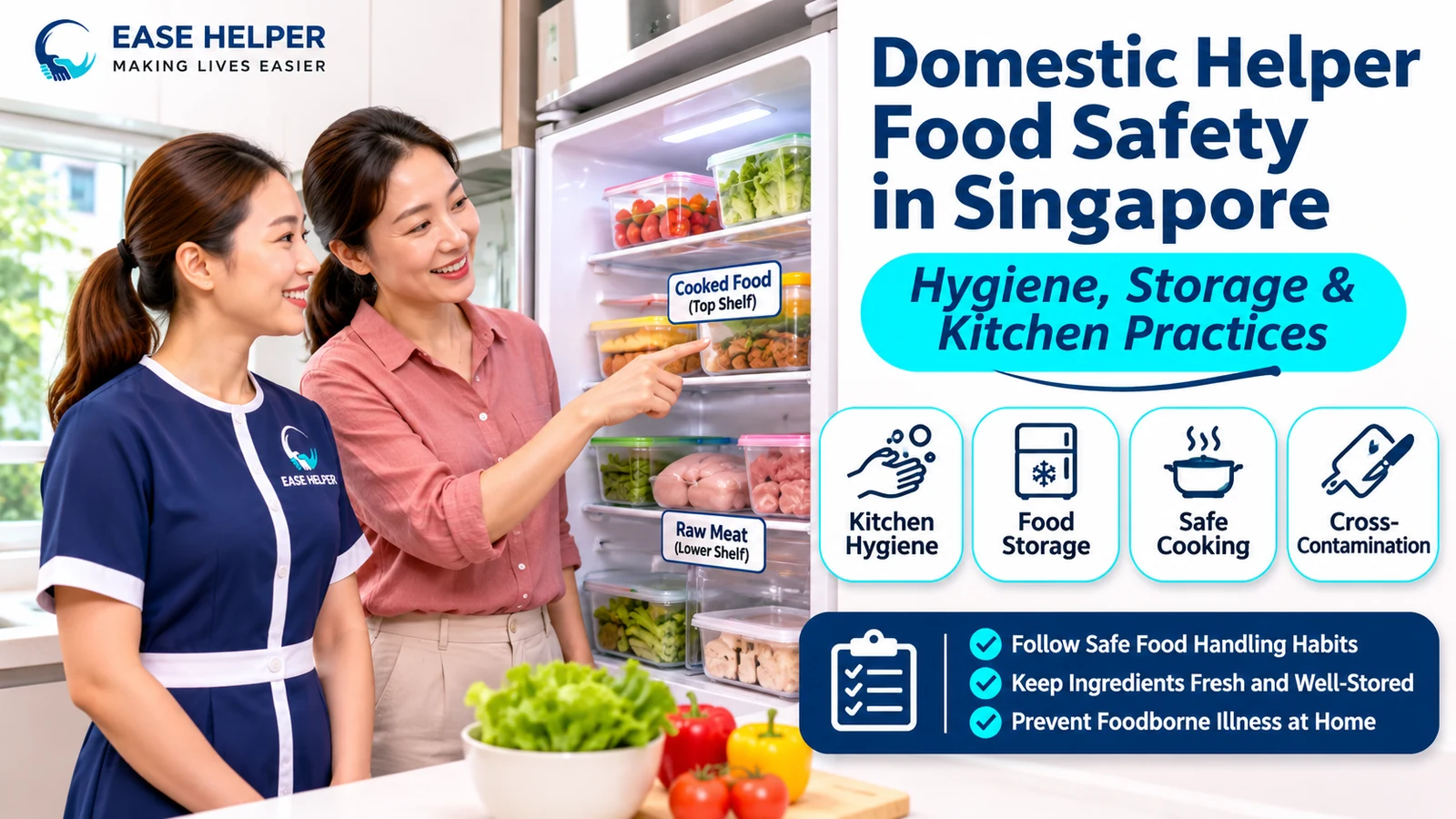
- Keep raw foods separate from ready-to-eat foods.
- Store refrigerated and frozen items promptly at suitable temperatures.
- Report damaged packaging, spoiled food or unusual smells.
- Ask the employer before discarding expensive or unfamiliar products, unless the item presents an immediate safety concern.
Importantly, rotating stock does not make expired or improperly stored food safe. When in doubt, follow food-safety guidance rather than relying on appearance alone.
For further information, consult the Singapore Food Agency.
Safe Storage of Cleaning Products
Household inventory management also includes cleaning supplies. However, helpers must store these products safely and separately from food.
Employers should explain the following rules:
- Keep cleaning chemicals in their original, labelled containers.
- Never mix bleach with other cleaning products.
- Follow product labels and safety instructions.
- Store hazardous products away from children and pets.
- Report leaking containers and damaged packaging promptly.
Safety reminder: Never transfer cleaning chemicals into beverage bottles or unlabelled food containers. This can lead to accidental poisoning.
Digital Inventory Tools Versus Paper Checklists
Not every household needs a mobile application. Instead, choose a method that suits the helper’s familiarity with technology and the employer’s preferences.
| Method | Advantages | Considerations |
|---|---|---|
| Notebook | Simple, inexpensive and easy to access | Requires manual updates |
| Printed checklist | Clear layout and easy weekly review | Needs replacement when full |
| Shared spreadsheet | Easy to organise and update | Requires suitable device access and basic training |
| Shopping list app | Convenient for shared purchases | May be unnecessary for small households |
For most families, consistency matters more than the technology. Therefore, start with one system and avoid maintaining several conflicting lists.
Common Household Inventory Mistakes to Avoid
Even a well-designed checklist can fail when responsibilities are unclear. Fortunately, employers can prevent many problems through simple instructions.
- Buying duplicates: Check cupboards before adding items to the shopping list.
- Overstocking: Consider available space and actual consumption.
- Ignoring expiry dates: Review perishable items regularly.
- Unclear purchase limits: Agree on spending rules in advance.
- Inconsistent updates: Set a predictable review day.
- Blaming the helper for every shortage: Review whether the instructions and minimum stock levels were clear.
In addition, employers should explain changes whenever the family’s routines, dietary needs or shopping habits evolve.
Training Your Domestic Helper to Manage Household Supplies
Effective training works best when employers demonstrate each task. Begin with a short walkthrough and show examples of completed inventory entries.
Then ask the helper to practise recording a few common items. Check her understanding and provide feedback. If necessary, use photographs or simple labels to make unfamiliar product names easier to recognise.
Most importantly, keep expectations realistic. Inventory management should support normal household duties, not become an excessive administrative burden.
Employers who are preparing to hire can also read our guide to hiring a domestic helper in Singapore for broader planning considerations.
Frequently Asked Questions
1. Should every domestic helper maintain a household inventory?
Not necessarily. However, a simple checklist can help when a helper regularly manages groceries or household supplies. The level of detail should reflect the family’s needs.
2. How often should household inventory be checked?
A weekly review works for many non-perishable supplies. Nevertheless, fresh groceries, infant essentials and other frequently used items may need more regular checks.
3. Can a domestic helper purchase household supplies independently?
Employers can agree on suitable purchasing responsibilities. They should also explain budgets, preferred products and which purchases require prior approval.
4. What is the easiest household inventory system?
A printed checklist or notebook is often sufficient. Start with essential items, record approximate quantities and mark what needs replenishment.
5. How can employers reduce food waste through inventory management?
Plan meals around suitable existing ingredients, check food dates, store products correctly and purchase realistic quantities. In addition, review leftovers and perishables before shopping.
Looking for a Domestic Helper in Singapore?
EaseHelper helps Singapore families find suitable domestic helpers for household responsibilities, including cleaning, cooking and everyday home management.
Explore your options and discuss your family’s requirements with our team.
Explore EaseHelperDisclaimer: This article provides general household-management guidance. Families should adapt inventory practices to their own needs and follow current Singapore food-safety and product-safety instructions. It does not replace professional advice or official regulatory guidance.