
Blog
Hiring a Domestic Helper for Elderly Care in Singapore: A Complete Guide

Executive Summary
Hiring a domestic helper for elderly care in Singapore can help families manage daily household responsibilities while supporting an older person’s comfort, independence and routine.
However, elderly care needs vary widely. Some seniors only need help with meals and housekeeping. Others require assistance with walking, personal hygiene or daily activities.
This guide explains how to assess caregiving experience, interview candidates, prepare the home, establish safe routines and understand the limits of a domestic helper’s responsibilities.
Key takeaway: Choose a domestic helper based on the elderly person’s individual needs, the candidate’s demonstrated skills and the family’s ability to provide appropriate training and supervision.
1. Why Families Hire a Domestic Helper for Elderly Care in Singapore
As family members grow older, everyday activities may become more challenging. Some seniors need help preparing meals, keeping their homes clean or attending appointments.
Meanwhile, working family members may struggle to balance employment, childcare and caregiving responsibilities.
Therefore, hiring a domestic helper can provide practical household support and help families maintain a consistent daily routine.
A domestic helper may assist with:
- Preparing meals according to dietary instructions.
- Cleaning and organising the elderly person’s living space.
- Supporting suitable daily activities.
- Accompanying seniors on approved outings.
- Helping with dressing and personal hygiene where appropriate.
- Providing companionship and conversation.
- Reporting changes in the elderly person’s condition.
However, domestic helpers are not automatically qualified nurses or professional caregivers. Families must match responsibilities to each helper’s training, abilities and experience.
2. Understand Your Elderly Family Member’s Care Needs
Before interviewing candidates, identify the type of assistance your elderly family member needs.
This first step helps you choose a suitable candidate and avoid unrealistic expectations.
Independent Seniors
Some elderly people can walk, eat and manage personal hygiene independently. However, they may appreciate help with cooking, cleaning, shopping and companionship.
In this situation, household skills and communication may matter more than advanced caregiving experience.
Seniors Who Need Mobility Assistance
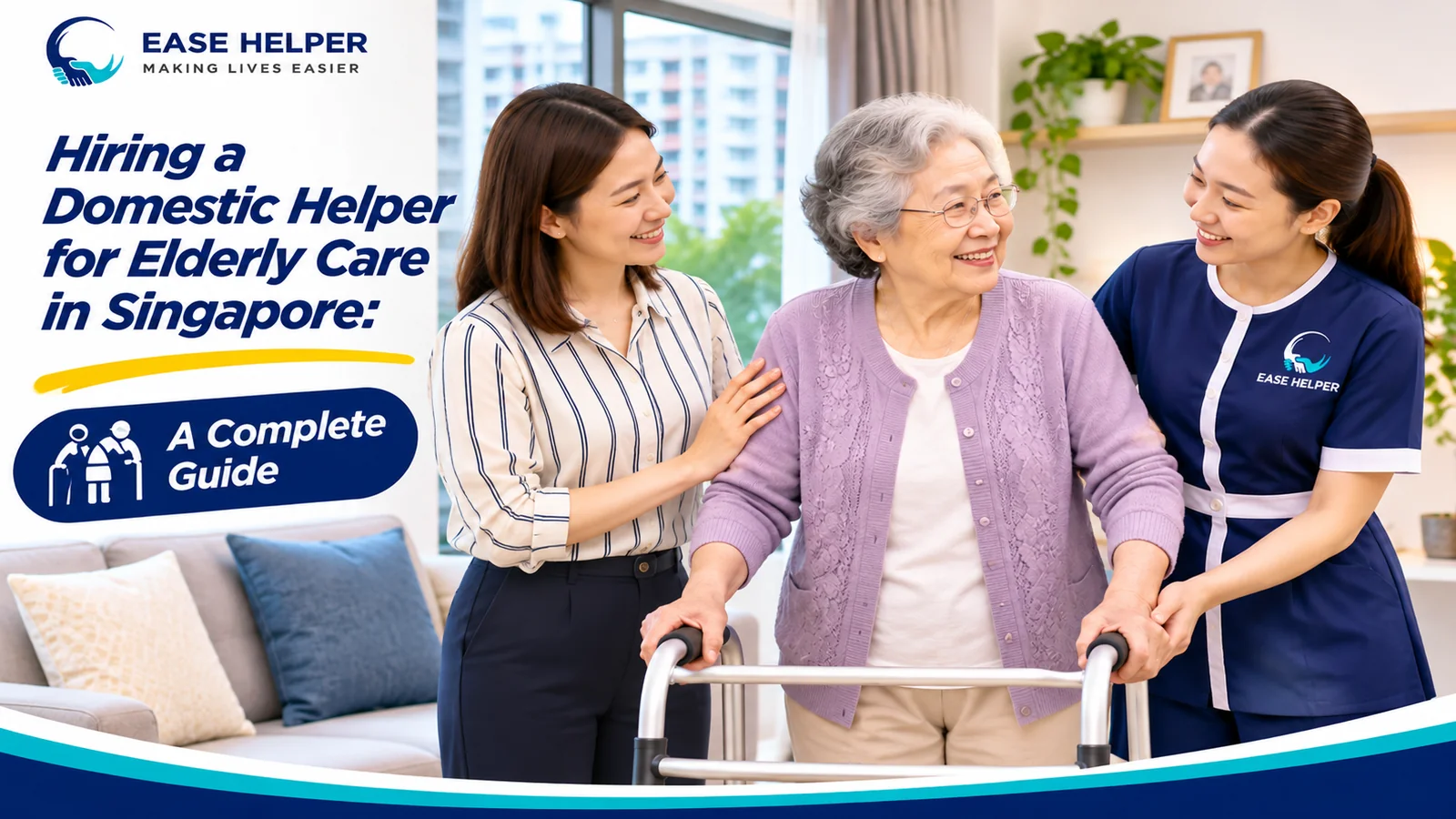
Other seniors may use a walking stick, walking frame or wheelchair. Therefore, the helper may need relevant training to assist safely with everyday movement.
Families should assess the candidate’s experience and seek professional guidance on safe transfer techniques where necessary.
Seniors With Complex Health Conditions
Some elderly people live with dementia, serious mobility limitations or multiple medical conditions.
These situations may require additional supervision, specialist training or professional healthcare support.
Consequently, families should discuss care arrangements with the elderly person’s healthcare team before assigning complex responsibilities.
3. What Skills Should an Elderly Care Domestic Helper Have?
A suitable domestic helper should demonstrate practical abilities that match the senior’s daily needs.
| Skill | What Employers Should Assess | Why It Matters |
|---|---|---|
| Communication | Can understand instructions and report concerns clearly. | Supports safe and consistent care. |
| Mobility awareness | Recognises fall risks and follows approved mobility instructions. | Helps reduce avoidable accidents. |
| Personal hygiene | Understands cleanliness, privacy and respectful assistance. | Supports dignity and comfort. |
| Meal preparation | Can follow dietary and food preparation instructions. | Supports daily nutrition routines. |
| Patience | Responds calmly to repeated questions or slower movements. | Helps create a respectful environment. |
| Emergency awareness | Knows when to alert family members or emergency services. | Supports timely assistance. |
Importantly, employers should assess these skills through interviews and practical discussions rather than relying on claims of experience alone.
4. Essential Interview Questions for Elderly Care Helpers
A structured interview can reveal how a candidate approaches daily caregiving situations.
Consider asking the following questions:
- Have you cared for an elderly person before?
- What was the person’s age and level of independence?
- What daily tasks did you perform?
- Have you assisted someone who uses a walking frame or wheelchair?
- How would you respond if an elderly person felt dizzy?
- What would you do if the person refused a meal?
- How would you communicate with someone who has hearing difficulties?
- Have you supported someone living with dementia?
- What would you do if the elderly person fell?
- How would you report a change in the person’s condition?
- What would you do if you did not understand an instruction?
- How would you respect the elderly person’s privacy and preferences?
Next, ask candidates to describe real situations from their previous employment.
For example, a candidate who says she has experience with mobility assistance should explain what equipment she used and whether she received training.
Additionally, parents and other family members can use our Myanmar vs Indonesian Domestic Helper comparison to understand why individual suitability matters more than nationality.
5. How to Assess Previous Elderly Care Experience
Previous employment can provide useful information. Nevertheless, the number of years worked does not always indicate the level of caregiving skill.
Ask About Specific Responsibilities
Find out whether the candidate mainly handled housekeeping or provided direct daily assistance to an elderly person.
For example, preparing meals for a senior differs from assisting someone with limited mobility.
Explore Her Training Background
Ask whether she attended relevant caregiving training and what practical skills she learned.
However, remember that a training certificate alone does not guarantee competence.
Check Communication Skills
Communication is especially important when an elderly person speaks a particular language or has hearing difficulties.
Therefore, consider arranging an interview that allows the candidate and the elderly family member to interact where appropriate.
6. Fresh vs Experienced Domestic Helpers for Elderly Care
Families often ask whether they should hire a fresh or experienced domestic helper.
The answer depends on the senior’s needs and the family’s training capacity.
Experienced Domestic Helpers
An experienced candidate may already understand household routines and some caregiving responsibilities.
However, employers should still verify her experience and provide clear instructions about the elderly person’s needs.
Fresh Domestic Helpers
A fresh helper may need more time to learn household expectations and caregiving routines.
Nevertheless, she may be suitable for less complex responsibilities if the family can provide appropriate training and supervision.
For seniors who require extensive physical assistance or specialised care, families should seek professional advice before deciding whether a particular helper can meet those needs.
7. Preventing Falls and Improving Home Safety
Falls can cause serious injuries among older adults. Therefore, families should identify hazards and make the home easier to navigate.
Start with these practical precautions:
- Keep walkways clear of loose objects.
- Remove or secure loose rugs and electrical cables.
- Maintain suitable lighting, especially at night.
- Keep frequently used items within easy reach.
- Use appropriate bathroom safety equipment where recommended.
- Check that footwear provides suitable support.
- Follow professional advice on walking aids and transfers.
Additionally, explain that the helper should not attempt to lift a person beyond her abilities or use an unfamiliar transfer technique.
Safety reminder: If an elderly person falls, the helper should assess immediate danger, contact the family and seek appropriate medical assistance. She should not automatically lift or move someone who may have a serious injury.
8. Supporting Seniors With Dementia
Some families need household support for an elderly person living with dementia.
Because dementia affects memory, communication and behaviour differently, families should provide clear guidance that reflects the person’s individual needs.
Helpful approaches may include:
- Maintaining familiar daily routines.
- Using simple and respectful communication.
- Allowing sufficient time for responses.
- Avoiding unnecessary arguments or confrontation.
- Keeping important personal items in familiar places.
- Reporting unusual changes in behaviour.
However, a domestic helper should not independently manage complex behavioural or medical issues.
Instead, the family should consult qualified healthcare professionals and obtain appropriate training where necessary.
9. Medication, Medical Appointments and Healthcare Responsibilities
Many elderly people take regular medication or attend medical appointments.
Consequently, employers should explain how the helper can support these routines without exceeding her competence.
A helper may assist with appointment reminders, transport arrangements and communication with family members.
However, families should not expect her to diagnose symptoms, change medication doses or perform medical procedures without appropriate professional direction and training.
For medication administration and other healthcare tasks, follow the elderly person’s healthcare team’s instructions and confirm who is qualified to perform each task.
For Singapore-based healthcare information, visit HealthHub or consult the person’s healthcare provider.
10. Creating a Daily Elderly Care Routine
A consistent routine can help both the elderly person and the domestic helper manage daily activities.
However, the schedule should remain flexible enough to accommodate the senior’s preferences, appointments and health needs.
| Time of Day | Example Activities | Important Considerations |
|---|---|---|
| Morning | Breakfast, hygiene and preparation for the day. | Allow enough time and respect personal preferences. |
| Late morning | Suitable activities, companionship or appointments. | Follow mobility and activity guidance. |
| Afternoon | Lunch, rest and light household tasks. | Balance household work with care needs. |
| Evening | Dinner preparation and household organisation. | Maintain safe movement and clear walkways. |
| Night | Preparing the bedroom and reviewing any concerns. | Plan overnight support and the helper’s rest appropriately. |
Furthermore, families should avoid assigning so many duties that the helper cannot provide safe support or obtain adequate rest.
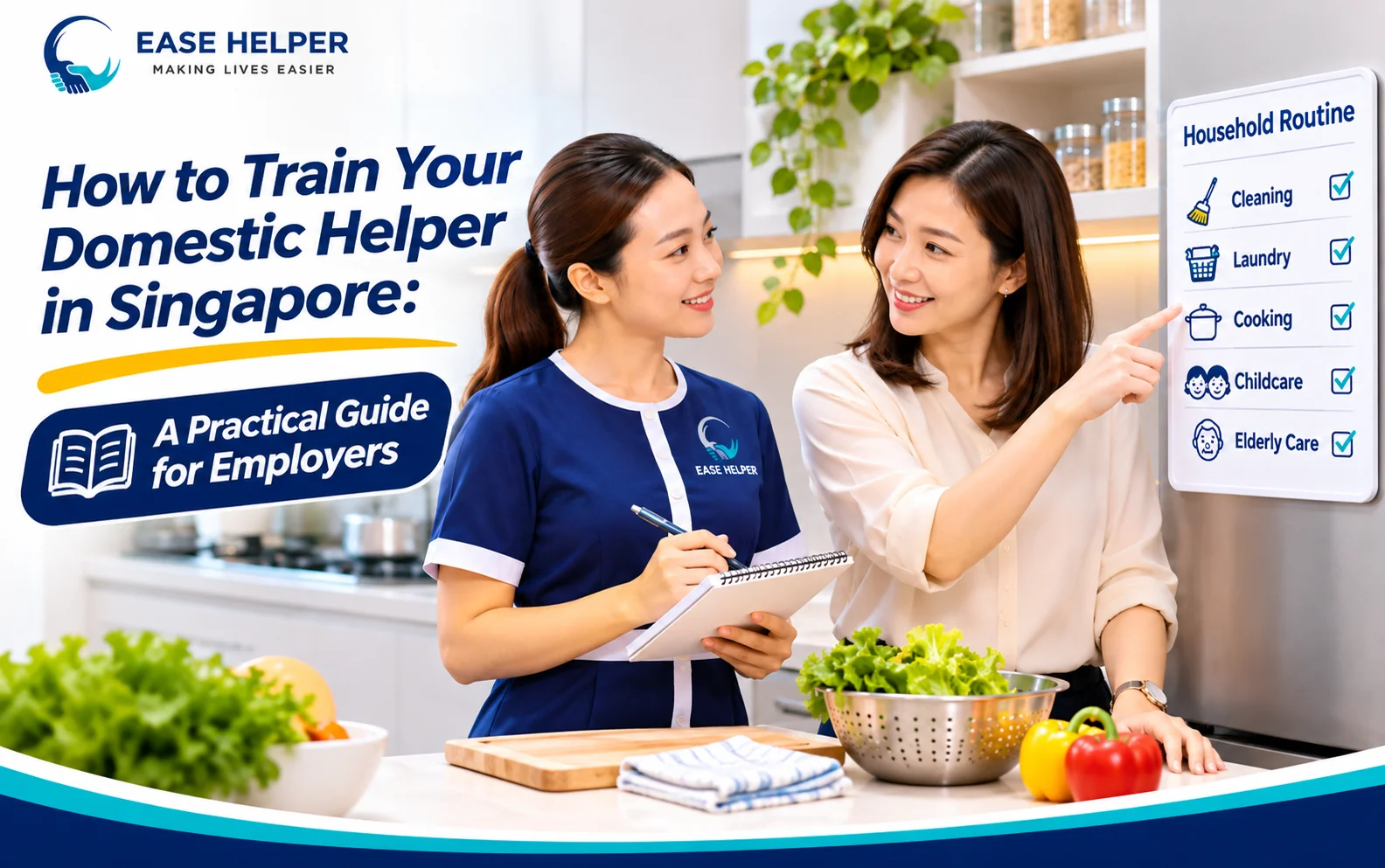
11. Training Your Domestic Helper for Elderly Care
Even experienced domestic helpers need orientation when they join a new household.
Therefore, employers should introduce responsibilities gradually and demonstrate important routines.
First Day: Household Orientation
Show the helper the elderly person’s living areas, bathroom, essential supplies and emergency contacts.
Next, explain the senior’s preferences, communication needs and any safety precautions.
First Week: Supervised Daily Routines
Demonstrate suitable household tasks and observe how the helper follows instructions.
Where the elderly person needs physical assistance, arrange appropriate professional guidance rather than relying on untrained trial and error.
Ongoing Training and Feedback
Review routines regularly and encourage the helper to ask questions.
Additionally, update instructions when the senior’s condition or household requirements change.
Families can also read our complete guide to hiring a domestic helper in Singapore for broader hiring and preparation considerations.
12. Employment Responsibilities and Domestic Helper Welfare
Employers must comply with Singapore’s Ministry of Manpower requirements when hiring a migrant domestic worker.
These include applicable Work Permit conditions, insurance, rest days, accommodation and other employment responsibilities.
Importantly, caring for an elderly person does not remove the employer’s responsibility to provide appropriate rest and working conditions.
If a senior needs continuous supervision, the family should consider additional care arrangements rather than assuming one domestic helper can work around the clock.
Review the latest official information from:
For ongoing employment planning, our Domestic Helper Work Permit Renewal Guide
13. When Should Families Consider Professional Elderly Care?
A domestic helper can provide valuable household assistance. However, some seniors require care beyond ordinary domestic helper responsibilities.
For example, families should seek professional advice when the elderly person needs:
- Complex wound care or medical procedures.
- Specialised rehabilitation or physiotherapy.
- Extensive physical transfers or lifting assistance.
- Advanced dementia care.
- Frequent medical monitoring.
- Continuous supervision that exceeds reasonable household arrangements.
In these situations, families may need a combination of domestic help, professional home care and other community support services.
Singapore’s Agency for Integrated Care (AIC) provides information about eldercare services and support options.
14. How EaseHelper Supports Families Hiring for Elderly Care
EaseHelper helps Singapore families explore domestic helper candidates based on their household requirements.
When elderly care is a priority, we encourage families to describe the senior’s daily needs clearly.
Our placement support may include:
- Discussing household and elderly care requirements.
- Identifying candidates with relevant experience.
- Arranging candidate interviews.
- Helping employers consider communication and suitability.
- Discussing training expectations.
- Providing guidance on applicable hiring procedures.
Nevertheless, families should assess each candidate independently and arrange professional training or healthcare support where necessary.
Frequently Asked Questions
Can a domestic helper care for an elderly person in Singapore?
Yes. A domestic helper may assist with suitable daily activities and household responsibilities. However, employers must match tasks to her abilities and provide appropriate guidance, supervision and training.
Do I need an experienced helper for elderly care?
Not always. The right experience level depends on the senior’s needs. For complex mobility or health conditions, relevant experience and professional training become particularly important.
Can a helper assist an elderly person who uses a wheelchair?
A helper may provide suitable assistance if she has the necessary skills and training. However, families should obtain professional guidance on safe movement and transfers where required.
Can a domestic helper administer medication?
Families should follow the elderly person’s healthcare team’s instructions. A helper should not independently make medication decisions or perform tasks beyond her training and competence.
What if my elderly parent has dementia?
Explain the person’s routines and communication needs clearly. Additionally, seek professional advice about dementia care, safety and any specialist support the household may require.
How can I find a suitable elderly care helper?
Start by identifying your family member’s daily needs. Next, interview candidates, assess their practical experience and discuss the level of training and supervision required.
Conclusion
Hiring a domestic helper for elderly care in Singapore can provide valuable household support and help families manage everyday responsibilities.
However, successful arrangements begin with a clear understanding of the elderly person’s needs.
Therefore, assess candidates carefully, establish safe routines and provide suitable training. In addition, seek professional healthcare support whenever the person’s condition requires specialist care.
With realistic expectations and regular communication, families can create a more supportive home environment while respecting both the elderly person’s dignity and the helper’s welfare.
Looking for a Domestic Helper to Support an Elderly Family Member?
EaseHelper can help you explore domestic helper candidates whose experience and skills may suit your household needs.
Share your requirements with our team and learn more about the hiring process in Singapore.
Explore EaseHelper ServicesDisclaimer: This article provides general information for Singapore employers. It does not replace medical advice, professional caregiving training or official MOM guidance. Employment requirements and healthcare recommendations may change. Always check current official sources and consult qualified professionals where appropriate.