Blog
How to Train a Myanmar Domestic Helper: A 30-Day Household Training Plan

Executive Summary
Learning how to train a Myanmar domestic helper effectively can make the first month of employment smoother for both the helper and the Singapore household. A structured 30-day training plan helps employers introduce household routines, cleaning standards, food preparation, communication, and safety procedures gradually. This guide provides a practical weekly schedule, daily training methods, and progress checklists while emphasising patience, reasonable workloads, adequate rest, and respectful communication.
Why a 30-Day Training Plan Matters for Myanmar Domestic Helpers
When employers hire a Myanmar domestic helper in Singapore, they may need to introduce unfamiliar household equipment, routines, or expectations. However, training needs depend on each person’s previous experience, skills, and language ability rather than nationality alone.
For example, an experienced helper may already know how to operate a washing machine and prepare meals. A first-time helper may need more guidance with these tasks. Therefore, employers should assess existing skills before deciding what to teach.
A structured plan helps households:
- Explain duties clearly without overwhelming the helper.
- Prioritise essential safety procedures.
- Reduce misunderstandings and avoidable mistakes.
- Develop consistent cleaning and cooking routines.
- Measure progress through practical demonstrations.
- Build confidence and mutual trust.
Singapore’s Ministry of Manpower (MOM) encourages employers to orientate and train new domestic helpers, especially during the initial adjustment period. Employers should also support their helpers’ well-being.
Before Day 1: Prepare Your Household Training Checklist
Before starting your Myanmar domestic helper training plan, prepare a simple written or visual guide. Keep instructions short, practical, and easy to understand.
Prepare These Five Essentials
- Household schedule: Outline regular meals, cleaning periods, and important family routines.
- Appliance instructions: Explain how to operate the washing machine, cooker, vacuum cleaner, and other essential equipment.
- Safety information: Identify emergency contacts, fire exits, hazardous products, and unsafe activities.
- Cleaning standards: Demonstrate how you want different surfaces, bathrooms, and bedrooms maintained.
- Communication arrangements: Explain how your helper should ask questions, report problems, and contact you when necessary.
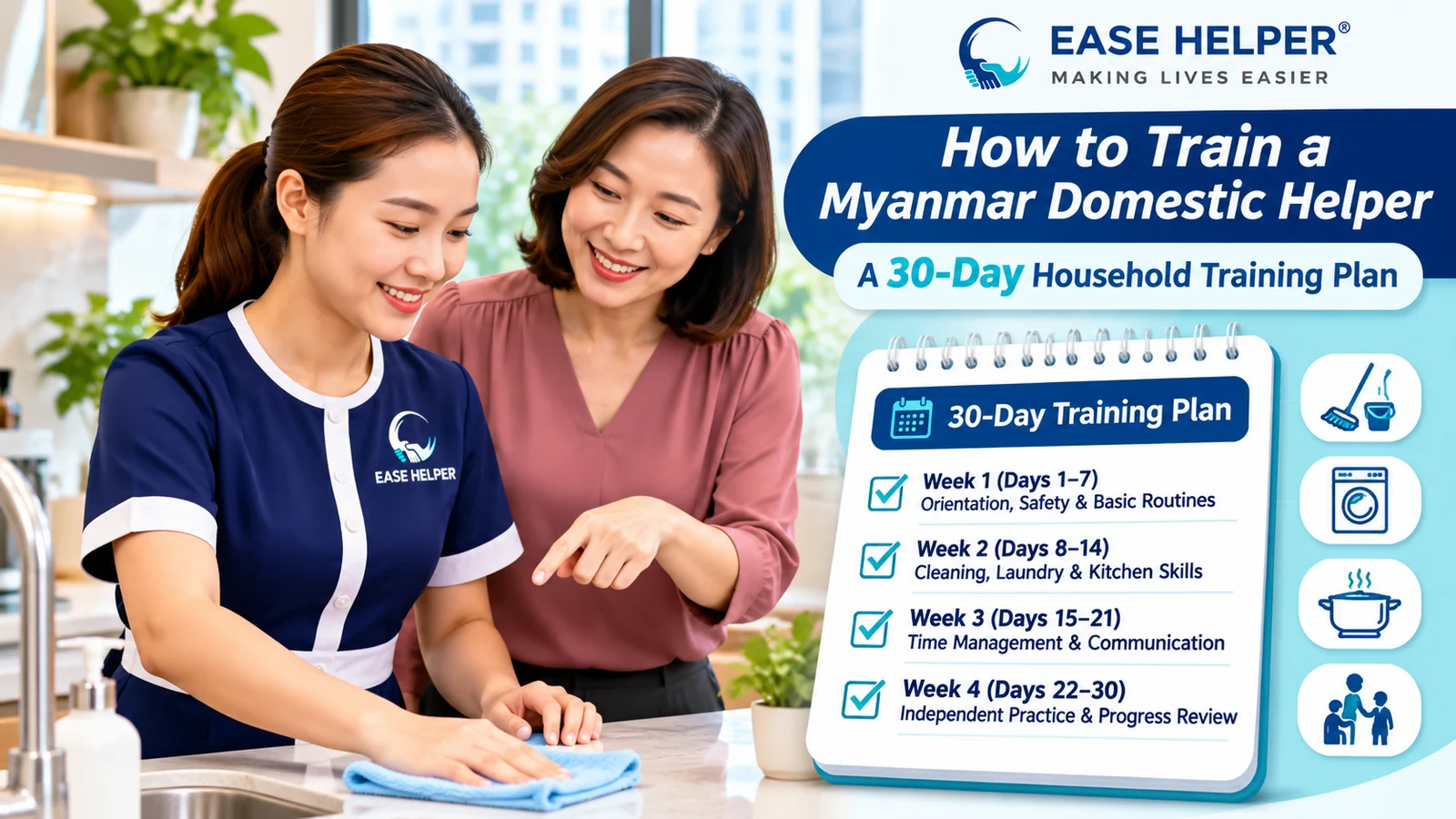
Week 1 (Days 1–7): Orientation, Safety and Basic Household Routines
The first week should focus on settling in and understanding the home. Avoid assigning every household responsibility immediately.
Day 1: Welcome and Household Orientation
- Introduce family members and explain their daily routines.
- Show the helper her accommodation, bathroom, and personal storage space.
- Explain meal arrangements, rest periods, and agreed rest days.
- Show emergency exits, first-aid supplies, and important telephone numbers.
- Explain how to contact the employer if a problem occurs.
Days 2–3: Cleaning Fundamentals
Demonstrate safe sweeping, mopping, dusting, and surface cleaning. Explain which products are suitable for different materials. Show the helper how to read product labels and never mix cleaning chemicals.
Ask her to repeat each task while you observe. Then provide constructive feedback without expecting immediate perfection.
Days 4–5: Laundry and Kitchen Basics
Introduce garment sorting, laundry labels, washing-machine settings, handwashing, food hygiene, and basic kitchen equipment. Explain how to separate raw and cooked food and handle sharp objects safely.
Days 6–7: Review and Adjust
Review the helper’s understanding through simple demonstrations. Discuss which tasks feel comfortable and which require further practice. Keep the workload reasonable and respect the agreed rest-day arrangements.
Week 2 (Days 8–14): Cleaning, Laundry and Kitchen Skills
During the second week, focus on improving consistency rather than introducing too many new duties.
Bathroom and Bedroom Cleaning
- Demonstrate cleaning toilets, sinks, and bathroom floors safely.
- Explain how to prevent slips and falls.
- Teach bed-making, linen changes, and dust removal.
- Show where equipment should be stored after use.
Laundry and Ironing
- Sort white, dark, and delicate garments.
- Read care labels before washing.
- Choose suitable wash cycles and detergent amounts.
- Practise safe ironing and proper clothing storage.
Cooking and Food Preparation
Begin with simple meals familiar to the household. Demonstrate one recipe at a time and explain ingredients, preparation steps, and kitchen hygiene. Ask the helper to confirm instructions before starting unfamiliar tasks.
For households with special dietary requirements or allergies, provide clear written instructions and explain how to avoid cross-contact.
Week 3 (Days 15–21): Time Management and Communication
By the third week, the helper may be ready to perform familiar tasks more independently. Nevertheless, employers should continue checking safety and understanding.
Introduce a Daily Priority List
Separate household duties into essential tasks and flexible tasks. For example, meal preparation and scheduled caregiving may take priority over non-urgent organising or deep cleaning.
Teach the helper to ask which task is most important when several requests arrive at the same time.
Practise Everyday Communication
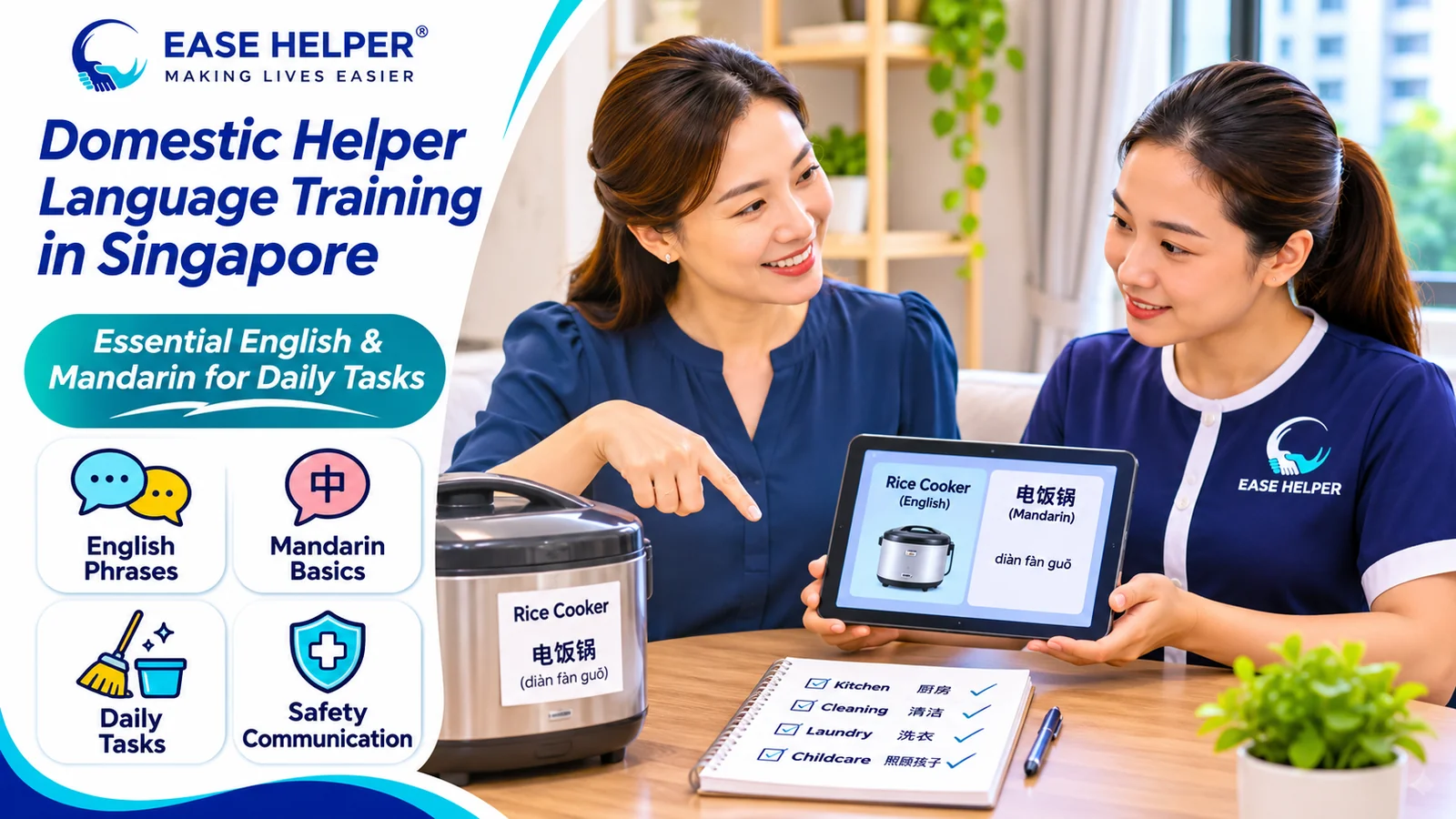
Use short, clear English instructions and practical demonstrations. Where helpful, provide translated notes or pictures. Avoid assuming that all Myanmar helpers have the same English or Mandarin ability.
Useful phrases include:
- “Please show me how to do this.”
- “I do not understand. Could you explain again?”
- “The cleaning product is finished.”
- “Something is broken. I will inform you.”
- “Which task should I do first?”
Develop Problem-Reporting Habits
Encourage the helper to report spills, damaged equipment, missing items, and safety concerns promptly. Make it clear that reporting a mistake is better than hiding it.
Week 4 (Days 22–30): Independent Practice and Progress Review
The final week focuses on performing established routines with less supervision. It is not a deadline by which every helper must master every household skill.
Days 22–25: Supervised Independence
Let the helper manage familiar cleaning and laundry tasks independently. Review completed work and explain any improvements needed.
Days 26–28: Household Routine Practice
Allow the helper to follow an agreed daily schedule. Observe whether she can prioritise tasks, use equipment safely, and communicate when she needs help.
Days 29–30: Training Review
Discuss strengths, areas for improvement, and additional support. Agree on the next training priorities rather than judging progress only by speed.
30-Day Myanmar Domestic Helper Training Schedule
| Period | Main Training Focus | Suggested Progress Check |
|---|---|---|
| Days 1–3 | Orientation, communication, emergency awareness | Can explain whom to contact and identify key household safety rules |
| Days 4–7 | Basic cleaning, laundry, kitchen hygiene | Can demonstrate essential tasks safely with guidance |
| Days 8–10 | Bathroom, bedroom, and floor cleaning | Uses appropriate tools and cleaning products |
| Days 11–14 | Laundry, ironing, simple meal preparation | Follows labels, recipes, and safety instructions |
| Days 15–18 | Task prioritisation and household schedules | Can identify urgent versus flexible tasks |
| Days 19–21 | Communication and problem reporting | Asks questions and reports concerns promptly |
| Days 22–25 | Independent practice with supervision | Completes familiar duties consistently |
| Days 26–28 | Managing an agreed daily routine | Follows a reasonable schedule and seeks help when needed |
| Days 29–30 | Progress review and next steps | Identifies strengths and future training needs |
This schedule is an illustrative training framework, not a MOM-mandated 30-day programme. Adapt it to the helper’s experience, household needs, and required rest arrangements.
How to Train a Myanmar Domestic Helper With Limited English
Language differences can make instructions harder to follow. However, clear demonstrations and supportive communication can reduce misunderstandings.
- Demonstrate: Show the task slowly before asking the helper to perform it.
- Use visual references: Provide pictures, labels, or short checklists.
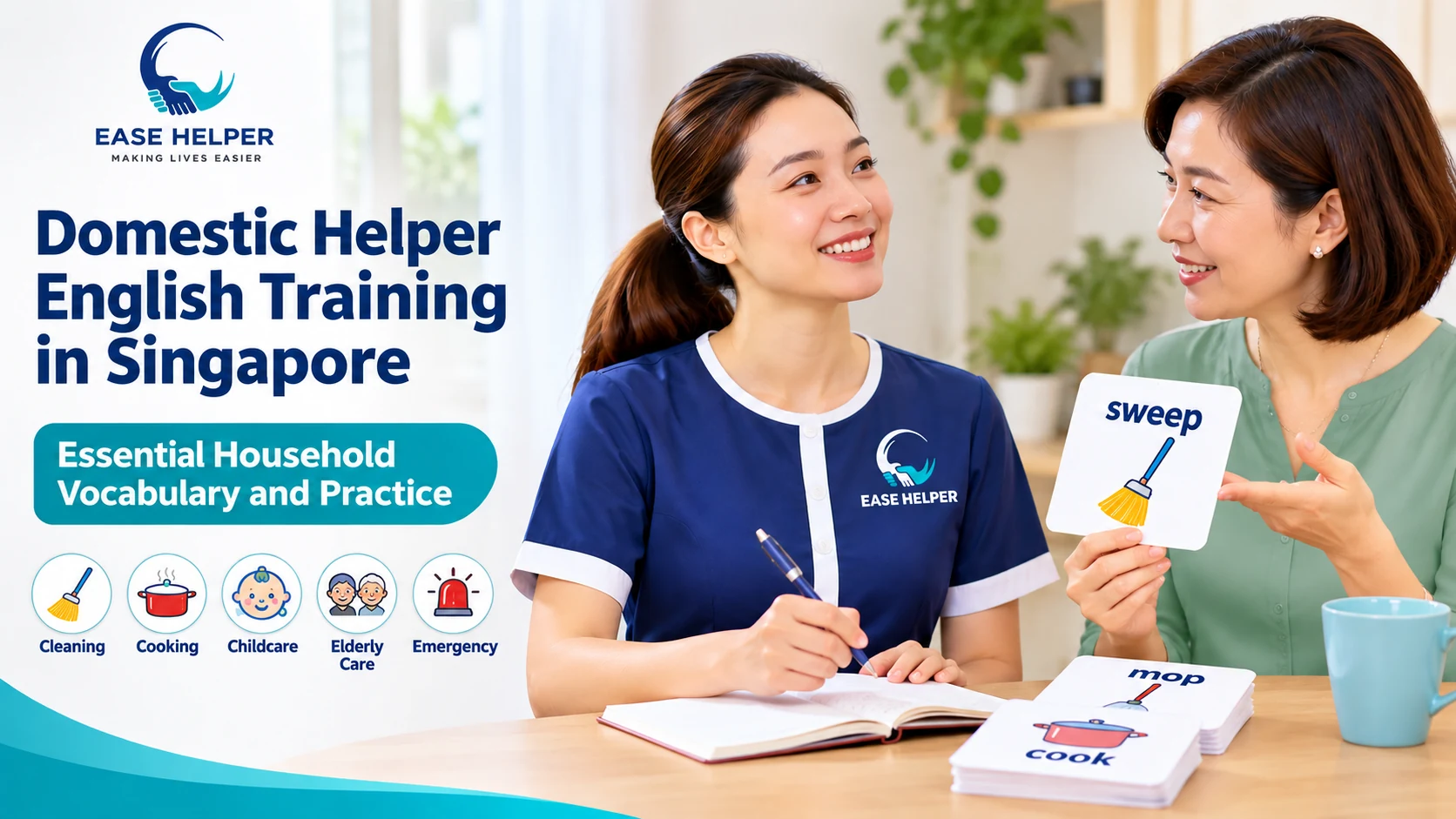
- Teach essential vocabulary: Focus on common household objects and safety terms.
- Confirm understanding: Ask the helper to demonstrate the task rather than simply asking whether she understands.
- Repeat when needed: Review important instructions patiently.
For further guidance, employers can explore structured domestic helper support and training resources from EaseHelper.
Common Mistakes Employers Should Avoid During Training
| Common Mistake | Better Approach |
|---|---|
| Giving many instructions at once | Teach one process at a time and confirm understanding |
| Assuming previous experience guarantees familiarity | Assess practical skills and household-specific knowledge |
| Expecting immediate independence | Increase responsibility gradually as confidence develops |
| Using criticism without explanation | Give specific, respectful feedback and demonstrate corrections |
| Ignoring safety procedures | Teach emergency response and safe equipment use first |
| Overloading the helper’s schedule | Set reasonable priorities and provide adequate rest |
Training for Childcare, Infant Care and Elderly Care
Some households require additional caregiving duties. These responsibilities need more than a general cleaning or cooking checklist.
For infant care, explain safe handling, feeding instructions, hygiene, and when to alert parents. For elderly care, demonstrate mobility support, fall prevention, and communication with family members.
Where duties involve specialised care, medical equipment, or complex needs, arrange appropriate professional instruction. A domestic helper should not be expected to perform clinical procedures without suitable training and authorisation.
Employers should clearly explain caregiving expectations and ensure that the workload remains manageable.
Employer Responsibilities During the First Month
Training should support a positive working relationship, not create unreasonable demands.
Under MOM’s guidance, employers must provide adequate food, suitable accommodation, medical care, and required rest days. Domestic helpers are entitled to a weekly rest day, with at least one rest day each month that cannot be compensated away.
Employers should also explain safe working practices and maintain open communication. Review the official MOM rest days and well-being guidance for current requirements.
Frequently Asked Questions
1. How long does it take to train a Myanmar domestic helper?
Training time varies according to previous experience, communication ability, household complexity, and assigned duties. A 30-day plan provides a useful starting structure, but some tasks may require longer practice.
2. What should employers teach during the first week?
Start with household orientation, emergency procedures, safe equipment use, communication, basic cleaning, and essential daily routines. Avoid introducing too many unfamiliar duties immediately.
3. How can I train a Myanmar helper who speaks limited English?
Use short instructions, demonstrations, translated notes where appropriate, and visual checklists. Ask the helper to demonstrate important tasks so you can confirm understanding.
4. Should an experienced Myanmar helper follow the same training plan?
Not necessarily. Experienced helpers may need only household-specific orientation and selected refresher training. Assess their existing skills before choosing the training schedule.
5. Can an employment agency help with domestic helper training?
Yes. An employment agency may provide pre-placement training, guidance, and practical support. Employers should ask which training areas are covered and whether additional instruction is available for their household’s needs.
Conclusion
Learning how to train a Myanmar domestic helper is easier when employers use a clear, practical, and flexible approach. A 30-day household training plan can help introduce essential routines, improve communication, and build confidence while reducing avoidable mistakes.
Ultimately, successful training depends on realistic expectations, patient demonstrations, safe working conditions, and ongoing feedback. Continue reviewing progress beyond the first month whenever additional support is needed.
Looking for a Myanmar Domestic Helper in Singapore?
EaseHelper helps Singapore families explore domestic helper options and understand practical household preparation. Whether you need assistance with cleaning, cooking, childcare, or elderly care, our team can help you consider suitable requirements and next steps.
Explore EaseHelperDisclaimer: This article provides general household training guidance and does not replace official MOM requirements, professional caregiving instruction, or individual employment advice. Employers should verify current regulations and adapt training to their helper’s skills and circumstances.