Blog
How to Teach Your Domestic Helper Laundry and Ironing Skills in Singapore

Executive Summary
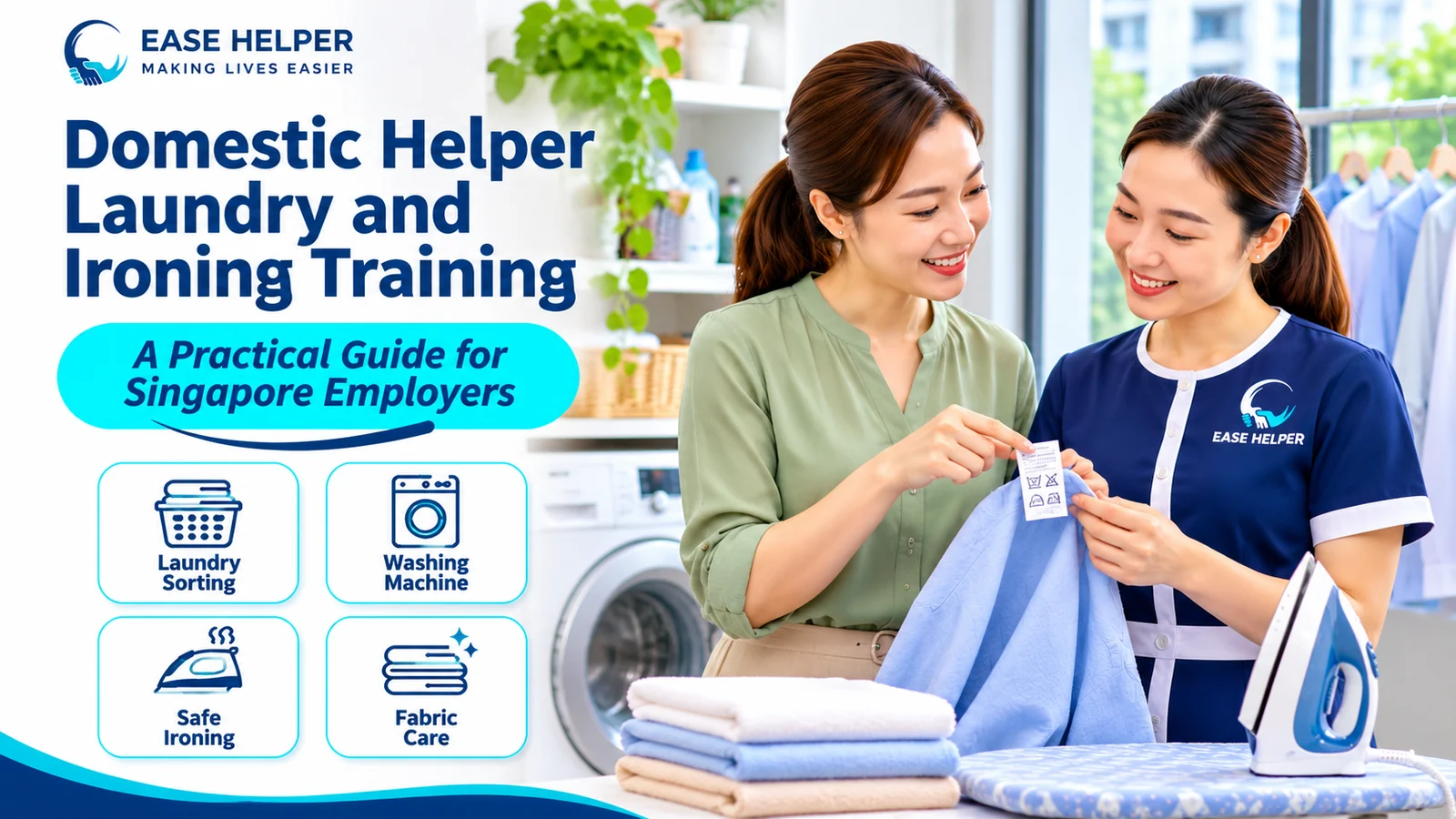
Teaching your domestic helper laundry and ironing skills can prevent damaged clothing, reduce household misunderstandings and improve daily efficiency. Start by explaining clothing care labels, sorting laundry and using your washing machine. Next, demonstrate safe drying, ironing, folding and storage techniques. This guide provides a practical training method, a laundry checklist, fabric-care advice and a suggested weekly schedule for Singapore households.
Why Domestic Helper Laundry and Ironing Training Matters
Domestic helper laundry and ironing training helps employers establish clear expectations for clothing care. Although some helpers have previous housekeeping experience, they may not know how to operate your washing machine or care for your family’s fabrics.
For example, a helper might use a hot wash for delicate clothing or iron a garment at the wrong temperature. As a result, clothes may shrink, fade or become damaged.
Fortunately, clear demonstrations can prevent many common mistakes. Furthermore, a written laundry checklist gives your helper something to refer to when questions arise.
1. Start With Clothing Care Labels
Before teaching your helper to use the washing machine, explain the symbols found on clothing labels. These symbols provide important information about washing, drying, ironing and professional cleaning.
Common Clothing Care Instructions
| Care Instruction | What It Means | Employer Training Tip |
|---|---|---|
| Machine wash | The garment may be washed by machine under the stated conditions | Check the permitted temperature and cycle |
| Hand wash | The garment requires gentle washing according to its label | Demonstrate careful handling without excessive rubbing |
| Do not bleach | Bleaching products should not be used | Show the helper how to identify bleach-containing products |
| Do not tumble dry | The garment must not be dried in a tumble dryer | Explain the appropriate alternative drying method |
| Ironing symbol | The garment may be ironed under specified conditions | Check temperature restrictions before ironing |
| Do not iron | Ironing is not permitted | Separate the garment from the ironing pile |
| Professional cleaning | The garment requires a specified professional cleaning method | Ask the employer before attempting to clean it |
Importantly, not all fabrics respond to heat or moisture in the same way. Therefore, teach your helper to check the label rather than relying on the garment’s appearance.
2. Teach Your Domestic Helper to Sort Laundry Correctly
Sorting is one of the most important laundry skills. It helps reduce colour transfer, fabric damage and hygiene problems.
Separate Clothes Into Suitable Groups
- White clothing: Keep separate when colour transfer is a concern.
- Dark clothing: Group similar dark colours where appropriate.
- Bright colours: Check whether new garments may release dye.
- Delicate fabrics: Follow the care label and use a suitable washing method.
- Towels and bedding: Wash according to fabric and hygiene requirements.
- Heavily soiled items: Assess whether separate washing is necessary.
For example, a new red shirt may release dye during washing. Consequently, mixing it with white clothing could cause staining.
Also, explain which family members’ garments require special care. This is particularly helpful for school uniforms, office clothing and delicate garments.
3. Demonstrate How to Use the Washing Machine
Different washing machines have different programmes, controls and detergent requirements. Therefore, demonstrate the actual appliance in your home instead of assuming your helper already knows how it works.
Step-by-Step Washing Machine Training
- Check pockets: Remove tissues, coins and other loose items.
- Read care labels: Confirm that machine washing is suitable.
- Sort garments: Separate items according to colour and fabric care.
- Load correctly: Avoid exceeding the machine’s recommended capacity.
- Add detergent: Follow the product and appliance instructions.
- Select the programme: Choose the appropriate wash cycle and temperature.
- Start the machine: Confirm the settings before washing.
- Unload promptly: Remove clean clothes after the cycle finishes.
Next, let your helper repeat the process while you observe. If necessary, place a simple instruction sheet beside the machine.
Practical tip: Take a photograph of your washing machine’s control panel and explain the programmes your household uses most often. Avoid assuming that a programme with the same name works identically on every machine.
4. Explain How Much Detergent to Use
Using excessive detergent does not necessarily make clothes cleaner. Instead, it may leave residue or create too much foam for the washing machine.
Likewise, insufficient detergent may produce unsatisfactory cleaning results. Therefore, follow the detergent manufacturer’s instructions and your machine’s requirements.
Important Detergent Rules
- Use the correct detergent for the machine and fabric.
- Follow the product’s recommended dosage.
- Do not mix laundry chemicals without checking their instructions.
- Keep detergent and laundry capsules away from children.
- Store products in their original labelled containers.
- Wash hands after handling cleaning chemicals when appropriate.
Additionally, explain whether your household uses fabric conditioner and which garments should not receive it.
5. Teach Safe and Effective Clothes Drying
Singapore’s humid weather can make drying clothes challenging, especially during rainy periods. Nevertheless, proper airflow and suitable drying methods can help prevent persistent dampness and unpleasant odours.
Clothes Drying Checklist
- Check whether the garment can be tumble-dried.
- Shake out clothing gently before hanging.
- Leave suitable space between garments for airflow.
- Use appropriate hangers or drying racks.
- Avoid leaving damp laundry in the washing machine for long periods.
- Confirm that clothes are fully dry before storage.
- Keep drying equipment away from electrical hazards.
Moreover, employers should explain how to use indoor drying racks, service-yard equipment or household dryers safely.
High-Rise Laundry Safety in Singapore
Safety is particularly important when drying laundry in HDB flats and condominiums. Helpers should use properly installed equipment according to its instructions and must never lean outside windows or climb onto unstable surfaces.
For current guidance on domestic helper safety, consult the Ministry of Manpower.
6. How to Teach Your Domestic Helper Ironing Skills
Ironing requires careful handling because excessive heat can damage fabrics or cause burns. Therefore, demonstrate the correct technique before asking your helper to iron valuable or delicate garments.
Step-by-Step Ironing Training
- Place the ironing board on a stable, suitable surface.
- Check the garment’s care label.
- Inspect the iron and power cord for visible damage.
- Select the appropriate temperature and steam settings.
- Test carefully on a less visible area when suitable.
- Iron the garment using a method appropriate for the fabric.
- Hang or fold the garment after ironing.
- Switch off and unplug the iron after use.
- Allow the iron to cool safely before storage.
For example, some synthetic fabrics require lower temperatures than cotton. However, the garment’s label and the iron manufacturer’s instructions should determine the correct setting.
Essential Ironing Safety Rules
- Never leave a switched-on iron unattended.
- Keep the hot soleplate away from skin and electrical cords.
- Do not iron clothing while someone is wearing it.
- Keep children away from the ironing area.
- Do not use an iron with a damaged cord or plug.
- Never place a hot iron directly on an unsuitable surface.
- Unplug the iron before filling or cleaning it when the manufacturer requires this.
Most importantly, encourage your helper to ask before ironing unfamiliar or expensive clothing.
7. Understand Different Fabric Care Requirements
Not every fabric should receive the same washing or ironing treatment. Consequently, employers should identify garments that need special attention.
| Fabric | General Consideration | Training Reminder |
|---|---|---|
| Cotton | Care varies by garment construction, colour and finish | Check temperature and shrinkage precautions |
| Polyester | Excessive heat may damage some garments | Follow low-temperature instructions where specified |
| Silk | Often requires delicate handling | Follow the label and ask before washing |
| Wool | May shrink or lose shape with unsuitable washing | Use only the permitted cleaning method |
| Linen | Can crease easily | Check ironing and drying instructions |
| Blended fabrics | Care depends on the blend and garment construction | Follow the manufacturer’s label |
Rather than memorising one temperature for each fabric, teach your helper to read the actual garment label. This approach is safer and more reliable.
8. Prevent Common Laundry Mistakes
Many laundry mistakes occur because instructions are unclear or because the helper has not used the household equipment before.
Common Mistakes and Better Practices
| Common Mistake | Possible Result | Prevention |
|---|---|---|
| Mixing unstable colours | Colour transfer | Sort garments and check new items |
| Using excessive detergent | Residue or excessive foam | Measure according to instructions |
| Overloading the machine | Poor washing performance | Follow appliance capacity guidance |
| Incorrect ironing temperature | Scorching or fabric damage | Check garment labels |
| Storing damp clothes | Musty odours or mould growth | Dry fully before storage |
| Ignoring pocket contents | Stains or damage | Check pockets before washing |
| Using unsuitable stain removers | Discolouration or fabric damage | Check product and garment instructions |
If a mistake happens, explain what went wrong and demonstrate the correct method. In addition, encourage your helper to report problems promptly rather than attempting an uncertain repair.
9. Teach Folding and Clothing Organisation
Good laundry training also includes folding and storing clean clothing. After all, even properly washed garments may become creased or disorganised if stored incorrectly.
Practical Clothing Organisation Tips
- Separate clothing by family member.
- Fold suitable garments neatly.
- Hang shirts, dresses and other items when appropriate.
- Keep clean and dirty laundry separate.
- Store fully dried clothes in suitable locations.
- Ask before reorganising personal drawers or wardrobes.
- Use a consistent system for school uniforms and work clothing.
For example, employers can designate separate baskets for each family member. This makes sorting easier and reduces misplaced clothing.
10. Create a Weekly Laundry and Ironing Schedule
A practical schedule can help your helper manage laundry alongside cooking, cleaning and other household responsibilities. However, adjust the workload to suit your family.
| Day | Suggested Laundry Task | Additional Consideration |
|---|---|---|
| Monday | Regular clothing laundry | Sort by fabric and colour |
| Tuesday | Iron suitable work or school clothing | Follow garment care labels |
| Wednesday | Towels and household linen | Use suitable wash programmes |
| Thursday | Regular clothing laundry | Check drying conditions |
| Friday | Fold and organise clean clothing | Prepare commonly used garments |
| Saturday | Remaining laundry and equipment care | Adjust to actual workload |
| Rest day | No assigned laundry work during the helper’s rest day | Family makes alternative arrangements |
This schedule is only an example. Furthermore, employers should account for the helper’s agreed rest days and other responsibilities.
11. Use a Simple Laundry Training Checklist
Once your helper understands the basic process, provide a checklist that summarises the household’s preferred laundry routine.
Before Washing
- Check pockets and garment labels.
- Sort clothing appropriately.
- Identify stains or damaged garments.
- Confirm the washing programme and detergent.
After Washing
- Remove clothing promptly.
- Dry garments according to their labels.
- Check that clothes are completely dry.
- Fold or hang garments appropriately.
Before Ironing
- Check the care label.
- Prepare a safe ironing area.
- Select the correct settings.
- Ask for guidance on unfamiliar fabrics.
Finally, review the checklist after the helper has gained experience. Remove unnecessary steps and clarify instructions that cause confusion.
12. Give Constructive Feedback During Training
Learning household preferences takes time. Therefore, employers should demonstrate patience and provide specific feedback.
For example, instead of saying that a shirt was ironed incorrectly, explain which part needs attention and demonstrate the preferred technique.
Similarly, praise improvements when the helper follows instructions correctly. This encourages communication and supports consistent results.
For broader household training, read our domestic helper cleaning checklist for Singapore homes once that proposed permalink has been confirmed as published.
Frequently Asked Questions About Domestic Helper Laundry and Ironing Training
1. How do I teach my domestic helper to use a washing machine?
Demonstrate how to check clothing labels, sort garments, load the machine, measure detergent and select a suitable programme. Afterwards, supervise a practice wash and provide a simple instruction sheet.
2. Should a domestic helper separate white and coloured clothes?
Separating colours can reduce the risk of dye transfer. However, sorting should also consider fabric type, care labels and how heavily items are soiled.
3. What is the safest way to teach ironing?
Start with the iron manufacturer’s instructions and garment care labels. Demonstrate stable equipment placement, temperature selection and safe handling. Supervise initial practice and keep children away from the ironing area.
4. How often should a domestic helper wash household clothes?
The frequency depends on family size, clothing use, hygiene needs and the helper’s other duties. A realistic schedule should prevent excessive accumulation while allowing sufficient time for other responsibilities and rest.
5. What should an employer do if a domestic helper damages clothing?
First, identify what happened and whether the garment can be professionally restored. Then, explain the correct care method calmly. Avoid unsafe repair attempts and follow applicable employment rules when addressing any dispute.
How EaseHelper Supports Domestic Helper Training
Clear laundry and ironing instructions help domestic helpers understand household expectations. Moreover, practical demonstrations can reduce mistakes and build confidence.
EaseHelper assists Singapore families with domestic helper recruitment and household matching. Employers can discuss housekeeping experience and training needs when considering a suitable helper.
Looking for a Domestic Helper in Singapore?
Explore EaseHelper’s domestic helper services and learn how we can assist your family with its household recruitment needs.
Explore EaseHelper ServicesDisclaimer: This article provides general household laundry, ironing and safety guidance. Always follow garment care labels, appliance manuals and cleaning product instructions. Employers must comply with current Ministry of Manpower requirements, including applicable domestic helper employment and rest-day rules. Seek professional assistance for electrical faults or specialised garment care.