Blog
Domestic Helper Mental Well-Being in Singapore: Recognising Stress and Providing Support

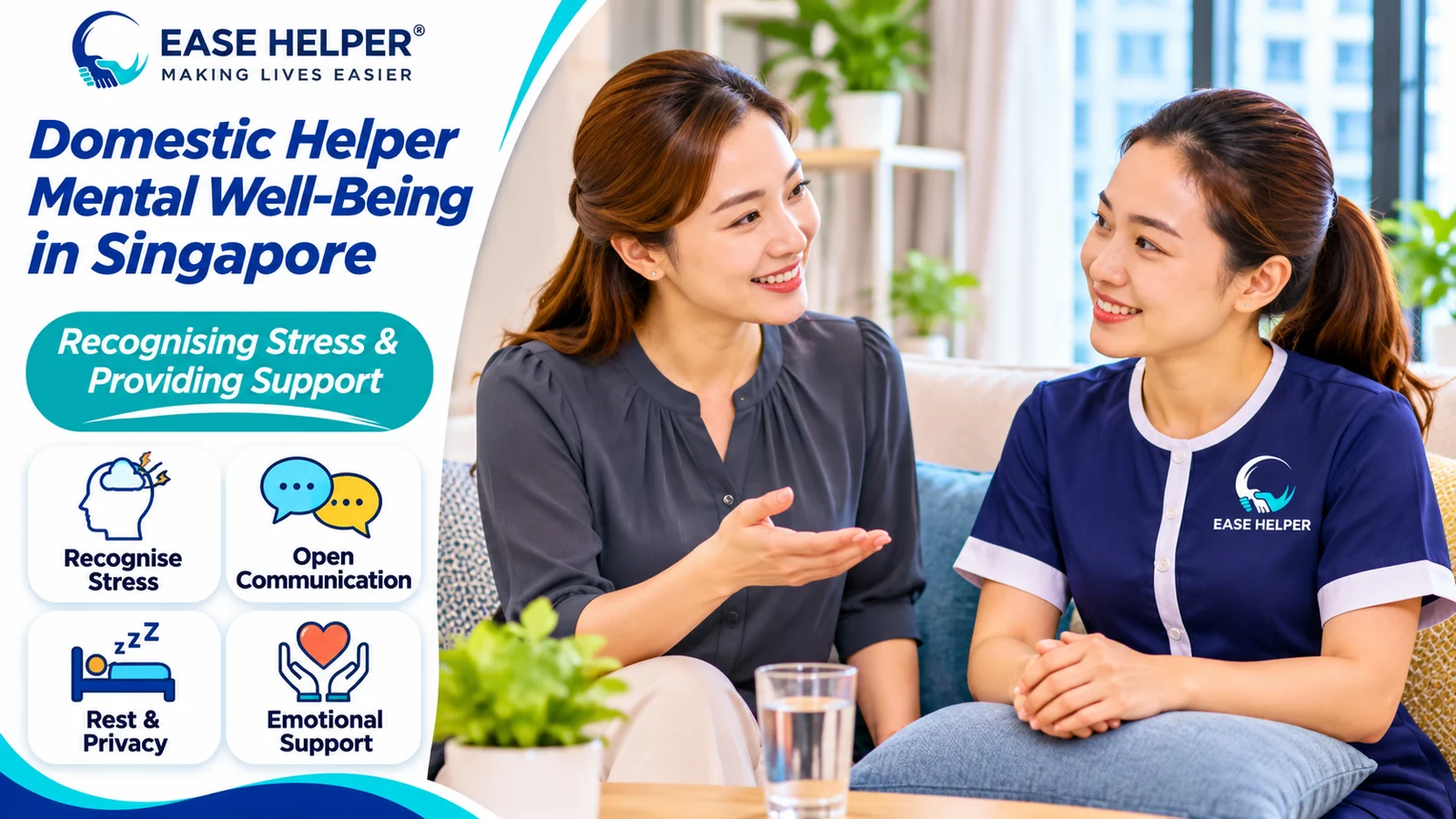
Domestic helper mental well-being is an important part of maintaining a healthy and respectful household in Singapore. Domestic helpers may experience stress, loneliness, communication difficulties or emotional pressure while working away from their families.
Although occasional stress is a normal part of life, prolonged difficulties can affect a person’s sleep, concentration, physical health and overall quality of life. Therefore, employers should recognise potential warning signs and provide appropriate support.
This guide explains common causes of stress, practical ways to improve domestic helper mental well-being and situations where professional assistance may be necessary.
Executive Summary
Domestic helper mental well-being involves emotional health, stress management, supportive relationships and a safe working environment. Singapore employers can contribute positively by communicating respectfully, providing appropriate rest, respecting privacy and addressing workplace concerns promptly.
Changes in mood, sleep, appetite or behaviour may indicate that a helper needs support. However, these signs do not establish a mental health diagnosis.
When difficulties persist or become serious, employers should help their helpers access appropriate healthcare or professional support rather than attempting to diagnose or manage the condition themselves.
1. Why Domestic Helper Mental Well-Being Matters
Domestic helpers often live in the same households where they work. As a result, the boundaries between working time, personal time and family life may feel less clear than in other employment arrangements.
Furthermore, helpers who are new to Singapore may need to adjust to unfamiliar routines, languages, food and expectations.
Supporting mental well-being can help households:
- Encourage open and respectful communication.
- Reduce avoidable misunderstandings.
- Identify problems before they become more serious.
- Maintain safer and more sustainable household routines.
- Support healthier employer-helper relationships.
- Promote dignity, trust and mutual understanding.
Importantly, supporting well-being is not simply about improving work performance. Domestic helpers deserve to be treated with dignity and consideration as individuals.
2. Common Sources of Stress for Domestic Helpers
Stress can arise from several factors, and individual experiences differ. Employers should avoid assuming that every helper faces the same challenges.
Workload and Unclear Expectations
A helper may feel overwhelmed when several tasks require attention simultaneously. For example, preparing meals, supervising a child and cleaning the home may create competing demands.
Clear priorities and realistic schedules can help reduce unnecessary pressure.
Communication Difficulties
Language differences may cause confusion, particularly when instructions involve unfamiliar appliances, childcare routines or safety procedures.
Consequently, employers should use simple explanations and demonstrations instead of repeatedly criticising misunderstandings.
Separation From Family
Living away from loved ones can create emotional strain, especially during family illnesses, celebrations or difficult events at home.
However, homesickness is only one possible contributor to stress and should not be assumed to explain every emotional difficulty.
Limited Personal Time
Insufficient opportunities for rest, social contact or personal activities may contribute to fatigue and emotional strain.
Employers should respect applicable rest-day requirements and reasonable personal boundaries.
3. Recognising Possible Signs of Emotional Stress
Changes in behaviour sometimes suggest that a domestic helper is experiencing difficulties. Nevertheless, these changes can also result from physical illness, fatigue or other circumstances.
Possible Warning Signs
- Persistent sadness, tearfulness or unusual withdrawal.
- Difficulty sleeping or noticeable changes in sleep patterns.
- Changes in appetite or energy levels.
- Increased irritability or anxiety.
- Difficulty concentrating on familiar tasks.
- Frequent complaints of headaches or physical discomfort.
- Loss of interest in previously enjoyed activities.
- Expressions of hopelessness or feeling overwhelmed.
Employers should look for meaningful changes rather than judging a helper based on personality or cultural differences.
Important: These signs are not diagnostic criteria. Employers should not label a helper as having depression, anxiety or another condition without assessment by a qualified healthcare professional.
4. Start With Respectful and Private Communication
When an employer notices signs of distress, a calm conversation can be a useful first step.
Choose an appropriate time and a private setting. Avoid discussing personal concerns in front of children, visitors or other household members.
Supportive Questions Employers Can Ask
- “How have you been feeling recently?”
- “Is anything about the daily routine particularly difficult?”
- “Are the instructions clear, or would another demonstration help?”
- “Are you getting enough rest?”
- “Would you like assistance finding someone to speak with?”
Listen without interrupting or immediately dismissing the concern. Moreover, avoid pressuring the helper to disclose private family matters or personal experiences.
Sometimes, practical changes to household routines may help. In other cases, professional support may be more appropriate.
5. Set Realistic Household Workloads
Workload management is an important part of domestic helper mental well-being.
Although household needs vary, employers should distinguish essential responsibilities from tasks that can be postponed.
Practical Workload Improvements
- Prepare a clear daily schedule.
- Explain which tasks have the highest priority.
- Avoid assigning several urgent duties simultaneously.
- Allow appropriate breaks and meal times.
- Provide additional training for unfamiliar tasks.
- Review workloads when family circumstances change.
For example, if a helper is caring for a young child, employers may need to reduce non-essential cleaning expectations during busy periods.
Additionally, employers should avoid expecting constant availability simply because the helper lives in the household.
6. Respect Rest Days, Sleep and Personal Time
Rest supports physical recovery, emotional well-being and personal independence.
Singapore employers should comply with the current Ministry of Manpower requirements for migrant domestic worker rest days, including the requirement for at least one rest day each month that cannot be compensated away.
Employers and helpers should discuss the remaining rest-day arrangements in accordance with applicable rules.
Healthy Rest Practices
- Plan household duties around agreed rest arrangements.
- Respect reasonable sleeping hours.
- Avoid unnecessary interruptions during personal time.
- Allow appropriate opportunities for meals and breaks.
- Encourage healthy routines without controlling private activities.
For current employment requirements, consult MOM’s migrant domestic worker guidance.
7. Encourage Healthy Social Connections
Positive social relationships can provide emotional support, particularly for helpers living far from their families.
Employers can respect appropriate communication with family and friends while discussing practical household arrangements.
Ways to Support Social Connection
- Respect personal communication during appropriate times.
- Support agreed rest-day arrangements.
- Allow reasonable opportunities to maintain family contact.
- Respect the helper’s personal relationships and privacy.
- Discuss legitimate safety concerns without unnecessary restrictions.
However, employers should not assume that every helper wants the same level of social interaction. Some people prefer quiet personal time, while others value regular contact with friends or community groups.
8. Protect Privacy and Personal Dignity
Domestic helper mental well-being can be affected when personal boundaries are unclear.
Although employers may establish reasonable household rules, those rules should not unnecessarily interfere with personal dignity.
Respectful Household Boundaries
- Respect the helper’s personal belongings.
- Avoid reading private messages without permission.
- Provide appropriate privacy for changing clothes and personal care.
- Do not publicly embarrass or insult the helper.
- Discuss mistakes privately and constructively.
- Keep personal health information confidential where appropriate.
Furthermore, employers should avoid sharing private details about their helper on social media or in household messaging groups without a legitimate reason and appropriate consent.
9. Provide Constructive Feedback Instead of Harsh Criticism
Every household requires communication about responsibilities and performance. However, repeated shouting, humiliation or unclear criticism can increase emotional pressure.
Employers should focus on specific behaviours and practical solutions.
A Better Feedback Approach
- Explain the task that needs improvement.
- Describe the expected outcome clearly.
- Demonstrate the correct method if necessary.
- Allow the helper to ask questions.
- Recognise improvements and review progress.
For example, instead of saying that the helper never cleans properly, explain which surface needs attention and demonstrate the preferred cleaning method.
This approach supports clearer expectations without unnecessary personal criticism.
10. Support Helpers During Difficult Personal Situations
Domestic helpers may occasionally experience distressing news from home, financial concerns or family emergencies.
Employers should respond with empathy while maintaining appropriate boundaries.
Possible Supportive Actions
- Allow reasonable time for important family communication.
- Discuss practical adjustments when appropriate.
- Help the helper understand available support services.
- Respect her decisions about personal matters.
- Avoid pressuring her to disclose sensitive information.
Importantly, employers should not make assumptions about a helper’s financial or family circumstances based on nationality or background.
11. When Should Employers Seek Professional Help?
Supportive communication can be valuable, but employers are not mental health professionals.
If a helper experiences persistent distress, significant changes in daily functioning or symptoms that interfere with sleep, eating or everyday activities, a medical assessment may be appropriate.
Situations That May Require Professional Assessment
- Persistent low mood or anxiety.
- Severe sleep difficulties.
- Repeated panic-like episodes.
- Significant changes in eating or functioning.
- Emotional distress that does not improve.
- Statements suggesting self-harm or hopelessness.
Employers should help arrange appropriate medical care when needed and respect the helper’s privacy.
If there is an immediate risk of serious harm, seek urgent emergency assistance rather than waiting for a routine appointment.
Emergency guidance: In Singapore, call 995 for an emergency ambulance when immediate medical assistance is required. For non-emergency mental health concerns, a healthcare professional can advise on suitable support and referrals.
12. What Are Employers’ Responsibilities for Mental Health Care?
Singapore employers are responsible for the necessary medical care and medical expenses of their migrant domestic helpers.
When a helper requires professional assessment or treatment for a mental health concern, employers should take the situation seriously and review the applicable medical obligations.
Insurance benefits may differ according to the policy. Therefore, employers should not assume that all mental health consultations or treatments are automatically insured.
For employment requirements, refer to the Ministry of Manpower.
13. Domestic Helper Mental Well-Being: Employer Checklist
The following checklist can help employers review household practices without intruding into personal matters.
| Area | Recommended Practice | Employer Review |
|---|---|---|
| Communication | Provide clear instructions and listen respectfully. | Review regularly |
| Workload | Set realistic priorities and allow appropriate breaks. | Review when routines change |
| Rest | Respect required rest days and reasonable sleep. | Review monthly |
| Privacy | Respect personal belongings and private communication. | Ongoing |
| Social contact | Support appropriate family and social connections. | Ongoing |
| Feedback | Use calm explanations and practical demonstrations. | Ongoing |
| Health concerns | Arrange professional assessment when needed. | As required |
| Emergencies | Know how to obtain urgent assistance. | Review periodically |
14. Common Mistakes That Can Increase Stress
| Common Mistake | Better Approach |
|---|---|
| Assuming silence means everything is fine | Provide opportunities for respectful conversation. |
| Assigning too many simultaneous tasks | Clarify priorities and adjust the schedule. |
| Criticising mistakes in front of others | Give private, constructive feedback. |
| Ignoring requests for rest | Review workload, rest and health needs. |
| Restricting all personal communication | Establish reasonable, respectful arrangements. |
| Trying to diagnose emotional problems | Encourage appropriate professional assessment. |
| Assuming all stress comes from homesickness | Consider workload, relationships and other possible causes. |
15. Build a Supportive Household Environment
Supporting domestic helper mental well-being does not require complicated programmes. Consistent everyday practices often provide a useful foundation.
Employers can start by establishing clear routines, communicating respectfully and ensuring that their helper knows how to raise concerns.
Five Practical Habits
- Check in respectfully: Ask whether household instructions or routines need clarification.
- Recognise effort: Acknowledge completed tasks and improvements.
- Maintain boundaries: Respect rest, privacy and personal dignity.
- Respond early: Address emerging problems before they escalate.
- Seek help when needed: Involve qualified professionals for significant health concerns.
Ultimately, a supportive employer-helper relationship combines clear expectations with mutual respect and appropriate personal boundaries.
Frequently Asked Questions
1. How can employers support domestic helper mental well-being in Singapore?
Employers can provide clear instructions, realistic workloads, appropriate rest, respectful communication and personal privacy. They should also help helpers access professional care when significant mental health concerns arise.
2. What are possible signs that a domestic helper is experiencing stress?
Possible signs include persistent sadness, sleep difficulties, changes in appetite, withdrawal, anxiety or reduced concentration. However, these signs have many possible causes and should not be used to diagnose a condition.
3. Can workload affect a domestic helper’s mental health?
Yes. Excessive or unclear responsibilities may contribute to stress and fatigue. Employers can help by setting priorities, providing training and reviewing household schedules.
4. Should employers arrange professional help if their helper feels emotionally distressed?
When distress persists, significantly affects daily functioning or raises safety concerns, professional assessment may be appropriate. Employers should support access to necessary care and follow applicable medical obligations.
5. Is homesickness the same as a mental health condition?
No. Homesickness is a common emotional response to separation from familiar people and surroundings. It is not automatically a mental health disorder, although persistent or severe distress may warrant professional attention.
Looking for a Domestic Helper in Singapore?
EaseHelper helps Singapore families explore domestic helper placement options that suit their household needs. Clear communication, practical training and respectful expectations can help build a more positive employer-helper relationship.
Explore EaseHelper ServicesDisclaimer: This article provides general information about domestic helper mental well-being and employer practices in Singapore. It is not medical, psychological or legal advice. Mental health concerns require individual assessment by qualified professionals. Employers should consult current Ministry of Manpower guidance for applicable employment and medical responsibilities.