
Blog
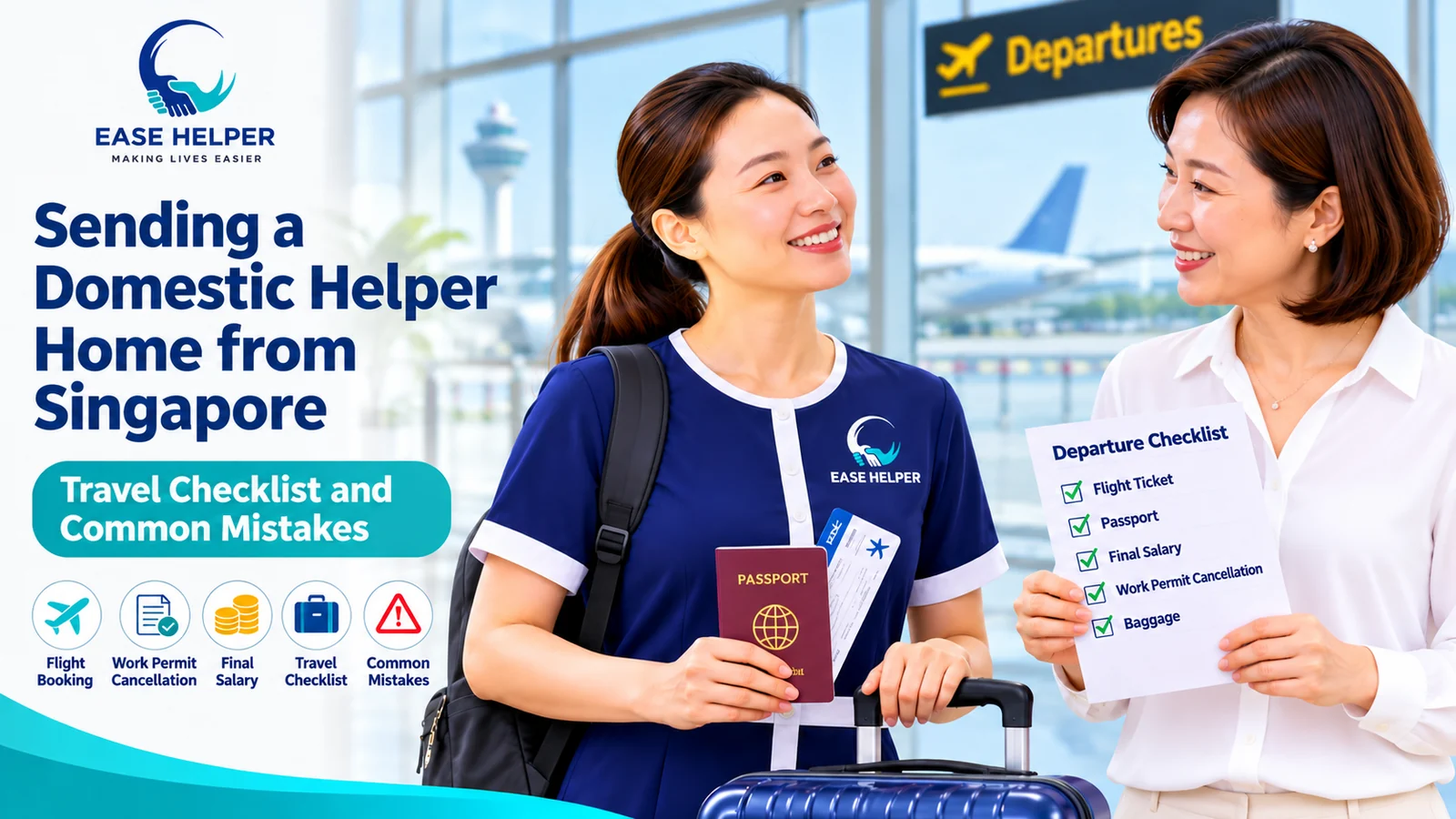
Sending a Domestic Helper Home from Singapore: Travel Checklist and Common Mistakes

Executive Summary
Sending a domestic helper home from Singapore requires careful planning. Employers should agree on the last working day, settle outstanding salary and employment matters, check passport validity, discuss transit arrangements, pay for repatriation travel and cancel the Work Permit correctly. Under MOM requirements, the helper’s departure must be within two weeks of Work Permit cancellation. This guide provides a practical travel checklist and explains common mistakes that can cause disputes, delays or immigration problems.
1. When Do Employers Need to Send a Domestic Helper Home?
There are several situations in which a domestic helper may return to her home country after working in Singapore. These include the completion of an employment contract, resignation, early termination by the employer, or a mutual decision not to continue employment.
Some helpers may also wish to return home for family or personal reasons. Whatever the circumstances, employers should handle the departure respectfully and follow the applicable Ministry of Manpower (MOM) requirements.
Importantly, the employer’s repatriation responsibility generally applies even when the helper resigns or requests to end her employment.
Employers should distinguish between a permanent return home after employment ends and temporary overseas leave when employment will continue. Different Work Permit arrangements may apply.
2. Confirm the Last Working Day and Employment Arrangements
Before booking a flight, the employer and domestic helper should discuss the intended end of employment.
Important matters to confirm include:
- The agreed final working day.
- Any contractual notice period or payment in lieu of notice, where applicable.
- The expected departure date.
- Outstanding salary and other agreed payments.
- The return of personal belongings and household property.
- Whether the helper intends to return home or explore an eligible transfer to another employer.
Employers should refer to the signed employment agreement when determining contractual notice obligations. Clear written communication can reduce misunderstandings.
A domestic helper should also have a reasonable opportunity to organise her belongings and inform her family of her arrival plans.
3. Who Pays for the Domestic Helper’s Flight Home?
Under MOM’s Work Permit conditions, the employer is responsible for paying the cost of sending the domestic helper home at the end of employment.
This responsibility includes:
- An appropriate air ticket to the international port of entry in her home country or region nearest to her hometown.
- Checked baggage allowance.
- Required connecting transport costs to the relevant international port of entry.
- Transit arrangements and agreed allowances as required under MOM’s guidance.
The employer and helper should discuss and agree in writing on connecting flights, layover durations and the allowance needed during transit before the ticket is purchased.
MOM also recommends obtaining written acknowledgement of the transport payment to help prevent disputes.
For official requirements, see MOM’s guide to sending a migrant domestic worker home.
Important: The employer’s responsibility to pay for repatriation generally remains even if the domestic helper initiated the resignation. Employers should not assume the helper must purchase her own flight.
4. Check the Passport, Flight and Destination Requirements
Before purchasing a ticket, verify that the helper has a valid passport and can meet the requirements of her intended travel route.
Review the following:
- Passport validity and the exact name shown on the passport.
- Flight date, time and departure terminal.
- Destination airport and connecting airports.
- Airline checked baggage and cabin baggage allowances.
- Transit visa or other entry requirements, if applicable.
- Any airline-specific health or documentation requirements.
- Transport arrangements after arrival.
For example, a helper travelling to Myanmar or Indonesia may need a connecting flight or onward transport, depending on her hometown and available routes.
Employers should check current requirements directly with the airline and relevant embassy or immigration authority, because these can change.
5. How to Cancel a Domestic Helper’s Work Permit
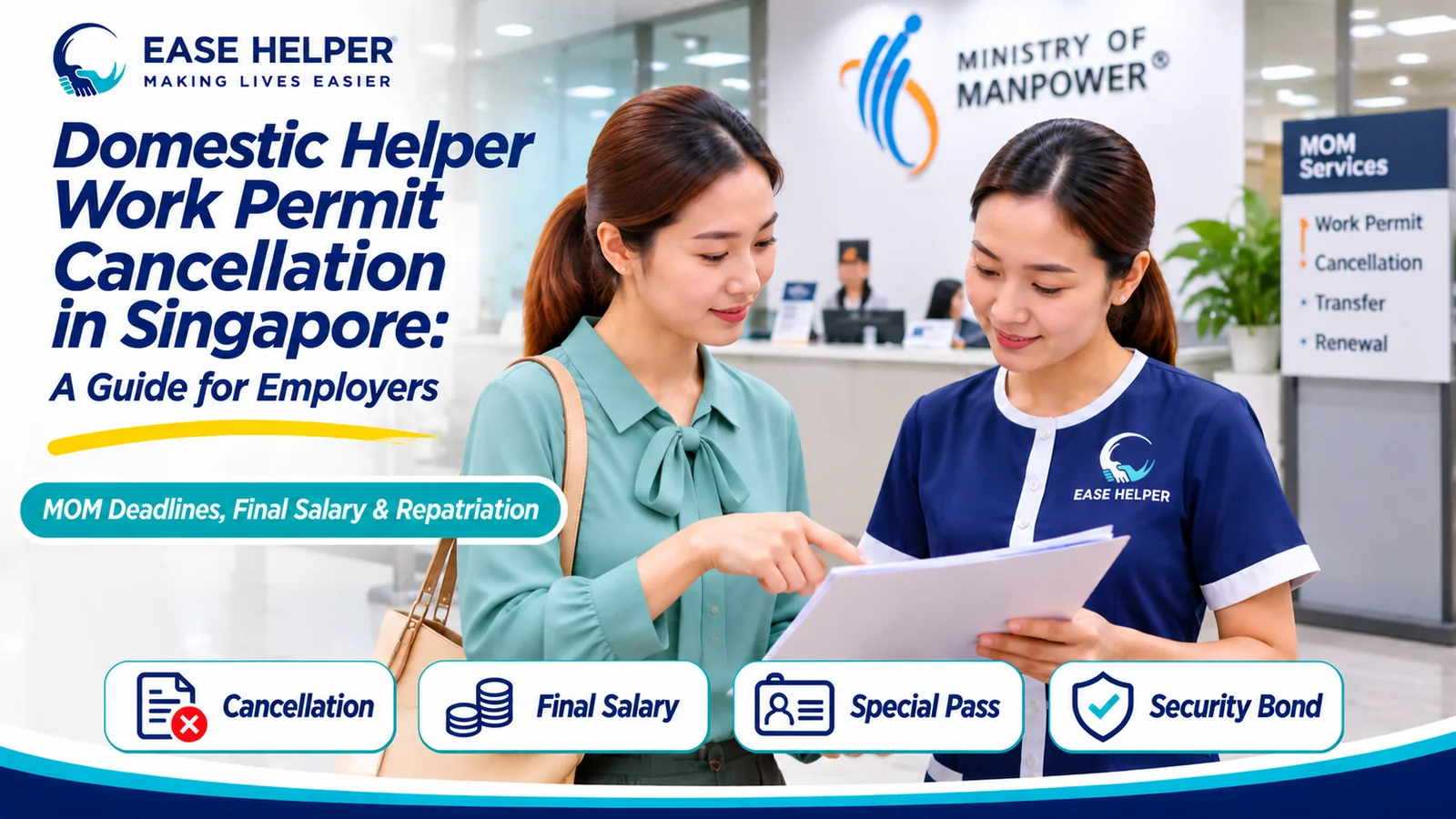
When the domestic helper’s employment ends, the employer must arrange Work Permit cancellation through MOM.
According to MOM, employers must generally cancel the Work Permit within one week after the helper’s last day of work. Cancellation is immediate once processed.
If the Helper Is Still in Singapore
- Agree on the last working day and settle outstanding employment matters.
- Confirm the departure arrangements and travel documents.
- Log in to the relevant MOM FDW eService and submit the Work Permit cancellation.
- Print the Special Pass issued during cancellation and give it to the helper.
- Ensure she has the Special Pass and a valid passport for departure.
- Make sure she leaves Singapore before the Special Pass expires.
Once the Work Permit is cancelled, the helper cannot continue working, even if she remains in Singapore while waiting for her flight.
If the Helper Has Already Left Singapore
If the helper has departed and will not return to work for the employer, MOM requires cancellation of her Work Permit within one week of her departure.
The employer should select the appropriate cancellation reason and retain the confirmation for their records.
Read the official MOM Work Permit cancellation instructions before completing the transaction.
6. Understand the Two-Week Departure Requirement
MOM requires the domestic helper’s departure date to fall within two weeks from the Work Permit cancellation.
However, employers must also ensure that the helper has valid immigration permission throughout her remaining stay and leaves before the expiry of her Special Pass.
Therefore, employers should not assume that every helper automatically receives a full 14-day stay after cancellation.
For example, if the Special Pass expires before a proposed flight date, the employer must resolve the immigration issue before relying on that booking.
Where an extension is necessary, check MOM’s current procedures before the existing permission expires.
7. Settle Final Salary and Outstanding Employment Matters
All outstanding employment issues, including salary payments, should be settled before the helper departs.
A practical final settlement review may include:
- Salary earned up to the final working day.
- Previously unpaid salary, if any.
- Any contractual notice payment or other agreed amounts, where applicable.
- Outstanding authorised deductions or reimbursements requiring clarification.
- Any unresolved employment or financial disputes.
Prepare a clear written breakdown showing the calculation and payment date. Both parties should have an opportunity to review the figures.
Where practical, use a traceable payment method and retain the supporting records. Avoid asking the helper to sign a statement acknowledging payment before she has actually received the money.
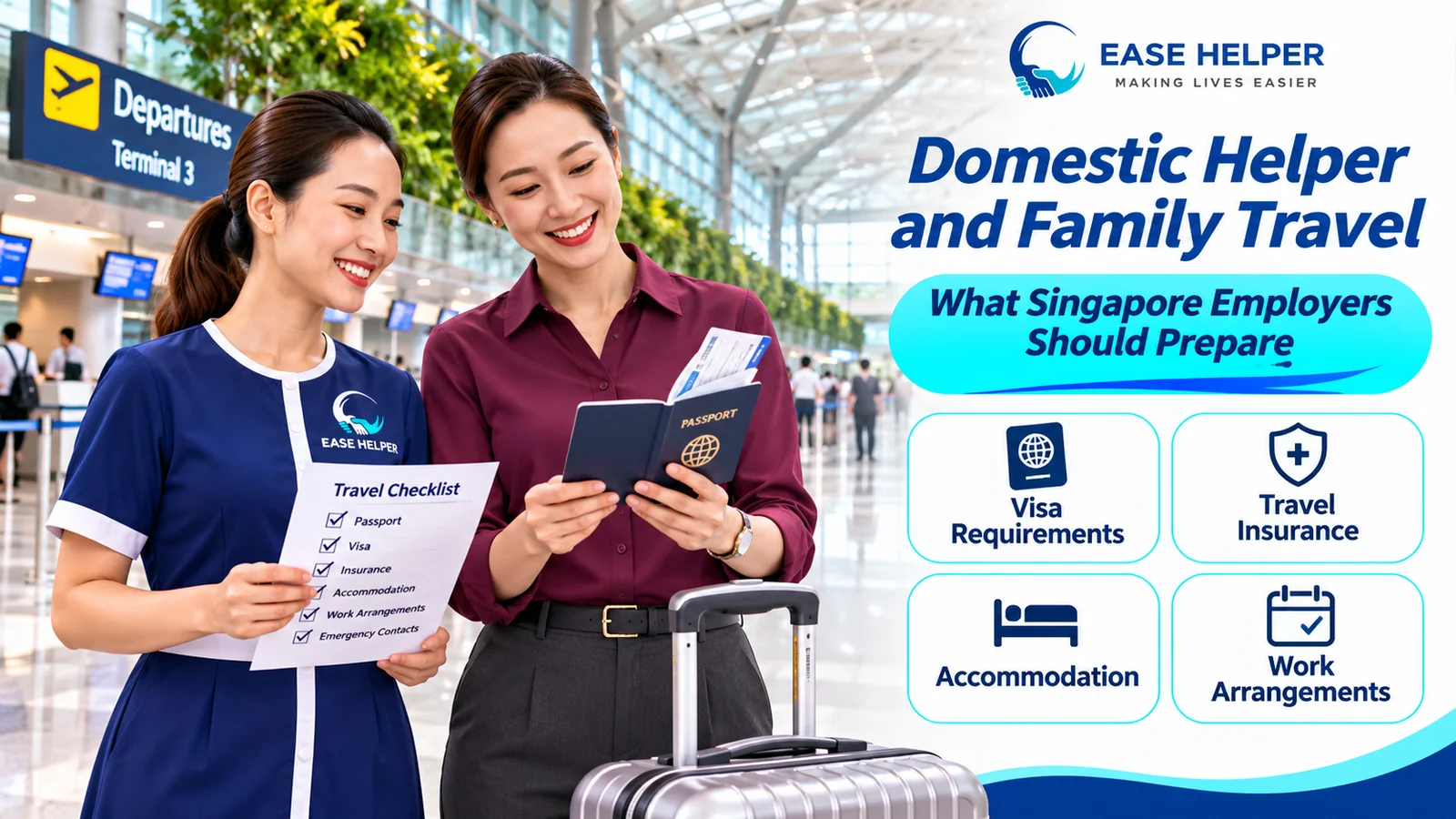
8. Domestic Helper Travel Checklist Before Departure
The following checklist can help employers and helpers prepare for a smooth return journey.
| Item | What to Check | When |
|---|---|---|
| Employment end date | Agree on the final working day and relevant notice arrangements | Before booking |
| Passport | Confirm validity and correct personal details | Before booking |
| Flight itinerary | Confirm destination, transit and departure date | Before payment |
| Transit agreement | Agree in writing on layovers and transit allowance | Before booking |
| Air ticket | Ensure employer-paid ticket includes checked luggage | Before departure |
| Final salary | Settle and document outstanding payments | Before departure |
| Work Permit | Cancel within the applicable MOM deadline | At employment end |
| Special Pass | Check validity and provide the document if required | After cancellation |
| Personal belongings | Allow sufficient time to pack and check baggage limits | Before departure |
| Airport transport | Arrange a reliable journey to the airport | Departure day |
| Travel contacts | Share itinerary and arrival details with the helper | Before departure |
9. What Should the Helper Carry to the Airport?
Before leaving for the airport, the helper should check that essential travel documents and personal belongings are accessible.
- Valid passport.
- Flight booking confirmation or boarding information.
- Special Pass, where applicable after Work Permit cancellation.
- Any required visa or transit documents.
- Important contact numbers and destination address.
- Necessary medication and supporting documentation, where applicable.
- Phone, charger and essential personal items.
Keep travel documents in cabin baggage rather than checked luggage. Check airline restrictions on batteries, liquids and other items before packing.
Employers can also help the helper understand her flight itinerary, especially if she is unfamiliar with international travel or connecting flights.
10. Common Mistakes When Sending a Domestic Helper Home
Several avoidable mistakes can cause unnecessary stress, disputes or compliance problems.
| Common Mistake | Potential Problem | Better Approach |
|---|---|---|
| Booking before checking passport validity | Travel or boarding difficulties | Verify documents before paying |
| Expecting the helper to pay for her flight | Failure to meet employer repatriation obligations | Budget for the required travel costs |
| Ignoring checked baggage | Unexpected charges and disputes | Include checked luggage in the ticket |
| Failing to agree on transit arrangements | Long layovers or inadequate transit support | Discuss and document arrangements in advance |
| Cancelling too early without a departure plan | Insufficient time or immigration difficulties | Coordinate cancellation and departure carefully |
| Allowing work after permit cancellation | Work Permit compliance breach | Stop all work once cancellation takes effect |
| Not settling outstanding salary | Financial disputes | Provide final settlement and payment records |
| Ignoring the Special Pass expiry | Risk of overstaying | Check the actual expiry date |
| Assuming the security bond ends immediately | Misunderstanding of employer obligations | Wait for MOM’s verification and discharge process |
11. What Happens to the Security Bond and Foreign Worker Levy?
Employers should understand that Work Permit cancellation, levy cessation and security bond discharge are related but separate matters.
Foreign Worker Levy
According to MOM, the levy is charged until one day before the Work Permit cancellation date.
Employers should check the final levy bill and any adjustments through the appropriate MOM channels.
Security Bond
For helpers subject to a security bond, MOM generally discharges the bond after verifying that the helper has departed Singapore and the relevant conditions have been met.
The processing period may vary depending on whether cancellation takes place before or after departure.
Do not assume the security bond is discharged merely because the flight has been booked or the Work Permit has been cancelled.
12. What If the Helper Wants to Travel Somewhere Else?
A domestic helper may sometimes request to travel to a destination other than the international port of entry nearest to her hometown.
MOM allows alternative destinations by mutual agreement between the employer and helper. The arrangement should be properly communicated during Work Permit cancellation.
If both parties cannot agree on the repatriation destination, they may seek MOM’s assistance rather than making unilateral arrangements.
See MOM’s guidance on repatriation destination disagreements.
13. What If the Flight Is Cancelled or Delayed?
Flight cancellations, severe weather, airline disruptions and unexpected travel restrictions may affect the planned departure date.
If this happens:
- Contact the airline promptly for available rebooking arrangements.
- Check whether the revised itinerary still meets applicable entry and transit requirements.
- Review the helper’s Special Pass expiry date.
- Contact MOM promptly if immigration permission may expire before the revised departure.
- Continue providing appropriate accommodation, food and necessary care while the helper remains under the employer’s responsibility.
- Keep relevant booking changes and communications for reference.
Employers should not assume that an airline cancellation automatically extends the helper’s legal stay in Singapore.
14. Can a Domestic Helper Transfer Instead of Returning Home?
In some circumstances, a domestic helper may be eligible to transfer to another employer rather than leave Singapore.
The transfer must follow MOM’s applicable procedures and involve the necessary consent and Work Permit arrangements.
Employers should not treat a proposed transfer as completed until the required approvals and responsibilities are properly addressed.
Where an employment agency is involved, clarify in writing who is responsible for accommodation, maintenance, insurance and repatriation during the transfer period.
Refer to MOM’s guidance on transfers through employment agencies.
15. Final Departure-Day Checklist
On the day of travel, employers can perform one final review:
- Confirm that the flight is operating as scheduled.
- Check the passport, ticket and Special Pass where applicable.
- Confirm the baggage weight and airline restrictions.
- Ensure the helper has received her outstanding salary and relevant documents.
- Arrange sufficient travel time to the airport.
- Confirm that her family or receiving contact knows the expected arrival details.
- Retain the Work Permit cancellation confirmation and travel records.
A respectful departure helps both the employer and domestic helper conclude the employment relationship professionally.
Frequently Asked Questions
1. Who pays for a domestic helper’s flight home from Singapore?
The employer is generally responsible for the cost of repatriation when employment ends. This includes an appropriate air ticket, checked baggage and required connecting transport costs, even when the helper resigns.
2. How soon must a domestic helper leave after Work Permit cancellation?
MOM requires the departure date to be within two weeks of cancellation. The helper must also leave before her Special Pass expires, which may impose an earlier deadline.
3. Can a domestic helper continue working after her Work Permit is cancelled?
No. Once the Work Permit has been cancelled, the helper cannot continue working, even if she remains in Singapore while waiting for her departure.
4. What happens if the helper’s flight is cancelled?
The employer should arrange a replacement flight, check the helper’s immigration status and contact MOM promptly if the revised departure could exceed her permitted stay. A cancelled flight does not automatically extend a Special Pass.
5. Can an employment agency help arrange a helper’s return home?
Yes. An employment agency may assist with flight arrangements, Work Permit cancellation and other departure coordination. However, the employer’s legal responsibilities remain unless a specific MOM-approved arrangement or applicable transfer framework provides otherwise.
Need Assistance With Domestic Helper Arrangements?
Whether you are planning to end a domestic helper’s employment, exploring a transfer or preparing to hire another helper, EaseHelper can help you understand the practical steps and available options.
Contact EaseHelper to discuss your household requirements and the next steps.
Contact EaseHelperDisclaimer: This article provides general information for employers and domestic helpers in Singapore. Work Permit procedures, immigration requirements, travel conditions and employment obligations may change. Always refer to the latest Ministry of Manpower guidance and confirm relevant requirements with airlines, embassies and other authorities. This article does not constitute legal or immigration advice.