Blog
How to Train Your Domestic Helper in Singapore: A Practical Guide for Employers

Executive Summary
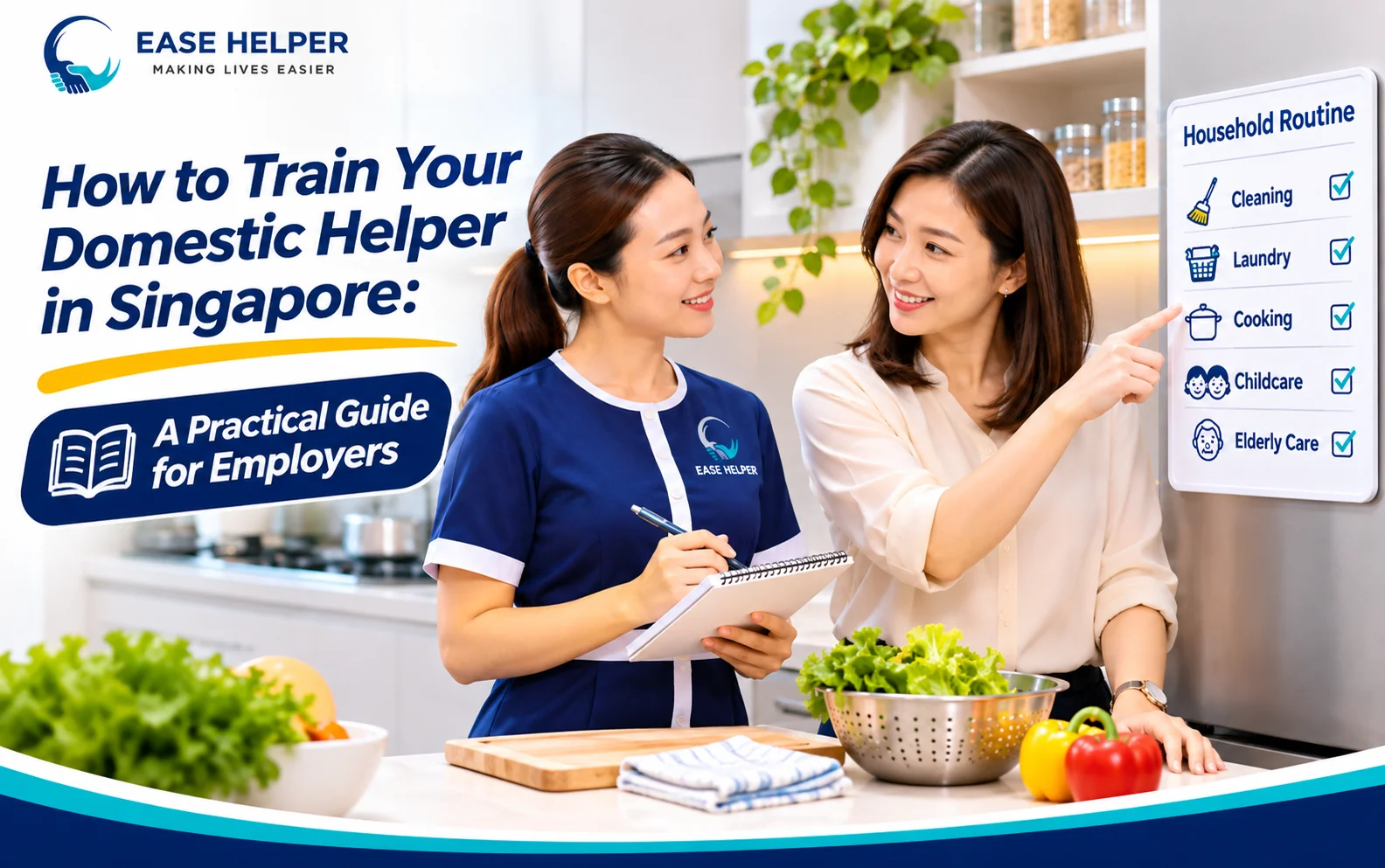
Learning how to train your domestic helper in Singapore starts with clear expectations, practical demonstrations and patient communication. Employers can make the adjustment easier by preparing a household routine, explaining safety rules and reviewing progress regularly. This guide covers first-week orientation, cleaning, cooking, childcare, elderly care, communication and common training mistakes. It also explains how to build confidence while respecting your domestic helper’s rights and well-being.
1. Why Domestic Helper Training Matters in Singapore
Every Singapore household has different routines, equipment and expectations. Even an experienced domestic helper needs time to understand a new family’s preferences. Therefore, employers should treat training as an introduction to the household rather than assume that every task will be familiar.
Effective training helps employers explain priorities, reduce misunderstandings and improve household safety. In addition, it gives domestic helpers a chance to ask questions before completing unfamiliar tasks independently.
Before training begins, review the overall hiring process in our guide to hiring a domestic helper in Singapore.
2. Start With a Clear First-Week Orientation
During the first few days, focus on essential information instead of teaching every household task at once. First, show your domestic helper where to find supplies, emergency contacts and important household equipment. Next, explain which tasks require immediate attention.
What to Cover During Orientation
- Introduce household members and explain daily routines.
- Show how to operate appliances safely.
- Identify cleaning products and explain safe storage.
- Explain food allergies, dietary preferences and kitchen hygiene.
- Share emergency contacts and instructions for seeking help.
- Discuss working arrangements, rest, communication and privacy.
Use a short written checklist where helpful. However, make sure your domestic helper understands each instruction rather than simply signing or ticking a box.
3. Create a Practical Domestic Helper Training Schedule
A simple schedule makes training easier to manage. Rather than introduce several complex tasks together, teach one routine, observe the result and provide feedback.
| Period | Training Focus | Employer’s Role |
|---|---|---|
| Day 1 | Household orientation and emergency procedures | Demonstrate key safety rules and answer questions |
| Days 2–3 | Cleaning, laundry and equipment | Show preferred methods and check understanding |
| Days 4–5 | Meal preparation and kitchen safety | Explain recipes, hygiene and dietary requirements |
| Days 6–7 | Review of routine and priorities | Discuss progress and adjust instructions |
| Following weeks | More specialised household responsibilities | Provide gradual practice and constructive feedback |
Adapt the schedule to your helper’s experience, language ability and agreed duties. Importantly, training must fit within reasonable working arrangements and should not interfere with required rest.
4. Teach Household Cleaning Step by Step
Cleaning expectations vary between homes. For example, one employer may prefer a particular floor-cleaning product, while another may have delicate surfaces that need special care.
Demonstrate Before Assigning
- Show the cleaning supplies and explain their purposes.
- Demonstrate the task slowly.
- Allow your helper to practise with suitable supervision.
- Check the result and give specific feedback.
- Repeat the demonstration when necessary.
Also explain which chemicals must never be mixed. Keep cleaning products in labelled containers and store them safely away from children and food.
5. Provide Kitchen and Cooking Training
Cooking training should begin with hygiene and safe equipment use. First, demonstrate handwashing, ingredient storage and separation of raw and cooked food. Then, introduce family recipes in manageable stages.
When possible, prepare a meal together before expecting independent cooking. In addition, explain food allergies, religious or dietary restrictions and any household rules about ingredients.
Essential Kitchen Safety Topics
- Safe handling of knives and hot cookware.
- Correct operation of gas or induction hobs.
- Food storage and refrigeration.
- Prevention of cross-contamination.
- Steps to take when equipment malfunctions or a gas smell is detected.
Encourage your helper to ask for assistance whenever a cooking method or appliance is unfamiliar.
6. Explain Childcare Responsibilities Carefully
Childcare requires clear instructions because every child’s needs differ. Employers should explain feeding routines, allergies, supervision rules and emergency contacts before assigning responsibility.
For infants, parents should demonstrate safe sleep practices and explain when the helper must seek immediate assistance. Never assume that prior childcare experience guarantees familiarity with your family’s specific needs.
Safety reminder: Parents should remain involved in childcare decisions. Give clear emergency instructions, and do not assign medical procedures or other specialised tasks without appropriate professional guidance.
7. Introduce Elderly Care Tasks With Appropriate Support
Some households hire domestic helpers to assist older family members. In these cases, training should focus on communication, daily routines, mobility safety and recognising when professional help is needed.
For example, show your helper how to keep walking paths clear and where to find emergency contacts. If an elderly person needs assistance with transfers, medication or medical equipment, obtain appropriate instructions from qualified healthcare professionals.
Furthermore, explain the older person’s preferences and encourage respectful communication. A familiar routine often helps both the family member and the helper feel more comfortable.
8. Communicate Clearly and Check Understanding
Language differences can create confusion, especially during the first few weeks. Therefore, use short sentences, demonstrate unfamiliar tasks and avoid giving several complicated instructions at once.
Practical Communication Techniques
- Explain one task at a time.
- Use pictures or simple written instructions when useful.
- Ask your helper to explain the steps in her own words.
- Give feedback privately and respectfully.
- Encourage questions without criticism.
Instead of saying that a task was done incorrectly, explain which step needs improvement and show the preferred method. As a result, feedback becomes more useful and less stressful.
9. Respect Rest Days, Privacy and Well-Being
Training works best when both parties feel respected. Employers must follow Singapore’s applicable employment requirements and provide the required rest arrangements. Discuss the schedule openly and avoid treating a rest day as an opportunity for additional compulsory training.
In addition, respect your domestic helper’s personal belongings, privacy and reasonable opportunities to communicate with family. Employers can consult the Ministry of Manpower’s Work Permit guidance for migrant domestic workers for official requirements.
10. Avoid Common Domestic Helper Training Mistakes
Even well-intentioned employers sometimes make training harder than necessary. Fortunately, small changes can improve the process.
- Giving too many instructions: Prioritise essential tasks and add responsibilities gradually.
- Assuming experience means identical methods: Explain your household’s preferences.
- Correcting without demonstrating: Show what a successful result looks like.
- Changing instructions frequently: Keep routines consistent whenever possible.
- Ignoring questions: Create opportunities for clarification.
- Expecting immediate perfection: Allow reasonable time for adjustment.
Above all, distinguish between a genuine safety issue and a difference in personal preference. Address urgent hazards immediately, but approach ordinary learning mistakes constructively.
11. Review Progress With a Weekly Check-In
A short weekly discussion helps employers identify problems before they grow. For example, ask which tasks feel comfortable, which instructions remain unclear and whether the daily schedule is realistic.
Then, agree on one or two priorities for the following week. Keep feedback specific and acknowledge improvements. Over time, these discussions can build trust and make household routines more predictable.
12. How EaseHelper Supports Domestic Helper Preparation
EaseHelper helps Singapore employers understand candidate suitability and household support needs. Our in-house training activities can help domestic helpers practise everyday household tasks before placement, while employers can continue household-specific orientation after arrival.
However, no general training programme can replace clear instructions for your particular home. Employers should explain family routines, equipment, safety expectations and any specialised care requirements.
When selecting an agency, read our domestic helper hiring guide and verify agency information through the MOM Employment Agencies and Personnel Search.
Frequently Asked Questions
How long does it take to train a domestic helper in Singapore?
The adjustment period varies according to experience, communication skills and household responsibilities. Start with a structured first week, then continue coaching and reviewing tasks as needed.
Should employers train experienced domestic helpers?
Yes. Even experienced helpers need an introduction to new household routines, appliances, preferences and safety requirements.
What should employers teach first?
Start with emergency procedures, household orientation, essential hygiene and the most important daily responsibilities. Add specialised tasks after your helper understands the basics.
How can employers overcome language barriers?
Use simple instructions, practical demonstrations and visual checklists. Ask your helper to repeat important steps to confirm understanding.
Can an agency provide all the training a helper needs?
Agency training can build useful foundational skills. Nevertheless, employers must still explain their household’s unique routines, expectations and safety procedures.
Conclusion
Learning how to train your domestic helper in Singapore takes planning, patience and consistent communication. Start with essential safety information, demonstrate tasks clearly and provide time to practise. Then, review progress regularly and adapt the training to your household’s needs.
With a supportive approach, employers can build a more organised home and a positive working relationship.
Looking for a Domestic Helper in Singapore?
EaseHelper can help you explore suitable candidates and understand the preparation involved in welcoming a domestic helper into your household.
Disclaimer: This article provides general information for Singapore employers and does not constitute legal, medical or professional advice. MOM requirements and policies may change. Always consult current official guidance and qualified professionals for specialised childcare, elderly care or medical matters.