
Blog
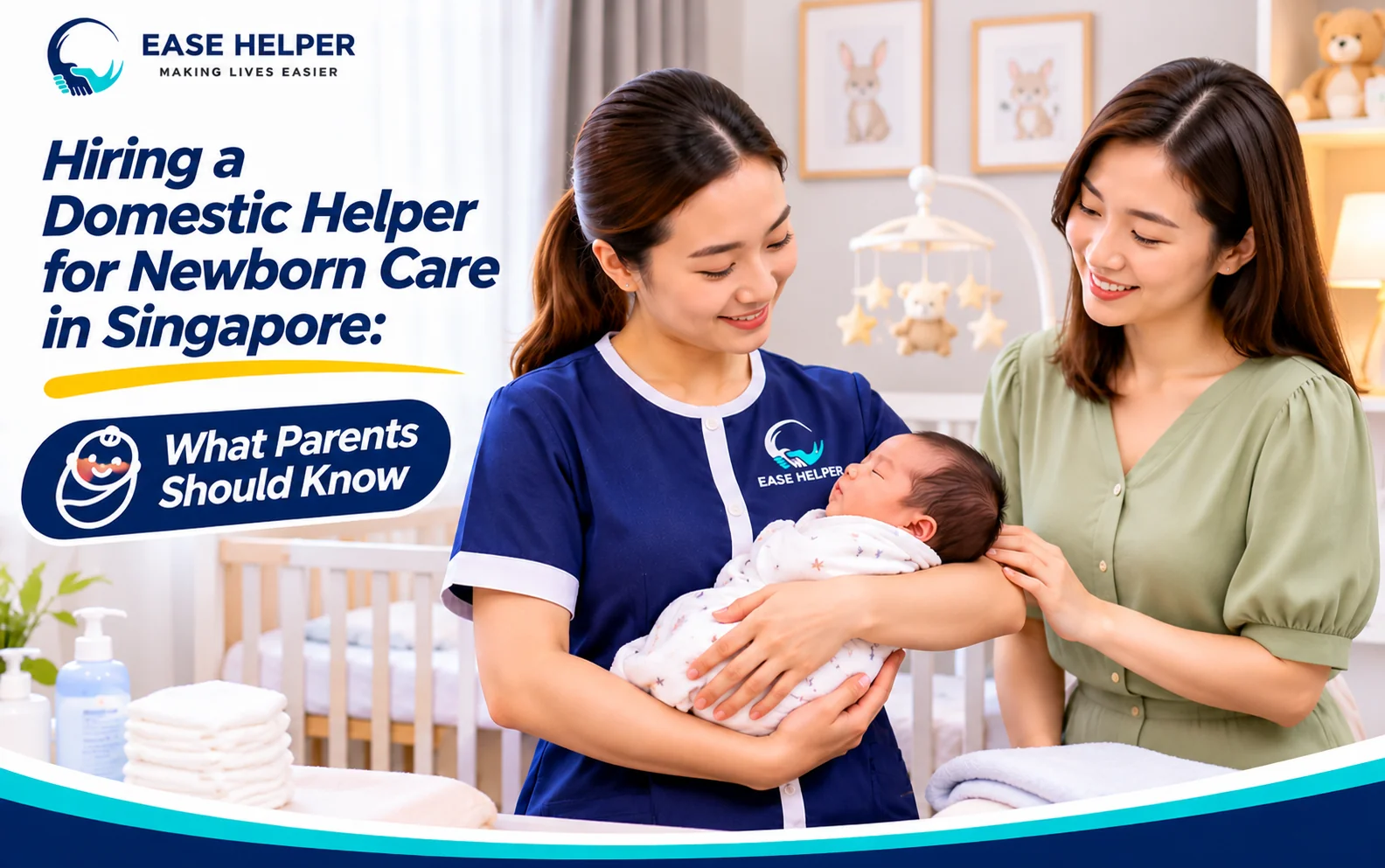
Hiring a Domestic Helper for Newborn Care in Singapore: What Parents Should Know

Executive Summary
Hiring a domestic helper for newborn care in Singapore can provide valuable household support during a demanding period. However, parents should assess each candidate’s practical experience, communication skills and ability to follow safe care instructions.
This guide explains how to interview candidates, evaluate newborn care experience, plan responsibilities and prepare a safe home environment. It also covers training, supervision and the importance of clear communication.
Key takeaway: Choose a domestic helper based on demonstrated skills and suitability, not nationality or experience claims alone. Parents remain responsible for their baby’s care decisions and should provide appropriate supervision.
1. Why Families Hire a Domestic Helper for Newborn Care
Welcoming a newborn brings excitement, but it also changes the family’s daily routine. Feeding schedules, frequent waking and household responsibilities can leave parents with limited time to rest.
Therefore, some families hire a domestic helper to support daily tasks while parents focus on their baby.
A domestic helper may assist with:
- Washing and preparing baby clothes.
- Cleaning and organising the nursery.
- Cleaning feeding equipment according to parents’ instructions.
- Preparing household meals.
- Managing laundry and routine household cleaning.
- Helping with age-appropriate baby care under parental supervision.
However, families should not assume that every experienced domestic helper has newborn care skills. Caring for an older child differs significantly from caring for a newborn.
2. What Experience Should Parents Look For?
When hiring a domestic helper for newborn care in Singapore, parents should review relevant experience carefully.
Previous Newborn Care Experience
Ask whether the candidate has cared for babies during their first months of life. Next, explore the exact responsibilities she handled.
For example, did she prepare feeding equipment, change nappies or help parents settle the baby? Did she work independently or under close supervision?
Understanding of Hygiene and Safety
Newborns need careful handling and consistent hygiene practices. Therefore, candidates should understand the importance of handwashing, clean feeding equipment and following parents’ instructions.
Communication and Willingness to Learn
A helper who asks questions and follows instructions may be a better fit than someone who claims extensive experience but resists guidance.
Additionally, parents should consider whether the candidate can understand important safety instructions and communicate concerns promptly.
3. Essential Interview Questions for Newborn Care
A structured interview helps parents understand what a candidate knows and how she responds to everyday situations.
Consider asking these questions:
- Have you cared for a newborn younger than three months?
- What were your daily responsibilities?
- How would you support a baby’s head and neck when carrying the baby?
- What would you do if a baby continued crying after a feed?
- How would you clean feeding bottles and related equipment?
- What would you do if the baby developed a fever?
- How would you respond if the baby appeared to have difficulty breathing?
- What sleeping position should a healthy baby use?
- How would you tell the parents about a problem?
- What would you do if you were unsure about an instruction?
Rather than accepting simple yes-or-no answers, ask candidates to explain their actions.
For broader interview guidance, read our Myanmar vs Indonesian Domestic Helper comparison, which discusses candidate suitability and communication.
4. Newborn Care Skills Parents Should Assess
| Skill | What to Assess | Why It Matters |
|---|---|---|
| Baby handling | Supports the head and neck and handles the baby gently. | Newborns require careful physical support. |
| Hand hygiene | Washes hands before handling feeding equipment or the baby. | Helps reduce exposure to germs. |
| Feeding support | Follows parents’ feeding instructions and hygiene procedures. | Supports consistent feeding routines. |
| Safe sleep | Understands back sleeping and the need for a clear, firm sleep surface. | Reduces preventable sleep-related risks. |
| Communication | Reports unusual symptoms and asks for guidance. | Allows parents to respond promptly. |
| Emergency awareness | Knows when to alert parents and seek emergency assistance. | Supports timely action during urgent situations. |
5. Safe Sleep Practices Every Family Should Explain
Safe sleep is one of the most important parts of newborn care. Parents should explain their household rules clearly and check that their helper understands them.
For a healthy baby, parents should follow current safe-sleep guidance, including:
- Place the baby on their back for every sleep.
- Use a firm, flat sleep surface designed for infants.
- Keep pillows, loose blankets, toys and soft bedding out of the baby’s sleep space.
- Avoid letting the baby sleep unattended on a sofa or adult bed.
- Keep the baby’s sleep environment free from smoke.
- Follow medical advice if the baby has special health needs.
Importantly, a domestic helper should never improvise sleep arrangements or use unapproved products.
Parents can consult Singapore’s HealthHub for family health information and discuss newborn care concerns with their healthcare professional.
6. How to Prepare Your Home Before the Helper Arrives
Before your domestic helper begins work, organise the areas she will use and explain where essential items belong.
Prepare the Baby’s Supplies
- Arrange nappies, wipes and baby clothes.
- Label storage areas clearly.
- Keep feeding equipment organised.
- Provide suitable cleaning supplies.
- Store medicines and hazardous products securely.
Write Down Important Instructions
A short written guide can help your helper remember daily routines. Include emergency contacts, household hygiene rules and instructions about when to contact the parents.
However, avoid overwhelming her with too many instructions on the first day. Instead, introduce responsibilities gradually.
7. Create a Practical Newborn Care Training Plan
Even a helper with previous experience needs time to understand your family’s preferences. Therefore, a structured orientation can make the transition smoother.
| Period | Training Focus | Parent’s Role |
|---|---|---|
| Day 1 | Home orientation, hygiene rules and emergency contacts. | Explain and demonstrate essential procedures. |
| Days 2–3 | Baby laundry, nursery cleaning and feeding-equipment hygiene. | Observe work and correct mistakes. |
| Days 4–5 | Supporting routine care and recognising when to ask for help. | Supervise practical activities. |
| Days 6–7 | Reviewing routines, communication and household priorities. | Provide feedback and clarify expectations. |
This schedule is only an example. Adjust the pace to the helper’s abilities and your baby’s needs.
For general preparation, see our complete guide to hiring a domestic helper in Singapore.
8. Should Parents Choose a Fresh or Experienced Helper?
Both fresh and experienced domestic helpers may be suitable for families with newborns. However, their training needs can differ.
Experienced Domestic Helpers
A candidate with verified newborn care experience may already understand common household routines. Nevertheless, parents should assess her actual skills and explain their own preferences.
Fresh Domestic Helpers
A fresh helper may need more demonstrations and supervision. However, someone who communicates clearly, follows instructions and learns carefully may still become a suitable household support person.
Ultimately, the right choice depends on the individual candidate and the amount of training and supervision the family can provide.
9. Common Mistakes Parents Should Avoid
Families can prevent many misunderstandings by setting realistic expectations from the beginning.
- Assuming experience guarantees competence: Ask for examples and assess practical knowledge.
- Giving unclear instructions: Demonstrate important procedures instead of relying on verbal explanations alone.
- Expecting immediate independence: Allow time for supervised learning.
- Overloading the helper: Prioritise safety and essential household responsibilities.
- Ignoring communication difficulties: Encourage questions and confirm understanding.
- Leaving emergency arrangements unclear: Explain who to contact and when to seek urgent help.
Furthermore, parents should review routines regularly as their baby grows.
10. What Should a Helper Do During a Newborn Emergency?
Parents should explain that a helper must report unusual symptoms immediately rather than trying to diagnose or treat the baby independently.
If a baby has serious breathing difficulties, becomes unresponsive or shows other signs of a medical emergency, the helper should seek emergency assistance immediately.
In Singapore, call 995 for an emergency ambulance.
Important: A domestic helper does not replace a doctor, nurse or qualified medical professional. Parents should seek professional advice about feeding difficulties, fever, illness, medication and any special medical needs.
11. Understand Singapore’s Domestic Helper Employment Requirements
Employers must comply with Singapore’s Ministry of Manpower (MOM) requirements when hiring a migrant domestic worker.
These include applicable Work Permit conditions, medical insurance, security bond requirements, rest days and other employer responsibilities.
Before hiring, review the latest official guidance:
In addition, families should plan ahead for Work Permit expiry. Our Domestic Helper Work Permit Renewal Guide explains the renewal process and common considerations.
12. How EaseHelper Supports Families Preparing for a Newborn
EaseHelper helps Singapore families explore domestic helper candidates based on their household requirements.
For families expecting a baby, we can discuss the importance of relevant experience, communication skills and willingness to follow household instructions.
Our support may include:
- Understanding your family’s newborn care and household needs.
- Identifying candidates with relevant experience.
- Arranging candidate interviews.
- Discussing training needs and practical expectations.
- Providing guidance on applicable hiring procedures.
- Supporting families during the placement process.
Where relevant training materials are available, families can also discuss ways to assess a candidate’s practical preparation before arrival.
However, parents should independently assess each candidate and provide suitable orientation and supervision after hiring.
Frequently Asked Questions
Can a domestic helper take care of a newborn in Singapore?
A domestic helper may assist with newborn care according to her skills and the family’s instructions. However, parents should assess her competence, provide appropriate supervision and retain responsibility for medical and safety decisions.
Is previous newborn experience necessary?
Previous experience can be valuable, particularly when a family needs substantial infant care support. Nevertheless, parents should evaluate each candidate’s demonstrated skills rather than relying only on the number of years worked.
What should I ask during a newborn care interview?
Ask about baby handling, hygiene, feeding support, safe sleep, communication and emergency awareness. In addition, use realistic scenarios to understand how the candidate would respond.
Should a domestic helper sleep in the baby’s room?
Sleeping arrangements depend on the family’s needs, safe-sleep considerations and applicable employment requirements. Employers must also provide their helper with suitable accommodation and adequate rest. Discuss the arrangement carefully before assigning overnight duties.
Can EaseHelper help me find a candidate with newborn care experience?
EaseHelper can discuss your requirements and help you explore suitable candidates. Availability and experience vary, so parents should interview and assess candidates before making a hiring decision.
Conclusion
Hiring a domestic helper for newborn care in Singapore requires more than checking employment history. Parents should assess practical skills, communication, safety awareness and willingness to learn.
Moreover, clear household instructions and a realistic training plan can help both the family and the helper adjust to their new routines.
By preparing carefully and choosing a suitable candidate, families can create a more organised home environment while maintaining appropriate supervision of their newborn.
Looking for a Domestic Helper to Support Your Growing Family?
EaseHelper can help you explore suitable domestic helper candidates and understand the hiring process in Singapore.
Tell us about your household needs, preferred experience and expected arrival timeline.
Explore EaseHelper ServicesDisclaimer: This article provides general information for Singapore employers. It does not replace medical advice, professional childcare training or official MOM guidance. Employment requirements and healthcare recommendations may change. Always check current official sources and consult qualified professionals where appropriate.