Blog
Domestic Helper Food and Daily Meals in Singapore: A Guide for Employers

Executive Summary
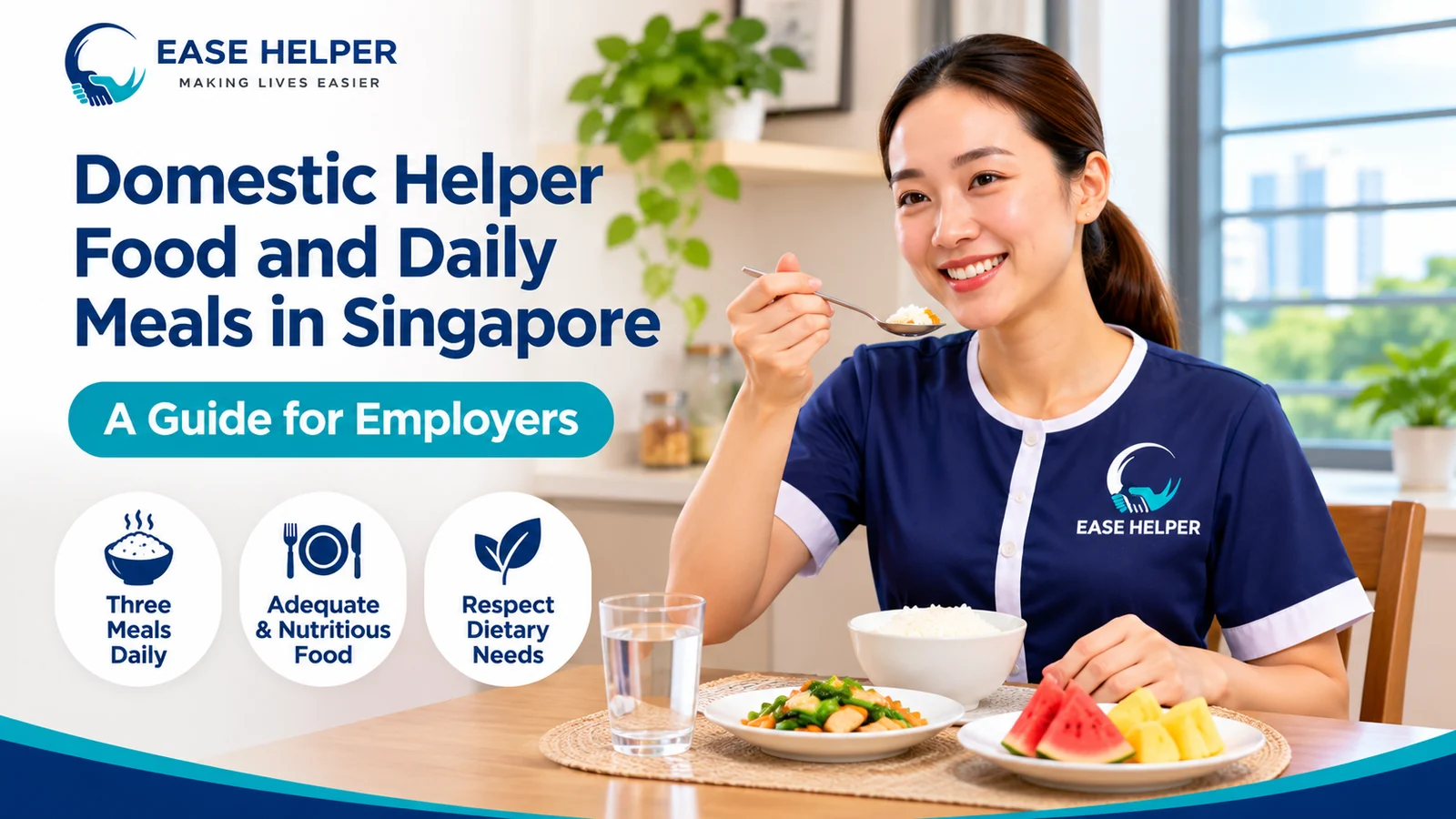
Employers must provide adequate domestic helper food in Singapore. Under Ministry of Manpower (MOM) requirements, employers must provide three meals a day and take responsibility for their domestic helper’s upkeep.
However, providing three meals is only the starting point. Employers should also consider meal portions, balanced nutrition, dietary restrictions and suitable eating times. This guide explains the official requirements and practical ways to establish fair household meal arrangements.
1. Why Providing Adequate Food Matters
A domestic helper may spend much of her working day cleaning, cooking, shopping or caring for family members. Therefore, she needs enough food and opportunities to eat properly.
As an employer, you must provide adequate meals throughout her employment. In addition, you should make sure she feels comfortable discussing her food needs.
Good communication helps prevent misunderstandings. For example, a helper may remain hungry after a small meal but hesitate to request more food.
If you are preparing to employ a helper, start with our guide to hiring a domestic helper in Singapore. It introduces the wider responsibilities involved in employing a helper.
2. MOM Requirements for Domestic Helper Food in Singapore
MOM requires employers to provide their domestic helpers with three meals daily: breakfast, lunch and dinner.
Moreover, employers should consider the amount and nutritional quality of the food they provide. A meal should offer enough nourishment for the helper’s needs rather than merely satisfy a fixed household routine.
| Area | Employer Responsibility | Practical Approach |
|---|---|---|
| Daily meals | Provide three meals each day. | Plan breakfast, lunch and dinner around reasonable eating times. |
| Food quantity | Provide adequate food. | Ask whether portions are sufficient and adjust them when needed. |
| Dietary needs | Respect foods the helper cannot or is uncomfortable eating. | Discuss religious, cultural and health-related restrictions. |
| Nutrition | Ensure food is adequate for her well-being. | Include a reasonable variety of carbohydrates, protein, vegetables and fruit. |
| Food expenses | Bear the cost of providing adequate food. | Provide meals directly or agree on a workable arrangement that still meets the obligation. |
Read the official MOM guidance on rest days, health and well-being for the current food requirements.
3. What Should a Domestic Helper Eat Each Day?
MOM provides an example of daily food intake for a woman performing moderate physical activity. The example includes bread for breakfast and balanced rice-based meals for lunch and dinner.
However, the example is not a universal menu. A helper’s food needs may vary depending on her appetite, activity level, health and dietary preferences.
A Practical Daily Meal Example
| Meal | Example | Important Consideration |
|---|---|---|
| Breakfast | Bread with spread, or another filling breakfast suited to her preferences. | Ensure she has enough food before beginning her daily activities. |
| Lunch | Rice, vegetables, protein and fruit. | Provide sufficient portions and allow time to eat. |
| Dinner | Rice or another staple food, vegetables, protein and fruit. | Discuss meal timing if the family eats unusually late. |
For example, a helper who prefers rice may not feel satisfied with a small serving of porridge. Likewise, a person performing physically demanding household tasks may need larger portions.
Therefore, ask your helper whether the meals are sufficient rather than assuming everyone in the household has identical needs.
4. Can a Domestic Helper Eat the Same Food as the Family?
Yes. Sharing suitable family meals can be a convenient arrangement when the food meets your helper’s nutritional and dietary needs.
However, your helper may not eat every dish that your family enjoys. For instance, she may avoid certain ingredients because of her religion, allergies or personal dietary requirements.
Consequently, discuss her preferences before establishing a shared meal routine.
When the Family’s Food Is Different
Some Singapore households regularly eat porridge, noodles, vegetarian meals or small portions. Meanwhile, a helper may prefer rice-based meals or different cooking styles.
Rather than insisting that she follow every family preference, consider providing suitable alternatives.
For more advice, see MOM’s guide to understanding a domestic helper’s dietary preferences.
5. Religious, Cultural and Medical Dietary Needs
Domestic helpers come from different backgrounds. Therefore, employers should discuss food restrictions respectfully and avoid making assumptions based on nationality.
Religious Dietary Requirements
Some helpers may avoid pork or require halal food. Others may follow vegetarian diets or have additional restrictions.
Ask directly about her needs and agree on suitable meal options. In addition, explain which kitchen equipment and ingredients she may use when preparing her own meals.
Food Allergies and Intolerances
A helper may have allergies or difficulty digesting certain foods. Therefore, ask whether there are ingredients she must avoid.
If she reports a serious allergy, take it seriously and discuss safe food preparation. Seek appropriate medical advice when necessary.
Different Eating Habits
Some helpers prefer a substantial breakfast, while others eat larger meals later in the day. Likewise, preferred spices, vegetables and staple foods can differ.
Although your family may have established routines, small adjustments can help your helper eat comfortably.
6. Can Employers Give a Food Allowance Instead?
Some households consider providing money so their domestic helper can purchase or prepare her own meals.
However, MOM places the responsibility for adequate food and its costs on the employer. A food allowance should not become a way to transfer that responsibility to the helper.
If you agree on an allowance arrangement, ensure that it genuinely provides access to three adequate meals every day. The arrangement should be clear, practical and suitable for the helper’s needs.
Importantly, do not assume that a particular allowance amount automatically satisfies MOM requirements. Food prices and individual needs can vary.
Important: MOM’s published guidance establishes the employer’s duty to provide adequate food. It does not establish a universal monthly food allowance that automatically replaces this duty. Employers should clarify unusual arrangements with MOM.
7. Should Domestic Helpers Buy Their Own Food?
Employers remain responsible for providing adequate food and bearing its costs.
Therefore, a helper should not have to use her salary to cover meals that the employer is responsible for providing.
Of course, she may choose to buy personal snacks or particular foods with her own money. However, these optional purchases should not replace the employer’s meal arrangements.
Similarly, employers should not treat the provision of ordinary meals as a reason to reduce the agreed salary.
8. Drinking Water and Access to Food
Besides planning meals, employers should make sure their domestic helper has access to safe drinking water throughout the day.
This is especially important in Singapore’s hot and humid climate. Household chores can involve considerable physical activity, so regular hydration matters.
Additionally, explain which food items she may prepare for herself. Clear instructions can prevent uncertainty about shared groceries, personal food and household supplies.
For example, you might designate a shelf for her preferred food items or agree on a weekly grocery list.
9. Meal Times and Household Routines
Some families eat dinner late because of work schedules. However, a helper may need to sleep earlier if she starts work early the next morning.
Therefore, discuss reasonable meal times rather than expecting her to wait until the entire family is ready.
MOM encourages employers to work out meal arrangements that suit the helper’s needs.
Example Household Routine
- Breakfast: Allow enough time for a proper morning meal.
- Lunch: Plan a reasonable break during the afternoon.
- Dinner: Arrange an earlier meal when the family eats late.
- Drinking water: Keep safe water readily available.
- Additional food: Discuss what the helper may prepare if she remains hungry.
These are practical suggestions, not fixed MOM meal-time requirements. Adjust the routine to suit your household and the helper’s needs.
10. Common Food-Related Mistakes Employers Should Avoid
Many food disagreements begin with unclear expectations. Fortunately, employers can prevent most problems through better communication.
| Common Mistake | Recommended Approach |
|---|---|
| Providing only small portions without checking whether they are enough. | Ask about appetite and adjust portions appropriately. |
| Expecting the helper to eat food that conflicts with her dietary restrictions. | Discuss restrictions and provide suitable alternatives. |
| Relying on instant noodles for every meal. | Offer varied, balanced meals with suitable nutrients. |
| Requiring the helper to wait until very late for dinner. | Arrange a suitable earlier meal when necessary. |
| Assuming the helper knows which groceries she may use. | Explain food arrangements clearly and respectfully. |
| Providing a food allowance without checking whether it covers adequate meals. | Ensure the arrangement actually meets the employer’s responsibility. |
11. How to Discuss Food Preferences With Your Domestic Helper
Start the conversation during the first few days of employment. Then, revisit the arrangements after your helper has settled into the household.
Consider asking these five questions:
- What do you usually eat for breakfast, lunch and dinner?
- Are there foods you cannot eat for religious or health reasons?
- Do you prefer rice, bread, noodles or other staple foods?
- Are the meal portions sufficient for you?
- Would you prefer different meal times or preparation arrangements?
Listen carefully to her answers. Moreover, encourage her to speak up if she feels hungry or experiences difficulties with the food provided.
For additional preparation tips, review our Myanmar vs Indonesian domestic helper guide, which discusses how household needs and candidate suitability may differ.
12. Domestic Helper Daily Meals Checklist
Use this checklist to review your household arrangements:
- ☐ Three adequate meals are available every day.
- ☐ Portions are sufficient for the helper’s needs.
- ☐ Meals include a reasonable variety of nutritious foods.
- ☐ Religious and cultural food restrictions are respected.
- ☐ Known allergies and medical dietary needs are considered.
- ☐ Safe drinking water is readily available.
- ☐ Meal times are practical and allow sufficient time to eat.
- ☐ The helper knows which groceries she may use.
- ☐ Any food allowance arrangement genuinely covers adequate meals.
- ☐ The helper feels comfortable discussing food concerns.
Review these arrangements whenever household routines or your helper’s needs change.
13. Frequently Asked Questions
How many meals must an employer provide a domestic helper in Singapore?
MOM requires employers to provide three meals a day: breakfast, lunch and dinner.
Must a domestic helper eat the same food as the family?
No. Family meals can be suitable, but employers must consider adequate nutrition and dietary restrictions. Provide alternatives when the family’s food does not meet the helper’s needs.
Can an employer provide a food allowance instead of cooking meals?
An agreed allowance arrangement must still meet the employer’s responsibility to provide adequate food at the employer’s expense. MOM does not specify a universal allowance amount that automatically fulfils this requirement.
Can employers ask their domestic helper to pay for meals?
Employers are responsible for adequate food and its costs. A helper may choose to buy optional personal food, but employers must not shift their basic food obligation onto her.
What if the helper is still hungry after meals?
Ask whether she needs larger portions or different foods. Then, make reasonable adjustments so she receives adequate nourishment.
Does MOM require a specific daily menu?
No. MOM provides an example of adequate daily food intake, but employers should consider individual nutritional needs, appetite and dietary restrictions.
14. How EaseHelper Supports Employers
At EaseHelper, we believe that clear expectations help employers and domestic helpers build better working relationships.
During the hiring process, employers can discuss household routines, food preferences and daily responsibilities. These conversations can help both parties prepare for living and working together.
However, employers remain responsible for providing adequate meals and complying with MOM’s requirements throughout the employment period.
Looking for a Domestic Helper in Singapore?
EaseHelper helps employers explore suitable domestic helper options and prepare for household responsibilities.
Start your hiring journey with clearer expectations and practical support.
Explore EaseHelper ServicesDisclaimer
This article provides general information for employers and does not constitute legal, medical or nutritional advice. MOM rules and guidance may change. For the latest official requirements, visit the Ministry of Manpower. Employers should seek clarification from MOM about specific food allowance or meal arrangements where necessary.