Blog
Domestic Helper and Family Travel: What Singapore Employers Should Prepare

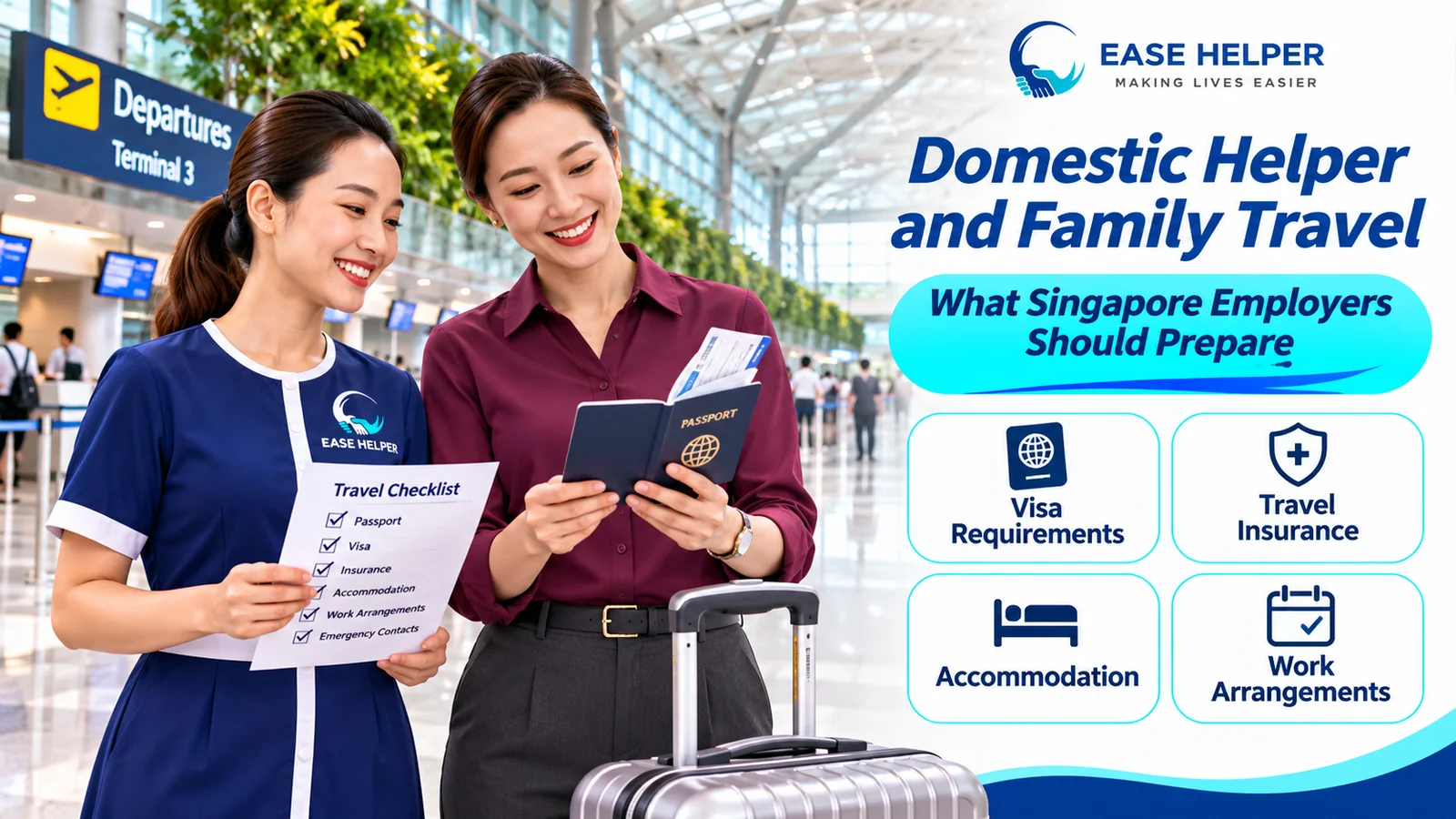
Domestic helper and family travel requires careful preparation when Singapore employers plan to bring their domestic helper overseas. Whether the trip involves a family holiday, visiting relatives or temporary travel, employers should review immigration requirements, employment arrangements and the helper’s wellbeing before departure.
However, travelling with a domestic helper involves more than booking an additional flight ticket. Entry rules, visa conditions and permission to perform domestic work can differ between destinations.
Therefore, this guide explains the main preparations Singapore employers should consider before travelling overseas with a domestic helper.
Executive Summary
Domestic helper and family travel arrangements should begin with a discussion between the employer and helper. Employers should check passport validity, destination-specific visas, permission to perform domestic work, insurance coverage and Singapore re-entry requirements.
In addition, employers should agree on travel duties, accommodation, rest arrangements and expenses before departure. A Singapore Work Permit does not automatically authorise a domestic helper to work in another country.
1. Can a Domestic Helper Travel Overseas With a Singapore Employer?
A domestic helper may be able to accompany an employer overseas, depending on the destination’s immigration and employment rules. However, permission to enter a country does not necessarily include permission to perform domestic work there.
For example, a helper might qualify for a short-term visitor visa but still need separate authorisation to provide childcare or household services during the trip.
Therefore, employers should check the destination’s official immigration guidance before making travel commitments.
Questions to Check Before Booking
- Does the helper’s nationality require an entry visa?
- Does the destination permit accompanying domestic helpers?
- Is a separate work authorisation or sponsorship arrangement required?
- What passport validity rules apply?
- Are there transit visa requirements?
- Can the helper return to Singapore under her existing immigration arrangements?
Importantly, rules can differ according to nationality, destination, length of stay and purpose of travel.
2. Discuss the Travel Plan With Your Helper
Before arranging overseas travel, employers should explain the trip and discuss whether the helper is willing and able to accompany the family.
For instance, a helper may have concerns about unfamiliar destinations, religious or dietary needs, personal safety or responsibilities outside her normal routine.
Consequently, a clear conversation helps both parties understand the proposed arrangements.
Topics to Discuss
- Travel dates and destinations.
- Reason for the trip.
- Expected childcare or household responsibilities.
- Accommodation and sleeping arrangements.
- Rest days and reasonable working hours.
- Travel costs and personal expenses.
- Emergency contact arrangements.
Moreover, employers should avoid assuming that accompanying the family on holiday means the helper is also on holiday. The actual duties and rest arrangements matter.
3. Check Passport and Visa Requirements
Passport and visa requirements are among the most important domestic helper and family travel preparations.
First, confirm that the helper has a valid passport. Next, check the destination’s entry conditions for her nationality.
Additionally, review the rules of any transit country, especially when the itinerary involves changing airports or passing through immigration.
Travel Document Checklist
- Valid passport.
- Destination visa, where required.
- Transit visa, where applicable.
- Any required permission to perform domestic work.
- Flight booking and accommodation details.
- Relevant travel insurance information.
- Singapore Work Permit and re-entry arrangements.
- Emergency contact information.
Important: A Singapore domestic helper Work Permit is not a substitute for a foreign visa or work authorisation. Always confirm the destination’s rules with its immigration authority or diplomatic mission.
4. Understand Singapore Work Permit and Re-entry Arrangements
Employers should review the helper’s Singapore Work Permit status before leaving the country.
For example, a Work Permit approaching expiry may create complications if the family plans an extended trip.
Therefore, check the permit validity, relevant travel documentation and current re-entry conditions before departure.
Employers can consult the Ministry of Manpower and the Immigration & Checkpoints Authority for applicable Singapore requirements.
Furthermore, employers should confirm whether the proposed travel affects any existing employment or administrative obligations.
5. Who Should Pay for the Helper’s Travel Expenses?
When an employer requires a domestic helper to accompany the family for work, the employer should plan and cover the necessary work-related travel expenses.
However, the exact legal responsibilities may depend on the employment agreement, applicable Singapore requirements and destination-specific laws.
Expenses Employers Should Plan For
- Flight or other transport tickets.
- Required visas and work authorisations.
- Suitable accommodation.
- Meals or appropriate meal arrangements.
- Required travel-related medical coverage.
- Local transport for work duties.
- Other necessary employment-related expenses.
Additionally, employers should explain any personal expenses that the helper may choose to incur voluntarily.
6. Arrange Suitable Accommodation and Privacy
Accommodation is an important part of responsible domestic helper and family travel planning.
For example, a hotel room that comfortably accommodates a family may not provide suitable sleeping arrangements for an additional adult.
Therefore, employers should review the accommodation layout before booking.
Accommodation Considerations
- A suitable and safe sleeping arrangement.
- Reasonable privacy for changing clothes and personal care.
- Access to appropriate bathroom facilities.
- Safe storage for personal belongings.
- Practical arrangements for meals and rest.
- Compliance with local accommodation requirements.
Furthermore, employers should avoid last-minute arrangements that leave the helper without adequate rest or privacy.
7. Plan Working Duties and Rest Days
Family travel can change daily routines significantly. Consequently, employers should agree on reasonable responsibilities before departure.
For instance, childcare during sightseeing may involve different tasks from childcare at home. Likewise, a family gathering could create additional cooking or cleaning requests.
Therefore, employers should discuss what the helper will actually do during the trip.
Practical Work Arrangements
- Explain expected childcare or elderly care duties.
- Identify periods when the helper can rest.
- Discuss rest-day arrangements in advance.
- Avoid expecting continuous availability throughout the trip.
- Provide reasonable time for meals and personal needs.
- Review applicable Singapore and destination employment rules.
Importantly, travelling overseas should not become a reason to disregard the helper’s wellbeing or applicable employment protections.
8. Check Medical and Travel Insurance
Employers should not assume that an existing Singapore domestic helper insurance policy covers every overseas situation.
Instead, review the policy wording and confirm whether overseas medical treatment, accidents, emergency assistance and repatriation are covered.
Moreover, some destinations may require particular insurance coverage as a condition of entry.
| Insurance Area | What to Check |
|---|---|
| Overseas medical treatment | Whether treatment at the destination is covered. |
| Accidental injury | Coverage limits, exclusions and conditions. |
| Emergency assistance | Availability of emergency support services. |
| Medical evacuation | Whether evacuation is covered when medically necessary. |
| Travel disruption | Whether relevant delays or cancellations are included. |
| Policy exclusions | Any exclusions related to employment or particular destinations. |
Consequently, employers should contact their insurer before departure rather than relying on assumptions about coverage.
9. Prepare for Childcare During Overseas Travel
Families travelling with young children may need additional planning. For example, unfamiliar accommodation, crowded attractions and long transport journeys can create new safety risks.
Childcare Travel Preparation
- Explain the daily itinerary and childcare responsibilities.
- Keep emergency contact numbers accessible.
- Identify safe meeting points in crowded locations.
- Discuss transport and child-seat arrangements.
- Prepare essential childcare supplies.
- Explain what to do if a child becomes unwell.
Additionally, employers should avoid leaving a helper to manage unfamiliar or high-risk situations without adequate support.
10. Travelling With Elderly Family Members
Overseas travel with elderly family members may require mobility support, medication planning and suitable accommodation.
Therefore, employers should assess the traveller’s needs before deciding which responsibilities the helper can safely manage.
Elderly Care Travel Checklist
- Confirm mobility and accessibility needs.
- Plan medication arrangements with the relevant healthcare professional.
- Check wheelchair or mobility-aid availability.
- Identify nearby medical facilities.
- Prepare emergency contact details.
- Arrange suitable transport and accommodation.
However, employers should not expect a helper to perform medical procedures or unsafe lifting tasks without appropriate training.
11. Emergency Preparedness While Travelling
Emergency arrangements should form part of every domestic helper and family travel plan.
For instance, the helper should know how to contact the employer if family members become separated at an airport or tourist attraction.
Furthermore, emergency telephone numbers differ between countries. Therefore, Singapore’s emergency numbers should not be assumed to work overseas.
Travel Emergency Checklist
- Save the destination’s emergency telephone numbers.
- Share the accommodation address.
- Provide the employer’s reachable contact number.
- Identify an alternative family contact.
- Explain what to do if someone becomes lost.
- Keep insurance assistance information available.
- Review the household emergency plan before departure.
In addition, employers should make sure the helper understands the instructions rather than simply receiving a written checklist.
12. Respect Personal Documents and Communication
Domestic helpers should have appropriate access to their personal identification documents and important travel information.
Consequently, employers should not retain a helper’s passport against her wishes or restrict reasonable communication with family members.
For practical travel arrangements, both parties can agree on how to safeguard documents during transport without denying the helper access to them.
Moreover, employers should respect the helper’s privacy and personal boundaries throughout the trip.
13. What if the Helper Cannot Accompany the Family?
Sometimes a helper cannot travel because of visa restrictions, personal circumstances or destination-specific employment rules.
Therefore, employers should consider lawful alternatives instead of assuming the helper must accompany them.
Possible Arrangements
- Discuss mutually agreed leave arrangements.
- Arrange appropriate accommodation and support in Singapore where lawful.
- Review the employment contract and applicable rest-day rules.
- Consider alternative childcare or elderly care arrangements for the trip.
- Seek guidance from MOM or a qualified adviser where necessary.
Importantly, employers should not assume that leaving a helper in Singapore automatically changes salary, rest-day or other employment obligations.
14. Pre-Departure Travel Checklist for Employers
Use the following checklist before confirming overseas travel with a domestic helper.
| Preparation | Recommended Action |
|---|---|
| Travel discussion | Explain the trip and confirm arrangements with the helper. |
| Passport | Check validity and destination requirements. |
| Visa | Confirm entry and transit requirements. |
| Work authorisation | Check whether domestic work is permitted at the destination. |
| Singapore re-entry | Review Work Permit and immigration requirements. |
| Insurance | Confirm appropriate overseas coverage. |
| Accommodation | Arrange suitable sleeping and privacy conditions. |
| Work duties | Agree on responsibilities and rest arrangements. |
| Emergency plan | Share local emergency numbers and contacts. |
| Travel expenses | Clarify responsibility for necessary costs. |
Finally, review the arrangements shortly before departure because immigration rules and travel requirements can change.
15. Frequently Asked Questions
1. Can I bring my domestic helper overseas from Singapore?
Possibly. However, eligibility depends on the destination, the helper’s nationality, immigration rules and permission to perform domestic work. Check the relevant official requirements before booking.
2. Does a Singapore Work Permit allow a helper to work overseas?
No. A Singapore Work Permit does not automatically grant permission to work in another country. Separate immigration or employment authorisation may be required.
3. Should the employer pay for the helper’s travel costs?
Employers should budget for necessary work-related travel expenses when requiring a helper to accompany the family. They should also check the employment agreement and applicable legal requirements.
4. Does domestic helper insurance cover overseas travel?
Coverage depends on the insurance policy. Therefore, employers should confirm overseas medical, accident and emergency assistance benefits directly with their insurer.
5. Can a helper remain in Singapore while the employer travels?
Depending on the circumstances, lawful arrangements may be possible. However, employers must continue to meet applicable employment, accommodation and welfare obligations. Seek MOM guidance where necessary.
How EaseHelper Supports Singapore Families
Domestic helper and family travel planning becomes easier when employers communicate clearly and prepare suitable arrangements in advance.
EaseHelper supports Singapore families with domestic helper recruitment and matching. During the selection process, employers can discuss household responsibilities, childcare needs, elderly care requirements and relevant expectations.
Looking for a Domestic Helper in Singapore?
Explore EaseHelper’s domestic helper recruitment services and find a suitable match for your household’s needs.
Explore EaseHelper ServicesDisclaimer: This article provides general information and does not constitute immigration, employment or legal advice. Requirements for overseas travel with a domestic helper vary by destination, nationality and travel purpose. Employers should confirm current rules with the destination’s immigration and labour authorities, as well as Singapore’s Ministry of Manpower and Immigration & Checkpoints Authority where applicable.