
Blog
Domestic Helper Mobile Phone Use in Singapore: Setting Fair and Practical Household Rules

Executive Summary
Domestic helper mobile phone use in Singapore can become a source of misunderstanding when employers and helpers have different expectations. A practical household policy should balance work responsibilities, safety, privacy, rest and personal communication.
Employers can reduce disagreements by explaining when phone use may interrupt duties, allowing reasonable personal communication, and agreeing on how to handle emergencies. Clear expectations work better than blanket restrictions or constant monitoring.
Why Mobile Phone Rules Matter
Mobile phones help domestic helpers stay connected with family, access information and manage personal matters. They can also support everyday tasks, such as checking directions or contacting an employer.
However, phone use may create problems when it distracts someone from childcare, cooking or other responsibilities that require attention.
For example, an employer may worry about a helper checking social media while supervising a young child. Meanwhile, the helper may need to answer an urgent message from her family overseas.
Both concerns deserve consideration. Therefore, employers should focus on safe behaviour and clear expectations rather than treating all phone use as a problem.
1. Discuss Phone Expectations Before Problems Arise
Start the conversation during the first few days of employment. Explain the household routine and identify duties that require uninterrupted attention.
Ask your helper when she usually contacts her family. Then discuss suitable times for personal calls and messages.
A helpful conversation might cover:
- When personal phone use is suitable during the day.
- Which tasks require full attention.
- How to respond to urgent family messages.
- Whether the employer may contact the helper during working hours.
- How the household will respect personal time and rest days.
Keep the discussion simple. If language differences create confusion, demonstrate examples and ask the helper to explain the agreement in her own words.
2. Identify Tasks Where Phone Distractions Can Be Dangerous
Not every household task carries the same risk. Consequently, phone rules should reflect the level of attention each activity requires.
| Household Activity | Practical Phone Expectation | Reason |
|---|---|---|
| Supervising babies or young children | Avoid non-urgent personal browsing while actively supervising. | Children may need immediate attention. |
| Cooking with a stove or hot oil | Keep attention on cooking and handle calls when safe. | Distractions can increase accident risks. |
| Assisting an elderly person with mobility | Focus on safe assistance before checking messages. | Falls and injuries can occur quickly. |
| General cleaning or folding laundry | Agree on reasonable breaks for personal messages. | These tasks may allow more flexibility. |
| Rest periods and rest days | Respect personal communication and privacy. | Rest and family contact support well-being. |
These examples are household safety suggestions, not a separate set of government phone-use rules. Employers should adapt them to actual duties and circumstances.
3. Allow Reasonable Contact With Family
Many migrant domestic helpers live far from their families. Regular communication can provide reassurance and emotional support.
Therefore, avoid unnecessary restrictions that isolate a helper from her loved ones. Instead, agree on practical times for routine calls while keeping arrangements flexible for emergencies.
For example, a helper might prefer to call her children after dinner. If that timing fits the household routine and her personal rest time, a predictable arrangement can help everyone plan.
However, emergencies do not follow a schedule. A helper should know how to alert the employer if she receives urgent news from home.
Employer tip: Discuss both routine calls and emergencies. A reasonable arrangement should not prevent a helper from seeking assistance or contacting relevant authorities when necessary.
4. Respect Privacy and Personal Boundaries
A helper’s mobile phone may contain private family conversations, photographs, financial information and personal accounts.
Employers should respect those boundaries. Avoid demanding passwords, reading private messages or routinely inspecting personal content.
Likewise, discuss household privacy expectations openly. For example, explain that family members’ photographs, private conversations and personal information should not be shared online without permission.
These expectations should apply respectfully to everyone in the household.
What About Taking Photographs at Home?
Some employers worry about photographs of children, visitors or the home appearing on social media. Rather than banning all photography without explanation, establish clear consent rules.
- Ask permission before photographing or posting family members.
- Do not share sensitive household information publicly.
- Explain which spaces or activities require additional privacy.
- Respect the helper’s own personal photographs and private communications.
5. Set Clear Rules Without Creating an Overly Strict Schedule
A phone agreement should be easy to remember. It should also leave room for different situations.
For instance, an employer might explain that personal social media browsing should wait until a suitable break when the helper is responsible for an active toddler. However, a short urgent family call may need immediate attention.
Instead of creating a long list of prohibitions, focus on a few principles:
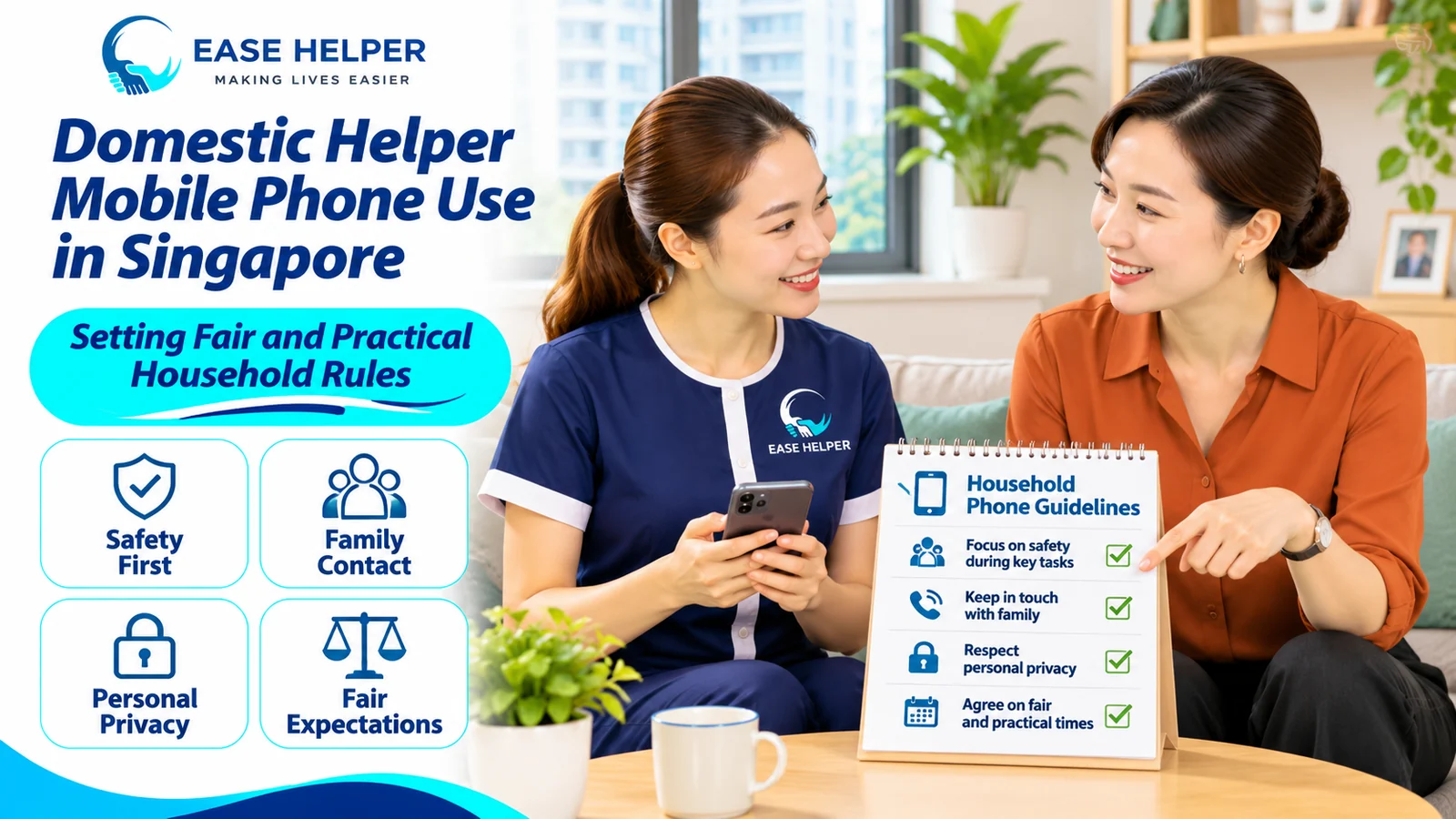
- Put safety first during tasks that require close attention.
- Complete agreed responsibilities without unnecessary distractions.
- Use suitable breaks for routine personal communication.
- Explain urgent situations promptly.
- Respect rest time, personal privacy and family contact.
Review the arrangement after the helper settles into the household. If the routine changes, update the expectations together.
6. Handle Excessive Phone Use Through Constructive Feedback
If phone use affects work, address the specific behaviour rather than making personal accusations.
For example, instead of saying, “You are always on your phone,” explain the concern: “When you are supervising the baby, please keep your attention on the baby. You can check routine messages during your break.”
Next, ask whether the helper understands the instruction and whether something urgent requires attention.
If the issue continues, discuss a clearer arrangement and review it after a reasonable period.
Employers can also benefit from reading our guide on hiring a domestic helper in Singapore, which explains the importance of choosing someone whose experience and expectations suit the household.
7. Avoid Common Employer Mistakes
Even well-intentioned employers sometimes create unnecessary conflict through unclear or inconsistent rules.
| Common Mistake | Better Approach |
|---|---|
| Banning all phone use without discussing needs | Agree on reasonable personal communication arrangements. |
| Changing rules without explanation | Explain why an adjustment is necessary. |
| Assuming every message is social media browsing | Ask about the situation before drawing conclusions. |
| Checking private messages | Respect personal privacy and address observable work concerns. |
| Ignoring rest time | Plan duties around proper rest and agreed working routines. |
| Giving complicated instructions | Use short explanations and confirm understanding. |
8. Create a Simple Household Phone Agreement
A written agreement can help prevent misunderstandings. Keep it short, use language the helper understands, and discuss it together.
Sample Household Phone Guidelines
Safety: Avoid non-urgent phone use while supervising children, assisting someone with mobility or performing potentially hazardous tasks.
Routine messages: Use suitable breaks or agreed personal time for non-urgent calls and browsing.
Emergencies: Inform the employer when an urgent family matter requires attention.
Privacy: Do not share family photographs or private household information without permission. Everyone should respect personal communications.
Rest: Personal phone use during rest periods should respect others’ sleep and privacy, without unnecessarily restricting the helper’s own rest and communication.
This sample is a discussion guide, not a legal contract. Employers should avoid adding terms that conflict with applicable employment requirements.
9. What Do Singapore’s Employment Rules Say?
Singapore’s Ministry of Manpower (MOM) provides requirements and guidance on employing migrant domestic workers, including rest days, well-being and employer responsibilities.
Employers should not assume that MOM sets a universal daily screen-time allowance or a fixed phone-use timetable for every household. Instead, establish reasonable expectations that remain consistent with applicable MOM requirements.
For official information, refer to MOM’s Work Permit information for migrant domestic workers.
10. How EaseHelper Can Support Better Communication
Clear communication begins before a helper joins the household. Employers should discuss responsibilities, safety expectations and family routines during the selection process.
EaseHelper helps Singapore households consider their domestic helper requirements and prepare for a smoother employment arrangement.
In addition, practical guidance and consistent instructions can help employers and helpers understand one another from the beginning.
Frequently Asked Questions
1. Can employers restrict domestic helper mobile phone use in Singapore?
Employers can discuss reasonable expectations for phone use during household duties, especially when safety requires close attention. However, arrangements should respect the helper’s privacy, rest, well-being and ability to communicate or seek assistance.
2. Can a domestic helper use her phone during rest time?
Personal communication is an important part of rest and private life. Employers should respect the helper’s rest time and agree on reasonable household considerations, such as keeping noise down at night.
3. What if a helper uses her phone while caring for a baby?
Explain the safety concern clearly. Ask her to avoid non-urgent browsing during active supervision and agree on suitable times to check routine messages. Make reasonable arrangements for urgent communication.
4. Should employers check their helper’s WhatsApp messages?
Routine inspection of private messages is not a constructive way to manage household expectations. Instead, address specific work or safety concerns directly and respect personal privacy.
5. How can employers prevent phone-related misunderstandings?
Discuss expectations early, use clear examples, allow reasonable personal communication and review the arrangement when necessary. Above all, encourage respectful two-way feedback.
Looking for a Domestic Helper in Singapore?
EaseHelper helps employers explore domestic helper options and prepare for a positive working relationship built on clear expectations and mutual respect.
Visit EaseHelper to learn more about our services and discuss your household needs.
Explore EaseHelperDisclaimer: This article provides general household management guidance and does not constitute legal advice. Employment requirements and MOM policies may change. Always consult the latest official MOM guidance for your circumstances. Suggested phone arrangements should never override applicable rest-day, safety or other employment obligations.