

Blog
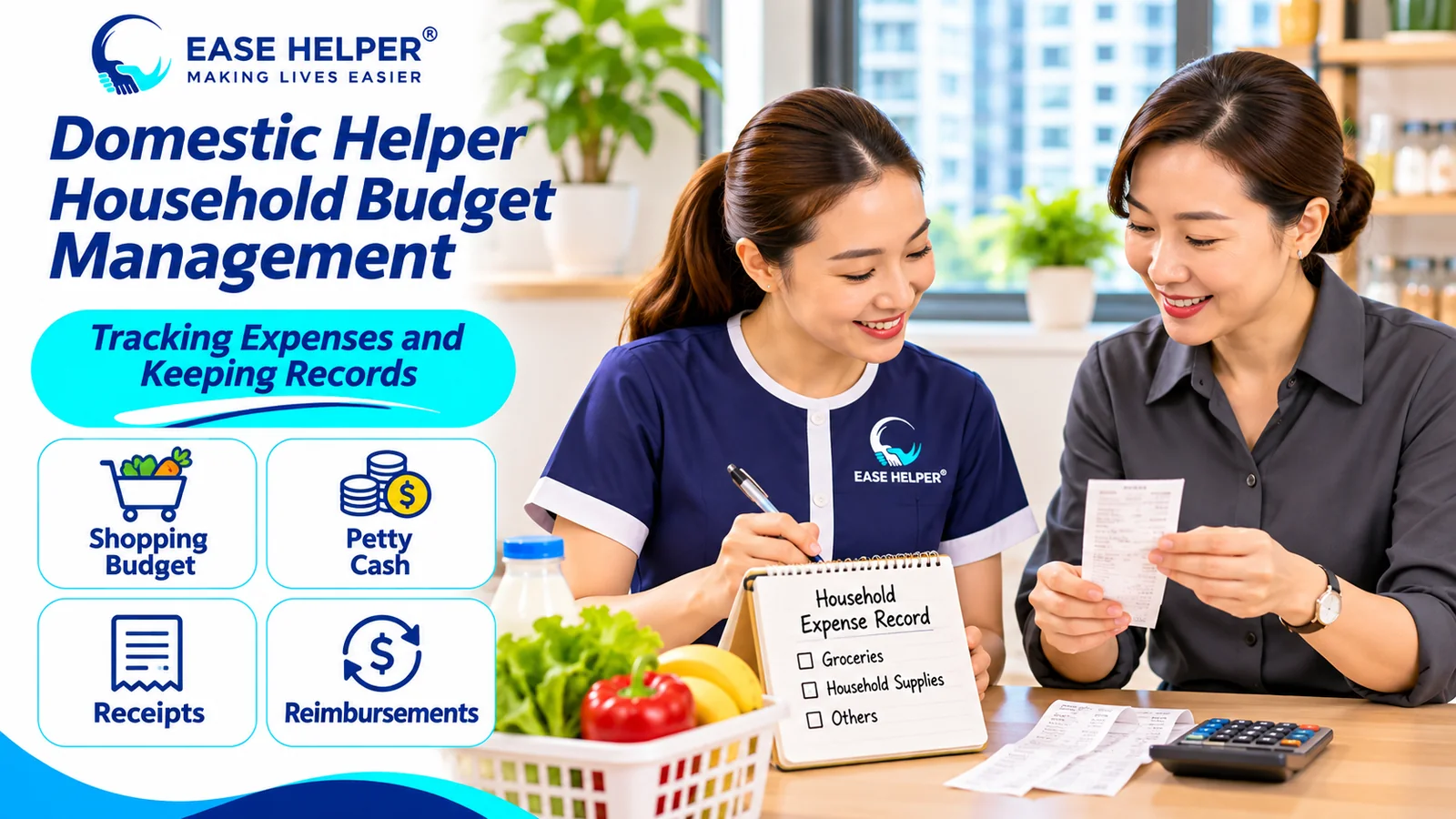
Domestic Helper Household Budget Management: Tracking Expenses and Keeping Records

Executive Summary
Managing household expenses becomes easier when employers and domestic helpers follow a simple, transparent system. A clear shopping budget, written expense records and regular receipt checks help prevent confusion and reduce unnecessary spending.
This guide explains how Singapore employers can organise household petty cash, track grocery purchases, handle reimbursements and introduce practical money-management routines. It also highlights an important distinction: household shopping funds belong to the employer, while the domestic helper’s personal salary and savings remain entirely her own.
Why Household Budget Management Matters
Many Singapore families ask their domestic helpers to buy groceries, household supplies and other daily necessities. However, small purchases can quickly add up, especially when several family members request different items.
Without a clear system, an employer may struggle to remember how much money was given or what the helper purchased. Similarly, the helper may feel uncertain about spending limits or reimbursement procedures.
Therefore, a straightforward household expense system benefits everyone. It creates transparency, saves time and supports a professional working relationship.
1. Establish a Clear Household Shopping Budget
Start by deciding which purchases your domestic helper may make independently. Next, agree on an approximate spending limit for routine shopping.
For example, a family might allocate a weekly grocery budget based on household size, dietary preferences and typical shopping habits. However, the employer should adjust this amount when prices or family needs change.
Separate Routine and Special Purchases
- Routine purchases: Vegetables, fruit, eggs, bread, milk and everyday household supplies.
- Planned purchases: Ingredients for a special meal, additional cleaning products or items requested by visiting relatives.
- Unexpected purchases: Urgent replacements or essential items that were not included in the original list.
For larger or unusual purchases, ask the helper to confirm the price before paying. This approach prevents misunderstandings without requiring approval for every small item.
Practical tip: Agree on a spending threshold that suits your family. For example, the helper could seek approval before buying any unlisted item costing more than S$20. This is a household preference, not a government requirement.
2. Use a Simple Household Expense Record
A notebook, printed worksheet or shared spreadsheet can help both parties track spending. The best method is one that the helper understands and can use consistently.
Record the date, item, amount spent and remaining household funds. Additionally, note whether the purchase was approved or whether the employer needs to reimburse the helper.
Example: Household Petty Cash Record
| Date | Description | Money In | Money Out | Balance |
|---|---|---|---|---|
| Monday | Household cash provided | S$100.00 | — | S$100.00 |
| Tuesday | Vegetables and fruit | — | S$18.50 | S$81.50 |
| Wednesday | Eggs, milk and bread | — | S$14.20 | S$67.30 |
| Thursday | Cleaning supplies | — | S$12.80 | S$54.50 |
| Friday | Rice and groceries | — | S$25.00 | S$29.50 |
In this example, the family provided S$100 and spent S$70.50. Therefore, S$29.50 remains available for future household purchases.
These amounts are illustrations only. Actual budgets will depend on the family’s circumstances.
3. Keep Receipts and Confirm Purchases
Receipts help employers understand spending patterns. They also protect helpers from confusion when several purchases take place on the same day.
After shopping, the helper can place receipts in a designated envelope or photograph them for a shared household record. Meanwhile, the employer can review the total during a regular check-in.
What If the Shop Does Not Provide a Receipt?
Some small purchases may not come with a receipt. In that situation, the helper can write down the item, price, shop and date.
For instance, if she buys vegetables from a market stall, a simple handwritten entry is usually enough for the family’s internal records.
Above all, the goal is accurate recordkeeping rather than excessive monitoring.
4. Explain How to Handle Change and Unused Money
When an employer provides cash for household shopping, the helper should know what to do with the remaining amount.
Choose one consistent arrangement:
- Return the change and receipts after each shopping trip.
- Keep the remaining household petty cash in an agreed location for the next purchase.
- Reconcile the balance with the employer at the end of each week.
Whichever arrangement you choose, both parties should understand it clearly. In addition, keep household funds separate from the helper’s personal money.
5. Handle Reimbursements Fairly
Sometimes, a helper may need to purchase an essential household item when the employer has not provided enough cash. Ideally, the employer should arrange payment in advance rather than expect the helper to use her own money.
If the helper voluntarily pays for an approved household purchase, the employer should reimburse her promptly and record the repayment.
Example: Reimbursement Record
| Purchase | Amount | Paid By | Reimbursement Status |
|---|---|---|---|
| Cooking oil | S$8.90 | Helper’s personal money | Reimbursed |
| Dishwashing liquid | S$5.50 | Household petty cash | Not required |
| Emergency groceries | S$12.40 | Helper’s personal money | Pending reimbursement |
Importantly, household purchases should not become a financial burden for the domestic helper. Employers should also avoid delaying reimbursements or using the helper’s salary to cover ordinary household costs.
6. Protect Personal Salary and Household Money
Household expense tracking must remain separate from salary management. The Ministry of Manpower (MOM) requires employers to pay their domestic helpers on time and in full, subject to the applicable rules.
Employers must not keep a domestic helper’s salary, savings, bank card or other personal money. Furthermore, employers must not deduct ordinary household expenses, damage costs or performance penalties from her salary.
For official guidance, read MOM’s domestic helper salary guidelines.
Keep Three Types of Money Separate
- Household petty cash: Money the employer provides for approved household purchases.
- Reimbursements: Money the employer owes the helper for approved household purchases she personally paid for.
- Personal salary and savings: Money belonging to the helper, which she controls independently.
This distinction is essential because a household shopping record should never be confused with a salary deduction or personal savings arrangement.
7. Use Digital Tools Without Sharing Sensitive Banking Details
Digital tools can make household expense tracking more convenient. For example, families may use a shared shopping list, spreadsheet or messaging thread to record approved purchases.
However, choose a system that does not require the helper to disclose her personal banking passwords, PINs or one-time passwords.
If an employer wants to provide a payment method for household purchases, they should assess its security features and spending controls carefully. In addition, the employer should retain control over their own banking credentials.
Singapore Police advise the public not to disclose sensitive banking details or authentication codes. For further information, visit the official ScamShield website.
8. Review Household Spending Weekly
A short weekly review is usually more useful than checking every transaction repeatedly throughout the day.
During the review, compare the shopping list, receipts and remaining household cash. Then discuss any unusually expensive items or purchases that were not planned.
Weekly Review Checklist
- Check the opening household cash balance.
- Add all money provided during the week.
- Review receipts and recorded purchases.
- Confirm any reimbursements that remain unpaid.
- Count the remaining household funds.
- Adjust the next shopping budget if necessary.
Most importantly, treat differences as questions to clarify rather than immediate evidence of wrongdoing. A missing receipt or calculation error may have a simple explanation.
9. Common Household Budget Mistakes to Avoid
| Common Mistake | Better Approach |
|---|---|
| Giving money without explaining the shopping budget | Agree on a spending limit and shopping priorities. |
| Mixing household funds with personal salary | Keep separate records and never safekeep the helper’s personal money. |
| Forgetting to record small purchases | Update the expense record after each shopping trip. |
| Delaying reimbursements | Repay approved personal expenses promptly. |
| Criticising the helper over price differences | Discuss prices calmly and compare available options. |
| Changing spending rules without explanation | Explain new expectations before the next shopping trip. |
10. How Employers Can Teach Budget Management
Not every domestic helper has experience managing a household shopping budget. Therefore, employers should introduce the system gradually.
- Demonstrate: Complete the first shopping record together.
- Explain: Show how to calculate the remaining balance.
- Practise: Let the helper record a few purchases independently.
- Review: Check the entries together and answer questions.
- Improve: Simplify the record if it feels unnecessarily complicated.
For a broader approach to teaching new responsibilities, see our guide to hiring a domestic helper in Singapore.
Families comparing helper backgrounds can also read Myanmar vs Indonesian Domestic Helper: Which Is Right for Your Family? to understand how to assess individual experience and suitability.
Frequently Asked Questions
1. Should a domestic helper manage household shopping money?
Yes, an employer may entrust a helper with an agreed amount for routine household purchases. However, the employer should explain the budget, spending limits and recordkeeping expectations.
2. Is a domestic helper required to keep every shopping receipt?
There is no general MOM rule requiring a receipt for every household purchase. Nevertheless, employers and helpers can agree on a practical receipt system for transparency.
3. Can an employer deduct missing household money from a helper’s salary?
Employers must not use salary deductions to penalise a domestic helper for missing money, damaged household items or performance issues. Instead, clarify the facts and seek appropriate advice if a serious dispute arises. Refer to MOM’s salary guidance.
4. What if a helper pays for household groceries using her own money?
Employers should avoid relying on the helper’s personal funds. If she voluntarily pays for an approved household purchase, reimburse her promptly and record the payment.
5. What is the easiest way to track household expenses?
A simple notebook or spreadsheet with five columns—date, description, money received, money spent and balance—works well for many families. Choose a method both parties can understand.
Looking for a Domestic Helper Who Fits Your Household?
EaseHelper helps Singapore families find suitable domestic helpers based on household needs, experience and practical responsibilities. We can also guide employers on setting clear expectations and introducing everyday household routines.
Explore EaseHelper ServicesDisclaimer: This article provides general household management guidance for Singapore employers. Sample budgets and expense records are illustrative, not official requirements. Employment obligations and salary rules may change. Always consult the latest Ministry of Manpower guidance for regulatory matters.