
Blog
Domestic Helper Home Security in Singapore: Keys, Visitors and Household Access Rules

Executive Summary
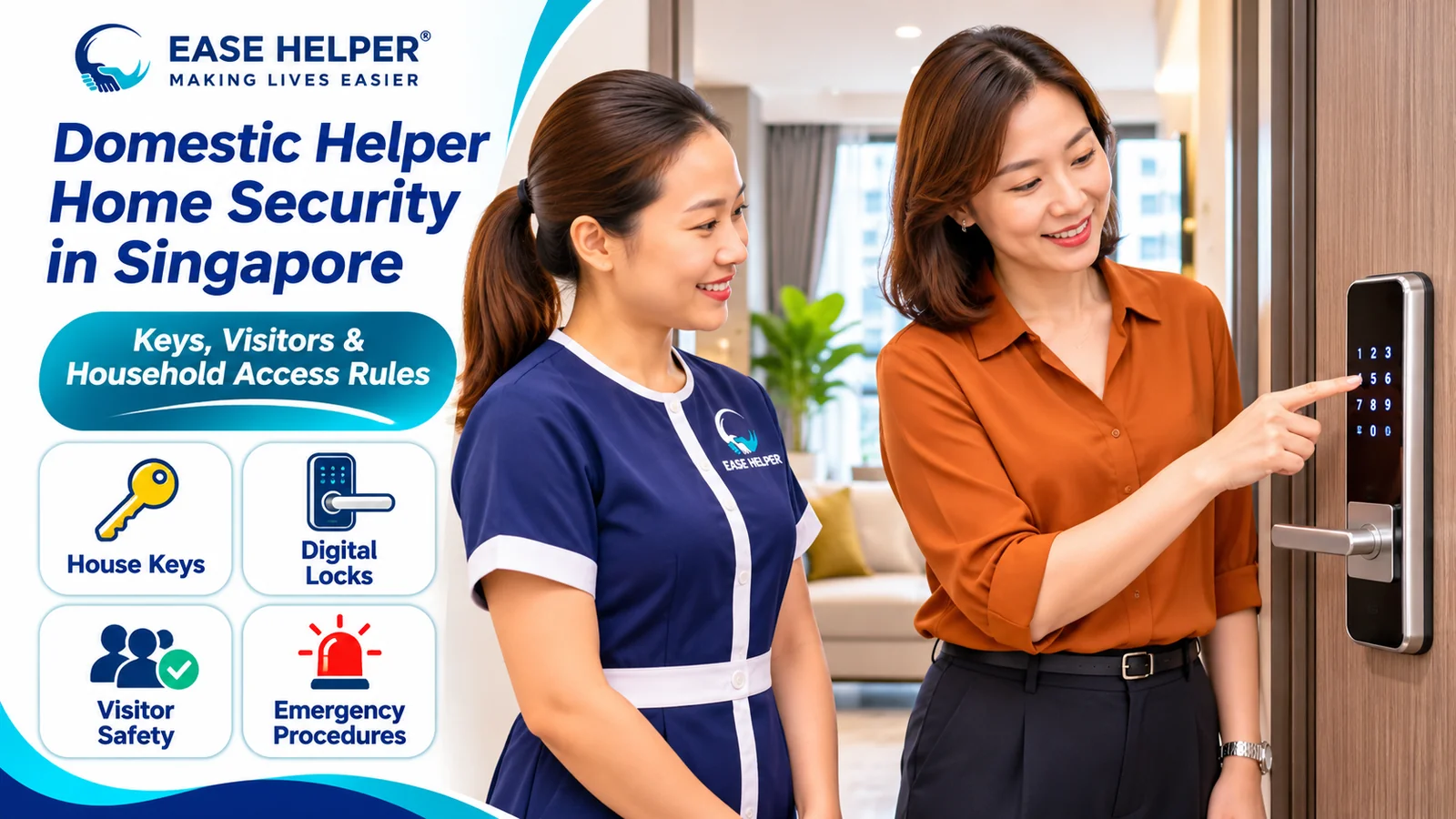
Domestic helper home security is an important part of managing a safe Singapore household. Employers should explain how to handle house keys, digital locks, visitors, deliveries, access cards and unexpected situations before leaving a helper responsible for the home.
This guide provides practical household security rules, a training checklist and emergency procedures. It also explains how employers can protect their property without imposing unreasonable restrictions or compromising a helper’s dignity and privacy.
Why Domestic Helper Home Security Matters
Domestic helpers often manage daily household activities while employers are working. They may receive deliveries, admit authorised visitors, collect children from school or lock the home before leaving.
However, unfamiliar security systems and unclear instructions can create avoidable problems. For example, a helper may not know whether a delivery person can enter the flat or whom to contact when a digital lock stops working.
Therefore, employers should establish simple rules from the beginning. Clear communication helps everyone understand their responsibilities and reduces unnecessary misunderstandings.
Importantly, good security procedures should apply consistently to the household rather than singling out the helper for suspicion.
1. Explain House Key and Access Card Rules
Domestic helper home security begins with understanding who may hold keys and access cards. In Singapore, HDB flats and condominiums may use physical keys, electronic access cards, digital locks or a combination of these systems.
Key Management Checklist
- Explain which keys the helper may use.
- Identify the correct key for each permitted entrance.
- Show where keys should be stored when not in use.
- Explain what to do if a key or access card goes missing.
- Clarify whether spare keys may be given to anyone else.
- Demonstrate how to secure doors and gates when leaving.
For example, employers can designate a consistent location for everyday keys. This reduces confusion and makes it easier to notice when something is missing.
However, avoid attaching the full home address to a keyring, as this could create additional risk if the keys are lost.
2. Teach Safe Use of Digital Door Locks
Many Singapore households use fingerprint, PIN or app-controlled door locks. Although these systems are convenient, helpers may need practical instruction before using them independently.
Digital Lock Training
- Demonstrate the normal locking and unlocking procedure.
- Explain how to confirm that the door is securely locked.
- Show how to recognise low-battery warnings.
- Explain the approved backup access procedure.
- Identify whom to contact if the lock malfunctions.
Employers should provide access only through methods the helper is authorised to use. Where possible, use an individual access code rather than sharing the employer’s primary administrator code.
Furthermore, explain that access codes should not be shared with friends, visitors or unknown callers.
Employer tip: If your digital lock supports separate user credentials, consider giving the helper her own authorised access method. This makes access management clearer and avoids unnecessary sharing of administrator settings.
3. Establish Clear Visitor Access Rules
Visitors can include relatives, friends, maintenance workers, delivery personnel and unfamiliar individuals. Therefore, employers should explain exactly who may enter the home.
Suggested Household Visitor Rules
- Allow entry only to people approved by the employer.
- Verify unexpected visits before opening the door.
- Do not allow strangers inside simply because they claim to know the family.
- Contact the employer when unsure about a visitor’s identity.
- Keep the main entrance secure while checking unexpected requests.
- Never disclose household security codes to visitors.
For example, if someone claims to be a maintenance contractor but no appointment was scheduled, the helper should contact the employer or building management using a known telephone number.
Employers should also explain how the helper can receive her own authorised visitors during permitted personal time, while respecting reasonable household arrangements.
4. Create Safe Delivery and Parcel Collection Procedures
Online shopping and food delivery are common in Singapore. Consequently, domestic helpers may interact with delivery personnel several times a week.
Employers should explain whether parcels should be collected at the door, left outside or received through a condominium reception desk.
Delivery Safety Checklist
- Check whether a delivery is expected.
- Keep the door secured when dealing with unfamiliar personnel.
- Avoid inviting delivery workers into the home unless specifically authorised.
- Do not disclose unnecessary household information.
- Contact the employer about suspicious requests for payment or personal information.
- Store received parcels in the agreed location.
Additionally, helpers should never share one-time passwords, banking details or account verification codes merely because a caller claims they are required for delivery.
5. Protect Household Information and Privacy
Home security involves more than physical locks. Families should also protect personal information, access credentials and sensitive documents.
However, privacy expectations must work both ways. Employers should respect their helper’s personal information and private communications as well.
Practical Information Security Rules
- Keep banking cards, passwords and sensitive documents secure.
- Explain which household information must remain confidential.
- Do not share door access codes or alarm settings publicly.
- Avoid posting photos that reveal household access credentials.
- Use separate accounts or limited permissions for smart-home systems where practical.
- Respect the helper’s own personal messages, documents and belongings.
Employers should not expect helpers to manage online banking or disclose their own passwords as part of ordinary household security arrangements.
6. Set Reasonable Rules for Security Cameras
Some Singapore households use CCTV or smart cameras to monitor entrances and shared areas. If cameras are installed, employers should explain their purpose and location clearly.
Camera arrangements must respect applicable privacy requirements and should never intrude into private spaces such as bathrooms or areas where someone changes clothes.
In particular, employers should avoid treating continuous monitoring as a substitute for proper training and communication.
For employment-related guidance, consult Singapore’s Ministry of Manpower (MOM).
7. Teach Safe Procedures When Leaving the Home
Helpers may leave the home for grocery shopping, school collection or other authorised errands. Therefore, employers should establish a consistent departure routine.
Before Leaving the Home
- Check that cooking appliances are switched off.
- Close and secure windows where appropriate.
- Confirm that the main door and gate are locked.
- Take the required keys or access card.
- Ensure children or dependent household members are appropriately supervised.
- Follow the agreed communication procedure if plans change.
Importantly, household security instructions should not prevent a helper from accessing emergency assistance or exercising her lawful rights.
8. Explain What to Do if Keys Are Lost
Lost keys can happen even when someone is careful. A calm response is more useful than blame.
Lost Key Response
- Inform the employer promptly.
- Explain where and when the key was last used.
- Check likely locations without taking unnecessary risks.
- Do not share the home address with strangers offering help.
- Follow the employer’s instructions for replacement access.
If a lost key could identify the property, employers should assess whether changing the lock or disabling an access card is necessary.
Furthermore, employers should avoid automatically accusing the helper of dishonesty when a key goes missing.
9. Prepare for Suspicious Visitors and Emergencies
Every household should have a simple emergency plan. The helper needs to know whom to call and when to seek immediate assistance.
| Situation | Recommended Response |
|---|---|
| Unknown person requests entry | Keep the entrance secured, decline entry and contact the employer if necessary. |
| Visitor claims to be a contractor | Verify the appointment through the employer or known management contact. |
| Lost key or access card | Inform the employer promptly so access can be reviewed. |
| Digital lock stops working | Use the approved backup procedure or contact the employer. Do not force the lock. |
| Suspected break-in or immediate threat | Move to safety and call the Singapore Police Force at 999. |
| Fire or serious medical emergency | Move to safety and call 995 for emergency assistance. |
For crime prevention information, refer to the Singapore Police Force. For fire safety guidance, visit the Singapore Civil Defence Force.
10. Create a Domestic Helper Home Security Checklist
A written checklist can help employers provide consistent instructions without overwhelming a new helper.
| Security Area | Training Requirement | Review Method |
|---|---|---|
| House keys | Correct use, storage and lost-key reporting | Demonstrate locking and unlocking |
| Digital locks | Approved access method and backup procedure | Practise normal entry and exit |
| Visitors | Authorised entry and identity verification | Discuss example scenarios |
| Deliveries | Safe parcel collection and scam awareness | Review delivery procedures |
| Household information | Confidentiality and secure handling | Explain practical examples |
| Emergencies | Contact numbers and safe evacuation | Review the emergency plan |
11. Communicate Security Rules Respectfully
Domestic helper home security procedures work best when they are understandable and proportionate. Employers should explain the reasons behind important rules instead of relying on threats or punishment.
For example, explain that an unknown visitor should not enter because the household wants to protect everyone inside, including the helper.
Furthermore, encourage questions. A helper who feels comfortable asking for clarification is more likely to report uncertainty or suspicious activity promptly.
When language barriers exist, use simple instructions, demonstrations and written reminders. Avoid assuming that silence means understanding.
12. Review Security Procedures When Household Arrangements Change
Household security needs can change over time. For instance, a family may install a new digital lock, hire a regular cleaner or arrange additional childcare.
Therefore, update instructions whenever access arrangements change.
- Review access permissions when a new household member arrives.
- Update authorised visitor lists.
- Explain new alarm or digital lock functions.
- Remove obsolete access credentials where appropriate.
- Confirm that emergency contacts remain current.
Regular reviews keep the procedures practical without turning ordinary household life into an unnecessarily restrictive environment.
Frequently Asked Questions
1. Should a domestic helper have her own house key?
Employers should provide a practical, safe means of access appropriate to the helper’s duties and household arrangements. This may be a physical key, access card or authorised digital lock credential. Clear instructions are essential.
2. Can employers set rules about visitors entering the home?
Yes. Employers can establish reasonable visitor access procedures to protect household safety. However, rules should be explained clearly and applied respectfully, without unnecessarily restricting the helper’s lawful personal activities.
3. What should a helper do when an unknown person knocks on the door?
She should keep the entrance secure, verify the visitor’s identity and contact the employer if uncertain. She should not admit an unknown person solely because they claim to know the family.
4. How can employers improve domestic helper home security without damaging trust?
Use clear written procedures, practical demonstrations, respectful communication and reasonable access controls. Explain why rules exist, encourage questions and avoid treating the helper as inherently untrustworthy.
5. What should employers do if a helper loses a house key?
Ask for a prompt report, assess the security risk and arrange appropriate replacement access. If the lost key could identify the property, consider whether the lock needs changing. Respond based on the circumstances rather than automatically assuming misconduct.
Looking for a Domestic Helper in Singapore?
EaseHelper helps families explore domestic helper options suited to their household requirements. Clear expectations, respectful communication and practical home security training can support a smoother working relationship.
Explore EaseHelper ServicesDisclaimer: This article provides general household security guidance for Singapore employers. It is not legal advice and does not replace current MOM requirements, applicable privacy laws, building management rules or official emergency procedures. Employers should verify current requirements with the relevant authorities.