
Blog
Domestic Helper Water and Electricity Conservation in Singapore: Practical Ways to Reduce Household Utility Bills

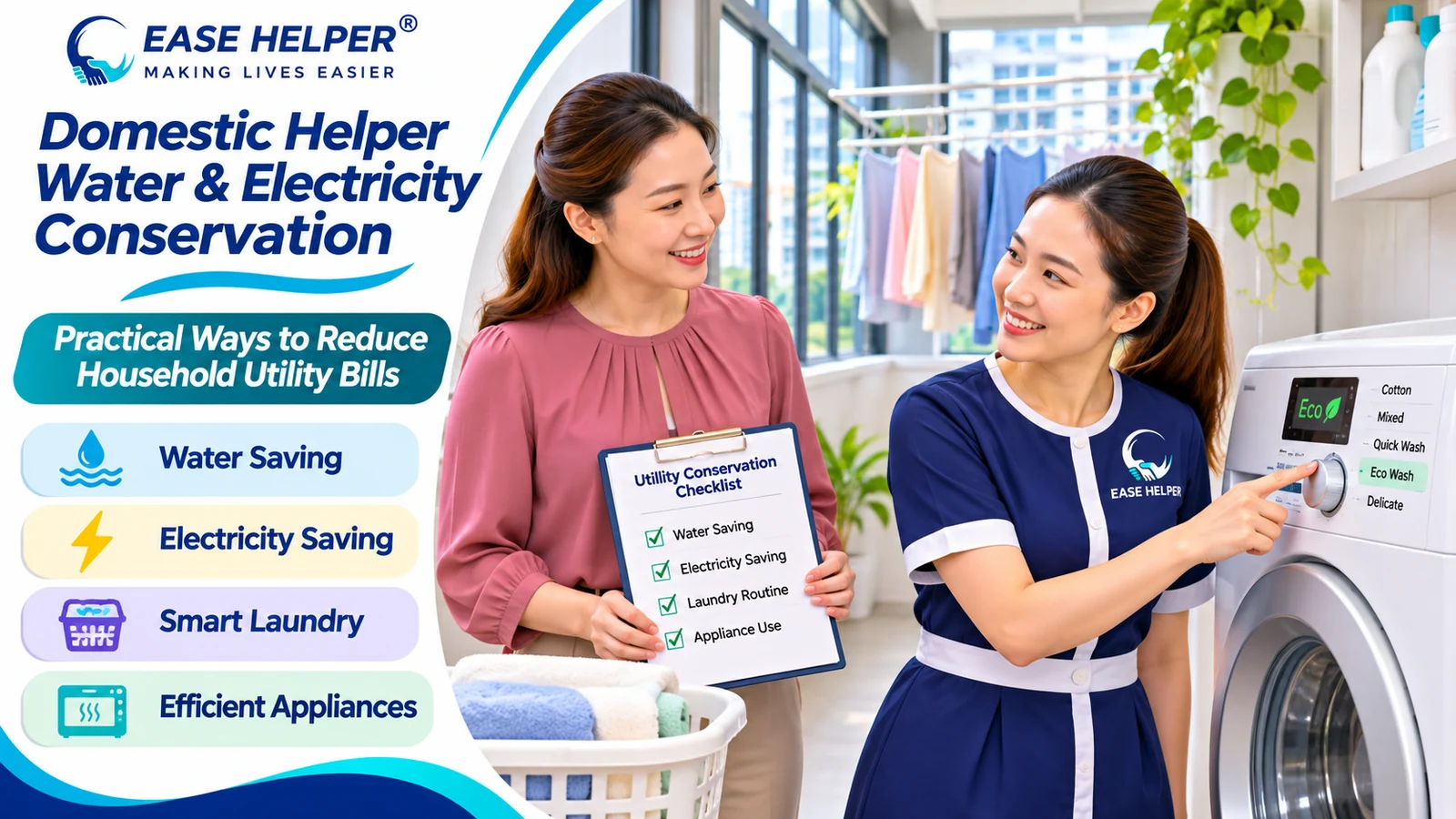
Domestic helper energy saving can help Singapore households manage electricity and water consumption without sacrificing cleanliness, safety or comfort. Simple habits during laundry, cooking, cleaning and daily household routines can prevent unnecessary utility waste.
However, successful conservation starts with clear employer instructions. Domestic helpers should understand which appliances to switch off, how to use water efficiently and when household safety or hygiene must take priority over saving money.
This guide explains practical water and electricity conservation habits, how employers can teach them and how families can build a fair, sustainable household routine.
Executive Summary
Domestic helper energy saving works best through simple, consistent habits. Employers can reduce avoidable utility consumption by teaching efficient laundry practices, responsible air-conditioner use, sensible water management and safe appliance operation.
Clear demonstrations, accessible instructions and regular equipment maintenance are more effective than unrealistic restrictions. Employers should never compromise essential drinking water, bathing, sanitation, food safety or reasonable living conditions to reduce utility bills.
1. Why Water and Electricity Conservation Matters in Singapore
Electricity and water are regular household expenses. In Singapore, air-conditioning, refrigeration, laundry, cooking, bathing and other daily activities all contribute to utility consumption.
Although the amount used varies between households, unnecessary waste can accumulate over time. Therefore, employers should establish realistic conservation practices that fit their family’s needs.
Benefits of Practical Conservation
- Reduces avoidable utility expenses.
- Encourages responsible use of household resources.
- Helps identify leaks and inefficient equipment.
- Supports environmentally responsible household habits.
- Creates clearer expectations for daily tasks.
For official consumer guidance, employers can consult PUB, Singapore’s National Water Agency, and the National Environment Agency.
2. Start Domestic Helper Energy Saving With Clear Instructions
Employers should not assume a new helper understands every appliance or household routine. Equipment, water systems and electricity costs may differ from those in her previous home.
Begin with a practical demonstration rather than a long list of restrictions.
What Employers Should Explain
- Which lights and appliances should be switched off when not needed.
- How to operate the washing machine efficiently.
- How to use air-conditioning and fans appropriately.
- When to report dripping taps or leaking pipes.
- How to use water sensibly during cleaning.
- Which appliances must remain switched on for safety or essential functions.
- Who to contact when equipment malfunctions.
Use simple language, photographs or short demonstrations if language barriers make written instructions difficult to understand.
3. Save Water During Daily Household Cleaning
Cleaning floors, bathrooms and kitchen surfaces can use substantial amounts of water when tasks are poorly organised.
Nevertheless, conservation should never mean leaving surfaces unhygienic or ignoring product instructions.
Practical Water-Saving Habits
- Use an appropriate bucket or measured quantity of water for suitable cleaning tasks.
- Avoid leaving taps running while preparing cleaning equipment.
- Use suitable microfibre cloths and mops.
- Clean spills promptly before they become harder to remove.
- Follow cleaning-product dilution and rinsing instructions.
- Use the correct cleaning method for each surface.
- Report leaking taps, hoses and toilet cisterns.
Some surfaces and cleaning chemicals require thorough rinsing. Always follow safety and hygiene requirements even when conserving water.
4. Reduce Water Waste During Dishwashing
Dishwashing is a frequent household activity. Small changes can reduce unnecessary tap-water use while maintaining food hygiene.
Efficient Dishwashing Routine
- Remove food scraps into the appropriate waste container.
- Group dishes by cleaning requirements.
- Turn off the tap while scrubbing when practical.
- Use a suitable amount of dishwashing detergent.
- Rinse dishes thoroughly and hygienically.
- Check that the tap is fully closed afterward.
If the household uses a dishwasher, follow the manufacturer’s instructions. Appropriate full loads and efficient programmes may help reduce resource consumption, depending on the machine and usage pattern.
Food safety comes first: Never reduce essential rinsing or sanitation simply to save water. Cooking equipment and food-contact surfaces must remain hygienic.
5. Domestic Helper Energy Saving During Laundry
Laundry is an important area for domestic helper energy saving because washing machines use both water and electricity. Some drying equipment also consumes considerable energy.
Efficient Laundry Practices
- Sort laundry by colour, fabric and care instructions.
- Use suitable loads without overloading the machine.
- Select appropriate wash programmes.
- Use lower-temperature settings when suitable for the garments and hygiene needs.
- Measure detergent according to the product and machine instructions.
- Air-dry clothes where practical and appropriate.
- Clean machine filters and maintain equipment as instructed.
Avoid unnecessary repeat washing. However, heavily soiled items, infant laundry or items requiring specific hygiene precautions may need different treatment.
When Should a Helper Use a Dryer?
Employers should explain when machine drying is appropriate, such as during prolonged wet weather or when specific garments require it.
Where suitable, natural drying may reduce electricity consumption. However, laundry must dry properly to avoid persistent dampness and unpleasant odours.
6. Use Air-Conditioning and Fans Responsibly
Air-conditioning can contribute significantly to electricity consumption in Singapore’s warm climate.
Employers should explain their preferred temperature settings and when rooms need cooling. They should also account for the comfort and health of everyone in the household, including the helper.
Air-Conditioner Conservation Tips
- Use reasonable temperature settings appropriate to the room and occupants.
- Keep doors and windows closed while air-conditioning is operating.
- Switch off cooling in genuinely unoccupied rooms when appropriate.
- Clean accessible filters according to manufacturer instructions.
- Report unusual noises, leaks or weak cooling.
- Use fans when suitable for the occupants and conditions.
Do not impose unsafe temperature restrictions, particularly on infants, elderly people or individuals with health-related cooling needs.
7. Switch Off Unnecessary Lights and Electrical Appliances
Lighting and small appliances are another opportunity to reduce avoidable electricity use.
Nevertheless, not every device should be unplugged or switched off. Refrigerators, essential medical equipment and certain security systems must remain operational.
Daily Electricity-Saving Habits
- Turn off lights in empty rooms when safe.
- Use daylight where practical.
- Switch off unused fans and non-essential appliances.
- Avoid leaving televisions operating unnecessarily.
- Follow household instructions for standby devices.
- Never disconnect essential equipment without permission.
- Report damaged sockets or overheating appliances.
Employers may also consider energy-efficient lighting and appliances when replacing old equipment.
8. Improve Refrigerator and Freezer Efficiency
Refrigerators operate continuously to keep food at safe temperatures. Good organisation can help reduce unnecessary energy waste.
Practical Refrigerator Habits
- Close refrigerator and freezer doors promptly.
- Plan what to retrieve before opening the door.
- Avoid blocking ventilation areas inside the appliance.
- Check that door seals close properly.
- Allow suitable cooked food to cool safely before storage, following food safety guidance.
- Report unusual temperatures or mechanical problems.
Never switch off the refrigerator overnight to save electricity. Food safety and proper storage temperatures must always take priority.
9. Save Energy During Cooking
Cooking efficiency depends on the appliance, food quantity and preparation method.
Rather than rushing meals, helpers should learn to prepare ingredients and choose suitable cooking equipment.
Energy-Conscious Cooking Habits
- Prepare ingredients before starting the cooking process.
- Use appropriately sized pots and pans.
- Cover pots when suitable for the recipe.
- Avoid unnecessarily prolonged preheating.
- Use suitable appliance programmes and settings.
- Turn off cooking equipment after use.
- Report damaged or malfunctioning appliances.
Never shorten required cooking times for meat, poultry, seafood or other foods that need thorough cooking. Food safety remains essential.
10. Report Water Leaks and Faulty Equipment Promptly
Leaks and equipment faults can waste resources even when a helper follows good conservation habits.
Problems to Report
- Dripping taps.
- Running or leaking toilet cisterns.
- Water pooling beneath sinks.
- Leaking washing-machine connections.
- Unusual appliance noise or overheating.
- Air-conditioner water leaks.
- Damaged electrical cords or plugs.
Helpers should notify the employer instead of attempting plumbing or electrical repairs beyond their training.
11. Create a Daily Water and Electricity Conservation Checklist
| Household Area | Recommended Practice | Safety Consideration |
|---|---|---|
| Kitchen tap | Turn off water when not needed. | Maintain proper food hygiene. |
| Dishwashing | Avoid unnecessary continuous running water. | Rinse dishes adequately. |
| Bathroom | Report leaks and avoid unnecessary water use. | Maintain sanitation and personal hygiene. |
| Laundry | Use suitable loads and programmes. | Follow fabric and hygiene requirements. |
| Air-conditioning | Follow agreed temperature and usage settings. | Protect occupants’ comfort and health. |
| Lighting | Switch off unnecessary lights. | Keep stairs and walking areas safely lit. |
| Refrigerator | Close doors promptly. | Maintain safe food temperatures. |
| Cooking | Use appropriate equipment and settings. | Cook food thoroughly. |
| Appliances | Switch off non-essential equipment when appropriate. | Keep essential systems operating. |
12. Common Domestic Helper Energy Saving Mistakes
| Mistake | Better Approach |
|---|---|
| Switching off the refrigerator to reduce electricity use | Keep refrigeration operating at safe temperatures. |
| Using too little water for essential cleaning | Maintain hygiene while avoiding unnecessary waste. |
| Overloading the washing machine | Follow the manufacturer’s load limits. |
| Leaving air-conditioning on with windows open | Close openings when cooling the room. |
| Ignoring a leaking toilet | Report the leak promptly. |
| Turning off lights in occupied walking areas | Keep necessary lighting on for safety. |
| Reducing cooking time below safe requirements | Follow proper food preparation and cooking guidance. |
| Unplugging essential medical equipment | Never disconnect essential equipment without authorisation. |
13. How Employers Can Train Helpers Without Creating Unreasonable Restrictions
Domestic helper energy saving should be a cooperative household practice, not a source of constant criticism.
Employers can encourage responsible habits by providing suitable equipment and setting clear expectations.
A Practical Five-Step Training Approach
- Explain: Discuss why conservation matters to the household.
- Demonstrate: Show efficient use of taps, appliances and cooling systems.
- Practise: Let the helper try each routine and ask questions.
- Review: Discuss what works and identify equipment problems.
- Improve: Adjust routines when family needs change.
Importantly, helpers must have reasonable access to drinking water, bathing, sanitation, lighting and appropriate rest conditions. Employers should never impose punitive or unsafe utility restrictions.
14. Review Household Utility Consumption Fairly
Employers may compare monthly water and electricity consumption to identify unusual changes. However, bills can fluctuate because of weather, household occupancy, tariff changes, appliance condition and other factors.
Therefore, an increase in a utility bill does not automatically mean the helper has wasted resources.
What to Review
- Changes in household occupancy.
- More frequent air-conditioner use during hot periods.
- New appliances or changes in operating hours.
- Water leaks or equipment faults.
- Changes in electricity or water tariffs.
- Additional laundry, cooking or caregiving requirements.
For household conservation information, visit PUB. Employers can also consult Singapore’s Energy Market Authority for electricity-related information.
15. Make Conservation a Shared Household Responsibility
Domestic helpers should not be solely responsible for household utility consumption.
Family members can support conservation by switching off unnecessary lights, reporting leaks, using appliances responsibly and maintaining suitable indoor temperatures.
When everyone follows similar expectations, the helper receives a clearer and fairer example of responsible resource use.
Ultimately, the objective is to prevent unnecessary waste while maintaining a safe, hygienic and comfortable home.
Frequently Asked Questions
1. How can domestic helpers save electricity in Singapore homes?
Helpers can use suitable laundry programmes, switch off unnecessary lights and appliances, close doors and windows during air-conditioning, and follow efficient cooking routines. Essential equipment and household comfort must remain protected.
2. What are practical water-saving tips for domestic helpers?
Turn off taps when water is not needed, use appropriate cleaning methods, avoid unnecessary running water during dishwashing and report leaks promptly. Proper hygiene and sanitation must not be compromised.
3. Should employers ask helpers to reduce air-conditioning use?
Employers may establish reasonable air-conditioning practices, but these should consider temperature, ventilation, sleep, health and individual household needs. Unsafe or punitive restrictions are inappropriate.
4. Can a domestic helper switch off the refrigerator overnight?
No. Refrigerators must maintain safe food storage temperatures. Switching them off overnight can expose perishable food to unsafe temperatures and increase food spoilage risks.
5. How should employers teach domestic helper energy saving?
Use clear instructions, practical demonstrations and a simple household checklist. Review routines together, explain exceptions and encourage helpers to report equipment problems without fear of blame.
Looking for a Domestic Helper in Singapore?
EaseHelper helps Singapore families explore domestic helper placement options based on their household requirements. Clear training, realistic expectations and supportive communication can help create an efficient and comfortable home.
Explore EaseHelper ServicesDisclaimer: This article provides general household water and electricity conservation guidance. Actual savings depend on appliance efficiency, usage patterns, tariffs and household circumstances. Always prioritise hygiene, food safety, electrical safety, health and reasonable living conditions. Consult relevant official guidance and qualified professionals when necessary.