
Blog
Domestic Helper Bathroom Safety in Singapore: Preventing Slips, Falls and Household Accidents

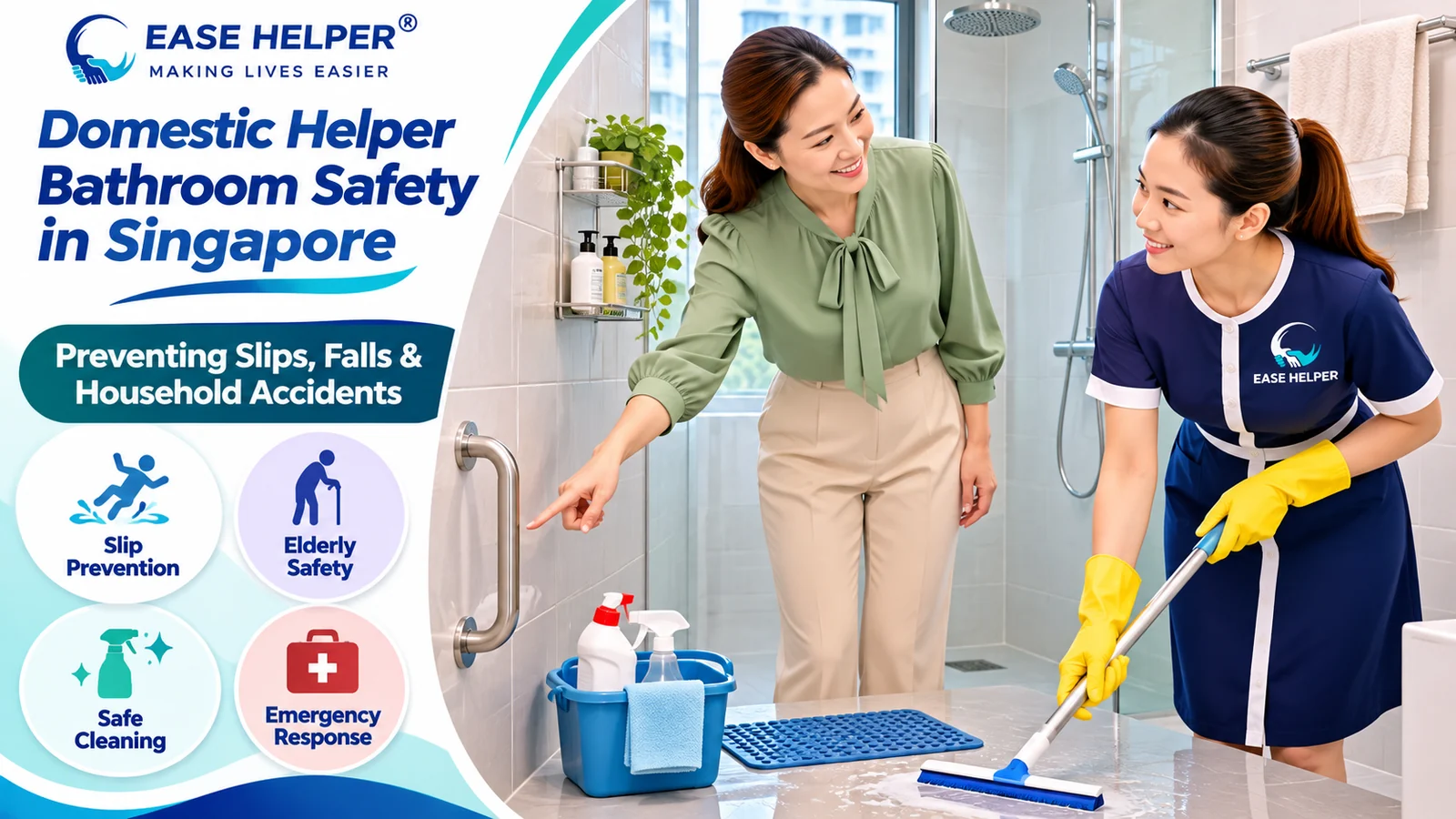
Domestic helper bathroom safety is an important part of household training in Singapore. Wet floors, slippery tiles, hot water, cleaning chemicals and restricted spaces can create accident risks for domestic helpers and family members.
These hazards become especially important when a helper assists young children or elderly residents with bathroom routines. Employers should explain safe procedures, provide suitable equipment and ensure helpers understand when to seek assistance.
This guide covers practical domestic helper bathroom safety measures, including slip prevention, safe cleaning, elderly fall prevention, child supervision and emergency response.
Executive Summary
Domestic helper bathroom safety begins with a clean, dry, well-maintained and accessible bathroom. Employers should provide stable non-slip surfaces, suitable cleaning products, adequate lighting and clear instructions for assisting family members.
Helpers should promptly address wet floors, report damaged fittings, avoid mixing cleaning chemicals and never attempt unsafe lifting.
For children and elderly residents, supervision and individual care plans are essential. Any serious fall, suspected head injury or medical emergency requires appropriate professional assistance.
1. Why Domestic Helper Bathroom Safety Matters
Bathrooms combine water, smooth surfaces, electrical equipment and limited space. Consequently, accidents may occur even during ordinary household routines.
Common activities include bathing children, assisting elderly residents, cleaning toilets and showers, washing bathroom floors and handling toiletries.
Common Bathroom Hazards
- Wet or slippery floor tiles.
- Loose bathroom mats.
- Cluttered walking areas.
- Inadequate lighting.
- Very hot water.
- Damaged grab bars or fittings.
- Unsafe cleaning chemicals.
- Electrical appliances near water.
- Unstable stools or improvised supports.
Employers should inspect the bathroom with their helper and identify any hazards before assigning cleaning or caregiving responsibilities.
2. Prevent Slips and Falls on Wet Bathroom Floors
Slip prevention is one of the most important domestic helper bathroom safety practices.
Water, soap residue and unsuitable footwear can reduce traction. Therefore, helpers should keep walking surfaces as dry and clear as reasonably possible.
Practical Slip Prevention Measures
- Remove standing water after showering or cleaning.
- Use a suitable floor squeegee where appropriate.
- Keep soap and shampoo residue off walking surfaces.
- Use properly fitted non-slip mats or flooring.
- Replace curled, loose or damaged mats.
- Keep buckets and cleaning tools away from walkways.
- Wear stable, slip-resistant footwear when appropriate.
- Report leaks that repeatedly leave floors wet.
Employers should also ensure that bathroom drains work properly. Persistent pooling may indicate a drainage or maintenance problem that requires attention.
Safety reminder: A wet floor should never be ignored simply because the bathroom is used frequently. Take particular care before children or elderly residents enter.
3. Use Non-Slip Mats and Bathroom Safety Equipment Correctly
Safety equipment can reduce certain hazards, but only when installed and maintained properly.
For example, a loose bath mat may create an additional tripping hazard instead of preventing a fall.
Equipment Employers Should Review
- Non-slip flooring or suitable shower mats.
- Securely installed grab bars.
- Appropriate shower chairs where needed.
- Stable toilet support equipment.
- Accessible lighting and switches.
- Shower controls that are easy to operate.
- Properly secured storage shelves.
Never assume a towel rail can support someone’s body weight. Only use equipment designed and installed for the intended purpose.
For people with significant mobility limitations, seek professional advice about suitable bathroom modifications.
4. Domestic Helper Bathroom Safety for Elderly Residents
Elderly family members may face additional bathroom risks because of reduced balance, muscle weakness, impaired vision or medical conditions.
However, the level of assistance required differs from person to person. Employers should explain the resident’s individual needs and any relevant professional care instructions.
Safe Elderly Bathroom Assistance
- Ensure the floor is clear before the resident enters.
- Prepare necessary toiletries and clothing in advance.
- Check that grab bars and support equipment are secure.
- Allow sufficient time for movement.
- Encourage the resident to use prescribed mobility aids.
- Respect privacy and dignity throughout personal care.
- Follow an agreed plan for requesting additional assistance.
Helpers should never pull an elderly person up by the arms or attempt a difficult transfer without appropriate training.
What If an Elderly Person Falls?
First, check for immediate danger and assess whether the person is responsive. Do not rush to lift or move someone who may have a serious injury.
If there is loss of consciousness, breathing difficulty, suspected head, neck or spinal injury, severe pain or another medical emergency, call 995.
For less urgent situations, follow the household care plan and seek appropriate medical advice. Do not attempt an unsafe lift.
5. Bathroom Safety When Caring for Young Children
Young children require close, age-appropriate supervision around water. A child can get into difficulty quickly, even in a shallow bath.
Essential Child Bathroom Safety Rules
- Never leave a baby or young child unattended in a bath.
- Prepare towels and toiletries before bathing begins.
- Check water temperature before use.
- Keep electrical devices away from water.
- Store cleaning chemicals securely out of children’s reach.
- Keep buckets and other water containers empty when not in use.
- Use suitable bathing equipment according to its instructions.
- Alert parents promptly about any accident or concern.
A helper should not leave a young child alone in water to answer the door, collect a phone or complete another household task.
Employers should explain the child’s bathing routine and establish realistic expectations for supervision.
6. Prevent Scalds From Hot Water
Hot water can cause painful burns, particularly to babies, young children and older adults with reduced sensation.
Domestic helper bathroom safety training should therefore include the correct operation of the household’s water heater and shower controls.
Hot Water Safety Practices
- Check the water temperature before bathing someone.
- Use appropriate temperature-control equipment where available.
- Avoid sudden changes to shower settings.
- Never leave a vulnerable person to adjust unfamiliar controls alone.
- Report malfunctioning heaters or inconsistent temperatures.
- Follow any individual care instructions about bathing temperature.
For babies, use a suitable bath thermometer and follow recognised infant bathing guidance rather than relying solely on touch.
If a scald occurs, cool the affected area under cool running water for 20 minutes where practical, avoid ice and seek medical assistance appropriate to the severity. Do not apply creams or household remedies to a fresh burn.
7. Use Bathroom Cleaning Chemicals Safely
Toilet cleaners, disinfectants and descaling products can irritate skin, eyes and the respiratory system when handled incorrectly.
Some cleaning product combinations can also release dangerous gases.
Essential Chemical Safety Rules
- Read and follow the product label.
- Never mix bleach with acidic toilet cleaners or ammonia-based products.
- Use suitable protective equipment as directed.
- Maintain adequate ventilation.
- Keep products in their original labelled containers.
- Do not use excessive quantities.
- Store chemicals securely away from children.
- Report spills or accidental exposure immediately.
Employers should demonstrate which product is appropriate for each bathroom surface.
Important: Never mix household cleaning chemicals unless the manufacturer explicitly instructs you to do so. If irritating fumes develop, leave the affected area and seek appropriate emergency assistance.
8. Safe Toilet and Shower Cleaning Procedures
Cleaning should remove dirt and residue without creating unnecessary exposure to chemicals or slippery surfaces.
Suggested Cleaning Sequence
- Prepare the correct cleaning products and tools.
- Ensure suitable ventilation.
- Remove loose items from the cleaning area.
- Clean surfaces according to product instructions.
- Use separate tools where appropriate to avoid cross-contamination.
- Rinse surfaces when the product label requires it.
- Remove excess water from walking areas.
- Return equipment to secure storage.
- Wash hands thoroughly after cleaning.
Never combine cleaning products to make a task faster. Also, avoid leaving a wet bathroom floor accessible to vulnerable household members during cleaning.
9. Prevent Electrical Accidents in Bathrooms
Water and electricity create serious hazards when electrical equipment is damaged or used incorrectly.
Employers should explain which electrical devices may be used in or near the bathroom.
Electrical Safety Checklist
- Keep portable electrical appliances away from water.
- Never handle plugs or switches with wet hands.
- Do not use damaged hair dryers or other electrical devices.
- Avoid unsuitable extension cords in bathrooms.
- Report sparks, overheating or unusual burning smells.
- Do not attempt electrical repairs.
- Follow the manufacturer’s water-heater safety instructions.
Any suspected electrical fault should be inspected by a suitably qualified professional.
10. Keep Bathroom Storage and Walkways Safe
Clutter can make a small bathroom difficult to navigate.
For example, cleaning buckets, loose cables and toiletries placed on the floor may increase the risk of tripping.
Good Bathroom Organisation
- Keep frequently used toiletries within safe reach.
- Store cleaning products separately and securely.
- Keep walking routes unobstructed.
- Do not overload wall-mounted shelves.
- Store sharp grooming tools safely.
- Remove empty bottles and unnecessary containers.
- Keep mobility aids accessible where required.
Employers should also avoid asking helpers to climb unstable stools to reach high storage areas.
11. Recognise Bathroom Maintenance Problems
Some hazards cannot be solved through cleaning alone.
For instance, loose tiles, damaged grab bars or persistent water leaks may require professional maintenance.
Problems Helpers Should Report
- Loose or cracked floor tiles.
- Water leaks or blocked drains.
- Unstable grab bars.
- Broken shower fittings.
- Flickering or damaged lighting.
- Unusual water-heater behaviour.
- Persistent mould or water damage.
- Doors or locks that prevent safe access.
Employers should address reported defects promptly rather than expecting the helper to perform repairs beyond her training.
12. Respect Privacy During Personal Care
Bathroom assistance often involves sensitive personal-care activities.
Therefore, domestic helper bathroom safety training should also address privacy, consent and respectful communication.
Good Personal-Care Practices
- Explain each step before providing assistance.
- Respect the person’s preferred level of independence.
- Use towels or appropriate coverings to preserve dignity.
- Follow household boundaries and individual care instructions.
- Do not take photographs or videos during personal care.
- Report difficulties discreetly to the employer.
Safety and dignity should be considered together, particularly when caring for elderly residents or people with disabilities.
13. What to Do After a Bathroom Accident
Despite precautions, accidents can still happen. Employers should prepare their helpers to respond calmly and seek appropriate assistance.
General Emergency Response
- Check that the area is safe before approaching.
- Assess whether the person is responsive and breathing normally.
- Call 995 for a medical emergency.
- Avoid unnecessary movement if a serious injury is suspected.
- Provide first aid only within the helper’s training.
- Notify the employer as soon as safely possible.
- Follow emergency responders’ instructions.
For suspected poisoning or serious chemical exposure, move away from the hazard without exposing yourself, and seek urgent medical guidance. Do not induce vomiting after chemical ingestion.
Singapore emergency ambulance services can be reached at 995. For official emergency information, visit the Singapore Civil Defence Force.
14. Domestic Helper Bathroom Safety Checklist
| Safety Area | Daily or Regular Check | Action Required |
|---|---|---|
| Floor condition | Check for standing water and soap residue. | Dry and clean walking surfaces. |
| Non-slip mats | Check stability and condition. | Replace loose or damaged mats. |
| Grab bars | Look for visible looseness or damage. | Stop relying on faulty equipment and report it. |
| Water temperature | Check before bathing vulnerable people. | Adjust safely and follow care guidance. |
| Cleaning products | Check labels and storage. | Never mix incompatible chemicals. |
| Electrical equipment | Check for visible damage. | Stop use and report defects. |
| Lighting | Check visibility and operation. | Report faulty lighting. |
| Walkways | Check for clutter and obstructions. | Keep routes clear. |
| Child supervision | Confirm a responsible adult is present. | Never leave young children unattended in water. |
| Elderly assistance | Review mobility and care needs. | Follow the individual care plan. |
15. Common Bathroom Safety Mistakes to Avoid
| Common Mistake | Safer Practice |
|---|---|
| Leaving the floor wet after cleaning | Remove excess water and check traction. |
| Using a loose bathroom mat | Use a stable, suitable non-slip surface. |
| Mixing toilet cleaner and bleach | Use products separately according to labels. |
| Leaving a child alone in a bathtub | Maintain continuous, appropriate supervision. |
| Pulling an elderly person up after a fall | Assess for injury and seek appropriate assistance. |
| Using an unstable stool | Use appropriate equipment or reorganise storage. |
| Ignoring a leaking water heater | Stop unsafe use and arrange professional inspection. |
| Using electrical devices near water | Keep electrical equipment away from wet areas. |
16. Create a Practical Bathroom Safety Training Routine
Domestic helper bathroom safety training works best when employers combine clear explanations with practical demonstrations.
During initial orientation, show the helper how to use the bathroom’s equipment, identify cleaning products and report maintenance problems.
Five-Step Employer Training Method
- Inspect: Identify hazards and maintenance issues.
- Demonstrate: Show safe cleaning and equipment use.
- Explain: Discuss child and elderly care precautions.
- Practise: Review emergency communication and safe responses.
- Review: Update instructions when household needs change.
Encourage helpers to report hazards promptly without fear of criticism. A supportive environment makes it easier to identify problems before accidents occur.
Frequently Asked Questions
1. What bathroom safety training should domestic helpers receive in Singapore?
Training should cover slip prevention, safe cleaning products, hot water precautions, electrical safety, bathroom maintenance, emergency communication and any household-specific childcare or elderly care requirements.
2. How can domestic helpers prevent bathroom slips and falls?
Keep walking surfaces reasonably dry, remove soap residue, maintain suitable non-slip mats, clear obstacles and report damaged flooring or equipment. Additional precautions may be necessary for people with mobility limitations.
3. Can domestic helpers mix bathroom cleaning chemicals?
No. Cleaning products should only be used according to their labels. Mixing bleach with acidic or ammonia-based cleaners can release dangerous gases.
4. What should a helper do if an elderly person falls in the bathroom?
Check for immediate danger and possible injury. Do not attempt an unsafe lift. Call 995 for a medical emergency, including suspected serious head, neck or spinal injuries, and follow professional guidance.
5. How often should employers review bathroom safety procedures?
Review procedures during initial orientation and whenever equipment, household arrangements or care needs change. Regular checks can also identify new hazards such as leaks, loose mats and damaged fittings.
Looking for a Domestic Helper in Singapore?
EaseHelper helps Singapore families explore domestic helper placement options based on their household requirements. Practical training, clear expectations and appropriate safety equipment can support a safer and more comfortable home for everyone.
Explore EaseHelper ServicesDisclaimer: This article provides general household bathroom safety information for Singapore employers and domestic helpers. It does not replace medical advice, professional caregiving instruction, equipment manufacturer guidance or official emergency procedures. Seek qualified assistance for mobility transfers, serious injuries, electrical faults and other specialised safety concerns.