
Blog
Domestic Helper Cultural Differences in Singapore: Building Mutual Understanding at Home

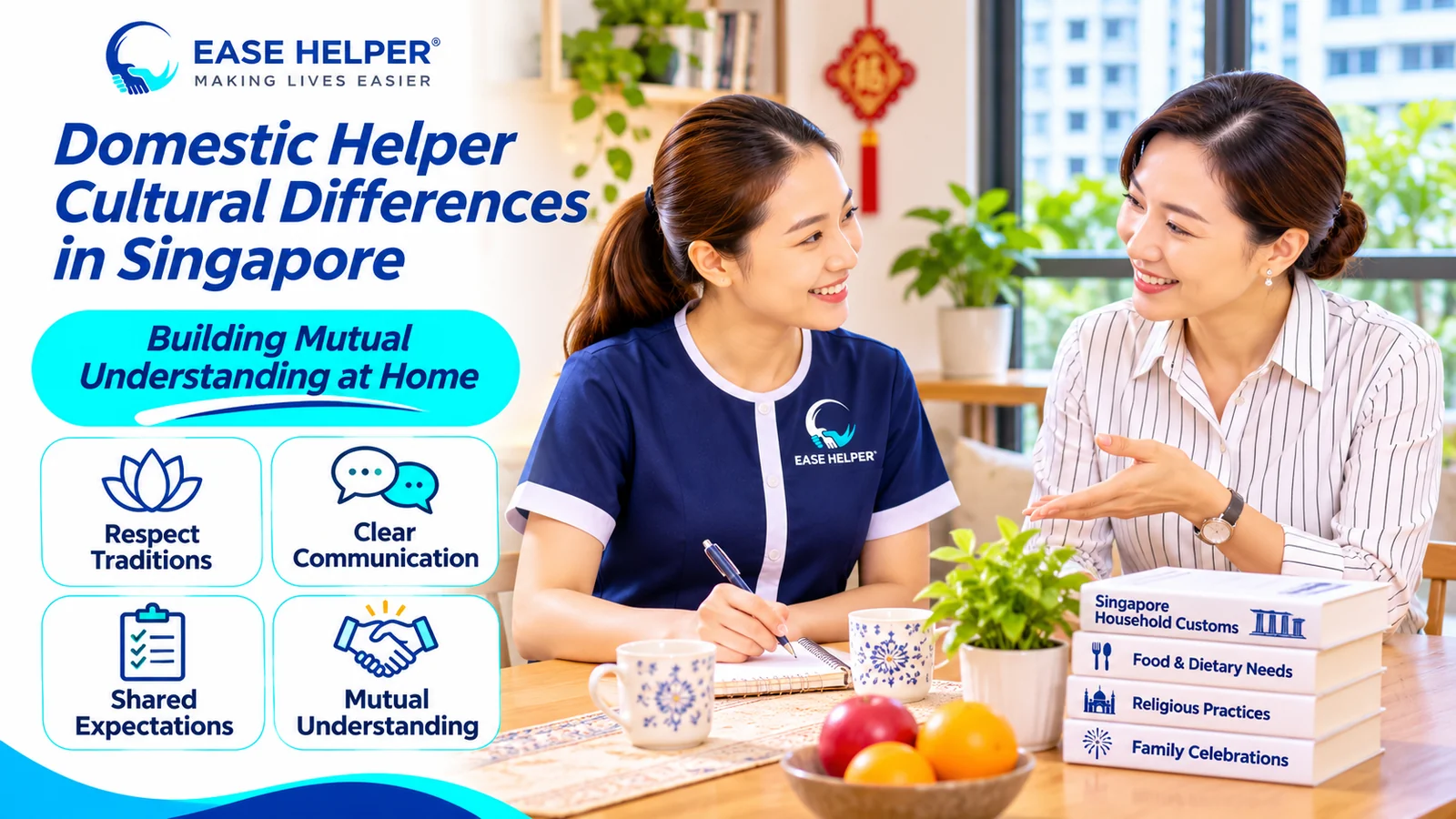
Hiring a domestic helper often brings two people from different backgrounds into the same household. In Singapore, employers and helpers may have different languages, family traditions, food preferences and daily routines. Although these differences are natural, misunderstandings can arise when either person assumes that everyone follows the same customs.
Fortunately, cultural differences do not have to create conflict. With patience, clear expectations and mutual respect, employers and domestic helpers can build a comfortable and professional working relationship.
Executive Summary
Key takeaway: Managing domestic helper cultural differences in Singapore starts with understanding each person as an individual. Employers should explain household practices clearly, respect reasonable personal and religious needs, avoid stereotypes and encourage open communication. Meanwhile, domestic helpers should learn household expectations, ask questions and communicate concerns respectfully. A practical, two-way approach helps both parties work together more confidently.
1. Why Cultural Understanding Matters in Singapore Households
Many Singapore households employ domestic helpers from countries such as Myanmar and Indonesia. As a result, employers and helpers may bring different experiences and customs into their working relationship.
For example, one family may prefer direct communication, while another person may consider a softer speaking style more respectful. Similarly, household food habits, family routines and personal celebrations can vary.
These differences do not indicate that either person is right or wrong. Instead, they show why employers should explain expectations rather than assume that a new helper already understands them.
Before employment begins, employers can also review our guide to Myanmar and Indonesian domestic helpers. However, nationality alone should never determine assumptions about a person’s personality, ability or beliefs.
2. Common Cultural Differences That May Affect Daily Life
Communication and expressions of respect
People express politeness in different ways. Some speak directly, while others prefer indirect wording. In addition, a helper may hesitate to disagree with an employer because she wants to show respect.
Therefore, employers should ask open questions and confirm understanding without putting pressure on the helper to agree immediately.
Food and dietary preferences
Households may have different approaches to ingredients, cooking methods and meal times. A helper may also have personal dietary preferences or religious food restrictions.
Discuss these matters early. For instance, explain which ingredients the household uses, which foods require separate preparation and how the helper can access suitable meals.
Religious and personal practices
Some domestic helpers may observe prayer times, fasting periods or religious celebrations. Others may not follow particular religious practices.
Rather than making assumptions, employers should ask whether any reasonable arrangements would help the helper observe her beliefs while meeting agreed household responsibilities.
Family traditions and celebrations
Singapore households may celebrate Chinese New Year, Hari Raya, Deepavali, Christmas or other occasions. A helper may be unfamiliar with the family’s customs or have celebrations of her own.
Explain special preparations in advance. At the same time, show interest in the helper’s traditions without requiring her to participate in personal or religious activities.
3. Cultural Differences Versus Individual Preferences
Not every difference comes from culture. Sometimes, two people simply prefer different ways of completing a task.
For example, an employer may fold towels in a particular way, while a helper may have learned another method. This is usually a household preference, not a cultural problem.
Consequently, employers should separate essential requirements from personal preferences.
| Situation | Possible misunderstanding | Practical response |
|---|---|---|
| Greeting family members | Different expectations about formality | Explain preferred greetings politely |
| Preparing meals | Different ingredients or cooking styles | Demonstrate recipes and discuss dietary needs |
| Asking questions | Helper hesitates to admit confusion | Encourage questions without criticism |
| Household celebrations | Unfamiliar traditions or schedules | Explain activities and responsibilities in advance |
| Personal routines | Different expectations about privacy | Agree on reasonable boundaries |
| Cleaning methods | Different training or habits | Show the required standard step by step |
4. How Employers Can Build Mutual Understanding
Start with a welcoming conversation
During the first few days, explain the household’s daily routines, important rules and communication preferences. Then invite the helper to share any questions or practical concerns.
Keep the discussion friendly and professional. A welcoming conversation can prevent small uncertainties from becoming bigger problems.
Demonstrate rather than assume
Even an experienced helper may be unfamiliar with your family’s preferred methods. Therefore, demonstrate important tasks, especially those involving children, elderly family members, food preparation or household safety.
Use a written checklist when helpful. Also, give the helper enough time to practise and improve.
Explain the reason behind important rules
People often follow instructions more confidently when they understand their purpose.
For example, instead of saying only, “Do not use this cloth,” explain that the family keeps separate cleaning cloths for food preparation and bathroom surfaces to prevent contamination.
Respect personal boundaries
Employers should maintain professional boundaries and respect reasonable privacy. Avoid unnecessary questions about sensitive personal matters. Likewise, discuss personal belongings, phone use and private space respectfully.
Mutual respect does not mean abandoning household rules. Rather, it means explaining rules fairly and applying them consistently.
5. How Domestic Helpers Can Adapt to Household Customs
Domestic helpers also play an important role in creating a positive working relationship. The following habits can help:
- Ask questions: Request clarification when instructions are unfamiliar.
- Observe household routines: Learn how family members prefer meals, cleaning and daily activities.
- Keep useful notes: Record important instructions, schedules and preferences.
- Communicate respectfully: Raise concerns calmly rather than allowing misunderstandings to continue.
- Be open to learning: Understand that different methods are not necessarily incorrect.
- Share reasonable needs: Explain dietary, religious or personal requirements where arrangements may be necessary.
For employers who are welcoming a helper for the first time, our complete guide to hiring a domestic helper in Singapore provides a broader introduction to the employment process.
6. Handling Cultural Misunderstandings Without Conflict
Even with careful preparation, misunderstandings may occur. However, a calm response usually produces better results than immediate criticism.
- Describe the situation: Explain what happened using specific facts.
- Ask for the helper’s perspective: Find out whether she misunderstood the instruction or had a different expectation.
- Clarify the household requirement: Explain the preferred approach and why it matters.
- Agree on the next step: Demonstrate the task or adjust a reasonable arrangement.
- Follow up: Check whether the solution works for both parties.
Example: An employer notices that her helper rarely asks questions. Instead of assuming that the helper is uninterested, she says, “If my instructions are unclear, please tell me. I would rather explain again than have you guess.” This approach makes communication safer and more comfortable.
7. Respecting Religious Practices and Personal Needs
Religious and personal needs deserve thoughtful discussion. For instance, a helper may wish to pray, observe a fasting period or avoid certain foods.
Where possible, employers and helpers should agree on practical arrangements that respect these needs and maintain household safety.
However, employers should not assume that everyone from a particular country follows the same religion or customs. Ask the individual respectfully and avoid stereotypes.
For official information on employment responsibilities, consult Singapore’s Ministry of Manpower guidance for migrant domestic workers.
8. Creating a Simple Household Cultural Understanding Checklist
A short discussion checklist can help employers and helpers establish expectations early.
| Discussion topic | Questions to consider |
|---|---|
| Communication | How should questions, concerns and urgent matters be raised? |
| Food | Are there dietary restrictions, preferred ingredients or meal arrangements? |
| Religion | Are there reasonable prayer or observance arrangements to discuss? |
| Household customs | Which family traditions or celebrations affect daily routines? |
| Privacy | What boundaries apply to personal belongings and private spaces? |
| Training | Which household tasks require demonstrations or written instructions? |
| Feedback | When should both parties review concerns and expectations? |
Review the checklist after the first few weeks. As everyone becomes more familiar with the household routine, some arrangements may need adjustment.
9. When Should Employers Seek Additional Support?
Most everyday misunderstandings can improve through discussion and clearer instructions. Nevertheless, some situations require additional help.
Consider contacting your employment agency when communication repeatedly breaks down, expectations remain unclear or either party needs support to resolve a disagreement.
For serious concerns involving safety, mistreatment or employment obligations, seek guidance from the appropriate authorities. Employers and helpers can refer to MOM’s official resources for relevant responsibilities and assistance.
10. Frequently Asked Questions
Do cultural differences make a domestic helper unsuitable for a household?
Not necessarily. Cultural differences are common in international employment. Clear communication, suitable training and mutual respect often help people work together successfully.
Should employers learn about a helper’s culture before hiring?
Basic awareness can be useful. However, employers should also ask the helper about her individual preferences rather than relying on general assumptions about nationality.
How can employers respect a helper’s religion?
Ask whether she has relevant religious practices or dietary needs. Then discuss reasonable arrangements that respect her beliefs while maintaining agreed responsibilities and household safety.
What if a helper does not understand a family tradition?
Explain the tradition in simple language and describe any related household tasks. Demonstrations or written notes may help, especially when language differences exist.
Can an employment agency help with cultural misunderstandings?
Yes. An employment agency may help clarify expectations, support communication and suggest practical ways to resolve everyday misunderstandings. Serious disputes may require guidance from MOM or other appropriate organisations.
Build a Better Working Relationship with EaseHelper
Every household is different. At EaseHelper, we help Singapore families understand their domestic helper options and prepare for a positive working relationship through clear expectations and practical guidance.
Looking for a domestic helper who suits your household’s needs?
Explore EaseHelper ServicesDisclaimer: This article provides general information for Singapore employers and domestic helpers. It does not replace legal advice or official Ministry of Manpower requirements. Employment rules and government guidance may change. Always consult the latest official sources when making employment decisions.