
Blog
Domestic Helper Food Storage in Singapore: How to Keep Groceries Fresh and Safe

Executive Summary
Proper food storage helps Singapore households maintain food quality, prevent contamination and reduce unnecessary waste. However, domestic helpers may need guidance on refrigerator temperatures, freezer organisation, food date labels and safe handling of leftovers.
This practical guide explains how employers can teach domestic helpers to store groceries safely. It covers refrigerator and freezer temperatures, separating raw and cooked food, managing fresh produce, storing dry ingredients, handling leftovers and building a simple daily food storage routine.
Why Food Storage Matters in Singapore Homes
Singapore’s warm and humid climate makes food storage an important household responsibility. Without suitable temperature control, perishable food can deteriorate quickly. Moreover, unsafe handling may allow harmful bacteria to multiply.
For this reason, employers should explain the family’s food storage practices during the helper’s initial training. A clear system also makes cooking easier because everyone knows where to find ingredients.
Most importantly, food storage is not simply about keeping the refrigerator tidy. It is about protecting the household’s health.
1. Understand Safe Refrigerator and Freezer Temperatures
Domestic helpers should first learn the correct temperatures for chilled and frozen food. According to the Singapore Food Agency’s food safety guidance, refrigerators should operate at 4°C or below, while freezers should remain at -18°C or below.
| Storage Area | Recommended Temperature | Main Purpose |
|---|---|---|
| Refrigerator | 4°C or below | Keeping chilled and perishable food cold |
| Freezer | -18°C or below | Maintaining frozen food at a suitable temperature |
| Dry-food cupboard | Cool and dry, as appropriate for the product | Storing suitable shelf-stable ingredients |
Employers can place a refrigerator thermometer inside the appliance so the helper can check its temperature. In addition, explain how to report an unusual reading or appliance malfunction.
Important: Refrigeration slows bacterial growth but does not make contaminated or spoiled food safe. Always follow product labels and food safety instructions.
2. Organise the Refrigerator to Prevent Cross-Contamination
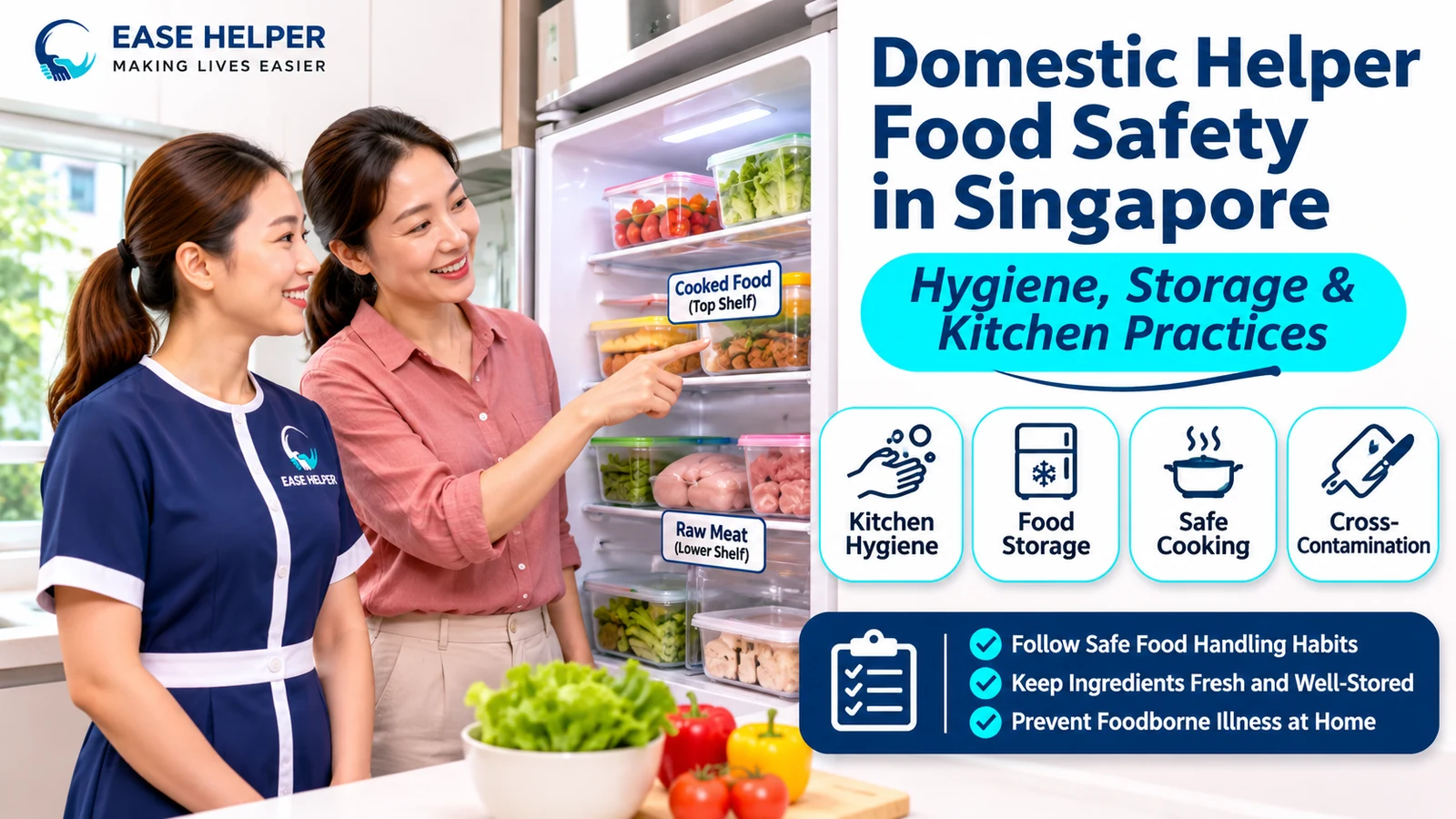
A well-organised refrigerator helps domestic helpers separate ingredients and find them quickly. More importantly, it reduces the risk of raw food contaminating ready-to-eat items.
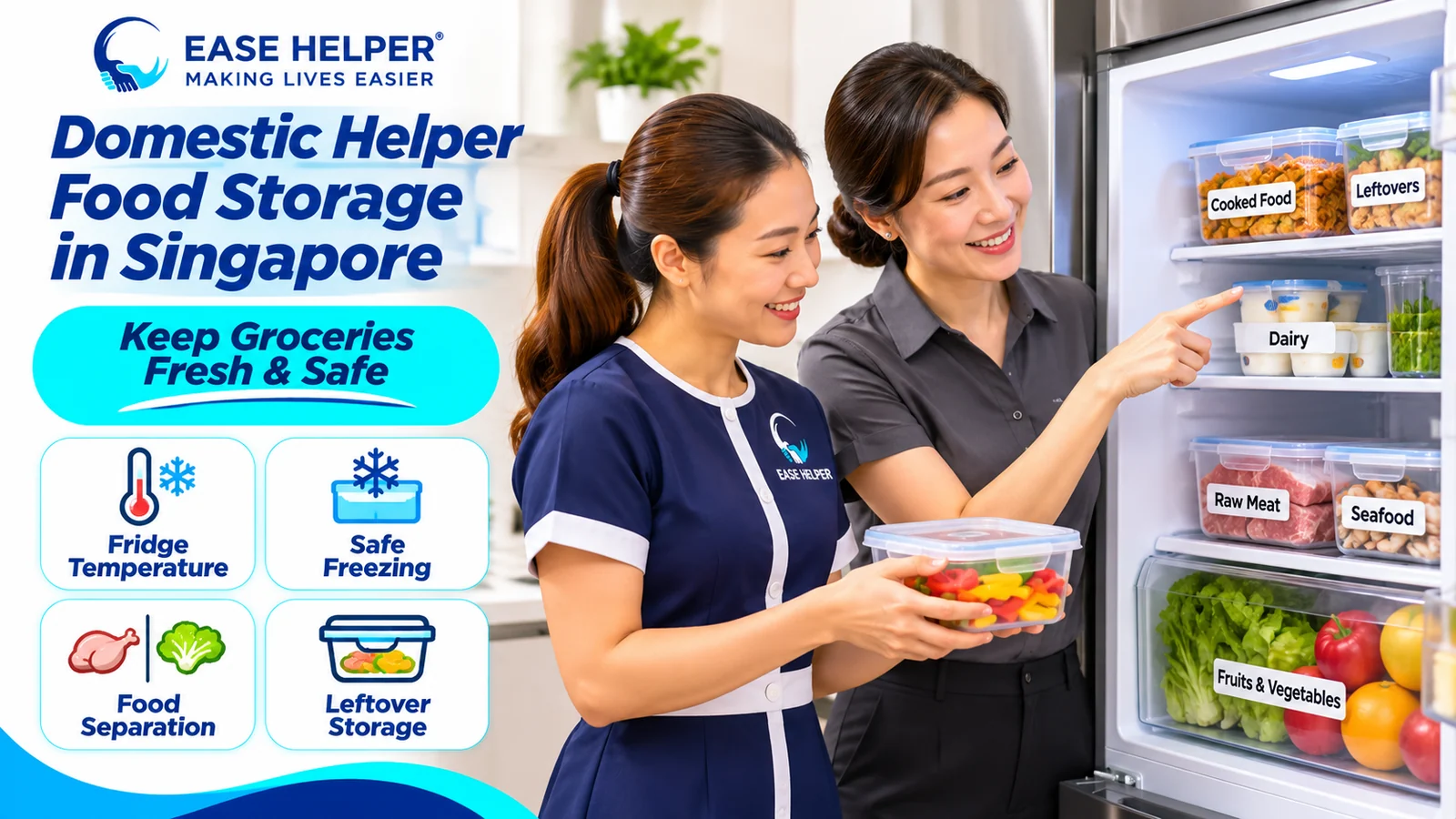
Suggested Refrigerator Arrangement
| Area | Suitable Items | Key Precaution |
|---|---|---|
| Upper shelves | Covered ready-to-eat food and cooked dishes | Keep away from raw meat juices. |
| Middle shelves | Dairy products and other chilled packaged food | Follow individual storage labels. |
| Lowest suitable shelf | Raw meat, poultry and seafood in sealed containers | Prevent leakage onto other food. |
| Produce compartments | Suitable fresh vegetables and fruit | Separate from raw animal products. |
| Door compartments | Products suitable for door storage | Avoid placing highly temperature-sensitive items in warmer areas. |
This arrangement is a practical starting point. However, refrigerator designs vary. Therefore, employers should adapt the layout to their appliance and the manufacturer’s instructions.
3. Store Raw Meat, Poultry and Seafood Safely
Raw meat and seafood need careful handling because their juices can contaminate other ingredients. Consequently, domestic helpers should use secure packaging and dedicated storage containers.
Safe Storage Steps
- Check the product’s packaging and storage instructions.
- Place raw meat or seafood in a clean, leak-proof container.
- Store the container below cooked and ready-to-eat food.
- Keep the refrigerator at the recommended temperature.
- Freeze products promptly when appropriate and according to their labels.
- Wash hands and clean surfaces after handling raw animal products.
Furthermore, avoid washing raw meat before storage. Splashing water can spread bacteria to surrounding kitchen surfaces.
If a package leaks or the food’s safety is uncertain, the helper should inform the employer rather than make an unsafe assumption.
4. Freeze Food in Practical Portions
Freezing food in smaller portions makes daily meal preparation more convenient. It also helps families avoid thawing more food than they need.
How to Prepare Food for Freezing
- Divide suitable food into meal-sized portions before freezing.
- Use clean, freezer-safe packaging or containers.
- Remove unnecessary air where appropriate.
- Label each package with the product name and freezing date.
- Keep raw ingredients separate from cooked food.
- Follow the product’s recommended storage period.
For example, a family may divide a large pack of chicken into smaller portions for different meals. However, helpers should avoid repeatedly thawing and refreezing food.
5. Learn How to Thaw Frozen Food Safely
Thawing food on the kitchen counter can expose it to unsafe temperatures. Instead, helpers should use suitable methods and plan ahead.
Recommended Thawing Methods
- Refrigerator: Allow sufficient time for food to thaw while remaining chilled.
- Microwave: Use the defrost setting when suitable, then cook the food promptly.
- Controlled cold-water method: Follow appropriate food safety guidance using secure packaging and suitable temperature control.
For detailed instructions, consult the Singapore Food Agency’s guidelines on thawing food.
Safety reminder: Do not leave frozen meat or seafood to thaw overnight at room temperature. Plan the next day’s meals early enough to allow safe thawing.
6. Store Fresh Vegetables and Fruit Correctly
Different types of fresh produce need different storage conditions. Therefore, helpers should follow product guidance rather than placing every fruit and vegetable in the same compartment.
Practical Produce Storage Tips
- Remove visibly spoiled produce before it affects nearby items.
- Keep suitable leafy vegetables refrigerated.
- Store cut fruit and vegetables promptly in covered containers in the refrigerator.
- Keep produce separate from raw meat and seafood.
- Avoid excessive moisture inside storage containers.
- Check whether particular fruits should ripen at room temperature before refrigeration.
Additionally, wash fresh produce thoroughly before eating or preparation. For most whole produce, washing shortly before use can help avoid unnecessary moisture during storage.
The Singapore Food Agency provides further guidance on handling raw fruits and vegetables.
7. Keep Dry Ingredients Away From Moisture and Pests
Rice, flour, noodles, cereals and dried ingredients are common items in Singapore kitchens. However, humidity and poor packaging can affect their quality.
Dry-Food Storage Checklist
- Use clean, dry and suitable airtight containers after opening packages when appropriate.
- Keep cupboards free from water leaks and excessive moisture.
- Check food regularly for insects, mould and damaged packaging.
- Label containers clearly so similar ingredients are not confused.
- Keep food separate from cleaning chemicals and pest-control products.
- Follow the manufacturer’s instructions when refrigeration is required after opening.
For example, a helper should not assume that every sauce can remain in a cupboard after opening. Some products require refrigeration, so checking the label is essential.
8. Use the First-In, First-Out Method
A simple rotation system helps families use older groceries before newer purchases. This practice is commonly called First In, First Out (FIFO).
How FIFO Works
- Check the dates and condition of existing products.
- Place newer purchases behind suitable older stock.
- Use products with earlier relevant expiry or use-by dates first.
- Remove expired or unsafe products promptly.
- Review stock before preparing the next shopping list.
Nevertheless, FIFO does not override expiry dates or food safety requirements. A newer item with an earlier use-by date may need attention first.
9. Cool and Store Cooked Food Properly
Cooked food can become unsafe when it remains at room temperature for too long. Therefore, helpers should divide food intended for later meals into smaller portions and cool it promptly.
Practical Leftover Storage Steps
- Separate food intended for later meals using clean utensils.
- Place it in clean, shallow containers to support faster cooling.
- Refrigerate promptly once sufficiently cooled, within safe time limits.
- Keep containers covered and away from raw food.
- Label the preparation date when useful.
- Reheat food thoroughly and avoid repeated reheating.
As a practical safety rule, do not leave cooked food at room temperature for more than two hours. The Singapore Food Agency also advises prompt refrigeration and proper temperature control for food intended for later consumption.
Read its guidance on temperature control in cooked food for more information.
10. Prevent Food Waste Without Compromising Safety
Good storage habits can reduce unnecessary grocery purchases. However, food safety must always take priority over saving money.
Ways to Reduce Food Waste
- Check existing ingredients before buying more.
- Plan meals around suitable products that need to be used soon.
- Freeze appropriate ingredients before they deteriorate.
- Use clear labels and organised containers.
- Avoid buying excessive quantities of highly perishable food.
- Discard food that is unsafe, spoiled or beyond an applicable use-by date.
Importantly, food that smells normal is not necessarily safe. When there is doubt about contamination or temperature abuse, the helper should seek guidance and avoid serving the food.
11. Create a Daily Food Storage Checklist
Domestic helpers often manage several household tasks. Therefore, a short checklist can help them maintain food storage standards without overlooking important details.
| When | Task | Purpose |
|---|---|---|
| Morning | Check ingredients needed for meals and identify any safe thawing requirements. | Support meal preparation. |
| After shopping | Put chilled and frozen groceries away immediately. | Maintain temperature control. |
| After cooking | Store food intended for later meals safely. | Reduce contamination risks. |
| Evening | Check that food containers are covered and stored correctly. | Maintain organisation. |
| Weekly | Review date labels, clean suitable storage areas and check refrigerator temperatures. | Reduce waste and detect problems. |
Employers should adapt this checklist to their household’s routine. In addition, allow adequate time for safe food handling instead of rushing the helper through multiple tasks.
12. Common Food Storage Mistakes and Solutions
| Common Mistake | Why It Matters | Better Practice |
|---|---|---|
| Leaving raw meat above cooked food | Raw juices may contaminate ready-to-eat items. | Use sealed containers on the lowest suitable shelf. |
| Overloading the refrigerator | Blocked airflow may affect cooling. | Leave space for cold air to circulate. |
| Thawing meat on the counter overnight | Food may enter unsafe temperature ranges. | Thaw safely in the refrigerator or by another approved method. |
| Keeping opened packages without labels | Storage instructions and dates may be forgotten. | Label products and follow manufacturer guidance. |
| Storing cleaning chemicals beside food | Chemical contamination may occur. | Use separate storage areas. |
| Leaving leftovers out too long | Bacteria may multiply. | Cool and refrigerate food promptly. |
13. How Employers Can Train Domestic Helpers in Food Storage
Practical demonstrations are often more effective than long verbal explanations. Therefore, employers can introduce food storage training in stages.
A Simple Four-Step Training Method
- Show: Demonstrate the correct refrigerator and cupboard arrangement.
- Explain: Describe why raw and cooked foods need separation.
- Practise: Let the helper organise a small grocery delivery with guidance.
- Review: Check understanding and answer questions respectfully.
Employers can also place simple picture labels on shelves or containers. This approach may help when the helper is still learning English.
For general information about employing a domestic helper, visit our guide to hiring a domestic helper in Singapore.
Frequently Asked Questions
1. What temperature should a refrigerator be in Singapore?
The Singapore Food Agency recommends keeping refrigerators at 4°C or below. A refrigerator thermometer can help households monitor the temperature.
2. What is the recommended freezer temperature?
Freezers should operate at -18°C or below. However, always follow the appliance manufacturer’s instructions and the storage requirements of individual food products.
3. Can a domestic helper thaw meat overnight on the kitchen counter?
No. Room-temperature thawing can allow harmful bacteria to multiply. Instead, plan ahead and thaw meat safely in the refrigerator or use another suitable method recommended by food safety authorities.
4. How should a helper store cooked leftovers?
Place food intended for later meals in clean, shallow containers. Cool it promptly, refrigerate it within safe time limits and keep it separate from raw food. Reheat thoroughly before serving.
5. How can employers teach food storage rules to a new helper?
Start with a refrigerator demonstration, explain food separation and temperature rules, then practise organising groceries together. Clear labels, photographs and regular feedback can reinforce the training.
Find a Domestic Helper Who Suits Your Household
EaseHelper helps Singapore families explore suitable domestic helper options based on individual experience and household needs. With clear instructions and practical training, helpers can develop confidence in everyday responsibilities, including kitchen organisation and food storage.
Explore EaseHelper ServicesDisclaimer: This article provides general household food storage guidance. Food safety recommendations may change, and specific products may require different storage conditions. Always follow manufacturer instructions and consult the Singapore Food Agency for current official guidance. If food safety is uncertain, do not consume the product.