
Blog
Domestic Helper Sick Leave in Singapore: What Employers Should Do When Their Helper Falls Ill

Executive Summary
Domestic helper sick leave in Singapore requires a different approach from ordinary Employment Act sick leave. Migrant domestic workers do not automatically receive the Employment Act’s statutory sick-leave entitlement.
Nevertheless, employers must provide necessary medical care and bear their helpers’ medical expenses. Employers should arrange medical attention when needed, respect medical advice, allow appropriate recovery time and follow applicable contractual and salary obligations.
A clear illness procedure helps protect the helper’s health while allowing the household to make temporary arrangements.
1. Are Domestic Helpers Entitled to Sick Leave in Singapore?
One common misunderstanding concerns whether domestic helpers receive the same statutory sick-leave entitlement as employees covered by Singapore’s Employment Act.
The Ministry of Manpower (MOM) confirms that migrant domestic workers are not covered by the Employment Act. Therefore, its statutory sick-leave provisions do not automatically apply to domestic helpers.
However, this does not mean employers can ignore illness or require an unwell helper to continue working regardless of her condition.
Employers remain responsible for their helpers’ medical needs and well-being under the applicable foreign manpower framework.
Employers should also review any sick-leave or illness-related arrangements agreed in the employment contract.
For official information, see MOM’s Employment of Foreign Manpower Act guidance.
2. What Should Employers Do When Their Domestic Helper Falls Sick?
When a helper reports feeling unwell, the employer should first assess whether she needs urgent medical attention.
Symptoms may include fever, vomiting, diarrhoea, dizziness, persistent coughing or unusual pain.
Immediate Steps for Employers
- Listen to the helper’s symptoms and concerns.
- Check whether emergency medical attention is needed.
- Arrange a medical consultation when appropriate.
- Explain the symptoms to the healthcare professional if language assistance is needed.
- Follow the doctor’s instructions for treatment and rest.
- Temporarily adjust household duties.
- Monitor recovery without unnecessary pressure.
For example, if a helper develops a high fever and feels weak, the employer should prioritise medical assessment rather than expecting her to complete her usual cleaning schedule.
Important: Severe breathing difficulties, unconsciousness, serious injuries or other life-threatening symptoms require immediate medical assistance. In Singapore, call 995 for an emergency ambulance.
3. Who Pays for a Domestic Helper’s Medical Expenses?
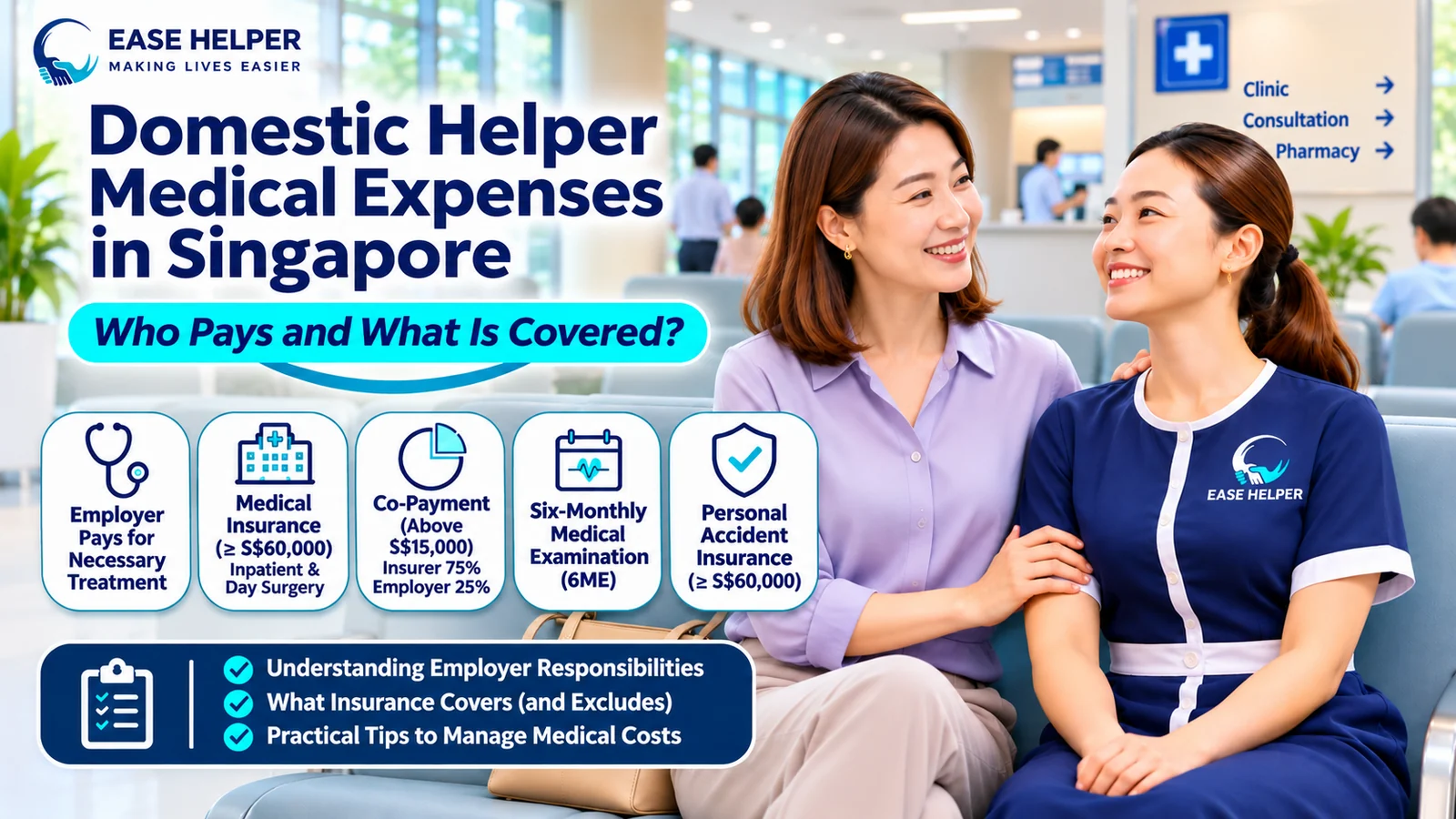
Singapore employers are responsible for the necessary medical expenses of their migrant domestic helpers.
This responsibility includes medical treatment costs, even when the amount exceeds the available insurance benefits.
Medical Expenses Employers Should Prepare For
- Medical consultations.
- Necessary prescribed medication.
- Relevant medical investigations and tests.
- Specialist consultations where medically necessary.
- Hospital treatment and surgery.
- Other necessary medical care.
Employers cannot require their domestic helpers to contribute to necessary medical expenses simply because the insurance policy does not cover the full amount.
Consequently, families should review their medical insurance coverage before an illness occurs.
Read MOM’s guidance on domestic helper medical expenses.
4. Does Domestic Helper Insurance Cover Sick Leave and Medical Treatment?
Employers must purchase and maintain the required medical and personal accident insurance for their domestic helpers.
However, insurance policies differ in their outpatient benefits, exclusions, deductibles and claims procedures.
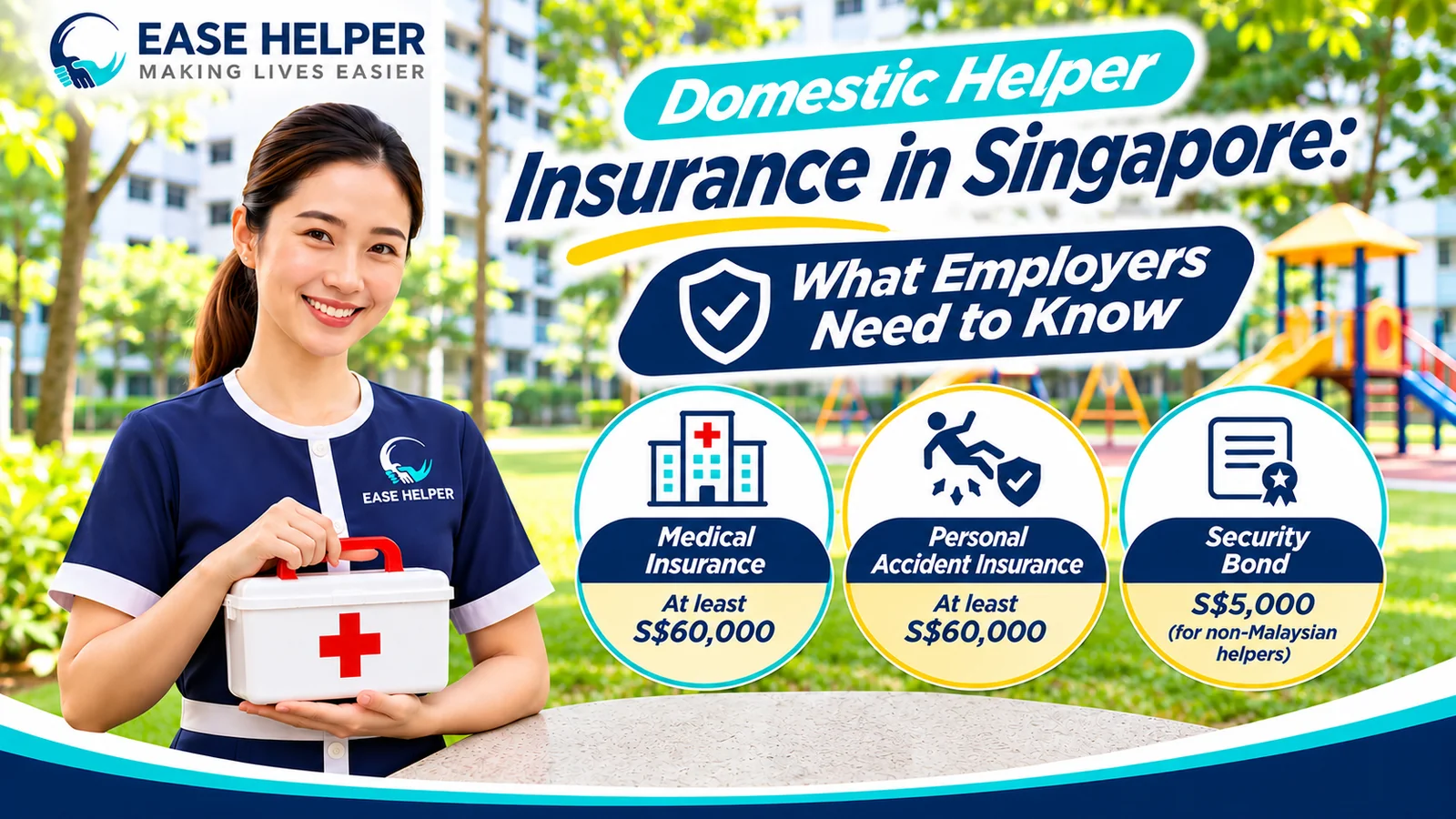
MOM requires medical insurance with an annual claim limit of at least S$60,000 for inpatient care and day surgery.
That minimum requirement does not mean every outpatient consultation or medical bill will automatically be reimbursed by the insurer.
Insurance Checklist
- Confirm the insurance policy remains active.
- Review inpatient and day surgery coverage.
- Check whether outpatient treatment is included.
- Understand any deductibles or co-payment arrangements.
- Keep the insurer’s emergency contact information.
- Check the claims submission requirements.
- Retain medical receipts and relevant documents.
For current requirements, visit MOM’s domestic helper insurance requirements.
5. Is a Medical Certificate Required for Domestic Helper Sick Leave?
A medical certificate, commonly called an MC in Singapore, provides a doctor’s assessment of whether a person is medically unfit for work for a specified period.
Although domestic helpers are not covered by the Employment Act’s statutory sick-leave framework, an MC remains useful for documenting medical advice and recovery needs.
What Employers Should Do With an MC
- Read the recommended period of medical leave.
- Clarify any restrictions on physical activities.
- Follow instructions about medication and follow-up appointments.
- Keep appropriate records of the consultation.
- Discuss any uncertainty with the healthcare provider.
Employers should not disregard a medical professional’s advice simply because the helper is not covered by the Employment Act.
Where the doctor recommends rest, the employer should make suitable arrangements to support recovery.
6. Should Employers Continue Paying Salary During Sick Leave?
Domestic helper sick leave and salary arrangements require careful consideration.
Because migrant domestic workers are not covered by the Employment Act, its statutory paid sick-leave provisions do not automatically apply.
However, employers must continue to comply with applicable salary obligations and the terms of their employment arrangements. A helper’s illness should not be treated as automatic permission to make arbitrary salary deductions.
Practical Salary Guidelines
- Review the agreed employment contract.
- Check the salary obligations applicable to the Work Permit.
- Do not make unsupported deductions from monthly salary.
- Keep accurate records of salary payments.
- Clarify unusual or prolonged illness arrangements with MOM where necessary.
- Communicate respectfully with the helper.
Employers should avoid treating medical leave as an ordinary unpaid absence without first confirming the applicable obligations and contractual arrangements.
7. How Much Rest Should a Sick Domestic Helper Receive?
The appropriate recovery period depends on the helper’s medical condition and the advice of the treating healthcare professional.
A minor illness may require a short recovery period. More serious conditions may require additional rest, treatment or follow-up appointments.
Employers should not impose an arbitrary recovery deadline that conflicts with medical advice.
Supporting Recovery at Home
- Allow sufficient uninterrupted rest.
- Provide suitable meals and drinking water.
- Ensure the sleeping area is comfortable and ventilated.
- Follow prescribed medication instructions.
- Arrange follow-up consultations when needed.
- Avoid assigning physically demanding tasks during recovery.
Furthermore, employers should recognise that recovery may take longer when a helper experiences persistent symptoms or complications.
8. What If the Helper Has a Fever, Flu or Contagious Illness?
Respiratory infections and gastrointestinal illnesses can affect other household members, particularly young children, elderly people and individuals with weakened immune systems.
Therefore, employers should follow medical advice and appropriate infection prevention measures.
Household Infection Prevention Measures
- Encourage regular handwashing.
- Follow medical advice about masks or limiting close contact.
- Clean frequently touched surfaces appropriately.
- Avoid asking an unwell helper to prepare food when this presents a hygiene risk.
- Provide suitable space for rest.
- Monitor symptoms and seek medical advice if they worsen.
Employers should avoid unnecessary isolation or discriminatory treatment. Instead, follow healthcare guidance and maintain respectful communication.
9. Managing Household Duties While Your Helper Is Sick
Many Singapore families depend on their domestic helpers for childcare, cooking, cleaning or elderly care.
When a helper becomes ill, employers may need to reorganise their schedules temporarily.
However, household convenience should not take priority over necessary medical treatment and recovery.
Temporary Household Arrangements
- Divide essential chores among family members.
- Prepare simple meals or arrange food delivery.
- Postpone non-essential cleaning.
- Arrange suitable childcare assistance.
- Seek family support for elderly care where possible.
- Consider legitimate external services for temporary household needs.
Employers should not assume that another domestic helper can be borrowed informally from a different household. Work Permit conditions restrict where and for whom domestic helpers may work.
10. What Happens If a Domestic Helper Requires Hospitalisation?
Hospitalisation can be stressful for both the helper and her employer.
Employers should prioritise appropriate treatment and communicate with the hospital and insurer about administrative requirements.
Hospitalisation Checklist
- Arrange urgent treatment when medically necessary.
- Provide the hospital with relevant identification and insurance information.
- Contact the insurer about admission and claims procedures.
- Understand the doctor’s treatment and discharge recommendations.
- Keep medical documents and receipts organised.
- Plan for appropriate recovery arrangements after discharge.
- Seek MOM guidance if prolonged illness affects employment arrangements.
Importantly, employers remain responsible for necessary medical costs that are not covered by insurance.
Do not delay urgent treatment while attempting to determine insurance eligibility.
11. What If the Helper Needs Long-Term Medical Treatment?
Some medical conditions require repeated consultations, ongoing treatment or extended recovery.
In such situations, employers should avoid making immediate employment decisions without understanding the medical and administrative implications.
Questions to Review
- What treatment has the doctor recommended?
- Is the helper medically fit to resume her usual duties?
- Are temporary adjustments necessary?
- What medical costs may arise?
- What insurance benefits are available?
- Are there Work Permit or employment implications?
- Does the helper require assistance communicating with family members?
If the situation becomes complicated, employers can seek clarification from MOM and their insurer.
Where employment ends, employers must still fulfil applicable obligations, including medical and repatriation responsibilities where required.
12. Can Employers Terminate a Domestic Helper Because She Is Sick?
Illness-related employment decisions require particular care.
Domestic helper employment arrangements may be terminated in accordance with applicable contractual and regulatory requirements. However, termination does not automatically remove an employer’s existing obligations.
Employers should not use termination as a way to avoid necessary medical expenses or other legal responsibilities.
Before taking action, review the employment contract, medical advice and MOM requirements.
For contract guidance, see MOM’s domestic helper employment contract guidance.
13. Preventing Illness Through Healthy Household Practices
Although not every illness can be prevented, healthy household practices may reduce avoidable risks.
Everyday Health and Hygiene Habits
- Provide adequate meals and drinking water.
- Maintain a clean, well-ventilated living environment.
- Support appropriate rest and sleep.
- Provide necessary medical care promptly.
- Encourage safe food preparation.
- Use cleaning chemicals safely.
- Provide suitable protective equipment for relevant tasks.
- Support recommended vaccinations and medical follow-ups.
Furthermore, employers should encourage their helpers to report health concerns early without fear of unfair treatment.
14. Domestic Helper Sick Leave Checklist for Employers
The following table provides a practical reference for managing illness in the household.
| Situation | Employer Action | Important Reminder |
|---|---|---|
| Helper reports illness | Listen, assess urgency and arrange medical care where needed. | Do not dismiss symptoms. |
| Medical consultation | Arrange treatment and pay necessary medical expenses. | Keep relevant receipts. |
| Doctor recommends rest | Adjust duties and support recovery. | Follow medical advice. |
| Possible infectious illness | Follow appropriate infection prevention guidance. | Protect vulnerable household members. |
| Salary questions | Review employment terms and applicable obligations. | Avoid arbitrary deductions. |
| Hospitalisation | Coordinate medical care and insurance procedures. | Do not delay urgent treatment. |
| Prolonged illness | Review medical advice and seek MOM guidance where necessary. | Understand continuing obligations. |
| Return to duties | Confirm recovery and resume responsibilities appropriately. | Do not rush recovery. |
15. Common Mistakes Employers Should Avoid
| Common Mistake | Better Approach |
|---|---|
| Assuming the Employment Act’s 14-day sick-leave entitlement automatically applies | Understand the separate framework for migrant domestic workers. |
| Asking the helper to pay medical bills | Meet the employer’s medical expense obligations. |
| Ignoring a doctor’s rest recommendation | Allow appropriate recovery time. |
| Making immediate salary deductions | Check contractual and applicable salary obligations first. |
| Assuming insurance covers every medical expense | Review policy benefits and employer responsibilities. |
| Pressuring the helper to work while medically unfit | Arrange temporary household support. |
16. Build a Respectful Household Illness Policy
A simple illness policy helps employers and domestic helpers understand what to do when health problems arise.
It can explain whom the helper should contact, how medical appointments are arranged and where emergency information is stored.
Suggested Household Illness Policy
- Inform the employer promptly when feeling unwell.
- Seek medical attention when appropriate.
- Follow the doctor’s treatment and rest instructions.
- Keep necessary medical records organised.
- Communicate any worsening symptoms.
- Discuss the return to normal duties after recovery.
Employers should explain the policy in a language the helper understands and invite questions.
Most importantly, the policy should encourage early reporting of illness rather than create fear or unnecessary pressure.
Frequently Asked Questions
1. How many days of sick leave does a domestic helper get in Singapore?
Migrant domestic workers are not covered by the Employment Act’s statutory sick-leave provisions. Employers should follow applicable medical care obligations, employment terms and medical advice rather than assuming the standard 14-day entitlement applies.
2. Must employers pay for a domestic helper’s medical consultation?
Yes. Employers are responsible for necessary medical treatment and related medical expenses for their migrant domestic helpers, including expenses not fully covered by insurance.
3. Can employers deduct salary when their domestic helper is sick?
Employers should not make arbitrary salary deductions. They must comply with applicable salary obligations and employment arrangements. Where the treatment of a prolonged illness is unclear, seek guidance from MOM.
4. Does domestic helper insurance cover outpatient treatment?
Coverage depends on the insurance policy. Mandatory medical insurance focuses on inpatient care and day surgery, while outpatient benefits vary. Employers remain responsible for necessary medical expenses regardless of whether the insurer reimburses them.
5. What should employers do if their domestic helper needs hospitalisation?
Arrange appropriate medical treatment, contact the insurer, keep medical records and follow the doctor’s recommendations. Employers should also review their continuing medical and employment responsibilities, particularly if recovery will take an extended period.
Looking for a Reliable Domestic Helper in Singapore?
EaseHelper helps Singapore families explore domestic helper placement options suited to their household needs. We encourage employers to establish clear expectations, provide appropriate training and support their helpers’ health and well-being throughout employment.
Explore EaseHelper ServicesDisclaimer: This article provides general information about domestic helper illness and employer responsibilities in Singapore. It is not legal, employment or medical advice. Employment terms, insurance policies and regulatory requirements may differ or change. Always refer to current Ministry of Manpower guidance and consult qualified healthcare or legal professionals where necessary.