Blog
How Much Does It Cost to Hire a Domestic Helper in Singapore? A Complete Cost Breakdown

Executive Summary
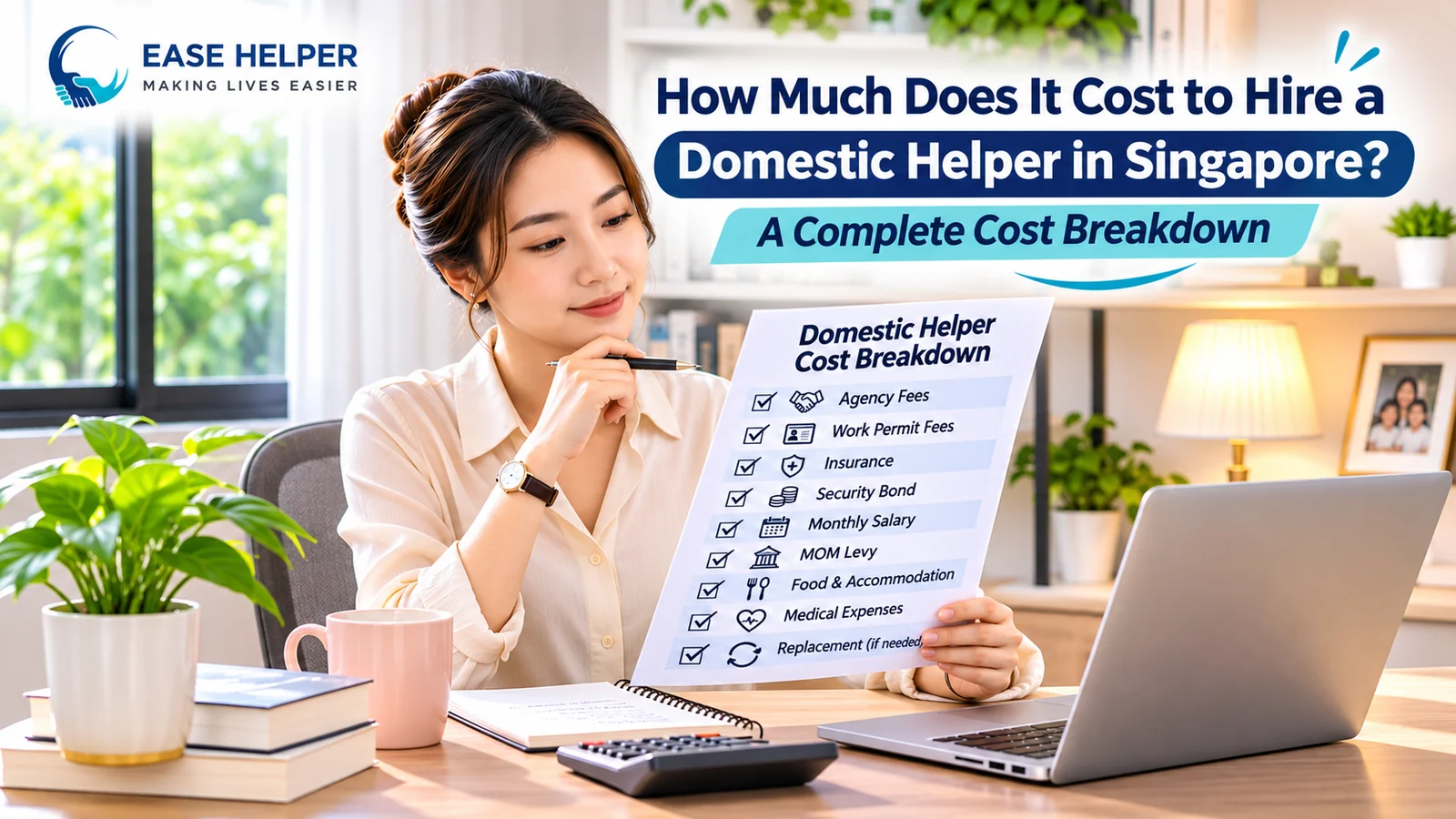
The cost of hiring a domestic helper in Singapore includes both one-time recruitment expenses and ongoing employment costs. Employers should budget for agency services, Work Permit administration, insurance, monthly salary, the MOM levy, food, accommodation and medical care. Additional expenses may arise from travel, medical examinations or changes in employment arrangements. This guide explains each cost category, offers an illustrative budgeting example and shows how to compare agency quotations.
How Much Does It Cost to Hire a Domestic Helper in Singapore?
There is no single total that applies to every household. The final cost depends on the recruitment method, the helper’s agreed salary, applicable levy, insurance arrangements and services included in the agency quotation.
Therefore, employers should separate expenses into three groups:
- One-time costs: recruitment, administrative and arrival expenses.
- Recurring costs: salary, levy, food, accommodation and household expenses.
- Periodic or unexpected costs: insurance renewal, medical examinations, healthcare and possible travel arrangements.
Before making a hiring decision, consider your family’s needs and review our complete guide to hiring a domestic helper in Singapore.
One-Time Costs of Hiring a Domestic Helper
1. Domestic Helper Agency Fees
An employment agency may charge for recruitment, candidate matching, interviews, documentation and placement support. However, the services included in each package can differ.
For that reason, request an itemised quotation. Check the service agreement, cancellation terms and any replacement conditions before making payment.
Also, distinguish the agency’s service fee from any separately identified salary advance or helper loan arrangement. These are not necessarily the same expense.
2. Work Permit Application and Issuance
Employers must arrange the required Work Permit procedures. Applicable government application and issuance fees form part of the initial budget.
Check the current requirements and charges on the Ministry of Manpower (MOM) website. Government charges can change, so avoid relying on an outdated quotation.
3. Insurance and Security Bond Arrangements
Employers must satisfy applicable MOM insurance and security bond requirements. These may involve medical insurance, personal accident insurance and a security bond arrangement, depending on the circumstances.
However, do not automatically count the full security bond amount as a non-refundable hiring fee. The bond is a financial guarantee, while the cost of arranging it may be different.
Review policy coverage, exclusions and deductibles. In addition, ask who handles claims and what happens if the employment arrangement ends early.
4. Travel, Arrival and Other Administrative Costs
Other initial expenses may include travel, arrival transport, required medical examinations or administrative services. The exact items depend on the recruitment arrangement.
Consequently, ask the agency to identify which costs are included and which remain payable separately.
Monthly Cost of Employing a Domestic Helper
Once your helper starts work, several expenses continue every month. These recurring commitments often account for a substantial share of the overall employment cost.
| Expense | What It Covers | Budgeting Tip |
|---|---|---|
| Monthly salary | The agreed payment to your domestic helper | Use the actual salary in your employment agreement |
| MOM domestic worker levy | The applicable monthly government levy | Check whether your household qualifies for a concession |
| Food and drinking water | Suitable daily meals and adequate drinking water | Include dietary needs in your household budget |
| Accommodation | Suitable sleeping and living arrangements | Check applicable MOM accommodation requirements |
| Medical care | Healthcare expenses and costs not covered by insurance | Keep a reserve for unexpected bills |
| Household supplies | Reasonable additional household consumables and utilities | Estimate costs based on your living arrangements |
Monthly Salary
Domestic helper salaries vary according to the agreed employment terms, experience and recruitment circumstances. Therefore, employers should use the actual agreed salary rather than assume a universal rate.
Pay salary according to the applicable rules and keep clear payment records. Also, explain the salary arrangement before employment begins.
Domestic Worker Levy
MOM charges a monthly levy for employing a migrant domestic worker. Some households may qualify for a concessionary rate under current eligibility rules.
However, not every employer qualifies. Verify your circumstances with MOM before including a concession in your financial plan.
Food, Accommodation and Medical Care
Employers must provide suitable accommodation, adequate food and necessary medical care in accordance with applicable requirements. These responsibilities continue throughout employment.
Although insurance helps manage certain medical risks, it does not necessarily cover every expense. As a result, a separate healthcare reserve is useful.
Illustrative First-Year Domestic Helper Budget
The following example demonstrates the budgeting method. It is not an EaseHelper quotation, a market-price survey or a statement of current MOM rates.
| Illustrative Item | Example Amount (SGD) | Calculation |
|---|---|---|
| Agreed monthly salary | $700 | $700 × 12 = $8,400 |
| Illustrative monthly levy allowance | $300 | $300 × 12 = $3,600 |
| Food and household allowance | $180 | $180 × 12 = $2,160 |
| One-time recruitment and setup allowance | $2,000 | Illustrative planning amount |
| Periodic expenses and contingency | $1,000 | Illustrative planning amount |
| Illustrative first-year total | $17,160 | Example only |
Important: The figures above are hypothetical budgeting inputs, not verified prevailing charges. They exclude any separately applicable costs not listed. Replace every amount with your actual salary agreement, current MOM levy, insurance quotation and agency fee breakdown.
For a more accurate estimate, calculate the first-year budget using the following formula:
First-year cost = one-time hiring expenses + 12 months of recurring expenses + periodic costs + contingency allowance.
How to Compare Domestic Helper Agency Quotations
Two agencies may advertise different prices because they include different services. Therefore, compare the full quotation rather than focusing only on the initial amount.
Ask these questions before signing:
- What is the agency’s own service fee?
- Which government and third-party charges are included?
- Does the quotation include insurance and administrative arrangements?
- Are any salary advances or loan arrangements listed separately?
- What support does the agency provide after placement?
- What are the replacement, refund and cancellation terms?
- Which additional costs could arise before or after arrival?
Request written answers where necessary. Then, retain the quotation, service agreement and payment receipts for reference.
Can Employers Reduce the Cost of Hiring?
Check Levy Concession Eligibility
First, check whether your household meets MOM’s current concession criteria. If you qualify, the applicable levy may be lower. However, do not assume eligibility without confirmation.
Choose a Suitable Helper From the Start
Next, consider household needs, relevant experience and communication skills during recruitment. A careful selection process may reduce the likelihood of a mismatch and additional recruitment expenses.
Understand the Agency’s Replacement Terms
Before signing, review what happens if the placement does not work out. Replacement policies vary, so written conditions matter.
Plan for Long-Term Employment
Finally, provide clear instructions, reasonable routines and respectful communication. A stable working relationship can help reduce avoidable disruption and repeated recruitment costs.
Common Cost Mistakes Employers Should Avoid
- Looking only at the advertised agency fee: Compare all included and excluded charges.
- Forgetting recurring expenses: Budget for salary, levy and household responsibilities every month.
- Assuming insurance covers everything: Review exclusions and maintain an emergency reserve.
- Overlooking replacement conditions: Read the service agreement before paying.
- Using outdated government figures: Check MOM for current requirements and fees.
Frequently Asked Questions
Is the agency fee the total cost of hiring a domestic helper?
No. The agency fee is only one component. Employers should also budget for applicable administrative expenses, salary, levy, insurance, food, accommodation and medical care.
Is a domestic helper’s salary included in the agency fee?
Not necessarily. Agencies structure their quotations differently. Therefore, ask whether any salary advance or loan arrangement appears in the amount quoted.
Do all employers pay the same domestic worker levy?
No. The applicable rate depends on current MOM rules and whether the household qualifies for a concession.
Should employers prepare an emergency budget?
Yes. Unexpected medical, travel or administrative expenses may arise. A contingency allowance can help households manage these costs.
Where can employers check official requirements?
Visit MOM Singapore for current Work Permit, levy and employer-responsibility information.
How EaseHelper Supports Singapore Employers
EaseHelper helps employers understand the domestic helper recruitment process and assess suitable hiring arrangements. We encourage families to review the full cost of employment before making a commitment.
By discussing your household requirements and reviewing an itemised quotation, you can make a more informed hiring decision.
Planning to Hire a Domestic Helper?
Speak with EaseHelper about recruitment options, agency services and the expenses to consider before hiring.
Explore EaseHelper ServicesDisclaimer: This article provides general information for Singapore employers. The example budget uses hypothetical figures and does not represent an official MOM rate or EaseHelper quotation. Government fees, levy concessions, insurance requirements and agency charges may change. Confirm current requirements with MOM and obtain an itemised quotation before making financial commitments.