
Blog
Domestic Helper Pest Prevention in Singapore: Keeping Your Home Free From Ants, Cockroaches and Mosquitoes

Executive Summary
Domestic helper pest prevention in Singapore begins with consistent cleaning, proper food storage, effective waste disposal and regular checks for stagnant water. Ants, cockroaches and mosquitoes can become household problems when food, moisture and suitable breeding or hiding places are available. This guide explains practical daily, weekly and monthly prevention routines, safe pest-control precautions and how Singapore employers can train their domestic helpers to maintain a cleaner, healthier home.
Why Domestic Helper Pest Prevention Matters in Singapore
Singapore’s warm and humid climate can support common household pests throughout the year. Ants may enter kitchens looking for food, cockroaches can hide in damp areas, and mosquitoes can breed in stagnant water.
For households with babies, young children, elderly family members or pets, pest prevention is especially important. Good hygiene and early detection help reduce contamination risks, avoid unnecessary pesticide use and make the home more comfortable.
However, domestic helper pest prevention should focus on practical household maintenance rather than expecting a helper to manage serious infestations independently. Employers remain responsible for arranging professional assistance when necessary.
1. Identify Common Household Pests in Singapore
Different pests require different prevention measures. Therefore, employers should explain the warning signs and suitable responses for each type.
| Pest | Common Locations | Typical Warning Signs | Prevention Focus |
|---|---|---|---|
| Ants | Kitchen counters, cupboards, dining areas and food storage. | Ant trails, insects around crumbs or sugary foods. | Remove food residues, seal containers and clean spills. |
| Cockroaches | Under sinks, behind appliances, drains and rubbish areas. | Live insects, droppings, egg cases or unusual odours. | Remove food and water sources, reduce clutter and address leaks. |
| Mosquitoes | Balconies, plant trays, bathrooms, service yards and outdoor containers. | Adult mosquitoes or standing water that may support breeding. | Remove stagnant water and prevent water accumulation. |
Ask your domestic helper to report repeated sightings instead of relying only on occasional cleaning or insect sprays.
2. Prevent Ants Through Proper Food Storage
Ants are commonly attracted to accessible food, particularly sweet or greasy residues. A few simple changes can make kitchens less attractive to them.
Daily Ant Prevention Checklist
- Wipe kitchen counters and dining tables after meals.
- Clean spills promptly, especially sugary drinks and sauces.
- Store biscuits, cereals, sugar and other dry foods in sealed containers.
- Keep opened food packaging properly closed.
- Sweep or vacuum crumbs from floors and corners.
- Clean reusable food containers before storage.
- Check cupboard corners for ant trails.
When ants appear repeatedly, identify where they are entering and inform the employer. Sealing appropriate entry gaps may help, but avoid blocking ventilation or essential drainage.
3. Reduce Cockroach Risks in Kitchens and Bathrooms
Cockroaches can shelter in dark, warm and damp spaces. As a result, regular cleaning alone may not solve the problem if food residues, leaks and hiding places remain.
Kitchen Prevention Measures
- Remove grease and food debris around cooking surfaces.
- Clean beneath accessible appliances where safe.
- Keep rubbish bins covered and empty them regularly.
- Wash dishes promptly and avoid leaving food residues overnight.
- Store dry food in properly sealed containers.
- Report leaking pipes or persistent moisture.
Bathroom and Utility Area Precautions
- Clean accessible floor traps and drains appropriately.
- Remove accumulated dirt around sinks and cabinets.
- Keep storage areas tidy and avoid unnecessary cardboard clutter.
- Report damaged drain covers or gaps around pipes.
- Check for repeated cockroach sightings.
4. Prevent Mosquito Breeding by Removing Stagnant Water
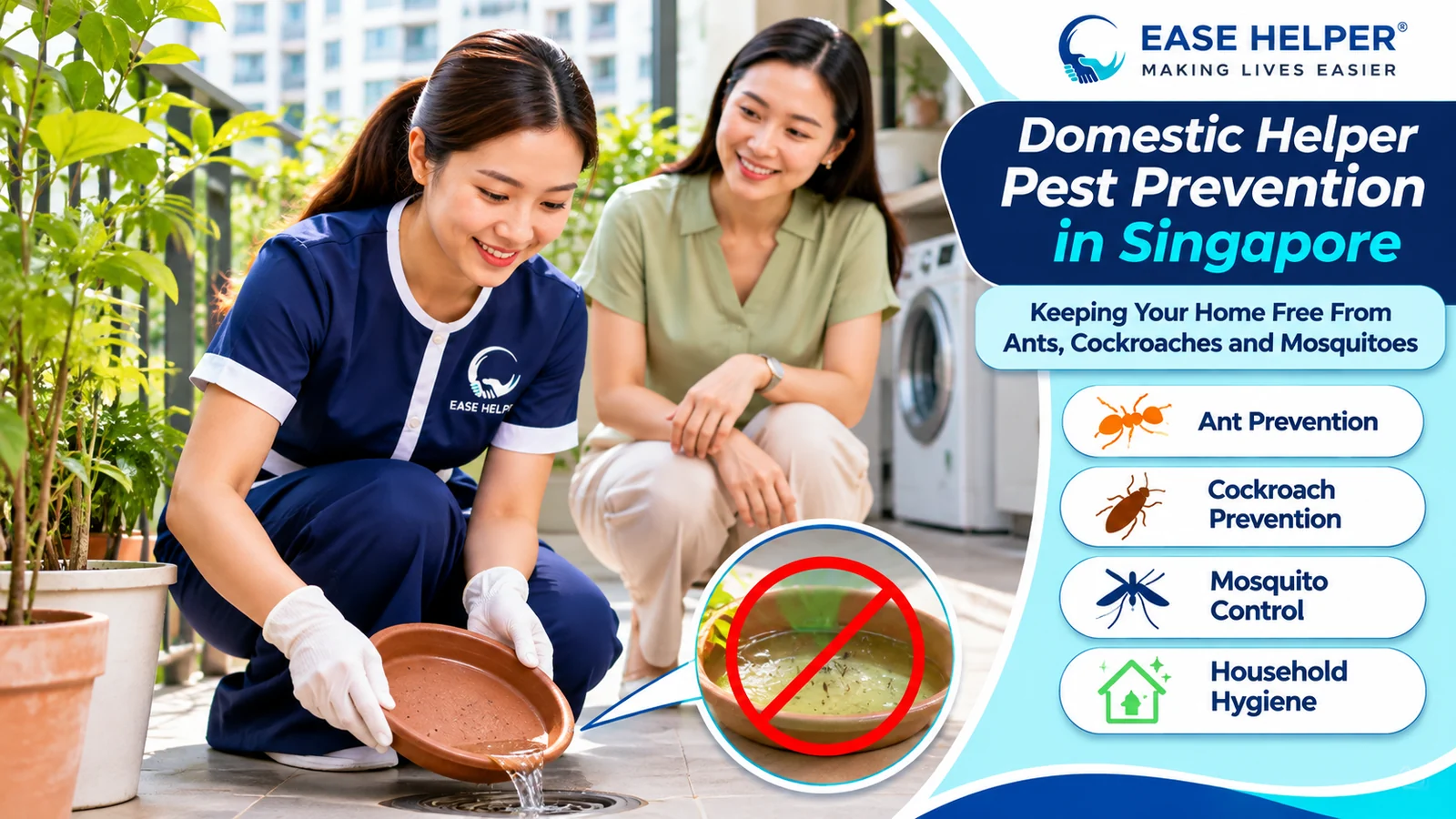
Mosquito prevention is particularly important in Singapore because some mosquitoes can transmit dengue. The National Environment Agency encourages households to prevent mosquito breeding by removing stagnant water and maintaining their surroundings.
Even small amounts of standing water can become breeding sites. Therefore, routine inspections are more effective than waiting until mosquitoes are visible.
Common Areas to Check
- Flowerpot plates and plant trays.
- Unused pails, buckets and watering cans.
- Balcony corners and outdoor containers.
- Air-conditioner drainage areas where accessible.
- Vases and other water-holding decorations.
- Service yards and accessible floor traps.
- Discarded containers that collect rainwater.
Daily and Weekly Mosquito Prevention
- Empty and turn over unused water containers.
- Remove stagnant water from accessible trays and surfaces.
- Keep water-storage containers properly covered.
- Maintain plant containers and water features according to appropriate guidance.
- Check outdoor areas after rainfall.
- Report persistent standing water or inaccessible breeding sites.
Employers can refer to the National Environment Agency (NEA) for current dengue prevention guidance and approved mosquito-control measures.
5. Maintain Proper Household Waste Disposal
Waste management plays an important role in domestic helper pest prevention. Food scraps and dirty packaging can attract ants, cockroaches and other pests when left exposed.
Recommended Waste Disposal Practices
- Dispose of food scraps promptly.
- Use suitable rubbish bags and covered bins.
- Empty kitchen bins regularly, especially when they contain food waste.
- Clean bins when spills or residue accumulate.
- Rinse recyclable food containers where appropriate.
- Keep rubbish disposal areas tidy.
- Follow the building’s waste-disposal arrangements.
In HDB flats and condominiums, employers should explain the correct use of rubbish chutes, bin centres and recycling facilities. Helpers should not leave exposed food waste in corridors or shared spaces.
6. Control Moisture and Improve Household Ventilation
Moisture can make some household areas more attractive to pests. Therefore, regular checks for dampness should form part of the cleaning routine.
Areas That Need Attention
- Cabinets beneath kitchen sinks.
- Bathroom storage areas.
- Washing machine surroundings.
- Water pipes and accessible plumbing connections.
- Areas behind movable storage containers.
- Balconies and service yards.
Wipe up water spills and allow suitable areas to dry. Where ventilation is available, use it appropriately. If leaks, persistent condensation or mould appear, inform the employer rather than attempting major repairs.
7. Use Pest-Control Products Safely
Some households use ant baits, cockroach traps or other pest-control products. However, improper handling can expose people and pets to unnecessary risks.
Safety Rules for Domestic Helpers
- Use only products approved by the employer and suitable for the intended purpose.
- Read and follow the product label carefully.
- Keep pesticides and baits away from children and pets.
- Never mix pest-control chemicals with household cleaners.
- Do not spray chemicals near exposed food or food-preparation surfaces.
- Follow ventilation, protective-equipment and re-entry instructions.
- Store chemicals in their original labelled containers.
- Wash hands after handling products as directed.
Do not use unidentified powders, unlabelled sprays or improvised chemical mixtures. For significant infestations, employers should engage a suitable professional pest-control service.
8. Create a Daily and Weekly Pest Prevention Checklist
A clear schedule helps domestic helpers manage prevention tasks consistently without repeating unnecessary work.
| Frequency | Task | Main Purpose |
|---|---|---|
| Daily | Wipe dining tables, kitchen counters and visible food spills. | Reduce food sources for ants and cockroaches. |
| Daily | Dispose of exposed food waste and check kitchen bins. | Reduce pest attraction. |
| Daily | Check frequently used water containers and plant trays. | Prevent stagnant water. |
| Weekly | Inspect accessible areas beneath sinks and around appliances. | Identify moisture and pest activity. |
| Weekly | Clean rubbish bins and check food storage cupboards. | Remove residues and detect infestations early. |
| Weekly | Inspect balcony and service-yard areas. | Identify possible mosquito breeding sites. |
| Monthly | Review pest sightings and unresolved household maintenance issues. | Decide whether further action is necessary. |
Adjust the schedule according to the home’s layout, household routines and any specific pest problems. A short checklist is often easier to maintain than a complicated cleaning plan.
9. Train Your Domestic Helper to Report Pest Problems
Good communication helps employers address pest problems before they become more serious. Explain what the helper should report and what action they may take independently.
Suggested Training Process
- Identify common pests using simple descriptions or pictures.
- Walk through household areas where pests may appear.
- Demonstrate correct food storage and waste disposal.
- Explain stagnant-water checks and safe cleaning procedures.
- Clarify which pest-control products, if any, the helper may use.
- Provide a simple way to report repeated sightings.
- Review the household checklist together after the first week.
For example, a helper could report: “I noticed cockroaches under the kitchen sink twice this week. The area is clean, but there may be a gap near the pipe.”
This type of specific observation helps employers decide whether maintenance or professional treatment is needed.
10. Recognise When Professional Pest Control Is Needed
Routine cleaning and preventive maintenance can reduce many household pest risks. However, some problems require professional assessment.
Warning Signs
- Repeated cockroach sightings despite consistent cleaning.
- Large numbers of ants returning after food sources are removed.
- Evidence of pests in inaccessible wall or appliance spaces.
- Persistent mosquito activity linked to suspected breeding sites.
- Recurring infestations affecting food storage or household hygiene.
- Situations requiring chemical treatments beyond ordinary household use.
Employers should arrange professional assistance when appropriate and follow treatment instructions carefully. Domestic helpers should not be expected to carry out hazardous pest-control work without proper training and safeguards.
11. Common Pest Prevention Mistakes to Avoid
| Common Mistake | Why It Is a Problem | Better Approach |
|---|---|---|
| Leaving food uncovered overnight. | May attract ants and cockroaches. | Store food properly and clean surfaces after meals. |
| Allowing water to collect in plant trays. | May create mosquito breeding opportunities. | Remove stagnant water and maintain plants appropriately. |
| Using excessive insect spray. | Can increase unnecessary chemical exposure. | Follow labels and focus on prevention and targeted treatment. |
| Ignoring recurring pest sightings. | May allow an infestation to worsen. | Report patterns and arrange further investigation. |
| Keeping dirty cardboard and clutter. | May provide hiding places for some pests. | Organise storage and remove unnecessary materials. |
12. Build Pest Prevention Into the Household Routine
Effective domestic helper pest prevention in Singapore depends on shared responsibility. Employers should provide suitable cleaning tools, safe storage containers and clear instructions. Meanwhile, helpers can maintain agreed cleaning routines and report problems promptly.
Regular feedback also matters. Instead of blaming a helper when pests appear, identify whether the cause involves building maintenance, outdoor conditions, plumbing, food storage or cleaning practices.
By combining practical hygiene measures with early reporting and appropriate professional support, households can manage pest risks more consistently.
Frequently Asked Questions
1. How can a domestic helper prevent ants in a Singapore kitchen?
Clean food spills promptly, store dry foods in sealed containers, remove crumbs and keep rubbish bins clean. Repeated ant trails should be reported so the household can investigate possible entry points.
2. What should a helper do if cockroaches keep appearing?
Maintain kitchen hygiene, check for accessible food residues and moisture, and report repeated sightings. Employers should investigate possible leaks or hiding places and arrange professional pest control if necessary.
3. How often should domestic helpers check for stagnant water?
Frequently used containers and known risk areas should be checked routinely, with additional inspections after rainfall or changes to household conditions. Follow current NEA guidance for mosquito breeding prevention.
4. Can domestic helpers use insect sprays and pest-control chemicals?
They should use only appropriate products approved by the employer, following all label instructions. Chemicals must be stored safely, kept away from children and pets, and never mixed with household cleaning products.
5. Who is responsible for arranging professional pest control?
Employers should arrange appropriate professional services when a household infestation requires specialist treatment. Domestic helpers can assist with routine prevention and reporting but should not be expected to perform unsafe chemical treatments.
Conclusion
Domestic helper pest prevention in Singapore is most effective when households maintain good hygiene, store food properly, remove stagnant water and respond early to warning signs. These habits can reduce common problems involving ants, cockroaches and mosquitoes.
With clear training, suitable equipment and realistic expectations, employers and domestic helpers can work together to keep the home cleaner and reduce avoidable pest risks.
Looking for a Domestic Helper in Singapore?
EaseHelper helps Singapore families explore domestic helper options suited to their household needs, including support with cleaning, cooking and everyday home management.
Explore EaseHelperDisclaimer: This article provides general household pest prevention information and does not replace current NEA guidance, product-specific safety instructions or professional pest-control advice. Employers should follow applicable Singapore requirements and seek qualified assistance for significant infestations or hazardous treatments.