
Blog
Domestic Helper Waste Management in Singapore: Recycling, Food Waste and Household Disposal

Executive Summary
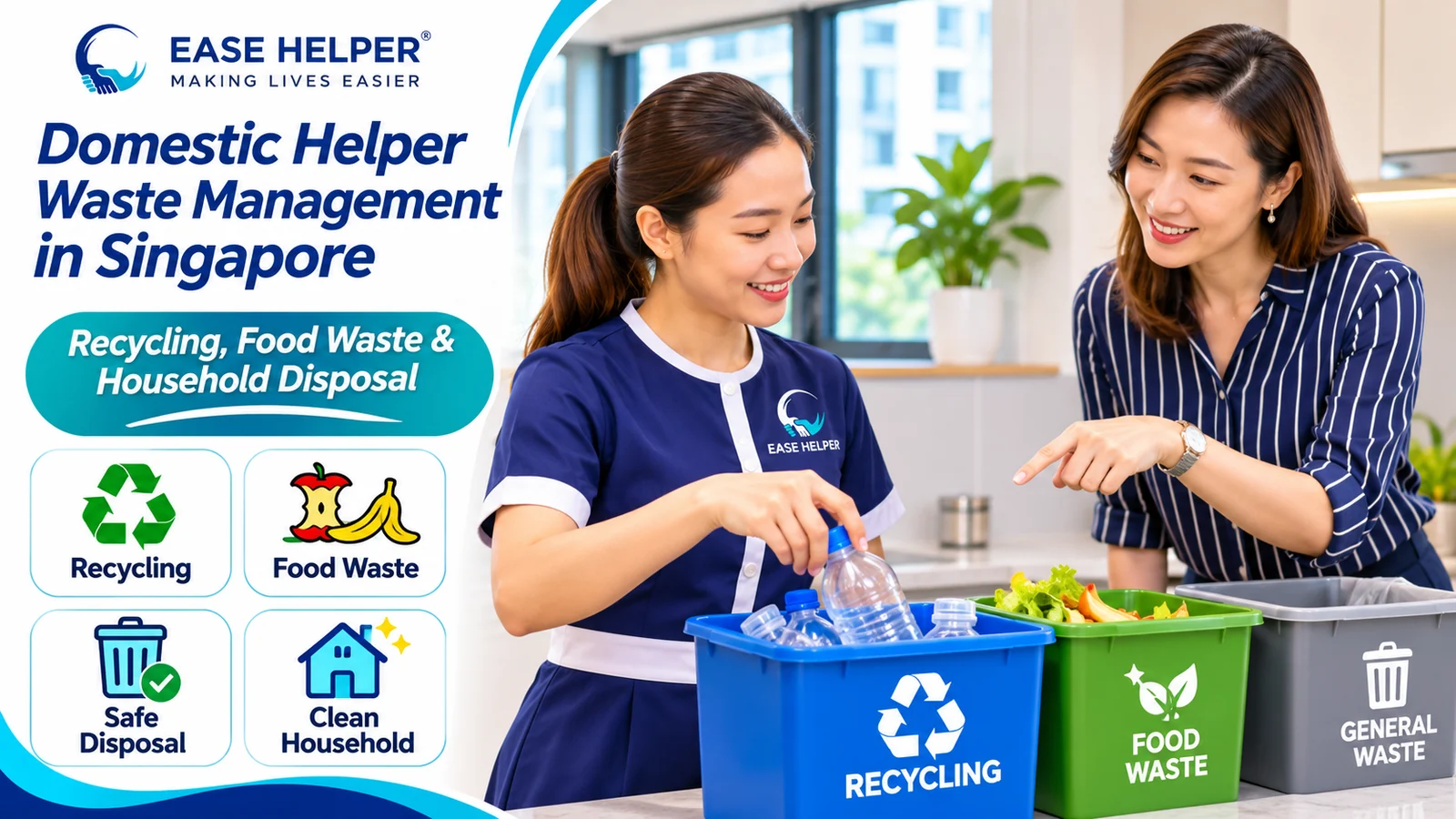
Effective domestic helper waste management involves separating recyclable materials, disposing of food waste promptly, keeping bins clean and following the household’s designated disposal procedures.
In Singapore, common household recyclables generally include suitable paper, plastic, metal and glass items. However, contaminated materials, electronic waste, batteries and bulky household items may require different handling.
This guide provides practical instructions, a household waste sorting table and a daily training checklist for employers and domestic helpers.
Why Domestic Helper Waste Management Matters in Singapore
Singapore households generate different types of waste every day. These include food scraps, packaging, paper, plastic containers and general rubbish.
When families mix all these materials together, recyclable items may become contaminated. Meanwhile, food waste left indoors can create unpleasant smells and attract pests.
Therefore, a clear disposal routine helps maintain household hygiene while supporting responsible recycling.
Employers should also explain that not every item displaying a recycling symbol is necessarily accepted in Singapore’s household recycling system.
1. Understand Singapore’s Household Waste Disposal System
Before assigning rubbish disposal duties, employers should show their helper where the household’s waste and recycling facilities are located.
Common Disposal Arrangements
- HDB flats: Residents may use designated refuse chutes or bin centres and shared recycling facilities.
- Condominiums: Management may provide separate collection areas for general waste and recyclables.
- Landed homes: Households may use designated bins and follow the applicable collection arrangements.
Because arrangements vary, the employer should demonstrate the correct location and method for each type of waste.
For national guidance, refer to the National Environment Agency (NEA).
2. Teach Domestic Helpers What Can Be Recycled
Domestic helper waste management training should include a simple explanation of Singapore’s recycling system.
Many clean paper, plastic, metal and glass items can be placed in designated household recycling bins. Nevertheless, items must meet the applicable recycling guidelines.
Common Recyclable Household Items
| Material | Common Examples | Preparation |
|---|---|---|
| Paper | Newspapers, cardboard boxes, office paper | Keep clean and dry; flatten boxes where practical. |
| Plastic | Suitable plastic bottles and containers | Empty contents and remove food residue. |
| Metal | Aluminium drink cans and food tins | Empty and clean before recycling. |
| Glass | Suitable glass bottles and jars | Empty contents and handle carefully. |
Importantly, not all plastic products, glass objects or paper-based packaging belong in household recycling bins.
When uncertain, check the current instructions on Clean & Green Singapore or the relevant recycling collection guidance.
3. Keep Food and Liquid Waste Out of Recycling Bins
One of the most common recycling mistakes is placing dirty food packaging into a recycling bin.
For example, a container filled with leftover sauce can contaminate other recyclable materials.
Simple Recycling Preparation Rules
- Empty food and drinks from containers.
- Remove remaining food residue.
- Rinse containers when necessary.
- Drain excess water before disposal.
- Keep paper and cardboard clean and dry.
- Place items in the correct recycling collection point.
Additionally, explain that heavily soiled tissues, greasy food packaging and food scraps generally do not belong in ordinary household recycling bins.
Employer tip: Place a small recycling guide near the kitchen waste area. Use photographs of common household items so the helper can identify the correct disposal category quickly.
4. Manage Kitchen Food Waste Properly
Food waste is an important part of domestic helper waste management because it can quickly produce odours and attract pests.
Common examples include vegetable trimmings, fruit peels, eggshells and leftover meals.
Food Waste Handling Checklist
- Collect food scraps in a suitable container.
- Keep the container covered when appropriate.
- Separate food waste from clean recyclables.
- Dispose of waste regularly.
- Clean spills immediately.
- Wash hands after handling rubbish.
Furthermore, employers should explain whether the household participates in a dedicated food waste collection or composting programme.
If no separate programme exists, follow the property’s ordinary food waste disposal arrangements.
5. Avoid Pouring Used Cooking Oil Down the Sink
Used cooking oil requires careful handling. Pouring significant quantities into kitchen sinks or drains can contribute to blockages and maintenance problems.
Therefore, employers should teach helpers how to manage oil after cooking.
Safer Used Cooking Oil Procedures
- Allow hot oil to cool before handling.
- Keep children and other household members away from hot containers.
- Transfer cooled oil into a suitable sealed container when necessary.
- Use an appropriate collection service if available.
- Otherwise, follow the applicable local general waste disposal guidance.
For small amounts of residual grease, follow the household’s approved cleaning and disposal procedure.
Never ask a helper to carry or pour dangerously hot oil.
6. Handle Broken Glass and Sharp Waste Safely
Broken glass, damaged ceramics and sharp objects can injure anyone handling rubbish.
Consequently, employers should provide a safe procedure for these items.
Sharp Waste Safety Rules
- Do not pick up broken glass with bare hands.
- Use suitable tools and protective equipment.
- Collect small fragments carefully.
- Place sharp waste in a rigid, puncture-resistant container.
- Label the container when appropriate.
- Follow the property’s safe disposal arrangements.
Moreover, broken drinking glasses and ceramics should not automatically be placed in household recycling bins. These materials may not be accepted with recyclable glass bottles and jars.
Medical sharps, such as used needles, require separate specialised guidance and should never be mixed casually with household waste.
7. Dispose of Batteries and Electronic Waste Correctly
Old mobile phones, batteries, chargers and electrical devices should not automatically go into ordinary household recycling bins.
Singapore has designated electronic waste collection arrangements for various categories of regulated e-waste.
Common Electronic Waste Items
- Used batteries.
- Mobile phones and certain accessories.
- Small electrical appliances.
- Computers and related equipment.
- Other electronic products accepted by designated collection programmes.
Employers should identify the correct collection point for each item and follow its acceptance rules.
For electronic waste recycling information, consult the NEA website.
Before disposing of devices containing personal data, employers should remove or securely erase that information themselves.
8. Understand Bulky Item Disposal Procedures
Furniture, mattresses and large household appliances often require special collection arrangements.
Domestic helpers should not be expected to move heavy items alone or leave them in common corridors, lift lobbies or unauthorised disposal areas.
Bulky Waste Checklist
- Confirm the applicable collection arrangement.
- Check with the town council, property management or authorised service provider.
- Arrange assistance for heavy or awkward items.
- Keep common areas and emergency exits clear.
- Follow the approved collection schedule.
In addition, employers should assess lifting risks before asking a helper to move furniture or large appliances.
9. Keep Household Rubbish Bins Clean
Waste management does not end when rubbish is removed. Dirty bins can develop unpleasant smells and attract insects.
Therefore, regular bin cleaning should form part of the household routine.
Bin Cleaning Procedure
- Empty the bin completely.
- Remove visible dirt and residue.
- Wash the bin using suitable cleaning products.
- Follow the product label and avoid mixing cleaning chemicals.
- Rinse where appropriate.
- Allow the bin to dry before replacing the liner.
Employers should provide gloves and suitable cleaning equipment when needed.
Also, avoid using the same cleaning cloth for rubbish bins and food preparation surfaces.
10. Prevent Pests Through Proper Waste Management
Food waste and poorly maintained rubbish areas may attract ants, cockroaches, flies and rodents.
Consequently, proper waste management supports a cleaner and healthier home.
Daily Pest Prevention Habits
- Remove food waste regularly.
- Keep bin lids closed where appropriate.
- Clean food spills promptly.
- Avoid leaving uncovered food scraps overnight.
- Keep disposal areas free from unnecessary clutter.
- Report signs of pest activity to the employer.
If pest problems continue, employers should investigate the cause and arrange appropriate professional assistance rather than relying only on repeated cleaning.
11. Follow Safe Rubbish Disposal Practices in HDB Flats
HDB households may use refuse chutes or designated collection points, depending on the block’s layout.
Employers should demonstrate the correct facilities and explain any building-specific instructions.
Important HDB Disposal Rules
- Use the designated refuse disposal facility.
- Keep rubbish securely contained.
- Do not force oversized items into refuse chutes.
- Never place burning or hazardous materials in a chute.
- Keep corridors and common areas clear.
- Use the designated recycling facilities correctly.
Furthermore, helpers should not attempt to clear a blocked chute themselves. Instead, they should report the problem through the appropriate building or town council contact.
12. Understand Condominium Waste Disposal Arrangements
Condominiums may provide centralised bin centres, recycling areas or floor-level disposal rooms.
However, these facilities differ between developments.
Therefore, employers should explain the specific house rules, including:
- Where general waste should be deposited.
- Where recyclables should be placed.
- Whether certain waste requires special collection.
- How to report damaged or overflowing bins.
- Whether management restricts access to particular disposal areas.
Additionally, helpers should avoid leaving rubbish outside designated collection points.
13. Create a Domestic Helper Waste Management Checklist
A practical checklist makes it easier to maintain consistent household waste procedures.
| Task | Frequency | Important Reminder |
|---|---|---|
| Separate clean recyclables | Daily | Keep food and liquid contamination out. |
| Remove kitchen food waste | Daily or as needed | Prevent odours and pests. |
| Check general rubbish bins | Daily | Replace liners when necessary. |
| Clean bin surfaces | Regularly | Use suitable cleaning products. |
| Handle used cooking oil | As needed | Allow oil to cool before handling. |
| Separate e-waste | As needed | Use appropriate collection arrangements. |
| Report bulky waste | As needed | Ask the employer to arrange collection. |
| Inspect waste area for pests | Regularly | Report signs of infestation. |
Employers should adapt this checklist to the household’s actual needs rather than expecting unnecessary daily cleaning tasks.
14. Teach Waste Sorting Through Practical Demonstrations
Domestic helper waste management training is more effective when employers demonstrate real examples.
For instance, place an empty drink can, clean cardboard box, food-stained tissue and used battery on a table. Then explain the appropriate disposal method for each item.
Four-Step Training Method
- Explain: Introduce the household’s waste categories.
- Demonstrate: Show where each type of waste belongs.
- Practise: Ask the helper to sort common household items.
- Review: Correct misunderstandings and update instructions when necessary.
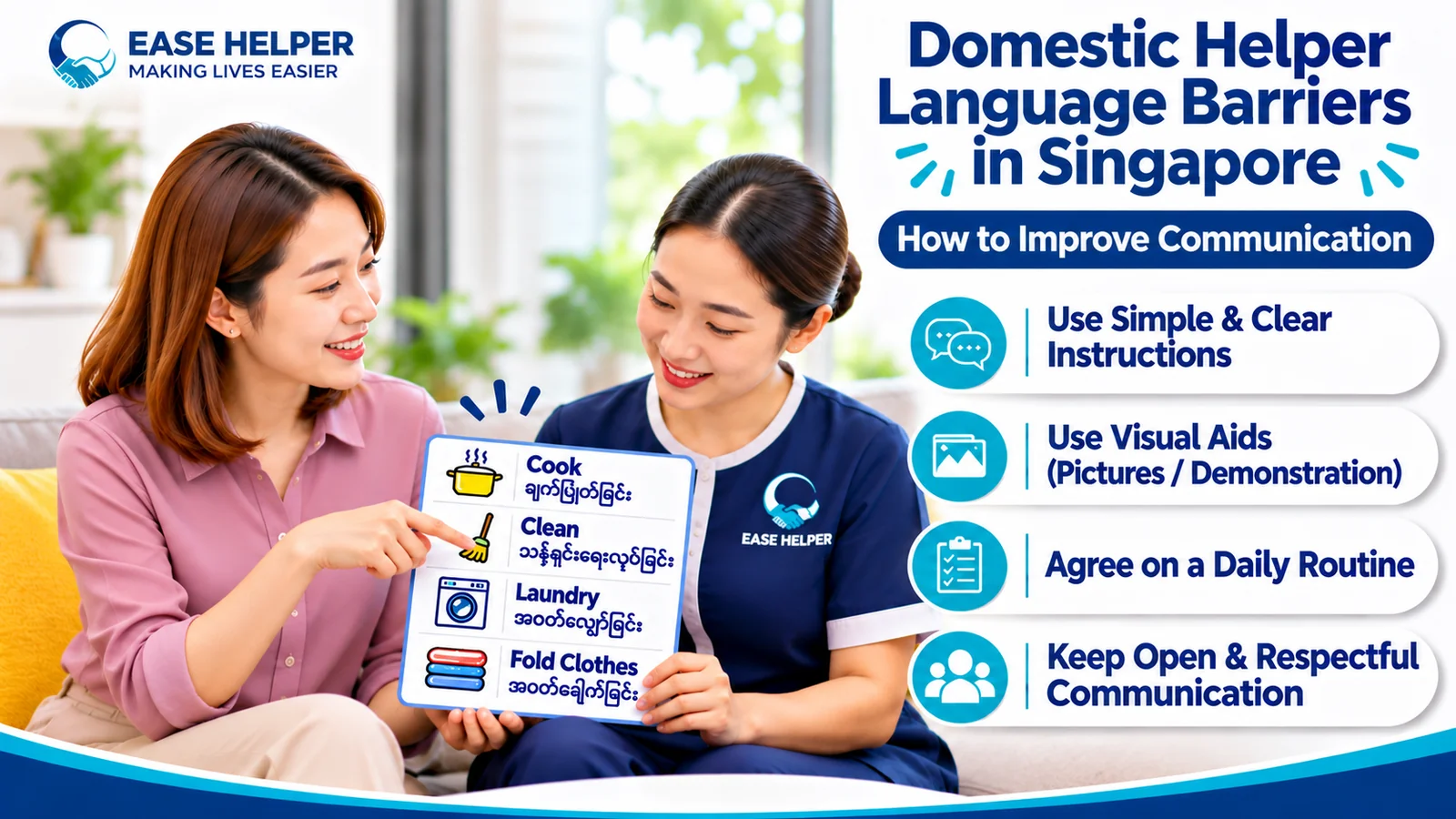
Moreover, use photographs and short written reminders when language differences make verbal explanations difficult.
Employers should encourage questions and avoid criticising mistakes without explaining the correct procedure.
15. Reduce Household Waste Through Simple Daily Habits
Besides disposing of waste properly, families can reduce the amount of rubbish they generate.
Practical Waste Reduction Ideas
- Plan meals to reduce unnecessary food waste.
- Check existing ingredients before grocery shopping.
- Store food correctly to prevent spoilage.
- Use reusable shopping bags when practical.
- Reuse suitable containers where safe.
- Avoid unnecessary disposable packaging.
- Repair or donate usable household items when appropriate.
However, employers should set the household’s purchasing and disposal preferences. Helpers should not be expected to make financial or environmental decisions without clear guidance.
16. Common Household Waste Management Mistakes
| Common Mistake | Better Practice |
|---|---|
| Putting food-stained packaging into recycling bins | Keep recyclable items clean and free of food residue. |
| Mixing batteries with ordinary recyclables | Use appropriate battery or e-waste collection points. |
| Leaving food waste uncovered for long periods | Use suitable containers and dispose of waste regularly. |
| Pouring used cooking oil into drains | Cool and dispose of oil through an appropriate method. |
| Placing bulky items in common corridors | Arrange authorised collection. |
| Assuming every plastic item is recyclable | Check Singapore’s applicable recycling guidelines. |
Frequently Asked Questions
1. What household items can be recycled in Singapore?
Many clean paper, plastic, metal and glass items can be recycled through designated household collection facilities. However, acceptance depends on the material and item type. Check current NEA recycling guidance when uncertain.
2. Can domestic helpers put food waste into recycling bins?
No. Food scraps should not be mixed with ordinary household recyclables. Use the property’s designated food waste programme, where available, or the appropriate general waste disposal arrangement.
3. How should a domestic helper dispose of used cooking oil?
Allow the oil to cool and follow an appropriate collection or disposal method. Avoid pouring significant quantities down the sink or drain. Employers should provide clear instructions for their household.
4. Where should old batteries and electronic devices be disposed of?
Use suitable battery or electronic waste collection arrangements rather than placing these items in ordinary household recycling bins. Check the current collection requirements for each type of device.
5. How can employers train domestic helpers in waste management?
Explain the household’s disposal facilities, demonstrate sorting with real examples and provide a short written checklist. Review common mistakes respectfully and update the instructions when the household’s arrangements change.
Looking for a Domestic Helper in Singapore?
EaseHelper helps Singapore families explore domestic helper options suited to their household needs. Clear instructions on cleaning, recycling and daily routines can help a new helper adapt to the family’s expectations.
Explore EaseHelper ServicesDisclaimer: This article provides general household waste management guidance for Singapore. Recycling acceptance rules, disposal arrangements and collection programmes may change. Always refer to current NEA guidance, property management instructions and relevant local requirements. This article does not replace professional hazardous waste handling advice.