Blog
Domestic Helper Time Management in Singapore: How to Organise Daily Household Tasks


Executive Summary
Domestic helper time management in Singapore works best when employers provide clear priorities, realistic schedules and sufficient rest. A practical daily routine helps helpers organise cleaning, cooking, laundry and other household responsibilities without unnecessary confusion. This guide explains how to create a daily task schedule, handle competing priorities, adjust routines for children or elderly family members and maintain respectful communication. It also includes sample timetables, weekly planning ideas and answers to common employer questions.
Why Domestic Helper Time Management Matters in Singapore
Domestic helper time management in Singapore is an important part of running an organised household. Many families rely on domestic helpers for several responsibilities, including meal preparation, cleaning, laundry and general housekeeping.
However, managing several duties can become difficult without clear instructions. For example, a helper may begin cleaning the living room while the employer expects lunch preparation to take priority.
Therefore, employers should establish a practical routine and explain which tasks matter most. In addition, a reasonable schedule helps prevent rushed work, misunderstandings and unnecessary stress.
Importantly, good time management does not mean filling every available hour with work. Instead, it means organising responsibilities efficiently while allowing sufficient meals, rest and personal time.
1. Identify Your Household’s Daily Priorities
Before creating a schedule, review your family’s actual needs. Every household operates differently. For instance, a family with young children may need more morning support, while a household with elderly parents may prioritise regular meals and assistance with daily activities.
Common Household Responsibilities
- Preparing breakfast, lunch and dinner.
- Cleaning bedrooms, bathrooms and common areas.
- Washing, drying, folding and ironing clothes.
- Buying groceries and organising household supplies.
- Assisting with childcare or elderly care, where applicable.
- Washing dishes and maintaining kitchen hygiene.
- Taking out rubbish and keeping shared areas tidy.
However, employers should avoid assuming that every task needs attention every day. Instead, separate essential daily duties from occasional household activities.
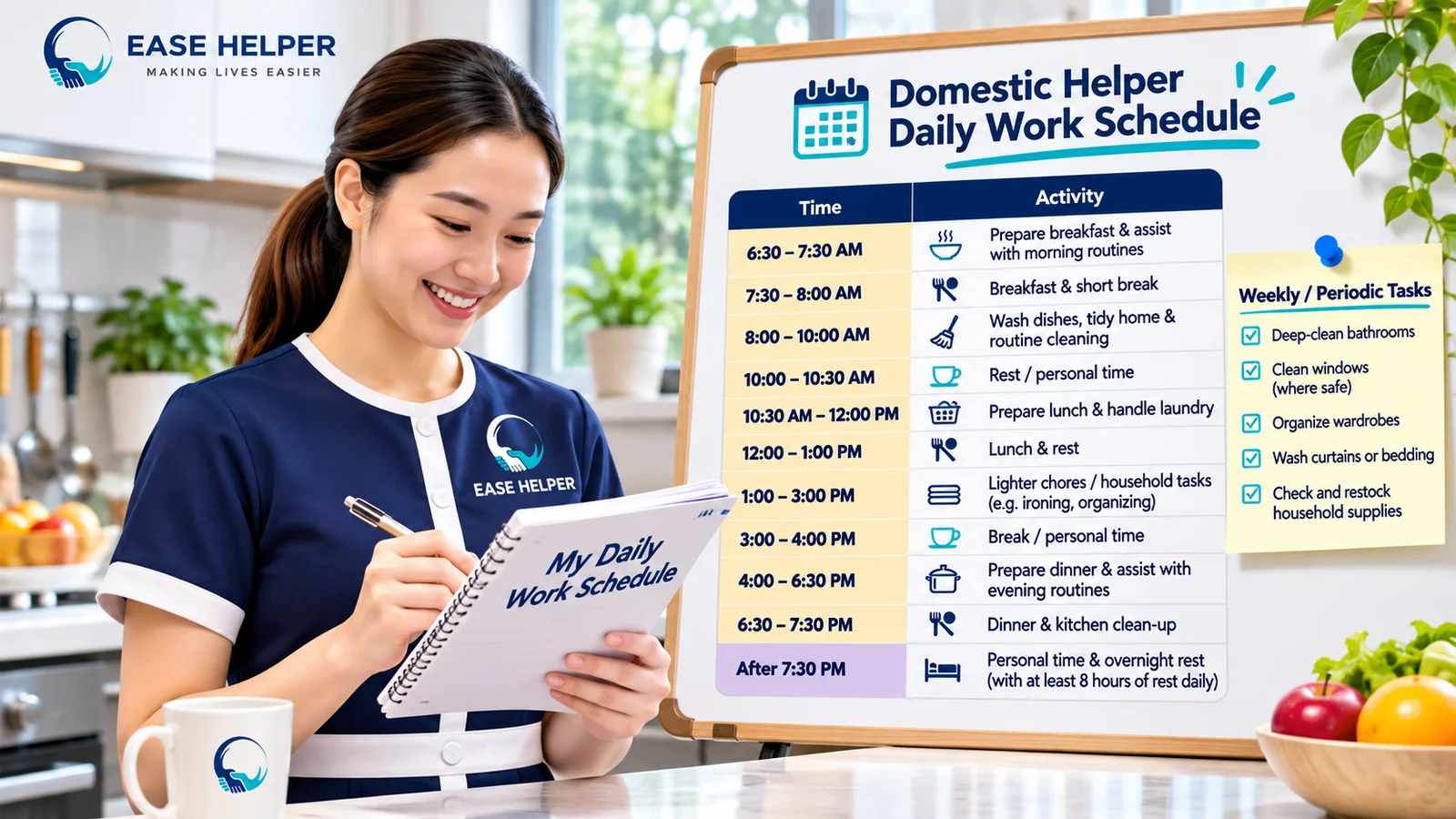
2. Create a Realistic Daily Domestic Helper Schedule
A clear timetable helps your helper understand the expected sequence of tasks. Nevertheless, the schedule should remain flexible because household needs may change.
Sample Daily Household Schedule
| Time | Example Activity | Priority |
|---|---|---|
| 7:00 am – 8:00 am | Prepare breakfast and assist with morning household routines | High |
| 8:00 am – 9:00 am | Breakfast, personal needs and agreed break | Rest |
| 9:00 am – 10:30 am | General cleaning and laundry | Medium |
| 10:30 am – 12:00 pm | Prepare lunch and organise kitchen | High |
| 12:00 pm – 1:00 pm | Lunch and rest | Rest |
| 1:00 pm – 3:00 pm | Selected household tasks, followed by a break as arranged | Medium |
| 3:00 pm – 5:00 pm | Prepare ingredients, fold laundry or complete priority tasks | Medium |
| 5:00 pm – 7:00 pm | Dinner preparation and kitchen cleaning | High |
| After evening duties | Personal time and uninterrupted overnight rest | Rest |
This timetable is only an illustration. It is not a required work schedule or a recommendation for fixed working hours. Employers must adjust duties and breaks to suit the household, the helper’s needs and applicable employment requirements.
For example, childcare responsibilities may change throughout the day. Therefore, a family with a newborn may need a different arrangement from a household with school-aged children.
3. Teach Your Domestic Helper to Prioritise Tasks
Not all household tasks have equal urgency. Consequently, employers should explain how to decide what needs immediate attention.
Use Three Simple Priority Levels
| Priority | Examples | Recommended Approach |
|---|---|---|
| High | Immediate safety concerns, urgent care needs, meals required at agreed times | Address promptly and inform the employer when necessary |
| Medium | Routine laundry, daily cleaning, planned food preparation | Complete according to the agreed schedule |
| Low | Non-urgent cupboard organisation, decorative cleaning, optional tidying | Arrange for another suitable time |
For instance, if a child needs immediate assistance while the helper is folding laundry, the care need takes priority. However, the helper should follow the family’s agreed childcare and safety instructions.
Similarly, if a household task cannot be completed safely, the helper should explain the situation instead of rushing.
4. Avoid Overloading Your Domestic Helper With Too Many Tasks
One common time management mistake is assigning several major responsibilities at the same time.
For example, preparing dinner, supervising a young child and cleaning a bathroom may require more attention than one person can safely provide simultaneously.
How Employers Can Prevent Task Overload
- Identify duties that require continuous attention.
- Avoid assigning conflicting responsibilities.
- Allow realistic time for each task.
- Provide appropriate equipment and supplies.
- Schedule regular meal and rest breaks.
- Adjust expectations when unexpected situations arise.
Furthermore, employers should review the workload regularly. If essential duties consistently remain unfinished, the schedule may need adjustment rather than stricter supervision.
5. Organise Household Cleaning Tasks by Frequency
Domestic helper time management becomes easier when employers divide cleaning into daily, weekly and occasional tasks.
Daily Cleaning
- Clean kitchen surfaces after food preparation.
- Wash dishes and manage household rubbish.
- Maintain frequently used living areas.
- Attend to spills and hygiene concerns promptly.
Weekly Cleaning
- Clean bathrooms thoroughly.
- Change bedsheets according to household needs.
- Vacuum or mop less frequently used areas.
- Clean selected appliances and storage areas.
Occasional Cleaning
- Organise cupboards and storage spaces.
- Clean suitable windows using safe methods.
- Review unused household items.
- Carry out seasonal household organisation.
However, employers must provide safe equipment and instructions. In particular, domestic helpers should not be asked to perform unsafe high-rise window cleaning.
6. Coordinate Cooking and Meal Preparation
Meal preparation often determines the timing of other household activities. Therefore, planning meals in advance can improve the daily routine.
Practical Meal Planning Steps
- Discuss the family’s meal preferences.
- Confirm the planned menu.
- Check available ingredients.
- Prepare a grocery list when needed.
- Allow suitable time for cooking and food safety.
- Clean and organise the kitchen after meals.
For example, preparing ingredients before the evening rush may reduce pressure during dinner preparation. Nevertheless, perishable ingredients must be stored safely.
For food hygiene information, employers can consult the Singapore Food Agency.
7. Manage Laundry and Ironing Efficiently
Laundry is another task that benefits from a predictable routine. However, the amount of laundry varies according to family size and daily activities.
Suggested Laundry Routine
- Sort clothes according to fabric care instructions.
- Check washing machine capacity before starting.
- Schedule suitable washing and drying periods.
- Fold clean clothes when practical.
- Iron only the items that require ironing.
- Return clothes to their designated storage areas.
Additionally, employers can reduce unnecessary work by explaining which garments need special handling and which can be folded without ironing.
8. Adjust Schedules for Childcare and Elderly Care
Households with dependants often need more flexible routines. In these situations, safety and care responsibilities may take precedence over general housekeeping.
For Families With Young Children
Coordinate household tasks around feeding, school arrangements and supervised activities. Furthermore, avoid expecting a helper to perform distracting chores while she must actively supervise a young child.
For Households With Elderly Family Members
Consider meal schedules, mobility assistance and other agreed care needs. However, the helper should receive appropriate training before assisting with activities that involve fall risks or specialised care.
Most importantly, employers should not assume that a helper can provide professional medical or nursing services without appropriate qualifications and support.
9. Use a Simple Daily Household Checklist
A written checklist helps domestic helpers remember responsibilities without relying entirely on verbal instructions.
Sample Daily Checklist
| Task | When Needed | Completion Check |
|---|---|---|
| Breakfast preparation | Morning | Completed or discussed |
| Kitchen cleaning | After meals | Completed or discussed |
| Laundry | Scheduled days | Completed or rescheduled |
| General tidying | Agreed period | Completed or discussed |
| Dinner preparation | Evening | Completed or discussed |
| Household supplies check | When required | Employer informed |
However, the checklist should support communication rather than become a rigid monitoring tool. If an unexpected task interrupts the schedule, the employer and helper can agree on a reasonable adjustment.
10. Improve Communication About Daily Tasks
Clear communication is essential for successful domestic helper time management in Singapore.
For instance, instructions such as “finish everything before lunch” may create confusion. Instead, employers should specify which tasks matter most and which can wait.
Useful Communication Practices
- Explain instructions using simple language.
- Demonstrate unfamiliar tasks.
- Confirm that the helper understands the priorities.
- Encourage questions and clarification.
- Provide respectful feedback.
- Discuss schedule changes in advance when possible.
Additionally, employers should consider language differences and allow reasonable time for a new helper to learn the household routine.
11. Allow Adequate Rest and Personal Time
Effective time management must include sufficient rest. A domestic helper needs opportunities to eat, recover from physical work and maintain personal wellbeing.
Employers should also comply with applicable rest-day requirements. In Singapore, migrant domestic workers are entitled to a weekly rest day, subject to the rules governing mutually agreed compensation and the mandatory monthly rest day that cannot be compensated away.
Because employment rules can change, employers should check the latest requirements on the Ministry of Manpower website.
Employer reminder: A daily schedule is a planning tool, not permission to require continuous work. Allow suitable meal breaks, personal time and sufficient uninterrupted rest. Adjust duties if the workload becomes unreasonable.
12. Review and Improve the Household Schedule
Even a carefully designed routine may need changes. Therefore, employers should review the schedule after the helper has had time to understand the household.
Questions to Discuss During a Weekly Review
- Which tasks are taking longer than expected?
- Are any responsibilities unclear?
- Do several duties regularly conflict?
- Are cleaning and meal schedules practical?
- Does the helper have enough time for meals and rest?
- Would better equipment or clearer instructions help?
For example, if grocery shopping regularly delays dinner preparation, the employer could change the shopping day or arrange delivery.
Likewise, if the household routine changes because of school holidays or visiting relatives, the employer should discuss revised priorities rather than simply adding more duties.
13. Common Domestic Helper Time Management Mistakes
| Common Problem | Possible Cause | Practical Solution |
|---|---|---|
| Tasks remain unfinished | Unrealistic workload | Review priorities and available time |
| Meals are delayed | Poor coordination | Plan ingredients and cooking periods |
| Helper appears confused | Unclear instructions | Use demonstrations and a simple checklist |
| Cleaning takes too long | Unnecessary repetition | Separate daily and weekly cleaning |
| Several tasks conflict | Competing priorities | Identify urgent duties and reschedule others |
| Helper becomes overtired | Insufficient rest or excessive duties | Reduce workload and improve rest arrangements |
Instead of blaming the helper when problems arise, examine whether the schedule, instructions and workload are reasonable.
Frequently Asked Questions About Domestic Helper Time Management
1. How can I improve my domestic helper’s time management?
Start with a realistic daily routine and clear task priorities. Demonstrate unfamiliar duties, provide suitable equipment and review progress together. Adjust the workload when necessary.
2. Should I prepare a daily timetable for my domestic helper?
A simple timetable can help, especially during the first few weeks. However, it should remain flexible and allow adequate meals, rest and personal time.
3. What should my domestic helper do when several tasks need attention?
Explain the household’s priority system in advance. Safety and urgent care needs generally come first. If priorities remain unclear, the helper should contact the employer for guidance.
4. How do I manage a domestic helper’s schedule when caring for children?
Organise duties around the child’s care and supervision needs. Avoid assigning distracting household tasks when active supervision is required. Adjust cleaning and laundry schedules accordingly.
5. What if my domestic helper cannot finish all assigned tasks?
Review whether the workload is realistic. Identify unnecessary tasks, conflicting responsibilities or training gaps. Then agree on a more manageable routine rather than expecting the helper to rush or sacrifice rest.
How EaseHelper Can Support Your Household
Successful domestic helper time management begins with clear expectations, practical training and respectful communication.
EaseHelper assists Singapore employers with domestic helper recruitment and household matching. During the selection process, families can discuss housekeeping experience, cooking skills, childcare needs and other relevant responsibilities.
Looking for a Domestic Helper in Singapore?
Explore EaseHelper’s domestic helper recruitment services and learn how we can assist your family with its household needs.
Explore EaseHelper ServicesDisclaimer: This article provides general household organisation and training guidance. Sample timetables are illustrative and do not establish required or recommended working hours. Employers must comply with applicable Ministry of Manpower requirements, including rest-day rules, and provide reasonable working arrangements, appropriate rest and safe household duties. Consult official MOM guidance for current requirements.