
Blog
Domestic Helper Grocery Shopping in Singapore: Budgeting, Planning and Practical Tips

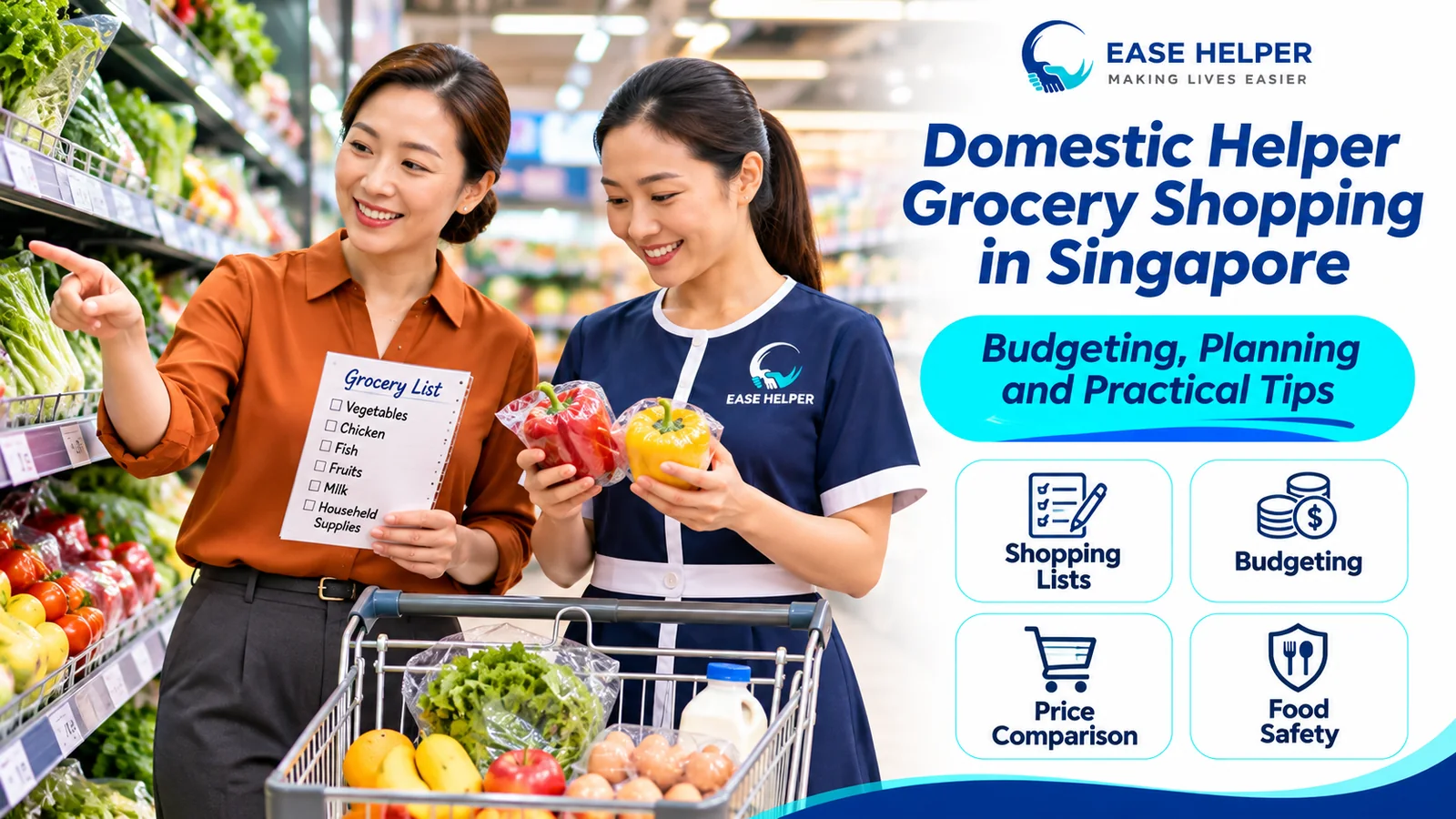
Domestic helper grocery shopping in Singapore becomes easier when employers provide clear instructions, realistic budgets and practical shopping guidance. Many families ask their domestic helpers to purchase vegetables, meat, household essentials and other groceries. However, unfamiliar products, prices and supermarket layouts can create confusion.
Therefore, employers should explain their shopping preferences before assigning independent grocery trips. With a simple list, clear spending limits and appropriate training, domestic helpers can help families manage grocery shopping efficiently.
Executive Summary
Domestic helper grocery shopping in Singapore works best with a written shopping list, agreed budget, suitable payment method and clear instructions about substitutions. Employers should also explain how to compare prices, check expiry dates, keep receipts and transport perishable food safely.
In addition, employers should introduce nearby supermarkets or markets and ensure shopping duties fit reasonably within the helper’s working schedule. Good communication reduces mistakes, food waste and unnecessary spending.
1. Can a Domestic Helper Do Grocery Shopping in Singapore?
Domestic helpers may assist with grocery shopping for their employer’s household as part of suitable domestic duties. For example, they may buy ingredients for family meals, purchase toiletries or collect household essentials.
Nevertheless, employers should explain the task clearly. A newly arrived helper may not recognise Singapore supermarket brands, local vegetables or common food labels.
Moreover, employers should ensure that shopping remains connected to their own household’s needs. They should not assign work for unrelated households or businesses.
2. Start With a Clear Grocery Shopping List
A written list helps a domestic helper identify the correct products and quantities. Therefore, employers should avoid instructions such as “buy some vegetables” when they expect particular ingredients.
What to Include in a Grocery List
- Product name and preferred brand, where relevant.
- Quantity, weight or package size.
- Preferred freshness or quality requirements.
- Maximum acceptable price for expensive items.
- Approved alternatives when an item is unavailable.
- Items that must not be substituted.
For example, write “fresh chicken breast, approximately 500 g” instead of simply “chicken”. Similarly, specify whether the family prefers fresh or frozen vegetables.
Additionally, photos can help when a product name is unfamiliar. However, employers should explain the item rather than expecting the helper to identify everything from a picture.
3. Set a Realistic Grocery Budget
A household shopping budget helps control spending and makes financial expectations clear. However, grocery prices vary by product, season, retailer and promotion.
Consequently, employers should base the budget on actual household needs rather than expecting every shopping trip to cost the same amount.
| Budget Item | Example Planning Approach |
|---|---|
| Fresh vegetables | Specify required types, quantities and preferred freshness. |
| Meat and seafood | Set suitable quantity and spending guidance. |
| Rice and dry goods | Check existing stock before buying more. |
| Fruit | Choose varieties based on household preferences and availability. |
| Household supplies | Separate cleaning and toiletry purchases from food expenses. |
| Contingency | Allow flexibility for price differences or essential replacements. |
Furthermore, employers should tell the helper what to do if the total exceeds the agreed budget. For example, she can contact the employer before purchasing an unexpectedly expensive item.
4. Where Can Domestic Helpers Buy Groceries in Singapore?
Singapore offers several grocery-shopping options. Each has different product ranges, prices and operating arrangements.
Supermarkets
Supermarkets generally provide packaged food, fresh produce, frozen items and household essentials in one location. Therefore, they can be convenient for a structured weekly shopping list.
Wet Markets
Wet markets may offer fresh vegetables, meat, seafood and other ingredients. However, product availability, pricing and payment methods may differ between stalls.
Neighbourhood Grocery Shops
Smaller shops can be useful for urgent purchases. Nevertheless, employers should explain when convenience matters more than price.
Online Grocery Shopping
Some households prefer online orders for heavy or recurring items. In that case, employers should explain how to check delivery quantities, substitutions and product condition.
Ultimately, the best shopping option depends on the household’s location, budget, dietary preferences and schedule.
5. Teach Your Helper to Compare Prices Properly
Lower prices do not always mean better value. For example, a smaller package may cost less overall but more per 100 g.
Therefore, employers should demonstrate how to compare package sizes and unit prices.
Simple Price Comparison Example
| Product | Illustrative Price | Price per 100 g |
|---|---|---|
| Rice, 1 kg | S$3.20 | S$0.32 |
| Rice, 2 kg | S$5.80 | S$0.29 |
In this illustrative example, the larger package offers a lower unit price. However, buying in bulk only makes sense when the household can use and store the product properly.
Additionally, teach the helper to check promotional conditions, package sizes and expiry dates before making a decision.
6. How to Choose Fresh Vegetables, Meat and Seafood
Fresh-food shopping requires attention to quality and safe handling. Consequently, employers should demonstrate their preferences during the first few shopping trips.
Vegetables and Fruit
- Look for suitable freshness and condition.
- Avoid produce with significant spoilage or mould.
- Check quantities before purchasing.
- Choose suitable ripeness for the planned meals.
Meat and Seafood
- Buy from appropriate food retailers.
- Check packaging and storage conditions.
- Keep raw meat and seafood separate from ready-to-eat food.
- Transport chilled and frozen items promptly.
- Follow product storage instructions after returning home.
For authoritative food-safety guidance, consult the Singapore Food Agency.
7. Explain What to Do When an Item Is Unavailable
Shopping lists cannot always be completed exactly. For instance, a preferred brand may be out of stock or a particular vegetable may not be available.
Therefore, employers should establish a simple substitution policy.
| Situation | Suggested Instruction |
|---|---|
| Preferred brand unavailable | Buy an approved alternative or ask the employer. |
| Requested vegetable unavailable | Check the agreed substitution list. |
| Item costs more than expected | Confirm before exceeding the agreed limit. |
| Product packaging looks damaged | Choose a suitable undamaged item or report the issue. |
| Unclear product label | Ask for clarification rather than guessing. |
Most importantly, employers should distinguish between flexible purchases and items that require exact specifications, such as food for allergies or medical dietary needs.
8. Choose a Safe and Practical Payment Method
Employers should provide an appropriate way to pay for household groceries. This may involve cash, an authorised payment card or another agreed payment arrangement.
However, the helper should never have to guess whether she is expected to use her personal funds.
Good Payment Practices
- Explain the available shopping budget.
- Provide clear instructions for the payment method.
- Keep payment credentials and PINs secure.
- Explain what to do if a transaction fails.
- Agree on how to return change or account for expenses.
- Avoid asking the helper to advance household expenses from her salary.
Furthermore, employers should avoid sharing unnecessary access to personal banking accounts. A controlled household shopping arrangement is generally easier to manage.
9. Keep Receipts and Record Grocery Expenses
Receipts help employers track household spending and resolve genuine discrepancies. Therefore, a simple recordkeeping process can be useful.
Suggested Shopping Record
| Date | Shop | Budget | Actual Spending | Receipt |
|---|---|---|---|---|
| Monday | Supermarket | S$60 | S$54.80 | Kept |
| Thursday | Neighbourhood shop | S$20 | S$17.50 | Kept |
These amounts are illustrative examples, not recommended household spending levels.
After shopping, the helper can provide the receipt and remaining change. However, employers should treat honest mistakes fairly and avoid automatic accusations when an amount does not match.
10. Grocery Shopping Safety in Singapore
Independent shopping may involve road crossings, crowded supermarkets, heavy bags and unfamiliar routes. Consequently, employers should explain basic safety precautions.
Important Safety Tips
- Use safe pedestrian crossings.
- Follow the agreed shopping route.
- Avoid carrying excessively heavy grocery bags.
- Use a suitable trolley for larger purchases.
- Keep personal belongings secure.
- Check transport arrangements for bulky items.
- Contact the employer if an unexpected problem occurs.
In addition, employers should allow realistic travel and shopping time. Rushing can increase mistakes and safety risks.
11. Store Groceries Properly After Shopping
Shopping does not end at the checkout. Proper storage helps preserve food quality and reduce waste.
Therefore, employers should demonstrate where each type of food belongs.
| Food Category | General Storage Guidance |
|---|---|
| Frozen food | Place in the freezer promptly and follow packaging instructions. |
| Chilled meat and seafood | Refrigerate promptly and prevent contact with ready-to-eat food. |
| Fresh vegetables | Store according to the type of produce. |
| Dry goods | Keep in suitable clean, dry storage areas. |
| Ready-to-eat food | Protect from contamination and follow storage instructions. |
Moreover, employers should explain how to rotate stock so older suitable products are used before newer purchases.
12. Avoid Common Grocery Shopping Misunderstandings
Even experienced domestic helpers may make mistakes when shopping for an unfamiliar family. Therefore, employers should provide specific feedback and improve unclear instructions.
Common Problems and Solutions
- Wrong brand: Include a product photo or exact name.
- Incorrect quantity: Specify weight, count or package size.
- Budget exceeded: Set approval limits and a contact procedure.
- Missing receipt: Explain how receipts should be kept.
- Unwanted substitution: Identify items that must not be replaced.
- Food spoiled during transport: Review shopping order and safe storage practices.
Importantly, employers should correct mistakes respectfully. A practical solution is more effective than repeated criticism.
13. First-Week Grocery Shopping Training Checklist
Newly arrived domestic helpers may need time to understand Singapore supermarkets, prices and transport arrangements.
As a result, a short orientation can help build confidence.
| Training Topic | What the Employer Should Explain |
|---|---|
| Shopping location | Preferred supermarket, market or neighbourhood shop. |
| Shopping list | Product names, brands, quantities and alternatives. |
| Budget | Spending limits and approval procedures. |
| Payment | Approved payment method and change handling. |
| Receipts | How to keep and submit shopping records. |
| Food safety | Freshness checks and safe transport. |
| Storage | Where groceries belong after returning home. |
| Communication | When to call or message the employer. |
Initially, employers can accompany the helper on a shopping trip. Subsequently, they can allow greater independence as she becomes familiar with the household’s needs.
14. Frequently Asked Questions
1. Can a domestic helper buy groceries independently in Singapore?
Yes. Grocery shopping for the employer’s household can form part of suitable domestic duties. However, employers should provide clear instructions, an appropriate budget and safe arrangements.
2. Should employers provide money for grocery shopping?
Employers should arrange an appropriate payment method for household purchases. They should not assume that the helper will use her own salary to fund groceries.
3. How can employers prevent overspending?
Provide a written shopping list, agree on a realistic budget and explain when approval is needed. In addition, review receipts and discuss price differences constructively.
4. What if a domestic helper buys the wrong groceries?
Explain the mistake respectfully and clarify the original instruction. Then, improve the shopping list with specific brands, quantities or product photos where useful.
5. How should employers train a helper who is unfamiliar with Singapore supermarkets?
Begin with a supervised shopping trip. Demonstrate product selection, price comparison, payment, receipt handling and safe transport. Gradually increase independence as the helper gains confidence.
How EaseHelper Supports Singapore Employers
Domestic helper grocery shopping in Singapore becomes more manageable when families establish clear routines and realistic expectations.
EaseHelper supports Singapore households with domestic helper recruitment and matching. Employers can discuss cooking, grocery shopping and other household requirements during the selection process.
Looking for a Domestic Helper in Singapore?
Explore domestic helper options with EaseHelper and find a suitable match for your household’s cooking, shopping and daily living needs.
Explore EaseHelper ServicesDisclaimer: This article provides general information about domestic helper grocery shopping in Singapore. It does not constitute legal, financial or food-safety advice. Employers should consult current Ministry of Manpower guidance and Singapore Food Agency recommendations where applicable. Individual household arrangements may vary.