
Blog
Domestic Helper Grocery Shopping in Singapore: A Practical Guide to Smart and Safe Shopping

Executive Summary
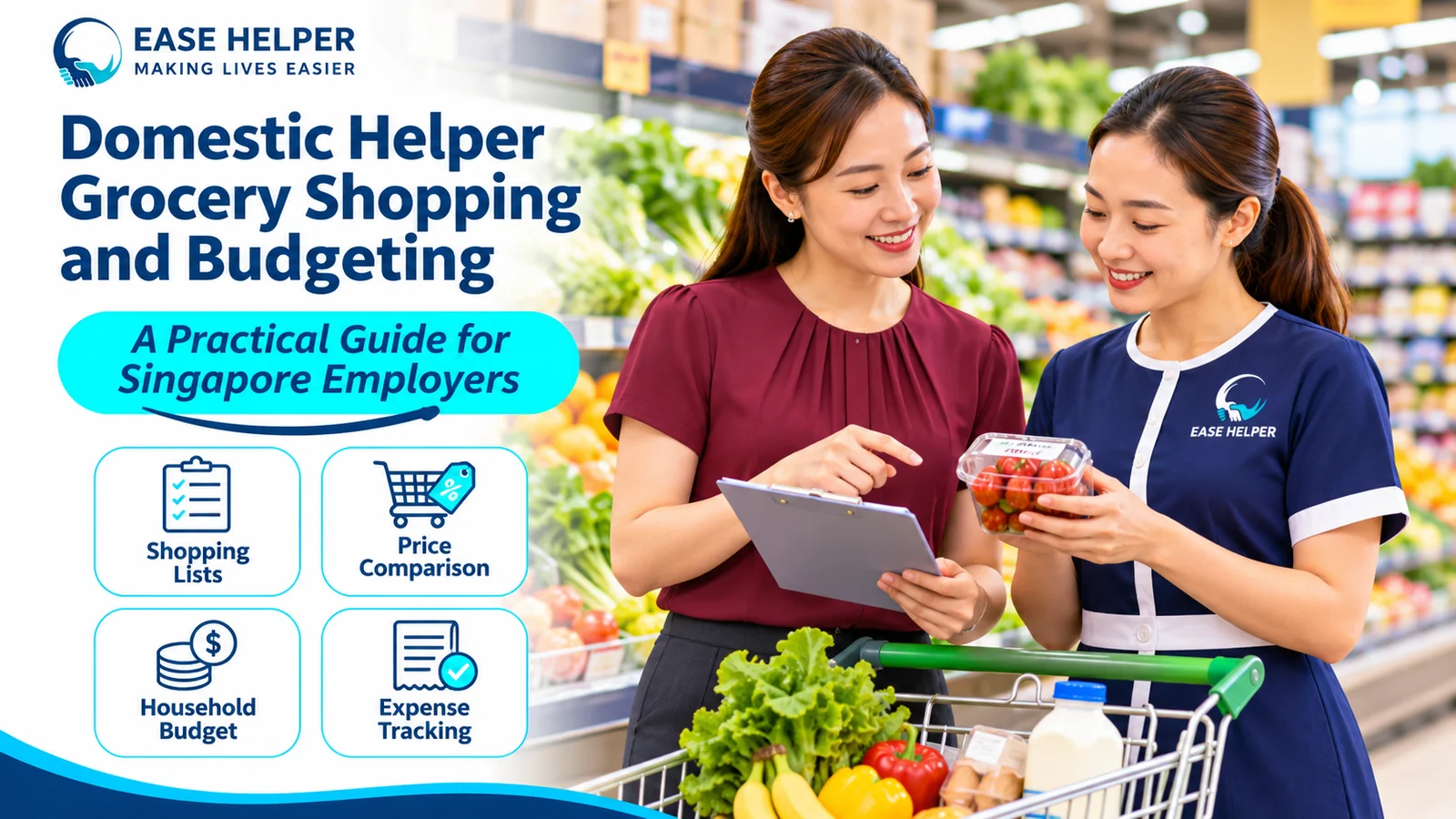
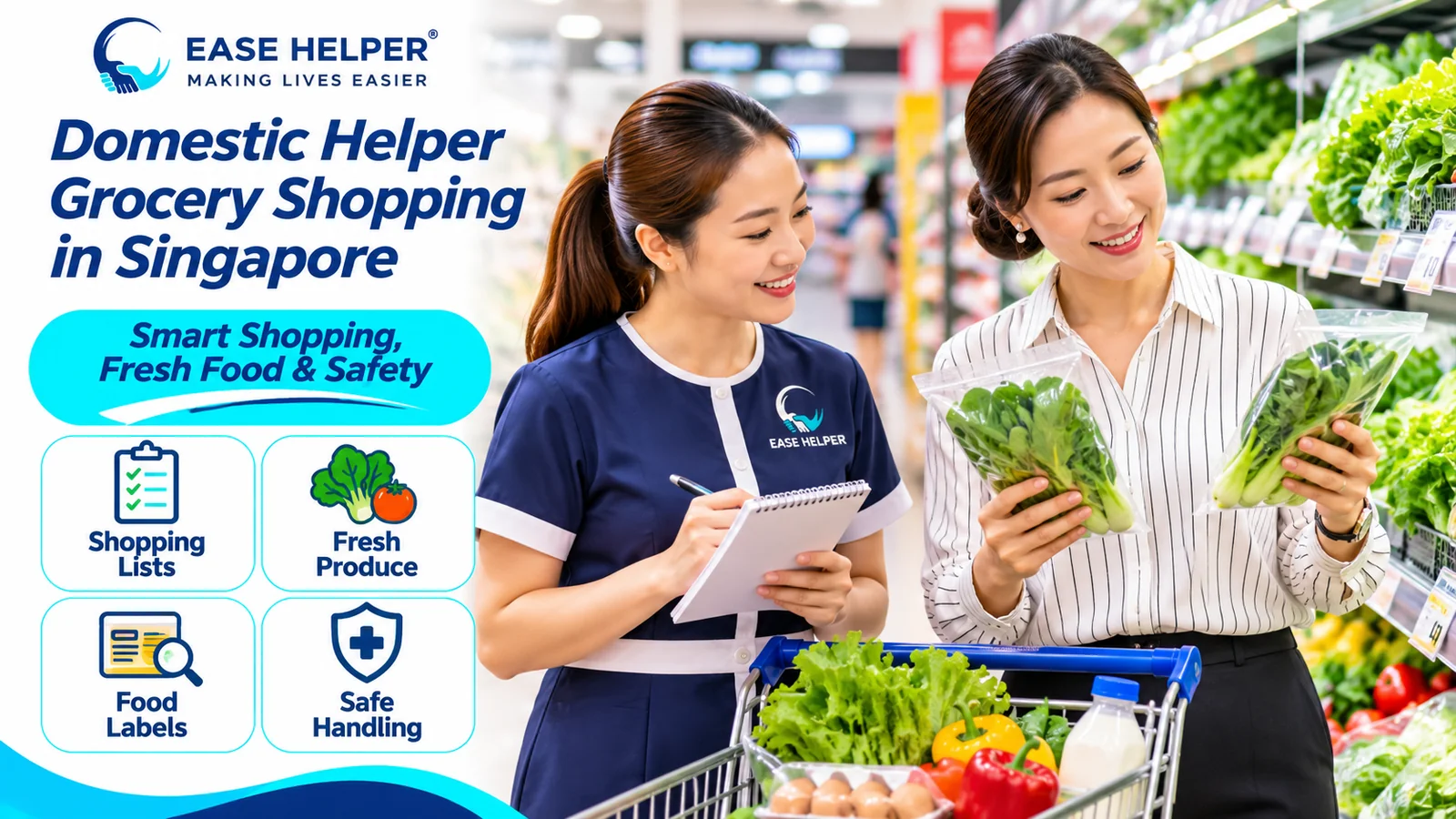
Grocery shopping is a common responsibility for domestic helpers in Singapore. However, successful shopping involves more than following a list. Helpers also need to recognise fresh ingredients, understand food labels, compare prices and transport groceries safely.
This practical guide helps employers teach their domestic helpers how to shop confidently at supermarkets, wet markets and neighbourhood shops. It includes a sample shopping checklist, useful buying tips, food safety advice and ways to prevent common mistakes.
Why Grocery Shopping Skills Matter
Singapore households often depend on regular grocery shopping to keep meals organised. Some families shop at supermarkets, while others prefer wet markets or neighbourhood stores.
As a result, domestic helpers may encounter unfamiliar ingredients, different packaging and several choices for the same product. Without clear instructions, they might buy the wrong quantity or overlook an important food label.
Fortunately, employers can teach these skills through simple demonstrations and regular practice. Over time, the helper can become more confident and independent.
1. Prepare a Clear Shopping List Before Leaving Home
A detailed shopping list helps the helper buy the correct products and avoid unnecessary trips. Therefore, employers should include quantities, preferred brands and any important dietary requirements.
What Should a Shopping List Include?
- Product name: For example, fresh spinach, eggs or cooking oil.
- Quantity: State whether the family needs one packet, two bottles or 500 grams.
- Preferred brand: Mention a specific brand when it matters.
- Alternative options: Explain which substitutions are acceptable.
- Special requirements: Identify allergies, vegetarian preferences or other dietary restrictions.
For unfamiliar ingredients, a photograph can be especially helpful. In addition, employers can show the helper the product packaging during their first shopping trip together.
Sample Grocery Shopping List
| Item | Quantity | Special Instructions |
|---|---|---|
| Eggs | 10 pieces | Check that the shells are intact. |
| Fresh spinach | 2 bundles | Choose fresh leaves without visible decay. |
| Chicken breast | 500 g | Buy chilled chicken and keep it separate from vegetables. |
| Milk | 1 litre | Choose the family’s preferred type and check the date label. |
| Rice | 5 kg | Buy the agreed variety and brand. |
| Dishwashing liquid | 1 bottle | Keep household chemicals separate from food. |
2. Understand the Difference Between Supermarkets and Wet Markets
Singapore offers several grocery shopping options. Each has advantages, so the best choice depends on the family’s preferences, location and shopping needs.
| Shopping Location | Common Advantages | What to Check |
|---|---|---|
| Supermarket | Clear shelf labels, packaged products and a wide selection | Unit prices, package sizes and food date labels |
| Wet market | Fresh produce, meat, fish and ingredients sold in flexible quantities | Freshness, hygiene, weight and quoted prices |
| Neighbourhood grocery shop | Convenient for smaller or urgent purchases | Product availability, packaging and price |
| Online grocery service | Useful for planned deliveries and bulky items | Delivery charges, substitutions and delivery times |
During the first few weeks, employers can introduce the helper to their preferred shops. Furthermore, they can explain which ingredients are usually purchased from each location.
3. Teach the Helper How to Choose Fresh Vegetables and Fruit
Fresh produce varies in appearance and quality. Therefore, helpers should learn to inspect ingredients before buying them.
Vegetable Selection Tips
- Choose leafy vegetables with fresh-looking leaves and firm stems.
- Avoid produce with extensive mould, slime or visible decay.
- Check whether vegetables are damaged or excessively wilted.
- Buy the quantity the family can reasonably use before spoilage.
Fruit Selection Tips
- Check for bruising, mould and damaged skin.
- Consider whether the family wants ripe fruit for immediate eating or firmer fruit for later.
- Handle delicate fruit carefully to prevent damage.
- Ask the employer before substituting unfamiliar fruit varieties.
However, appearance alone cannot guarantee food safety. Proper washing, storage and preparation remain important after shopping.
4. Choose Meat, Fish and Seafood Carefully
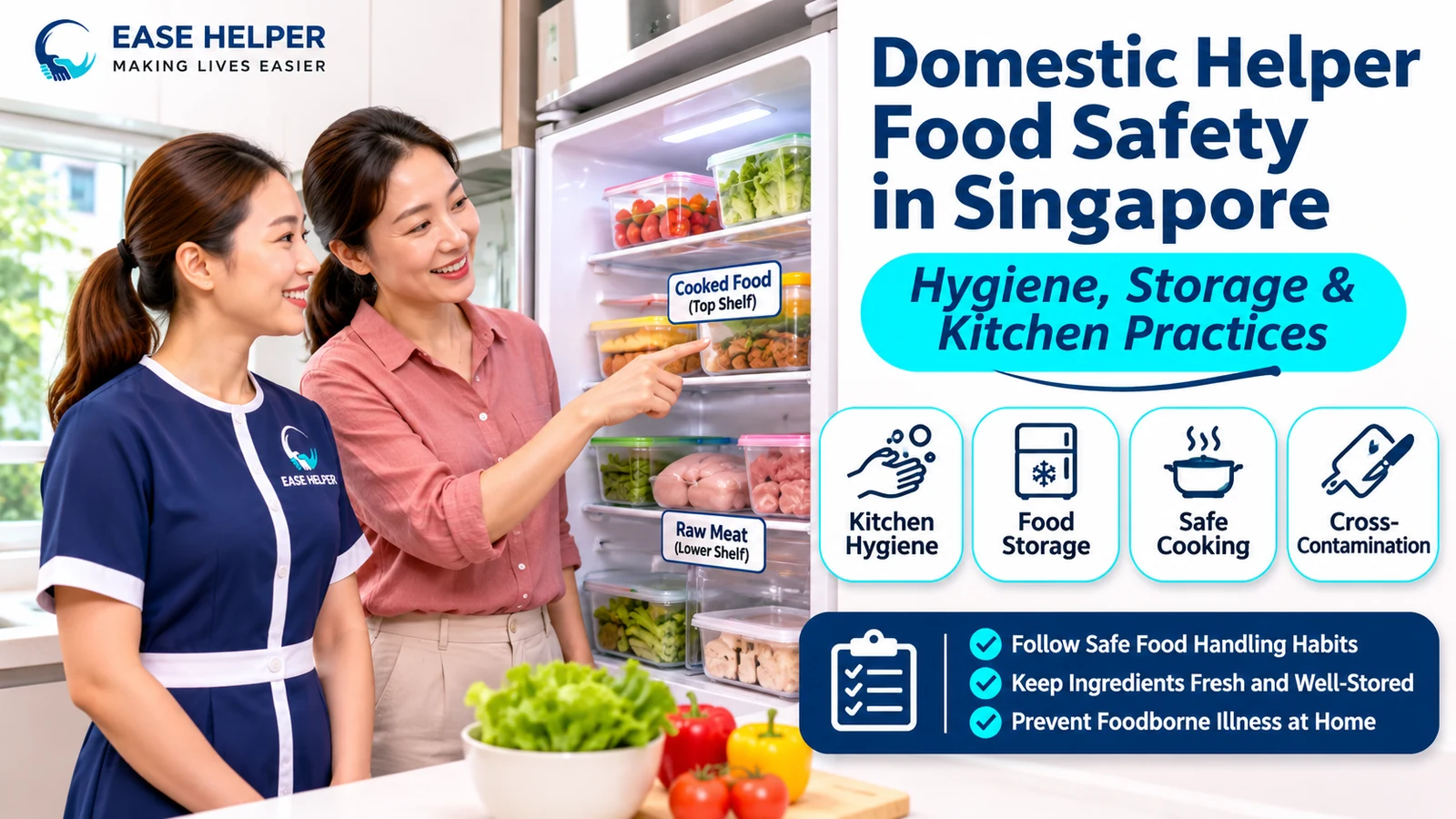
Raw animal products require extra care because poor handling can increase food safety risks. Consequently, domestic helpers should learn how to inspect packaging and minimise the time these items spend outside refrigeration.
What to Check Before Buying
- Choose products from reputable sellers that maintain appropriate chilled or frozen storage.
- Check packaging for leaks, tears or damage.
- Review the relevant date labels on packaged products.
- Avoid products with unusual odours or obvious signs of spoilage.
- Keep raw meat and seafood away from ready-to-eat foods.
For practical food safety information, employers can refer to the Singapore Food Agency (SFA).
Food safety reminder: Do not rely on smell or appearance alone to decide whether meat or seafood is safe. Follow proper temperature control, storage instructions and food safety guidance.
5. Learn to Read Food Labels and Expiry Information
Food packaging contains information that helps families make suitable purchasing decisions. Therefore, helpers should check labels rather than choosing products based only on appearance.
Important Label Information
- Product name: Confirm that the item matches the shopping list.
- Ingredients: Look for allergens or ingredients the family avoids.
- Net weight: Compare the actual quantity inside the package.
- Date marking: Check the applicable use-by, expiry or best-before information.
- Storage instructions: Follow refrigeration, freezing and other handling directions.
Different date labels have different meanings. For example, a best-before date generally relates to product quality, while a use-by date can be particularly important for food safety. Helpers should follow the product’s instructions and avoid using food when its safety is uncertain.
6. Compare Prices Without Sacrificing Quality
Smart grocery shopping does not always mean choosing the cheapest item. Instead, compare the price, quantity, quality and suitability for the family.
Example: Comparing Rice Prices
| Product | Pack Size | Price | Price per kg |
|---|---|---|---|
| Rice A | 2 kg | S$6.00 | S$3.00 |
| Rice B | 5 kg | S$13.50 | S$2.70 |
| Rice C | 10 kg | S$25.00 | S$2.50 |
In this illustration, Rice C has the lowest price per kilogram. However, a smaller household may prefer a smaller pack because it needs less storage space and may consume rice more slowly.
Likewise, a discounted product is not necessarily a good purchase if the family cannot use it before its quality deteriorates.
7. Keep Chilled and Frozen Groceries Safe During Transport
Singapore’s warm weather makes proper food handling especially important. Consequently, helpers should plan their shopping route to reduce the time chilled and frozen food spends outside suitable storage.
Practical Transport Guidelines
- Buy shelf-stable products and household supplies first.
- Collect chilled and frozen items near the end of the shopping trip.
- Use an insulated bag with suitable cooling packs when necessary.
- Keep raw meat and seafood securely packed away from other foods.
- Travel home promptly after completing the shopping.
- Refrigerate or freeze perishable products as soon as possible.
Furthermore, avoid leaving groceries in a hot vehicle or direct sunlight. If a refrigerated product becomes warm for an extended period, seek food safety guidance rather than assuming it remains safe.
8. Organise Grocery Bags for Safe and Comfortable Travel
Heavy or poorly packed bags can cause spills and unnecessary strain. Therefore, helpers should distribute groceries sensibly and avoid carrying more than they can manage safely.
- Place heavy, sturdy items at the bottom of suitable bags.
- Keep eggs and delicate fruit away from heavy objects.
- Separate cleaning chemicals from food.
- Use reusable bags that are clean and in good condition.
- Ask the employer to arrange delivery for very heavy purchases.
If the helper uses public transport, she should keep bags clear of doors and walkways. In addition, she should remain attentive to traffic and other pedestrians while carrying groceries.
9. Know What to Do When an Item Is Unavailable
Sometimes, a supermarket runs out of a requested product. Rather than guessing, the helper should follow an agreed substitution procedure.
Three-Step Substitution Method
- Check: Look for the same product in another pack size or approved brand.
- Confirm: Ask the employer before choosing an unfamiliar alternative, especially for allergy-sensitive items.
- Record: Note any substitution so the family knows what was purchased.
For example, if the requested milk is unavailable, the helper should not automatically replace it with another type. The family may have dietary or nutritional reasons for its original choice.
10. Introduce a Grocery Shopping Training Routine
Employers should not assume that every helper already understands Singapore’s shopping practices. Instead, provide practical training that matches her experience.
| Training Stage | Suggested Activity | Learning Goal |
|---|---|---|
| First shopping trip | Employer and helper shop together | Learn preferred shops and products |
| Second shopping trip | Helper follows the list with guidance | Practise finding items and checking labels |
| Third shopping trip | Helper completes a small routine list | Build confidence and independence |
| Ongoing practice | Review substitutions and shopping challenges | Improve accuracy and decision-making |
Employers can also use photographs, short demonstrations and translated notes when needed. For a broader introduction to domestic helper employment, read our guide to hiring a domestic helper in Singapore.
11. Common Grocery Shopping Mistakes and Solutions
| Common Mistake | Practical Solution |
|---|---|
| Buying the wrong quantity | Specify grams, kilograms, packets or pieces on the shopping list. |
| Choosing an unsuitable substitute | Confirm unfamiliar alternatives before purchasing. |
| Ignoring food date labels | Check packaging and relevant dates before paying. |
| Buying too much fresh produce | Plan quantities according to meals and storage capacity. |
| Leaving chilled groceries unrefrigerated | Shop for perishables last and return home promptly. |
| Mixing raw meat with ready-to-eat food | Use separate, secure packaging. |
| Carrying excessively heavy bags | Divide purchases or arrange suitable delivery. |
12. Build Confidence Through Clear Communication
A successful shopping routine depends on communication as well as practical skills. Therefore, encourage the helper to ask questions when a product, quantity or instruction is unclear.
For instance, an employer can explain why the family prefers a particular ingredient rather than simply telling the helper that another brand is wrong.
Over time, these conversations help both parties understand household preferences. They also reduce repeated mistakes and unnecessary frustration.
Families comparing different helper backgrounds can explore our Myanmar vs Indonesian Domestic Helper guide. However, remember that shopping experience and learning ability vary between individuals, not simply by nationality.
Frequently Asked Questions
1. Can a domestic helper buy groceries independently in Singapore?
Yes. Grocery shopping can form part of a domestic helper’s agreed household duties. Employers should provide clear instructions, suitable funds and appropriate safety guidance.
2. Should employers accompany their helpers on the first shopping trip?
It is often helpful, especially when the helper is new to Singapore or unfamiliar with local ingredients. A demonstration can make later independent shopping easier.
3. How can a helper avoid buying the wrong groceries?
Use a shopping list with quantities, photographs, preferred brands and clear substitution rules. In addition, encourage the helper to confirm unfamiliar products before purchasing them.
4. How should a helper transport frozen food home?
Buy frozen products near the end of the shopping trip, use suitable insulated bags when needed and return home promptly. Follow product storage instructions and food safety guidance.
5. What should employers do when a helper makes a shopping mistake?
Discuss the mistake calmly, explain the correct product or procedure and update the shopping instructions if necessary. Practical guidance usually works better than criticism.
Find a Domestic Helper Who Suits Your Household
EaseHelper supports Singapore families in finding suitable domestic helpers based on their household needs and individual experience. Clear instructions and practical training can help a new helper adapt to daily responsibilities, including grocery shopping and meal preparation.
Explore EaseHelper ServicesDisclaimer: This article provides general household shopping and food handling guidance. Product prices and examples are illustrative. Food safety recommendations and official requirements may change. Consult the Singapore Food Agency and other relevant authorities for current guidance.