
Blog
Domestic Helper Food Safety in Singapore: Essential Kitchen Hygiene Practices

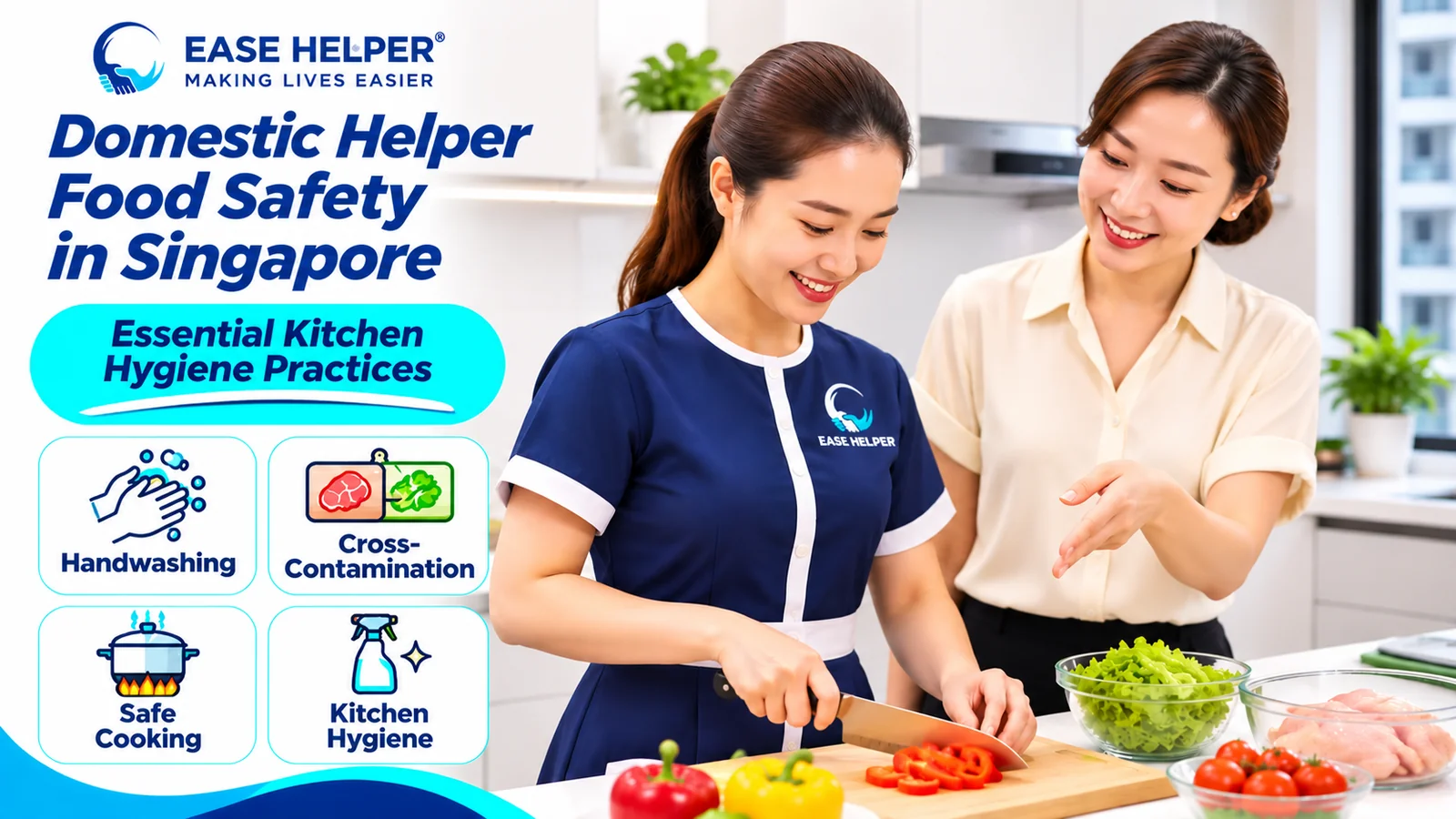
Executive Summary
Good kitchen hygiene starts with clean hands, hygienic equipment, careful handling of raw ingredients and thorough cooking. Employers should teach domestic helpers how to prevent cross-contamination, maintain clean kitchen surfaces and recognise unsafe food handling practices. Regular demonstrations and respectful feedback help make food safety part of the household’s daily routine.
Why Domestic Helper Kitchen Hygiene Matters in Singapore
Singapore’s warm and humid climate makes proper food handling particularly important. Harmful microorganisms can multiply when food is handled or kept under unsuitable conditions.
Furthermore, certain family members may face greater risks from foodborne illness. Young children, pregnant women, older adults and people with weakened immune systems may need additional protection.
Therefore, employers should introduce food safety procedures during their helper’s initial kitchen training rather than waiting for a mistake.
1. Teach Proper Handwashing Before Food Preparation
Handwashing is one of the simplest ways to reduce contamination. Nevertheless, a quick rinse with water is not enough.
When Should Your Domestic Helper Wash Her Hands?
- Before preparing food or handling ready-to-eat ingredients.
- After handling raw meat, poultry, seafood or eggs.
- After using the toilet.
- After touching rubbish, cleaning chemicals or dirty surfaces.
- After coughing, sneezing or blowing her nose.
- After handling pets or pet-related items.
Show your helper how to wash her hands thoroughly with soap and running water, including between the fingers and around the nails. Afterwards, she should dry them with a clean towel or suitable disposable material.
Employer tip: Keep soap and clean hand-drying materials near the kitchen sink. Also, remind your helper to wash her hands again whenever she switches from a dirty task to food preparation.
2. Prevent Cross-Contamination Between Raw and Cooked Food
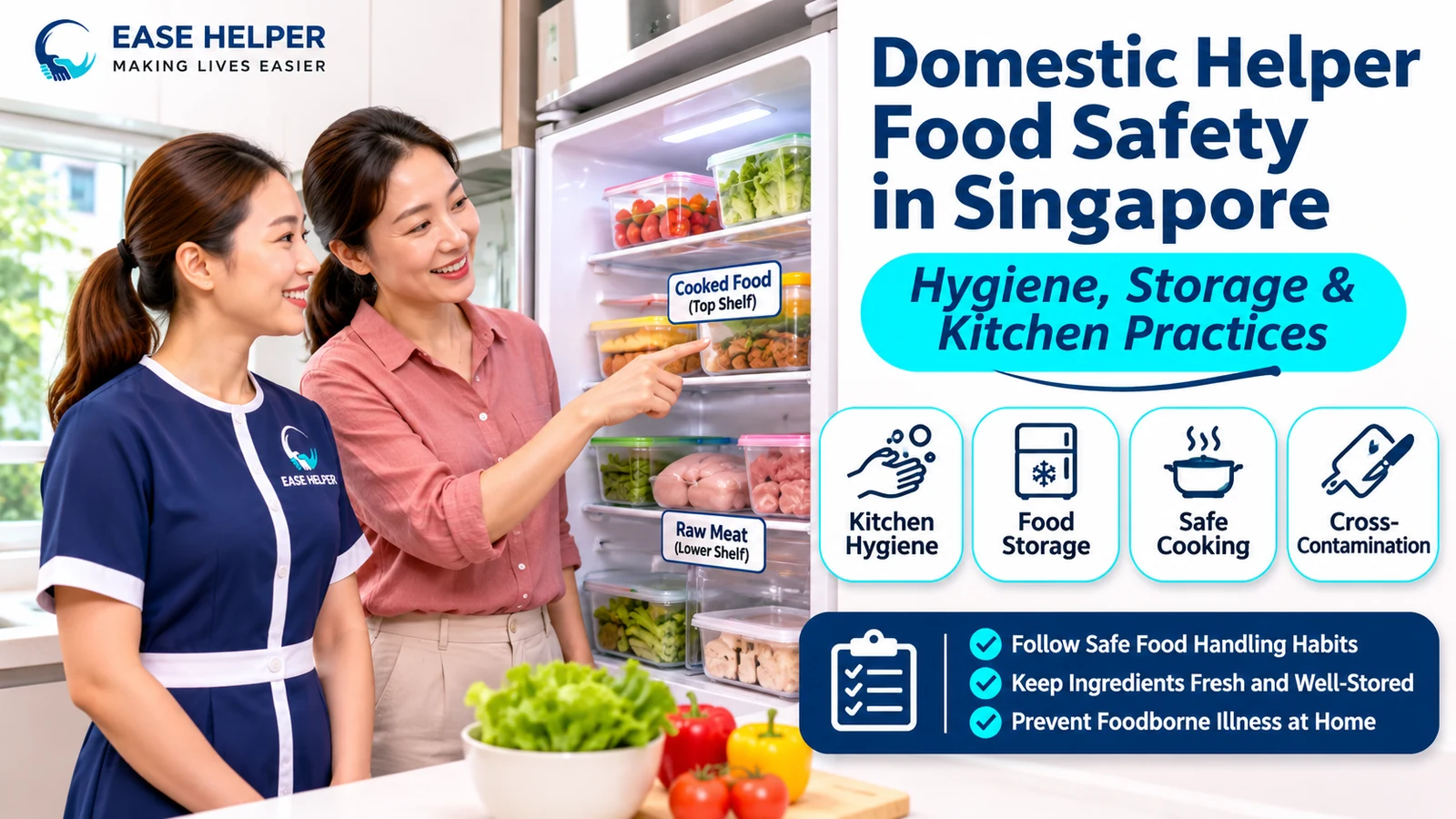
Cross-contamination occurs when harmful microorganisms move from one food, surface or utensil to another. For example, raw chicken juices can contaminate vegetables that the family plans to eat without further cooking.
To reduce this risk, establish clear rules for handling raw and ready-to-eat ingredients.
Practical Cross-Contamination Prevention Rules
- Use separate chopping boards for raw meat and ready-to-eat foods.
- Wash knives and utensils thoroughly between different tasks.
- Keep raw ingredients away from cooked dishes.
- Never place cooked food on an unwashed plate that previously held raw meat.
- Clean and sanitise preparation surfaces after handling raw ingredients.
- Avoid washing raw poultry because splashing water can spread contamination around the sink.
For example, an employer can assign one chopping board to raw meat and another to vegetables and cooked food. Simple labels or colour coding can make these instructions easier to remember.
3. Domestic Helper Kitchen Hygiene: Daily Cleaning Checklist
Even fresh ingredients can become unsafe when a helper prepares them with dirty equipment. Therefore, kitchen cleaning should form part of the food preparation routine.
Daily Kitchen Cleaning Tasks
- Clean countertops before and after preparing meals.
- Wash chopping boards and knives after each relevant task.
- Clean sinks and taps regularly.
- Replace or wash dirty kitchen cloths frequently.
- Keep rubbish bins covered and empty them regularly.
- Check kitchen surfaces for pests or signs of contamination.
Additionally, teach your helper to use food-safe cleaning products according to their labels. She should never mix cleaning chemicals or allow chemical residues to contact food.
4. Handle Raw Meat, Seafood and Eggs Safely
Raw animal products require particular care because they may carry harmful microorganisms.
First, teach your helper to handle these ingredients with clean hands and utensils. Next, remind her to keep raw juices away from other ingredients. Finally, ensure she cleans all affected equipment and surfaces after preparation.
For eggs, avoid using cracked or visibly dirty eggs in dishes that will receive little or no cooking. Similarly, discard raw ingredients that show clear signs of spoilage.
When in doubt about an ingredient’s safety, your helper should ask the employer rather than guess.
5. Cook Food Thoroughly and Avoid Unsafe Shortcuts
Proper cooking helps destroy many harmful microorganisms. However, appearance alone does not always confirm that food has reached a safe internal temperature.
Therefore, teach your helper to follow reliable cooking instructions and use a clean food thermometer when appropriate, especially for poultry and larger meat portions.
Moreover, she should avoid tasting food with a spoon and returning the same unwashed spoon to the cooking pot.
Important Safe Cooking Habits
- Cook poultry and other high-risk foods thoroughly.
- Follow suitable cooking temperatures for different foods.
- Use clean utensils when serving cooked dishes.
- Avoid prolonged delays between cooking and serving.
- Reheat leftovers thoroughly and evenly.
For official Singapore food safety advice, consult the Singapore Food Agency (SFA).
6. Practise Safe Food Storage After Cooking
Good kitchen hygiene does not end when cooking finishes. Leftovers also need appropriate handling.
For instance, food should not remain at room temperature for extended periods. Instead, divide large portions into smaller, shallow containers when suitable and refrigerate promptly.
Also, label leftovers when helpful and avoid repeatedly warming and cooling the same dish.
Employers should explain which foods the family intends to keep and which items should be discarded. This prevents confusion and unnecessary waste.
7. Create a Simple Kitchen Food Safety Checklist
A written checklist helps your helper remember essential tasks without relying entirely on verbal instructions.
| Stage | Food Safety Task | When to Check |
|---|---|---|
| Before cooking | Wash hands and clean preparation surfaces. | Before each meal preparation |
| Preparing ingredients | Separate raw foods from ready-to-eat foods. | Throughout preparation |
| During cooking | Cook food thoroughly and use clean utensils. | Every cooking session |
| After cooking | Serve safely and refrigerate leftovers promptly. | After each meal |
| Kitchen cleaning | Wash equipment and dispose of food waste. | After food preparation |
| Weekly review | Inspect kitchen cleanliness, cloths and equipment. | Once a week |
Keep the checklist short and easy to understand. If your helper prefers visual instructions, add simple pictures or demonstrate each step in person.
8. How to Train Your Helper in Safe Kitchen Hygiene
Different households have different cooking methods, ingredients and kitchen equipment. Consequently, practical demonstrations often work better than lengthy instructions.
A Simple Four-Step Training Approach
- Explain: Describe the task and the food safety risk it addresses.
- Demonstrate: Show the correct method using the household’s own equipment.
- Practise: Let your helper repeat the task while you observe.
- Review: Give specific, respectful feedback and repeat the demonstration when necessary.
For employers hiring their first helper, our guide to hiring a domestic helper in Singapore provides useful background on preparing for the employment arrangement.
Most importantly, encourage your helper to ask questions whenever instructions are unclear. A supportive approach helps her report mistakes or possible food safety concerns promptly.
9. Common Food Safety Mistakes to Avoid
Some kitchen mistakes seem minor but can create avoidable risks. Employers should explain these examples during training.
| Common Mistake | Safer Practice |
|---|---|
| Using the same unwashed knife for raw chicken and salad vegetables. | Use separate utensils or wash them thoroughly between tasks. |
| Leaving cooked food out for several hours. | Serve promptly or refrigerate within recommended safe time limits. |
| Wiping hands and counters with the same dirty cloth. | Use clean, separate materials for appropriate tasks. |
| Handling food immediately after touching rubbish. | Wash hands thoroughly before returning to food preparation. |
| Assuming food is safe because it smells normal. | Follow safe handling, storage and expiry guidance rather than relying on smell alone. |
10. Build Food Safety Into the Household Routine
Food safety works best when everyone follows consistent practices. Therefore, employers should apply the same rules themselves and explain them clearly to their helper.
For example, schedule kitchen cleaning after meal preparation, provide sufficient equipment and ensure the helper has enough time to complete each task properly.
Furthermore, review the routine when the family introduces new ingredients, cooking appliances or dietary requirements.
Regular communication and practical training can help make safe food preparation a normal part of daily household work.
Frequently Asked Questions
1. Should Employers Train Domestic Helpers in Food Safety?
Yes. Employers should explain their household’s kitchen hygiene rules and demonstrate safe food preparation methods. Practical training helps reduce misunderstandings and supports consistent routines.
2. Can a Domestic Helper Use the Same Chopping Board for Meat and Vegetables?
Separate boards are preferable, particularly when vegetables will be eaten raw. If equipment must be reused, clean it thoroughly between handling raw and ready-to-eat foods.
3. How Often Should Kitchen Cloths Be Cleaned?
Clean or replace cloths whenever they become dirty or contaminated. Use separate materials for different cleaning tasks and avoid leaving damp, dirty cloths around food preparation areas.
4. What Should a Helper Do if She Suspects Food Has Spoiled?
She should avoid serving it and inform the employer. Do not rely solely on appearance or smell to decide whether potentially unsafe food can still be eaten.
5. Where Can Employers Find Official Food Safety Guidance in Singapore?
The Singapore Food Agency provides official guidance on food safety, hygiene and safe food handling. Employers can review its resources at www.sfa.gov.sg.
Looking for a Domestic Helper in Singapore?
EaseHelper helps Singapore households explore domestic helper options based on their family needs. Whether your priorities include cooking, household cleaning or family care, our team can assist you with the selection process.
Find out how EaseHelper can support your household.
Explore EaseHelper ServicesDisclaimer: This article provides general household food safety information and does not replace official Singapore Food Agency guidance or professional medical advice. Food safety recommendations may differ depending on ingredients, preparation methods and individual health needs. Refer to current SFA guidance for authoritative information.